 Preview
 Send
Send Share
Share
 Details

 Download
 Similars
 X-Ray
X-Ray Diaporama
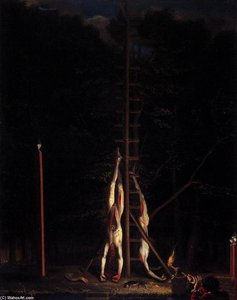
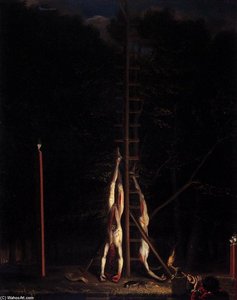
The Corpses of the De Witt Brothers
 Oil On Canvas
- WallArt
- Baroque Realism
 1672
1672 70.0 x 56.0 cm
 Rijksmuseum
 Read More
Hand Made Oil Reproduction
Hand-painted oil on canvas in your size and frame, made to order by our artists. ( Buy Print Buy Image)




P118B $10

P118H $10

P118W $10

P438Z $10

P508JH $12

P508YH $12

P805H $10

P805Z $10

P919BZ $10

P919G $10

P919XJ $10

P959ZH $10

P968JZ $12

W106C $8

W218G $10

W218JH $8

W218Y $10

W307PJ $10

W316G $10

W316PJ $8

W316Y $10

W398PJ $8

W4111J $10

W500HY $15

W500JH $15

W692G $12

W849H $8

W940BG $15

W953PJ $8




Pick from our preset sizes that match the artwork's original proportions.

You may enter your own dimensions to fit a specific frame or space. If your selected size does not match the original image's proportions, we will either crop the artwork or extend the painting with additional hand-painted elements. A digital mockup will be sent for your approval before production begins.
Please note that the on-screen preview does not reflect the actual cropping or extension. Only the mockup will accurately show the final composition.
While custom sizes are available, we recommend selecting a dimension from the predefined list to preserve the original proportions.
After order, ArtsDot.com team will email client for instructions and provide a mockup preview
Worldwide Delivery () in 3/4 weeks instead of standard 5 weeks. (16 August). No compromise on quality.

Free Worldwide Express Shipping

High-Quality Linen Canvas

Full Shipping Insurance

Customs Tax Refund Guarantee

True Color Matching Guarantee

60-Day Return Policy (Defects Only)

100% Money-Back Guarantee

Bulk Discount Offer
 Glass option is only available in size under 110 CM

The Corpses of the De Witt Brothers
Reproduction Medium
Reproduction Size
-


Total Price
$ 263
Artwork Description
A Macabre Tableau of Political Turmoil: Jan de Baen’s “The Corpses of the De Witt Brothers”
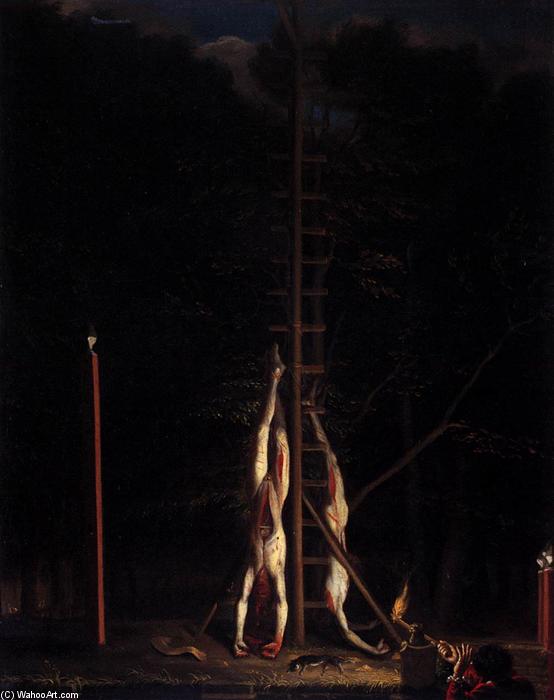
Jan de Baen's "The Corpses of the De Witt Brothers," painted in 1672-75, is not merely a depiction of a brutal event; it’s a chillingly effective indictment of political violence and a haunting meditation on power, betrayal, and the fragility of life. This monumental oil painting, now residing within the esteemed collection of the Rijksmuseum in Amsterdam, captures the aftermath of the shocking lynching of Johan and Cornelis de Witt – two towering figures who dominated Dutch politics for decades before their untimely demise. The scene unfolds with stark realism and dramatic intensity, transporting the viewer directly into the heart of a nation gripped by turmoil.
The painting’s subject matter is undeniably unsettling: the bodies of the brothers are suspended from a tall wooden ladder, their limbs grotesquely contorted against the backdrop of a dark, densely wooded landscape. The executioners' tools—axes, knives, and other implements of violence—are scattered around them, serving as grim reminders of the barbarity that transpired. De Baen doesn’t shy away from depicting the gruesome details – the flayed skin, the severed limbs, the exposed musculature – yet he does so with a controlled hand, imbuing the scene with a sense of solemn dignity rather than mere sensationalism. The figures are rendered in muted tones of brown, grey, and ochre, creating an atmosphere of somber reflection and emphasizing the starkness of death.
A Masterclass in Caravaggian Drama: Technique and Composition
De Baen’s technical skill is immediately apparent in the painting's masterful use of chiaroscuro – a dramatic contrast between light and shadow. A small fire or lantern, positioned at the base of the ladder, casts long, theatrical shadows that engulf much of the scene, intensifying the sense of drama and highlighting key elements such as the tools and a solitary figure clad in dark clothing standing in the foreground. This technique, reminiscent of Caravaggio’s work, draws the viewer's eye to specific details while simultaneously creating an overall atmosphere of foreboding. The artist employs loose brushstrokes, particularly on the wooden ladder and the bodies themselves, lending a sense of texture and roughness that reinforces the painting’s visceral impact.
The composition is carefully orchestrated to maximize its emotional effect. The verticality of the ladder immediately draws the eye upwards, emphasizing the height of the figures and their vulnerability. The surrounding trees are rendered with varying degrees of detail – some sharply defined, others blurred into the background – creating a sense of depth and atmospheric perspective. Geometric shapes—the rectangular ladder, the roughly human forms, and the organic outlines of the foliage—dominate the scene, grounding the chaotic subject matter within a framework of controlled order. The use of size diminution effectively conveys the distance between the foreground figure and the distant trees, further enhancing the painting’s spatial depth.
Historical Context: A Nation in Crisis
“The Corpses of the De Witt Brothers” is inextricably linked to one of the most turbulent periods in Dutch history – the Rampjaar of 1672. This year witnessed a series of devastating military defeats for the Republic, including the loss of its fleet at Gravelines and the invasion of the Netherlands by Louis XIV’s forces. The de Witt brothers, as influential figures within the government, were blamed for the country's misfortunes, fueling widespread resentment and ultimately leading to their brutal assassination. The painting serves as a potent symbol of this period of political instability and social unrest, capturing the collective grief and outrage felt throughout the nation.
It’s important to note that the brothers had been instrumental in shaping Dutch policy for years prior to the Rampjaar. Johan de Witt, as Grand Pensionary, was a shrewd administrator who skillfully navigated the complex political landscape of the Republic. Cornelis de Witt, as bailiff of Dordrecht and representative of the States-General, played a crucial role in defending Dutch interests abroad. Their deaths were not merely a personal tragedy; they represented a significant blow to the stability and prosperity of the nation.
Symbolism and Emotional Resonance
Beyond its historical significance, “The Corpses of the De Witt Brothers” is rich in symbolism. The act of lynching itself represents the dangers of mob rule and the erosion of justice. The exposed bodies serve as a stark reminder of the consequences of political ambition and the fragility of human life. The solitary figure in the foreground, shrouded in darkness, may represent the viewer – an observer confronted with the horrors of violence and injustice. The painting’s somber palette and dramatic lighting evoke feelings of sorrow, dread, and perhaps even a sense of moral outrage. It is a powerful testament to the enduring human capacity for both cruelty and compassion.
Reproductions of this iconic artwork offer a compelling opportunity to engage with a pivotal moment in Dutch history while appreciating De Baen’s exceptional artistic skill. Its haunting imagery continues to resonate today, prompting reflection on themes of power, betrayal, and the enduring consequences of political violence.
Related Artworks
Artist Biography
The Elegance of Portraiture in the Dutch Golden Age
Jan de Baen stands as a prominent figure within the illustrious Dutch Golden Age, celebrated for his exquisitely crafted portraits that captured the spirit and dignity of aristocratic subjects. Born in Haarlem on February 20th, 1633, his early life was marked by profound tragedy; the untimely deaths of his parents left him an orphan at just three years old. Taken into the care of his uncle, Hinderk Pyman—a magistrate and painter residing in Emden—de Baen received his first brushstrokes of inspiration from a man who would instill in him an initial appreciation for artistic endeavor. This formative experience propelled de Baentoward formal training, commencing his apprenticeship with the renowned Jacob Adriaensz Backer in Amsterdam in 1645, where he honed his skills alongside one of the era’s most formidable masters.
Backer's influence proved pivotal, shaping de Baen’s stylistic sensibilities and establishing a foundation for his future artistic pursuits. As he matured, de Baen developed a unique ability to navigate the complex social hierarchies of the seventeenth century through his art. He became a painter who understood the subtle language of status, bringing a specific kind of elegance and flattery to his work that was highly preferred by his wealthy patrons. This knack for making his subjects appear both real and remarkably distinguished allowed him to rise quickly in prominence, eventually leading him to serve the exiled Charles II of England during the monarch's time in Holland.
A Legacy of Royal and Political Grandeur
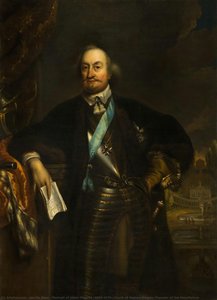
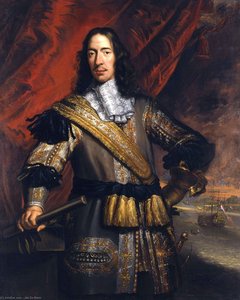
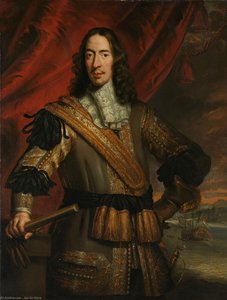
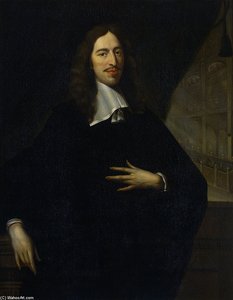
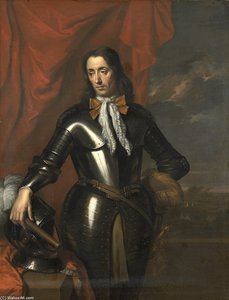
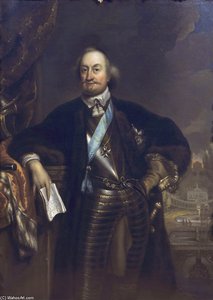
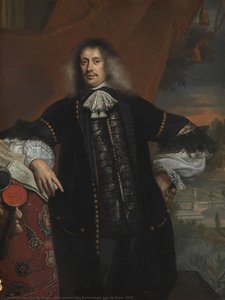
The trajectory of de Baen’s career was intimately tied to the shifting political tides of Europe. Following the Restoration of 1660, while he had opportunities to accompany the English court back to London, he opted instead for a settled life in The Hague. It was here that his reputation reached its zenith. His artistic output spanned diverse genres, yet portraits remained his dominating oeuvre, reflecting the multifaceted interests of the period. He gained renown for his depictions of influential figures such as Cornelis de Witt and Johan de Witt, brothers who held positions of considerable power within Dutch governance. In these works, he captured their likenesses with remarkable accuracy, conveying a sense of solemn grandeur that immortalized their political weight.
Beyond the Dutch political elite, de Baen’s brush touched the very pinnacle of European royalty. He famously captured the likeness of King William III of England, cementing his reputation as a portraitist capable of elevating subjects to iconic status. His ability to blend meticulous realism with a flattering aesthetic made him one of the most popular portrait painters between 1665 and 1700. While history often remembers the heavy shadows of Rembrandt or the bravado of Frans Hals, de Baen offered a different, more polished vision—one of light, refinement, and the sophisticated grace of the Hague's upper echelons.
Technique, Personal Life, and Final Years
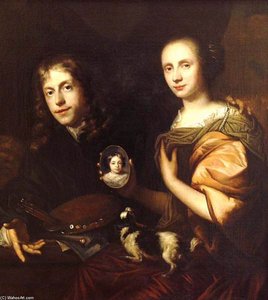
Beyond meticulous realism, de Baen’s technique distinguished him through its ability to satisfy the era's craving for prestige. He mastered the art of presenting textures—the sheen of silk, the weight of velvet, and the intricate details of lace—in a way that spoke directly to the wealth of his sitters. His work was not merely about documentation but about the creation of an idealized persona. This skill is perhaps most intimately seen in his 1674 Self-portrait with his wife, Maria de Kinderen, where he displays both his painterly attributes and a tender connection to his family, reminding us that behind the grand portraits of kings lay a man deeply rooted in his own domestic reality.
De Baen’s life was one of both professional triumph and personal continuity. He married Maria de Kinderen in 1665, and together they raised a large family, including at least eight children, one of whom, Jacobus, followed in his father's footsteps to become a painter himself. This cycle of artistic lineage is a testament to the enduring nature of the Dutch tradition. Jan de Baen passed away in The Hague on March 8, 1702, leaving behind a body of work that remains a vital window into the splendor, the politics, and the refined elegance of the Dutch Golden Age.
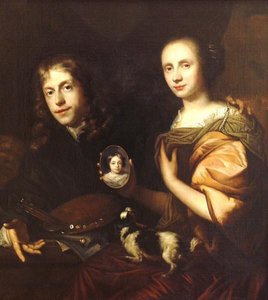
Jan de Baen
1633 - 1702 , Netherlands
Quick Facts
- Artistic Movement Or Style: Dutch Golden Age painting
- Artists Who Influenced This Artist: Jacob Adriaensz Backer
- Date Of Birth: February 20, 1633
- Date Of Death: 1702
- Full Name: Jan de Baen
- Nationality: Dutch
- Notable Artworks:
- The Corpses Of The De Witt Brothers
- Portrait Of Johan De Witt
- Place Of Birth: Haarlem, Netherlands
Related Articles

Demandes Commerciales
APS ofrece reproducciones de bellas artes y encargos personalizados desde 2004. Confían en nosotros corporaciones, hoteles y coleccionistas selectos para obras de arte de calidad museística, servicio discreto y soluciones artísticas completas. ¡Póngase en contacto con nosotros para obtener un presupuesto personalizado!

Dutch Masters: 10 Golden Age Paintings That Still Inspire |
Journey into the Dutch Golden Age! Explore 10 iconic paintings by Rembrandt, Vermeer & Hals. Discover the stories behind these Baroque masterpieces and find museum-quality art reproductions to elevate your home decor on .
Pieter de Hooch: Illuminating Dutch Domestic Life & Golden Age Charm
Explore the captivating world of Pieter de Hooch, a master of Dutch Golden Age painting. Discover his innovative use of light, intimate domestic scenes, and lasting influence on art history. Learn more at ArtsDot.
Jan Steen: A Master of Dutch Genre Painting & the Golden Age
Explore the life & art of Jan Steen, a leading Dutch Golden Age painter renowned for his humorous genre scenes & insightful social commentary. Discover his techniques, legacy, and collecting tips.
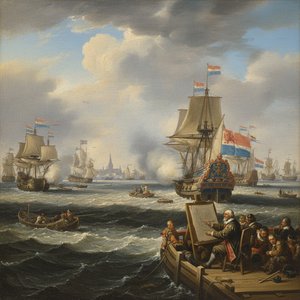
Willem van de Velde the Elder: Master of Maritime Painting & Chronicler of the Dutch Golden Age
Discover the captivating maritime paintings of Willem van de Velde the Elder, a master chronicler of the Dutch Golden Age. Explore his unparalleled realism and lasting influence on naval art history.