- Home

- Oil Painting Reproduction
- jan davidszoon de heem or johannes de heem or johannes van antwerpen or jan davidsz de hem
 Preview
 Send
Send Share
Share
 Details

 Download
 Similars
 X-Ray
X-Ray Diaporama
Still Life


 Read More
Hand Made Oil Reproduction
Hand-painted oil on canvas in your size and frame, made to order by our artists. ( Buy Print Buy Image)




P118B $10

P118H $10

P118W $10

P438Z $10

P508JH $12

P508YH $12

P805H $10

P805Z $10

P919BZ $10

P919G $10

P919XJ $10

P959ZH $10

P968JZ $12

W106C $8

W218G $10

W218JH $8

W218Y $10

W307PJ $10

W316G $10

W316PJ $8

W316Y $10

W398PJ $8

W4111J $10

W500HY $15

W500JH $15

W692G $12

W849H $8

W940BG $15

W953PJ $8




Pick from our preset sizes that match the artwork's original proportions.

You may enter your own dimensions to fit a specific frame or space. If your selected size does not match the original image's proportions, we will either crop the artwork or extend the painting with additional hand-painted elements. A digital mockup will be sent for your approval before production begins.
Please note that the on-screen preview does not reflect the actual cropping or extension. Only the mockup will accurately show the final composition.
While custom sizes are available, we recommend selecting a dimension from the predefined list to preserve the original proportions.
After order, ArtsDot.com team will email client for instructions and provide a mockup preview
Worldwide Delivery () in 3/4 weeks instead of standard 5 weeks. (16 August). No compromise on quality.

Free Worldwide Express Shipping

High-Quality Linen Canvas

Full Shipping Insurance

Customs Tax Refund Guarantee

True Color Matching Guarantee

60-Day Return Policy (Defects Only)

100% Money-Back Guarantee

Bulk Discount Offer
 Glass option is only available in size under 110 CM

Still Life
Reproduction Medium
Reproduction Size
-


Total Price
$ 263
Artwork Description
A Symphony of Opulence: Jan de Heem’s Still Life
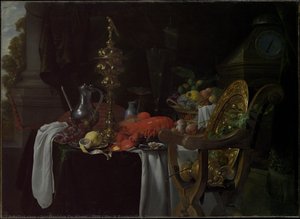
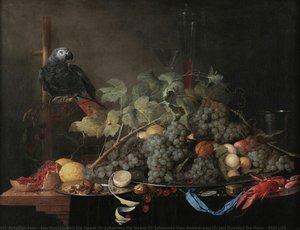
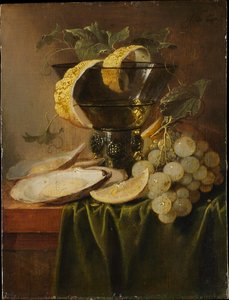
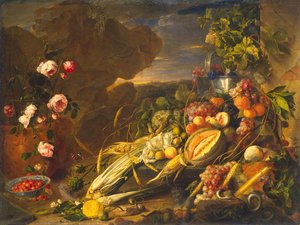
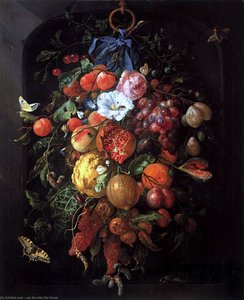
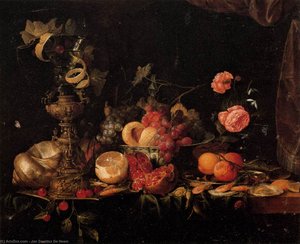
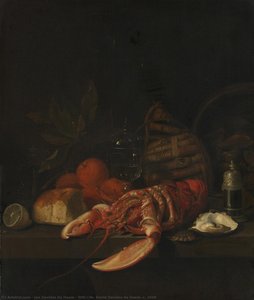
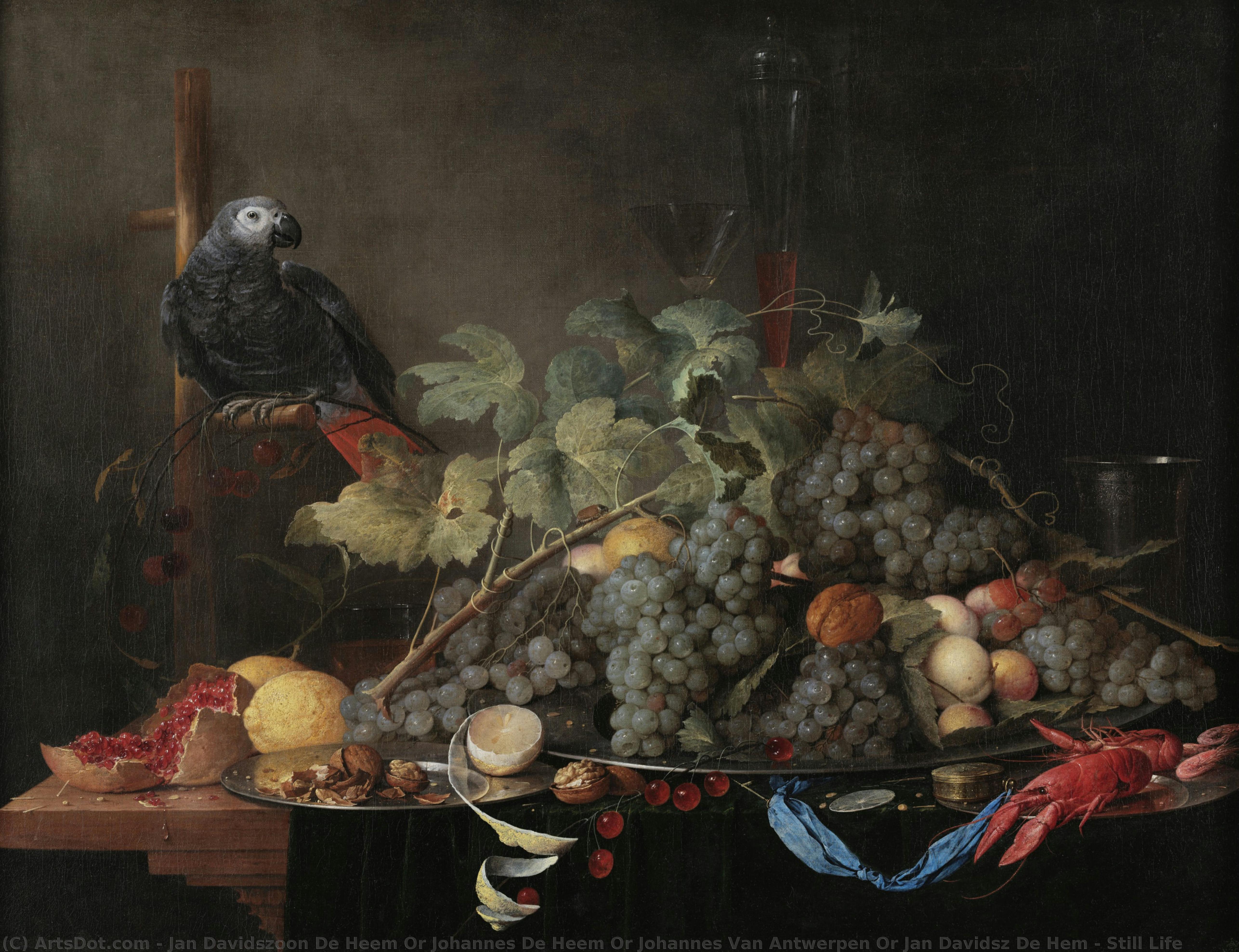
This captivating still life, dating back to 1640, offers an intimate glimpse into the world of the Dutch Golden Age, masterfully rendered by the hand of Jan Davidszoon de Heem – a name synonymous with opulent detail and profound contemplation. More than just a depiction of fruit and objects, this painting is a carefully constructed visual poem, reflecting De Heem’s signature style: a harmonious blend of luxurious abundance and poignant vanitas themes. The scene unfolds on a table, dominated by a vibrant collection of fruits – plump oranges scattered with deliberate placement, a generous pile of grapes upon which a watchful bird perches, seemingly observing the viewer as much as its subjects. A simple chair anchors the composition in the background, subtly reminding us of the domestic setting from which this tableau originates.
The Master’s Technique: Light, Texture, and Detail
De Heem's technical prowess is immediately apparent. His meticulous attention to detail elevates this still life beyond a simple arrangement; it becomes a study in light, texture, and the illusion of three-dimensionality. Notice how he employs chiaroscuro – the dramatic contrast between light and shadow – to highlight the glistening surfaces of the fruit and the reflective sheen of the silver objects (though not explicitly visible here, the style suggests their presence). The artist’s brushwork is remarkably fine, capturing the delicate curves of the grapes, the rough texture of the oranges, and the subtle nuances of color. This painstaking approach, honed through years of training under his father and refined in Leiden, resulted in a realism that was both captivating and deeply symbolic.
Symbolism and the Vanitas Theme
The painting’s significance extends beyond its technical brilliance; it is steeped in symbolism, reflecting De Heem's embrace of the ‘vanitas’ – the contemplation of mortality. The bird, a recurring motif in his work, often represents fleeting beauty and the transience of life. The abundance of fruit, symbols of earthly pleasures, serves as a reminder of their impermanence. While not overtly dramatic, the arrangement subtly encourages reflection on the ephemeral nature of existence, a hallmark of De Heem’s artistic philosophy. The careful composition itself speaks to this theme – a frozen moment in time, highlighting the beauty and fragility of the natural world.
Historical Context and Artistic Influence
Created during the height of the Dutch Golden Age (1602-1702), this still life exemplifies the artistic trends of the period. The Dutch were renowned for their trade, wealth, and sophisticated tastes, reflected in the lavishness of their interiors and the subject matter of their art. De Heem’s work aligns with the prevailing style of Dutch Golden Age still lifes – characterized by meticulous detail, a focus on naturalism, and often imbued with symbolic meaning. His influence extended beyond his own time, shaping the course of still life painting for generations to come. This piece represents a pinnacle of his career, showcasing his mastery of light, color, and composition.
Related Artworks
Artist Biography
Jan Davidsz. de Heem: Master of Opulence and Vanitas
Born in Utrecht, Netherlands, in 1606, Jan Davidszoon de Heem – often simply known as Jan de Heem – emerged as one of the most celebrated still life painters of the Dutch Golden Age. His career spanned decades, weaving together influences from his early training with his father, David de Heem the Elder, and the broader artistic currents of Antwerp’s vibrant art scene. De Heem wasn't merely a painter; he was an orchestrator of visual feasts, meticulously arranging objects – fruits, flowers, silver, shells, and even symbolic vanitas elements – to create scenes brimming with luxurious detail and profound contemplation.
De Heem’s early life laid the foundation for his distinctive style. He began his artistic education under his father, absorbing the Elder's mastery of floral arrangements and a penchant for rich color palettes. This initial training was further refined in Leiden, where he studied with David Bailly, a prominent painter known for his meticulous depictions of everyday objects. However, it was his move to Antwerp in 1635 that truly shaped his artistic trajectory. Antwerp’s bustling art market and its proximity to the Flemish Baroque tradition exposed De Heem to a wider range of influences, including the work of Balthasar van der Ast, known for his elegant still lifes, and Frans Snyders, whose dramatic compositions featuring hunting scenes and exotic animals offered a contrasting yet equally compelling aesthetic.
The Development of a Unique Style
De Heem’s style evolved over time, reflecting both his technical skill and his growing artistic vision. Initially, his works mirrored the conventions of Leiden – carefully rendered objects arranged on dark cloths, often with a focus on breakfast scenes. However, as he settled in Antwerp, his paintings underwent a dramatic transformation. He began to favor lighter backgrounds, creating an atmosphere of luminous opulence that highlighted the textures and colors of his subjects. This shift is particularly evident in his “pronkstillevens” – elaborate still lifes characterized by their profusion of objects, intricate arrangements, and symbolic weight.
A key element of De Heem’s style was his masterful use of light and shadow. He employed a subtle yet effective chiaroscuro technique to create depth and volume, drawing the viewer's eye to specific details within the composition. His meticulous attention to detail extended beyond mere representation; he sought to capture the very essence of each object – the velvety texture of a peach, the iridescent sheen of a pearl, the delicate veins of a flower petal. Furthermore, De Heem’s compositions were rarely static. He frequently introduced elements of movement and dynamism, such as scattered feathers or rolling fruit, adding a sense of life and vitality to his paintings.
Symbolism and Vanitas
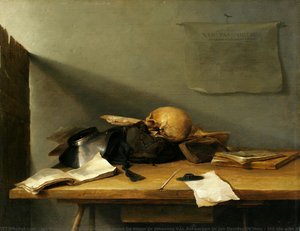
De Heem's still lifes are not simply decorative arrangements; they are often imbued with symbolic meaning. He skillfully integrated vanitas motifs – symbols representing the transience of earthly pleasures and the inevitability of death – into his compositions. These elements, such as skulls, decaying fruit, wilting flowers, and hourglasses, served as reminders of mortality and the fleeting nature of beauty and wealth. However, De Heem’s use of vanitas was not morbid or pessimistic. Rather, it functioned as a subtle commentary on the importance of appreciating the present moment and living a virtuous life.
Beyond the traditional vanitas symbols, De Heem frequently incorporated objects with specific allegorical meanings. A snake coiled around a flower might represent temptation, while a broken goblet could symbolize lost honor or fleeting joy. The inclusion of musical instruments – such as violins and lutes – often alluded to the pleasures of music and art, suggesting that these pursuits were worthy of contemplation but should not be pursued at the expense of spiritual values.
Major Works and Legacy
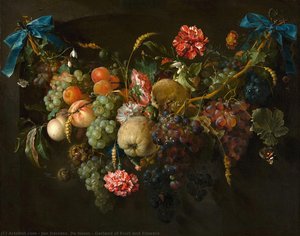
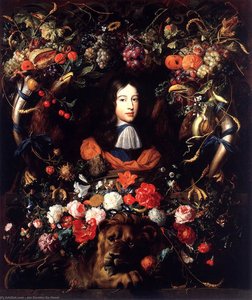
De Heem’s prolific output includes numerous masterpieces that are celebrated for their technical brilliance, opulent beauty, and profound symbolism. “Garland of Fruit and Flowers” (1637) exemplifies his mastery of color and composition, while “Still Life with Books and a Violin” (c. 1642) showcases his ability to integrate literary and musical references into his paintings. His portraits, particularly those featuring Prince William III surrounded by an abundance of flowers and fruits, demonstrate his versatility as a painter and his keen understanding of aristocratic taste.
Despite his considerable success, De Heem remained a relatively private individual. He continued to work throughout his life, producing hundreds of paintings that are now housed in major museums around the world. His legacy endures as one of the most important figures in Dutch and Flemish Baroque painting – a master of still life who transformed this genre into an art form of unparalleled beauty, complexity, and philosophical depth. His influence can be seen in the work of subsequent generations of painters, and his paintings continue to captivate viewers with their luminous colors, intricate details, and profound meditations on the human condition.
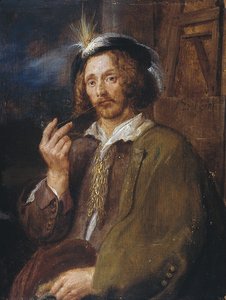
jan davidszoon de heem or johannes de heem or johannes van antwerpen or jan davidsz de hem
1606 - 1684 , Netherlands
Quick Facts
- Artistic Movement Or Style: Dutch Golden Age, Baroque
- Artists Or Movements Influenced By This Artist: ['Balthasar van der Ast']
- Artists Who Influenced This Artist: ['David de Heem']
- Date Of Birth: 17 April 1606
- Date Of Death: 26 April 1684
- Full Name: Jan Davidszoon de Heem
- Nationality: Dutch, Flemish
- Notable Artworks:
- Garland of Fruit & Flowers
- Still Life with Books
- Vanitas Still Lifes
- Place Of Birth: Utrecht, Netherlands
Related Articles

Dutch Masters: 10 Golden Age Paintings That Still Inspire |
Journey into the Dutch Golden Age! Explore 10 iconic paintings by Rembrandt, Vermeer & Hals. Discover the stories behind these Baroque masterpieces and find museum-quality art reproductions to elevate your home decor on .

Demandes Commerciales
APS ofrece reproducciones de bellas artes y encargos personalizados desde 2004. Confían en nosotros corporaciones, hoteles y coleccionistas selectos para obras de arte de calidad museística, servicio discreto y soluciones artísticas completas. ¡Póngase en contacto con nosotros para obtener un presupuesto personalizado!
Pieter de Hooch: Illuminating Dutch Domestic Life & Golden Age Charm
Explore the captivating world of Pieter de Hooch, a master of Dutch Golden Age painting. Discover his innovative use of light, intimate domestic scenes, and lasting influence on art history. Learn more at ArtsDot.

Golden Age Reflections: Dutch Baroque Painting & Cultural Innovation
Explore the Dutch Golden Age of painting! Discover key artists like Vermeer & ter Borch, their innovative techniques, and the rich cultural context behind these Baroque masterpieces. Learn about collecting & appreciating this iconic art period.
Jan Jansz Wijnants: A Study in Dutch Golden Age Still Life & Floral Transience
Explore the captivating world of Jan Wijnants and Dutch Golden Age still life painting. Discover symbolism, masterful techniques & lasting influence on floral art history. Learn more!