 Preview
 Send
Send Share
Share
 Details

 Download
 Similars
 X-Ray
X-Ray Diaporama
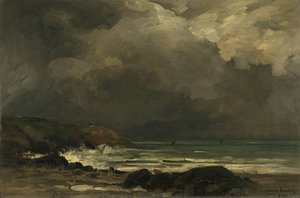
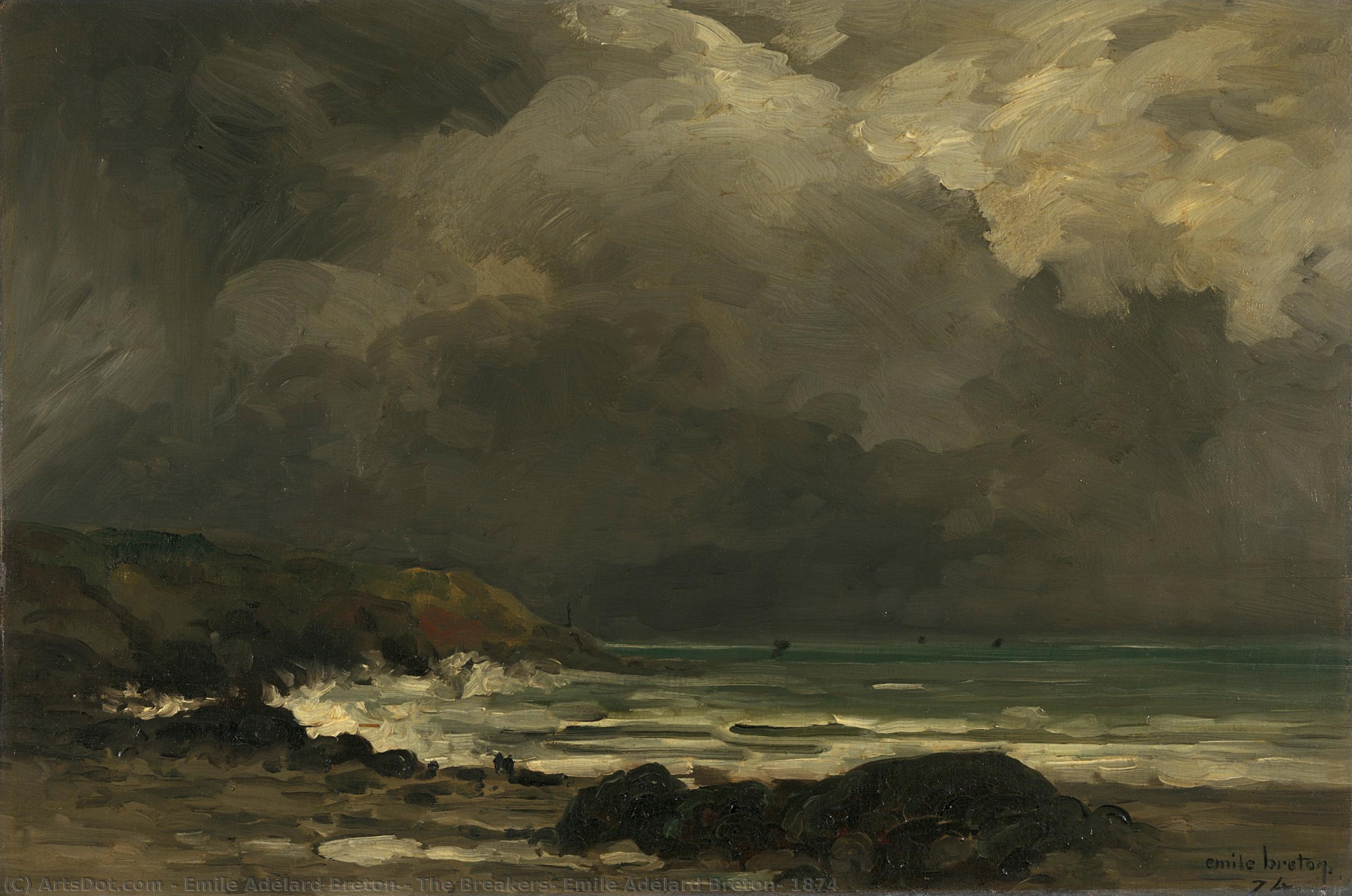
The Breakers, Emile Adélard Breton, 1874
 1874
1874 48.0 x 71.0 cm
 Read More
Hand Made Oil Reproduction
Hand-painted oil on canvas in your size and frame, made to order by our artists. ( Buy Print Buy Image)




































Pick from our preset sizes that match the artwork's original proportions.

You may enter your own dimensions to fit a specific frame or space. If your selected size does not match the original image's proportions, we will either crop the artwork or extend the painting with additional hand-painted elements. A digital mockup will be sent for your approval before production begins.
Please note that the on-screen preview does not reflect the actual cropping or extension. Only the mockup will accurately show the final composition.
While custom sizes are available, we recommend selecting a dimension from the predefined list to preserve the original proportions.
After order, ArtsDot.com team will email client for instructions and provide a mockup preview
Worldwide Delivery () in 3/4 weeks instead of standard 5 weeks. (21 August). No compromise on quality.

Free Worldwide Express Shipping

High-Quality Linen Canvas

Full Shipping Insurance

Customs Tax Refund Guarantee

True Color Matching Guarantee

60-Day Return Policy (Defects Only)

100% Money-Back Guarantee

Bulk Discount Offer
 Glass option is only available in size under 110 CM

The Breakers, Emile Adélard Breton, 1874
Reproduction Medium
Reproduction Size
-


Total Price
$ 263
Artwork Description
Related Artworks
Artist Biography
Émile Adélard Breton: Weaver of Nocturnal Landscapes
Émile Adélard Breton (1831-1902) stands as a quietly compelling figure in 19th-century French painting, renowned for his evocative nocturnal landscapes populated by solitary figures. Born in Courrières, a small mining town in northern France, Breton’s artistic journey was deeply intertwined with the rhythms of his environment and profoundly shaped by personal tragedy. Initially receiving instruction from his elder brother, Jules Breton – a more established artist known for his realistic depictions of rural life – Émile quickly developed a distinctive style that diverged significantly from his sibling's approach. He largely pursued self-education, cultivating an intensely personal vision rooted in observation and emotional resonance rather than strict academic training.
Breton’s artistic development unfolded against the backdrop of significant social and political upheaval. The Franco-Prussian War (1870) profoundly impacted his life, leading him to serve as a commander in Pas-de-Calais. This experience, marked by both bravery and loss, undoubtedly contributed to the somber mood that permeates much of his work. Following the war, he assumed the role of mayor of Courrières, continuing a family tradition of civic engagement. However, it was the devastating loss of his son, Louis, in 1891, followed shortly by the death of his wife, that proved to be the most transformative event in his life. This double bereavement led him to abandon painting altogether, selling his entire studio and withdrawing from public life – a decision that effectively silenced one of France’s most intriguing artistic voices for nearly a decade.
The Language of Dusk: Style and Technique
Breton's paintings are immediately recognizable by their atmospheric intensity and melancholic beauty. He specialized in nocturnal landscapes, often depicting scenes bathed in the muted light of twilight or moonlight. His compositions frequently feature vast, brooding skies—streaked with clouds, swirling mists, or the pale glow of the moon—and solitary figures – farmers, shepherds, or travelers – rendered as small, almost spectral forms within the immense scale of nature. Unlike the detailed realism favored by Jules Breton, Émile’s approach was characterized by a deliberate simplification and abstraction. He employed loose brushstrokes and a restricted palette of predominantly dark blues, greys, browns, and ochres to create a sense of depth and mystery.
A key element of his technique involved the skillful manipulation of light and shadow. Breton wasn’t simply depicting illumination; he was conveying mood and emotion through the interplay of darkness and luminosity. The “light” in his paintings often symbolized not just physical radiance but also fragility, transience, and the lingering presence of memory. His use of atmospheric perspective—creating a sense of distance through subtle variations in color and tone—further enhanced the feeling of vastness and solitude within his landscapes.
Symbolism and Influences
While Breton’s work predates the formal emergence of the Symbolist movement, it shares many affinities with its principles. His emphasis on subjective experience, emotional intensity, and the exploration of psychological states aligns closely with the Symbolists' concerns. The solitary figures in his landscapes often seem to embody a sense of isolation, longing, or quiet contemplation—themes that resonate deeply within the Symbolist tradition. Breton’s work also reveals an influence from Romanticism, particularly the emphasis on nature as a source of sublime beauty and spiritual experience.
Interestingly, Breton's artistic sensibilities were recognized by Vincent van Gogh, who admired his ability to evoke “a new effect” in landscape painting—one that moved beyond mere representation and ventured into the realm of emotional expression. Van Gogh’s praise highlights a crucial connection between these two artists: both sought to capture the essence of nature through a deeply personal and subjective lens.
Legacy and Recognition
Despite his relative obscurity during much of his career, Émile Adélard Breton's work has gained increasing recognition in recent decades. His evocative landscapes continue to captivate viewers with their haunting beauty and profound emotional depth. He was awarded medals at the Salon in 1866, 1867, and 1868, as well as a first-class medal at the Exposition Universelle of 1878, solidifying his position as a respected artist within the Parisian art world. Following his period of artistic inactivity, he resumed painting in his later years, producing works such as *Le Dégel* (The Thaw) and *Paysage de nuit* (Night Landscape), which further explored the themes that had defined his earlier work.
Today, a street in Courrières bears his name—a testament to his enduring connection with his birthplace. Breton’s legacy extends beyond his individual paintings; he represents a pivotal moment in French art history – a transition from academic realism to a more subjective and emotionally resonant approach to landscape painting. His work continues to inspire artists and viewers alike, reminding us of the power of nature to evoke profound feelings and capture the fleeting beauty of the human experience.
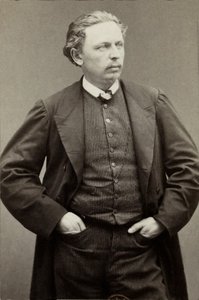
émile adélard breton
1831 - 1902 , France
Quick Facts
- Artistic Movement Or Style: Nocturnal landscapes
- Artists Or Movements Influenced By This Artist: ['Symbolism']
- Artists Who Influenced This Artist: ['Jules Breton']
- Date Of Birth: March 8, 1831
- Date Of Death: November 24, 1902
- Full Name: Émile Adélard Breton
- Nationality: French
- Notable Artworks:
- Le Dégel
- Paysage de nuit
- Le Crépuscule sous la neige
- Place Of Birth: Courrières, France