 Preview
 Send
Send Share
Share
 Details

 Download
 Similars
 X-Ray
X-Ray Diaporama
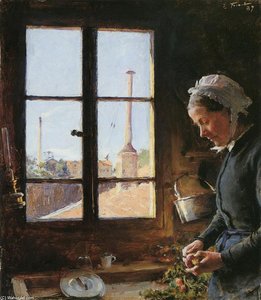
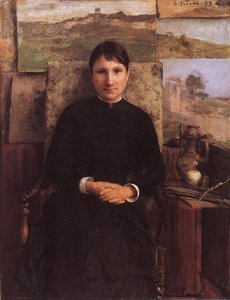
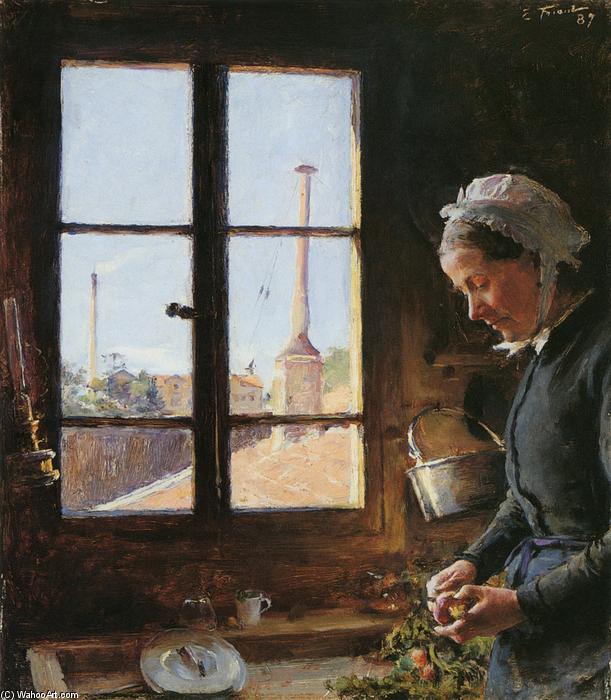
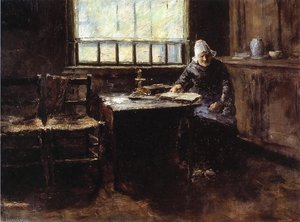
Portrait de sa mère épluchant un navet, devant une fenêtre


 Read More
Hand Made Oil Reproduction
Hand-painted oil on canvas in your size and frame, made to order by our artists. ( Buy Print Buy Image)




P118B $10

P118H $10

P118W $10

P438Z $10

P508JH $12

P508YH $12

P805H $10

P805Z $10

P919BZ $10

P919G $10

P919XJ $10

P959ZH $10

P968JZ $12

W106C $8

W218G $10

W218JH $8

W218Y $10

W307PJ $10

W316G $10

W316PJ $8

W316Y $10

W398PJ $8

W4111J $10

W500HY $15

W500JH $15

W692G $12

W849H $8

W940BG $15

W953PJ $8




Pick from our preset sizes that match the artwork's original proportions.

You may enter your own dimensions to fit a specific frame or space. If your selected size does not match the original image's proportions, we will either crop the artwork or extend the painting with additional hand-painted elements. A digital mockup will be sent for your approval before production begins.
Please note that the on-screen preview does not reflect the actual cropping or extension. Only the mockup will accurately show the final composition.
While custom sizes are available, we recommend selecting a dimension from the predefined list to preserve the original proportions.
After order, ArtsDot.com team will email client for instructions and provide a mockup preview
Worldwide Delivery () in 3/4 weeks instead of standard 5 weeks. (17 August). No compromise on quality.

Free Worldwide Express Shipping

High-Quality Linen Canvas

Full Shipping Insurance

Customs Tax Refund Guarantee

True Color Matching Guarantee

60-Day Return Policy (Defects Only)

100% Money-Back Guarantee

Bulk Discount Offer
 Glass option is only available in size under 110 CM

Portrait de sa mère épluchant un navet, devant une fenêtre
Reproduction Medium
Reproduction Size
-


Total Price
$ 263
Artwork Description
Portrait de sa mère épluchant un navet devant une fenêtre : Une Œuvre Réaliste au Cœur de Nancy
Émile Friant, né à Dieuze en 1863, est une figure marquante ayant tissé les liens entre le réalisme du XIXe siècle et les mouvements artistiques émergents du début du XXe siècle. Son parcours vitifié par les bouleversements politiques et sociaux de son temps témoigne d'une sensibilité profondément ancrée dans la réalité française qu’il chercha à traduire avec une précision remarquable dans ses œuvres. Initialement orienté vers une carrière scientifique, Friant fut rapidement saisi par une passion pour la peinture, nourrie d’abord par des professeurs privés puis sous l’œil attentif de Louis-Théodore Devilly à Nancy où Devilly lui inculqua l'importance de l'observation directe et du souci du détail – principes fondamentaux qui définirent son style caractéristique : un réalisme imprégné d'une profondeur émotionnelle et d’une richesse psychologique. Cette approche novatrice lui permit de capturer avec une puissance inégalée les nuances subtiles de la vie quotidienne et des états d’âme humains.- Sujet : Le tableau représente une femme debout devant une fenêtre, tenant dans sa main un panier rempli de fruits qu'elle épluche ou cueille avec soin. Cette scène se déroule à l’extérieur, où deux pommes sont disposées au pied de la fenêtre.
- Style : Friant pratique le réalisme, une esthétique privilégiée pour son époque qui vise à représenter les objets et les personnages avec une fidélité absolue aux faits observés. Cette méthode permet d'éviter toute idéalisation excessive et offre une interprétation sincère du monde réel.
- Technique : L’œuvre est réalisée à l’huile sur panneau, une technique classique qui assure une grande stabilité et une luminosité exceptionnelle. Friant maîtrisait parfaitement les effets de lumière et d’ombre pour donner au tableau une atmosphère palpable et renforcer l'expressivité des personnages.
- Contexte Historique : Créé en 1887, le portrait reflète les préoccupations esthétiques et intellectuelles de la Belle Époque, une période marquée par une certaine nostalgie du passé tout en embrassant les nouvelles idées scientifiques et philosophiques qui bouleversaient les certitudes établies.
- Symbolisme : Le navet épluché peut être interprété comme symbole de la simplicité et de l’humilité, valeurs essentielles à la philosophie réaliste que Friant défendait avec conviction. De même, la fenêtre offre une ouverture vers l'extérieur, représentant la liberté et la possibilité d’embrasser les différentes perspectives de la vie.
Les Détails Observés : Une Réflexion sur la Lumière et la Couleur
Friant accordait une attention particulière aux effets lumineux et aux couleurs pour donner au tableau une atmosphère riche et complexe. Il utilisait une palette limitée mais soigneusement choisie afin de reproduire avec précision les nuances naturelles du paysage environnant et d’exprimer les émotions ressenties par la femme représentée. Ses coups de pinceau étaient précis et maîtrisés, permettant lui d'obtenir des textures variées et une profondeur chromatique remarquable. Cette maîtrise technique témoigne de son talent artistique et de sa connaissance approfondie des principes fondamentaux de la peinture à l’huile.Un Tableau au Musée des Beaux-Arts de Nancy : Une Préservation Précieuse
Le portrait de sa mère épluchant un navet devant une fenêtre est aujourd'hui conservé au Musée des Beaux-Arts de Nancy, où il constitue un exemple incontournable du réalisme français de la fin du XIXe siècle. Cette institution artistique s’est engagée à assurer la pérennité de l’œuvre grâce à une restauration minutieuse et à une présentation adaptée aux exigences du temps moderne. Une visite au musée permet ainsi de découvrir les œuvres d'autres artistes importants de cette époque et de comprendre les enjeux esthétiques et intellectuels qui animaient la société française au tournant du siècle.L’Impact Émotionnel : Une Capture Authentique de l’Humanité
Au-delà de sa richesse technique et de son contexte historique, le tableau possède une valeur émotionnelle considérable. Il évoque avec sensibilité les préoccupations quotidiennes de la femme représentée et offre un aperçu fascinant des états d'âme humains. Cette capacité à transmettre une véritable profondeur psychologique témoigne du génie artistique de Friant et confirme sa place parmi les grands peintres réalistes de son temps. Une œuvre qui continue de susciter l’intérêt des amateurs d’art et des chercheurs en histoire de l’art contemporain.Related Artworks
Artist Biography
A Life Rooted in Realism: The World of Émile Friant
Émile Friant, born in the small commune of Dieuze in 1863, emerged as a pivotal figure bridging the gap between 19th-century realism and the burgeoning artistic movements of the early 20th century. His life story is one deeply intertwined with the political and social upheavals of his time. The Franco-Prussian War cast a long shadow over his childhood; the family’s flight to Nancy following the annexation of Dieuze by Prussia instilled in him a sense of displacement that perhaps fueled his dedication to capturing the essence of French life and identity within his art. Though initially steered towards a scientific path, Friant's innate artistic talent quickly asserted itself, nurtured first by private tutors and then under the guidance of Louis-Théodore Devilly in Nancy. Devilly’s emphasis on direct observation and meticulous detail laid the foundation for Friant’s signature style—a realism imbued with emotional depth and psychological insight. Even a youthful self-portrait, “Le Petit Friant,” at just fifteen years old, garnered attention and secured him permission to pursue formal studies in Paris, marking the beginning of his ascent within the art world.Parisian Training and Early Salon Successes
The Parisian artistic landscape proved both stimulating and disillusioning for the young Friant. Studying under Alexandre Cabanel, a celebrated academic painter, exposed him to established techniques but ultimately left him feeling constrained by the rigid atelier system. While he diligently practiced oil sketches of historical works, Friant yearned for a more personal and authentic approach. This desire led him back to Nancy, where he continued to hone his skills while exhibiting regularly at both Parisian and local salons. His early Salon submissions, including “The Prodigal Son” and “Studio Interior,” demonstrated a burgeoning talent for narrative painting and an ability to capture the nuances of human emotion. A second-place finish in the prestigious Prix de Rome competition further solidified his reputation, followed by third and then second-class honors at subsequent Salon presentations. Crucially, Friant cultivated lasting friendships with actors Ernest and Benoit Coquelin, which led to a series of compelling portrait commissions that would become a hallmark of his oeuvre. A grant from the 1886 Salon enabled travel to the Netherlands, where he encountered the works of Dutch Masters—an experience that profoundly influenced his use of light and shadow and his attention to everyday life.Mature Works: Portraits, Genre Scenes, and North African Influences
Friant’s mature work is characterized by evocative portraits and genre scenes depicting the lives of ordinary people in Nancy and beyond. He possessed an extraordinary ability to capture not just physical likeness but also the inner character and psychological state of his subjects. This talent reached its zenith with “La Toussaint” (All Saints' Day), a poignant depiction of a family mourning at a graveside, which earned him a Gold Medal at the 1889 Universal Exhibition—a testament to his growing acclaim. Beyond portraiture, Friant found inspiration in North Africa, making multiple journeys to Algeria and Tunisia. These travels infused his landscapes with a vibrant palette and a sense of exoticism, while also providing compelling subjects for portraits that reflected the cultural diversity of the region. In 1923, he was appointed professor of painting at the École des Beaux-Arts in Paris, a position that acknowledged his established reputation and influence within the art world. His contributions were further recognized with promotion to Commander in the Legion of Honor and membership in the Institut de France—the highest honors bestowed upon artists in France.A Legacy of Realism and Photographic Precision
Émile Friant’s artistic legacy rests firmly on his commitment to realism, a style he embraced while simultaneously transcending its limitations. While initially shaped by Devilly's emphasis on direct observation and Cabanel’s academic techniques, Friant developed a distinctive voice that moved beyond strict adherence to either approach. He was not merely interested in replicating reality; rather, he sought to imbue his paintings with emotional resonance and psychological depth. His innovative use of photography as a preparatory tool—a practice increasingly common among artists of the time—demonstrates an engagement with emerging technologies and a desire for accuracy in representation. He represents a crucial link between 19th-century naturalism and the artistic innovations of the early 20th century, contributing to the evolution of French painting while remaining true to his core principles. Some consider him one of the last great naturalists, preserving a tradition of meticulous observation and emotional honesty in an era of rapid change. His tragic death in 1932—falling from a height in Paris—brought an abrupt end to a remarkable career, but his paintings continue to captivate audiences with their beauty, sensitivity, and enduring relevance. Friant’s work serves as a powerful reminder of the importance of capturing the human experience with both precision and compassion.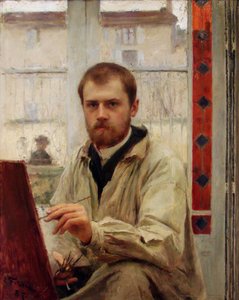
Émile Friant
1863 - 1932 , France
Quick Facts
- Artistic Movement Or Style: Realism
- Artists Or Movements Influenced By This Artist: Early 20th century art
- Artists Who Influenced This Artist:
- Devilly
- Cabanel
- Date Of Birth: April 16, 1863
- Date Of Death: June 9, 1932
- Full Name: Émile Friant
- Nationality: French
- Notable Artworks:
- La Toussaint
- Self-portrait
- The Lovers
- Place Of Birth: Dijon, France