 Preview
 Send
Send Share
Share
 Details

 Download
 Similars
 X-Ray
X-Ray Diaporama
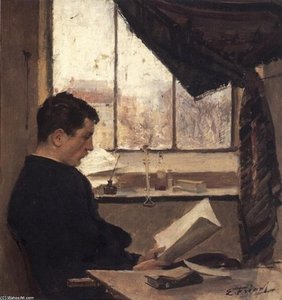
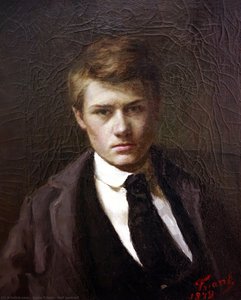
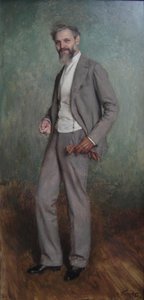
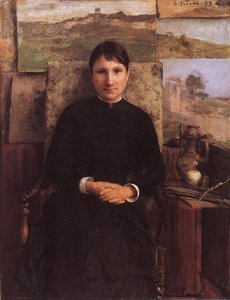
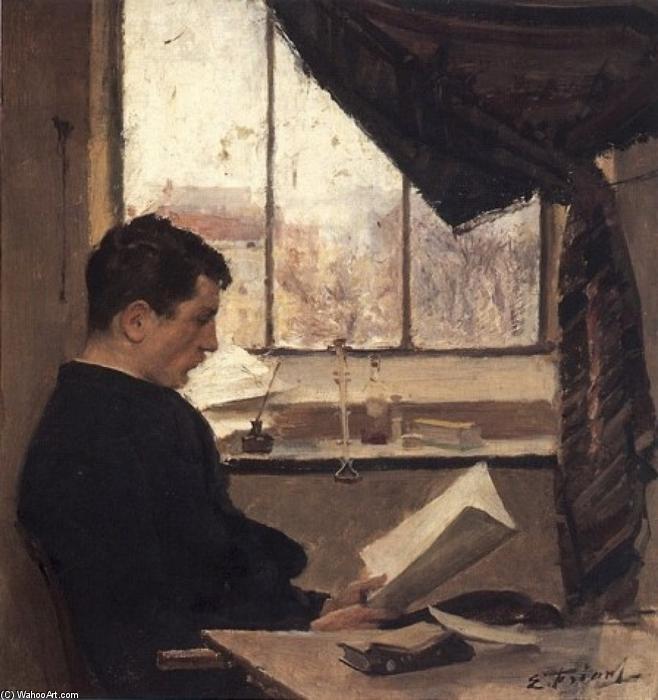
A Student (also known as Self-portrait)


 Read More
Hand Made Oil Reproduction
Hand-painted oil on canvas in your size and frame, made to order by our artists. ( Buy Print Buy Image)




P118B $10

P118H $10

P118W $10

P438Z $10

P508JH $12

P508YH $12

P805H $10

P805Z $10

P919BZ $10

P919G $10

P919XJ $10

P959ZH $10

P968JZ $12

W106C $8

W218G $10

W218JH $8

W218Y $10

W307PJ $10

W316G $10

W316PJ $8

W316Y $10

W398PJ $8

W4111J $10

W500HY $15

W500JH $15

W692G $12

W849H $8

W940BG $15

W953PJ $8




Pick from our preset sizes that match the artwork's original proportions.

You may enter your own dimensions to fit a specific frame or space. If your selected size does not match the original image's proportions, we will either crop the artwork or extend the painting with additional hand-painted elements. A digital mockup will be sent for your approval before production begins.
Please note that the on-screen preview does not reflect the actual cropping or extension. Only the mockup will accurately show the final composition.
While custom sizes are available, we recommend selecting a dimension from the predefined list to preserve the original proportions.
After order, ArtsDot.com team will email client for instructions and provide a mockup preview
Worldwide Delivery () in 3/4 weeks instead of standard 5 weeks. (16 August). No compromise on quality.

Free Worldwide Express Shipping

High-Quality Linen Canvas

Full Shipping Insurance

Customs Tax Refund Guarantee

True Color Matching Guarantee

60-Day Return Policy (Defects Only)

100% Money-Back Guarantee

Bulk Discount Offer
 Glass option is only available in size under 110 CM

A Student (also known as Self-portrait)
Reproduction Medium
Reproduction Size
-


Total Price
$ 263
Artwork Description
Émile Friant’s “A Student”: A Window into Victorian Introspection
Émile Friant's "A Student," painted in 1885, is more than just a portrait; it’s a poignant glimpse into the quiet contemplation of a young man grappling with his studies and perhaps, with something deeper within himself. This oil painting, currently residing at the Musée des Beaux-Arts in Nancy, France, offers a remarkably intimate portrayal of a figure lost in thought, rendered with Friant's signature blend of realism and subtle emotional depth. The scene unfolds within a modestly furnished room, bathed in the warm, diffused light that suggests an afternoon study session – a commonplace yet profoundly evocative setting for capturing the essence of intellectual life.
Friant’s masterful technique is immediately apparent. He eschews dramatic poses or theatrical gestures, instead focusing on the simple act of reading. The young man, identified as “A Student,” sits at a wooden desk, his head bowed slightly over an open book. His posture conveys a sense of absorption, almost detachment from the immediate surroundings. Notice the meticulous detail with which Friant has depicted the textures of the clothing – the worn fabric of the jacket, the subtle folds of the trousers – and the aged wood of the desk. These small details contribute to the painting’s overall feeling of authenticity and immediacy. The artist's use of light is particularly noteworthy; it doesn’t illuminate the entire scene uniformly but rather creates pockets of brightness that draw attention to key elements, such as the book in the student’s hands and the window behind him.
The Realist Vision: Contextualizing Friant’s Style
Émile Friant emerged as a significant figure within the realist movement during the late 19th century. Influenced by artists like Gustave Courbet, he sought to depict everyday life and human experiences with honesty and directness, eschewing idealized representations in favor of portraying subjects as they truly were. “A Student” exemplifies this approach; it’s not a romanticized depiction of learning but rather a realistic portrayal of a young man engaged in the mundane activity of studying. This commitment to realism was deeply rooted in Friant's personal experiences – his childhood marked by displacement and hardship following the Franco-Prussian War – which instilled within him a desire to capture the essence of French identity and the realities of its people.
The painting’s creation coincided with a period of significant social and political change in France. The Second Empire was crumbling, giving way to the Third Republic, and there was a growing sense of uncertainty and anxiety about the future. Friant's work reflects this atmosphere of introspection and questioning, as he explores themes of identity, education, and the search for meaning in a rapidly changing world. His focus on the individual’s inner life—a hallmark of realism—resonates powerfully with the anxieties and uncertainties of the era.
Symbolism and Emotional Resonance
Beyond its straightforward depiction of a student reading, “A Student” is rich in subtle symbolism. The open book represents knowledge, but also perhaps the burden of learning and the challenges it presents. The window behind the figure offers a glimpse of the outside world—a world that remains largely unseen by the student, absorbed as he is in his studies. This creates a sense of isolation and detachment, suggesting that the pursuit of knowledge can sometimes come at the expense of connection with others.
The painting’s emotional impact lies in its quiet intensity. There's no overt drama or excitement—only a profound sense of stillness and contemplation. The student’s expression is unreadable, inviting viewers to project their own thoughts and feelings onto the scene. It’s a portrait that speaks not just to the eye but also to the heart, prompting reflection on the nature of learning, self-discovery, and the human condition. The muted color palette further enhances this sense of introspection, creating an atmosphere of subdued seriousness.
Reproductions: Bringing Friant's Vision to Life
For those seeking a tangible connection to this remarkable artwork, high-quality oil painting reproductions are now available through platforms like ArtsDot.com. These meticulously crafted reproductions faithfully recreate Friant’s original techniques and materials, ensuring that the essence of his vision is preserved with exceptional detail and vibrancy. The process mimics the artist's own methods, utilizing traditional oil paints on canvas to achieve a remarkably authentic result.
Whether displayed in a study, a library, or a personal sanctuary, a reproduction of “A Student” offers a beautiful reminder of the enduring power of art to capture the complexities of human experience. Consider pairing it with works by Claude Monet and Wassily Kandinsky – artists who similarly explored themes of light, color, and emotion – for a cohesive and inspiring collection. Explore further details about Realism and its notable artists on https://en.wikipedia.org/wiki/Realism_(arts).
Related Artworks

Artist Biography
A Life Rooted in Realism: The World of Émile Friant
Émile Friant, born in the small commune of Dieuze in 1863, emerged as a pivotal figure bridging the gap between 19th-century realism and the burgeoning artistic movements of the early 20th century. His life story is one deeply intertwined with the political and social upheavals of his time. The Franco-Prussian War cast a long shadow over his childhood; the family’s flight to Nancy following the annexation of Dieuze by Prussia instilled in him a sense of displacement that perhaps fueled his dedication to capturing the essence of French life and identity within his art. Though initially steered towards a scientific path, Friant's innate artistic talent quickly asserted itself, nurtured first by private tutors and then under the guidance of Louis-Théodore Devilly in Nancy. Devilly’s emphasis on direct observation and meticulous detail laid the foundation for Friant’s signature style—a realism imbued with emotional depth and psychological insight. Even a youthful self-portrait, “Le Petit Friant,” at just fifteen years old, garnered attention and secured him permission to pursue formal studies in Paris, marking the beginning of his ascent within the art world.Parisian Training and Early Salon Successes
The Parisian artistic landscape proved both stimulating and disillusioning for the young Friant. Studying under Alexandre Cabanel, a celebrated academic painter, exposed him to established techniques but ultimately left him feeling constrained by the rigid atelier system. While he diligently practiced oil sketches of historical works, Friant yearned for a more personal and authentic approach. This desire led him back to Nancy, where he continued to hone his skills while exhibiting regularly at both Parisian and local salons. His early Salon submissions, including “The Prodigal Son” and “Studio Interior,” demonstrated a burgeoning talent for narrative painting and an ability to capture the nuances of human emotion. A second-place finish in the prestigious Prix de Rome competition further solidified his reputation, followed by third and then second-class honors at subsequent Salon presentations. Crucially, Friant cultivated lasting friendships with actors Ernest and Benoit Coquelin, which led to a series of compelling portrait commissions that would become a hallmark of his oeuvre. A grant from the 1886 Salon enabled travel to the Netherlands, where he encountered the works of Dutch Masters—an experience that profoundly influenced his use of light and shadow and his attention to everyday life.Mature Works: Portraits, Genre Scenes, and North African Influences
Friant’s mature work is characterized by evocative portraits and genre scenes depicting the lives of ordinary people in Nancy and beyond. He possessed an extraordinary ability to capture not just physical likeness but also the inner character and psychological state of his subjects. This talent reached its zenith with “La Toussaint” (All Saints' Day), a poignant depiction of a family mourning at a graveside, which earned him a Gold Medal at the 1889 Universal Exhibition—a testament to his growing acclaim. Beyond portraiture, Friant found inspiration in North Africa, making multiple journeys to Algeria and Tunisia. These travels infused his landscapes with a vibrant palette and a sense of exoticism, while also providing compelling subjects for portraits that reflected the cultural diversity of the region. In 1923, he was appointed professor of painting at the École des Beaux-Arts in Paris, a position that acknowledged his established reputation and influence within the art world. His contributions were further recognized with promotion to Commander in the Legion of Honor and membership in the Institut de France—the highest honors bestowed upon artists in France.A Legacy of Realism and Photographic Precision
Émile Friant’s artistic legacy rests firmly on his commitment to realism, a style he embraced while simultaneously transcending its limitations. While initially shaped by Devilly's emphasis on direct observation and Cabanel’s academic techniques, Friant developed a distinctive voice that moved beyond strict adherence to either approach. He was not merely interested in replicating reality; rather, he sought to imbue his paintings with emotional resonance and psychological depth. His innovative use of photography as a preparatory tool—a practice increasingly common among artists of the time—demonstrates an engagement with emerging technologies and a desire for accuracy in representation. He represents a crucial link between 19th-century naturalism and the artistic innovations of the early 20th century, contributing to the evolution of French painting while remaining true to his core principles. Some consider him one of the last great naturalists, preserving a tradition of meticulous observation and emotional honesty in an era of rapid change. His tragic death in 1932—falling from a height in Paris—brought an abrupt end to a remarkable career, but his paintings continue to captivate audiences with their beauty, sensitivity, and enduring relevance. Friant’s work serves as a powerful reminder of the importance of capturing the human experience with both precision and compassion.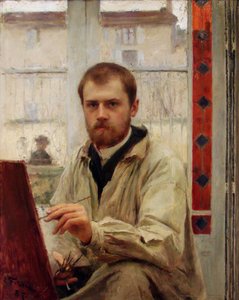
Émile Friant
1863 - 1932 , France
Quick Facts
- Artistic Movement Or Style: Realism
- Artists Or Movements Influenced By This Artist: Early 20th century art
- Artists Who Influenced This Artist:
- Devilly
- Cabanel
- Date Of Birth: April 16, 1863
- Date Of Death: June 9, 1932
- Full Name: Émile Friant
- Nationality: French
- Notable Artworks:
- La Toussaint
- Self-portrait
- The Lovers
- Place Of Birth: Dijon, France
Related Articles
Romantic Realism's Finest: 10 Masterpieces for Your Home | ArtsDot
Explore 10 defining masterpieces of Romantic Realism! Discover Courbet, Millet & Daumier's powerful paintings—capturing emotion and social realities. Find museum-quality reproductions for your home at ArtsDot.com.

Oil on Canvas: A Historical & Technical Exploration of a Timeless Artistic Medium
Explore the rich history & enduring techniques of oil painting on canvas. Discover the science behind its longevity, conservation practices, and contemporary relevance. Expert insights for art enthusiasts.

The Enduring Legacy of Oil on Canvas: Technique, History & Aesthetic Impact
Explore the rich history & techniques of oil painting – from Renaissance masters to Impressionism. Discover pigments, layering methods, and why this timeless medium endures. Expert insights for artists & art enthusiasts.

Reflecting the Self: A History of Portraiture & Psychological Insight
Explore the fascinating history of self-portraiture from Renaissance masters like Dürer & Rembrandt to modern interpretations. Discover the psychological insights and artistic techniques behind these iconic works. Expert analysis for art enthusiasts.

The Enduring Power of Painting: A Historical & Contemporary Exploration of Form and Emotion
Explore the rich history & enduring techniques of oil painting with ArtsDot. Discover masterpieces, learn about art collecting, and find authentic handmade reproductions crafted by skilled artists.