 Preview
 Send
Send Share
Share
 Details

 Download
 Similars
 X-Ray
X-Ray Diaporama
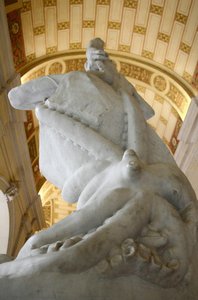
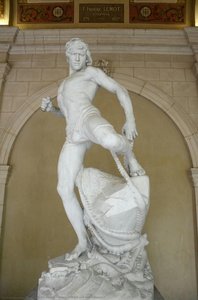
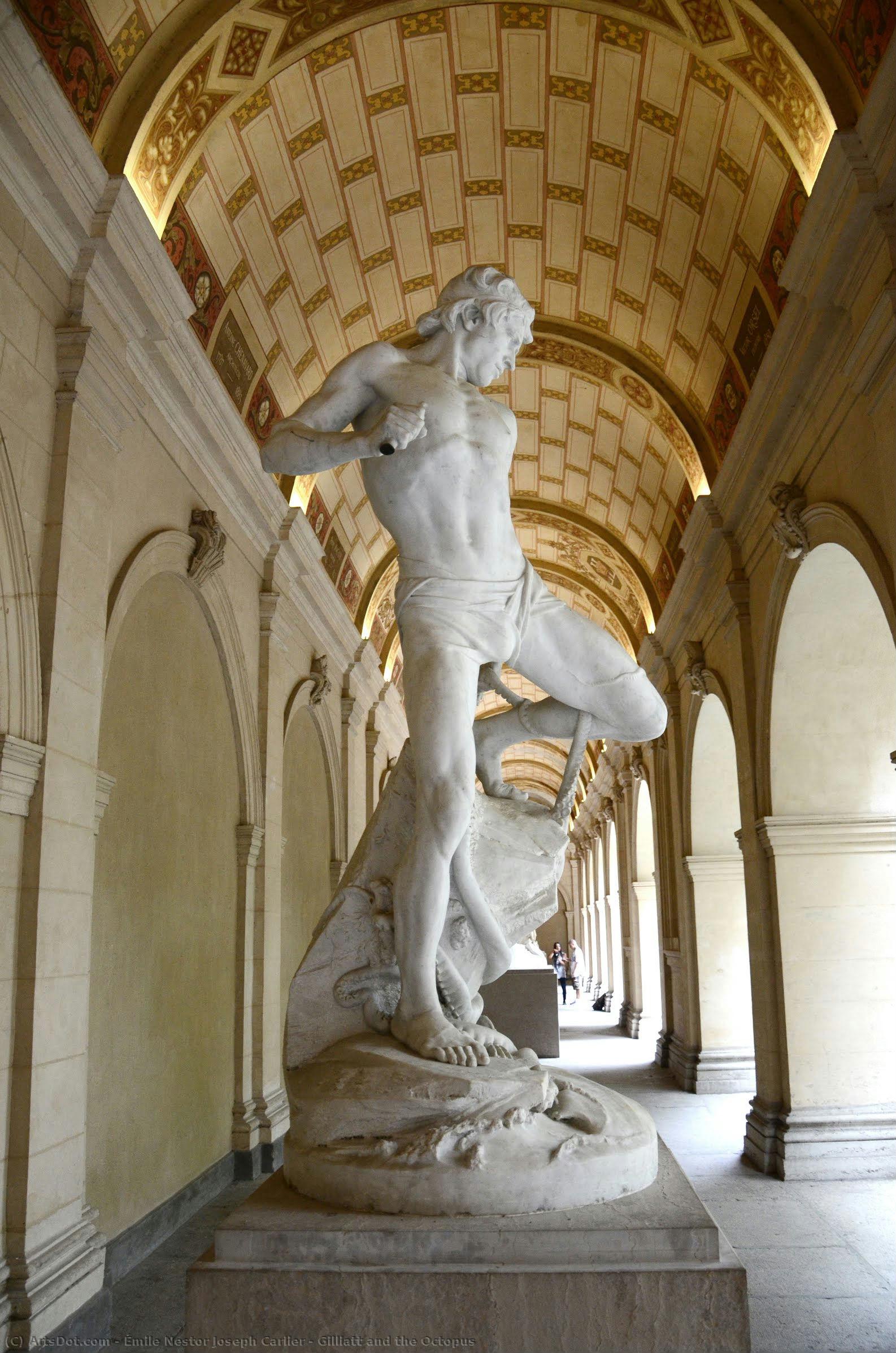
Gilliatt and the Octopus


 Read More
Giclée / Art Print
Museum-quality giclée or canvas print with fast production and flexible finish options. ( Buy Hand Made Painting Buy Image)




































Pick from our preset sizes that match the artwork's original proportions.

You may enter your own dimensions to fit a specific frame or space. If your selected size does not match the original image's proportions, we will either crop the artwork or extend the image with a mirrored or solid-fill edge. A digital mockup will be sent for your approval before production begins.
Please note that the on-screen preview does not reflect the actual cropping or extension. Only the mockup will accurately show the final composition.
While custom sizes are available, we recommend selecting a dimension from the predefined list to preserve the original proportions.
Worldwide Delivery () in 2 weeks instead of standard 4/5 weeks. (23 August)

Free Worldwide Express Shipping

High-Quality Linen Canvas

Full Shipping Insurance

Customs Tax Refund Guarantee

True Color Matching Guarantee

60-Day Return Policy (Defects Only)

100% Money-Back Guarantee

Bulk Discount Offer
 Glass option is only available in size under 110 CM

Gilliatt and the Octopus
Giclée / Art Print
Reproduction Size
-


Total Price
$ 63
Related Artworks








Artist Biography
The Sculptural Legacy of Émile Nestor Joseph Carlier
In the grand tapestry of European art, few figures capture the transition from the classical traditions of the nineteenth century to the fluid modernity of the twentieth as gracefully as Émile Nestor Joseph Carlier. Born in 1849, a period marked by profound political and social shifts, Carlier’s life was a testament to the power of metamorphosis. While his early years were steeped in the analytical rigors of journalism and the diplomatic complexities of the Belgian civil service, his true calling lay in the tactile world of clay and bronze. His journey from documenting the turbulent unification of Belgium to sculpting its very soul represents a rare fusion of intellectual depth and physical mastery.
Carlier’s artistic evolution was not merely a change in profession but a deepening of vision. His early exposure to the political landscape and his scholarly work in historical geography provided him with a unique perspective on the human condition—a perspective that would later breathe life into his sculptural subjects. As he moved away from the written word toward the chisel, he brought with him an innate understanding of narrative and symbolism. This allowed him to transcend simple representation, turning stone and metal into vessels for complex stories drawn from the wellsprings of mythology and classical literature.
A Master of Form and Movement
The work of Carlier is most profoundly felt in its ability to evoke emotion through the interplay of light and shadow upon curved surfaces. As a sculptor who flourished during the Belle Époque, he became a vital conduit for the Art Nouveau movement. His sculptures are characterized by an organic elegance, where lines do not merely define a shape but seem to flow with a life of their own, mimicking the sinuous rhythms of nature. Yet, even as he embraced these flowing, decorative motifs, Carlier possessed a structural discipline that hinted at the emerging Art Deco aesthetic, blending soft, romantic curves with a burgeoning sense of geometric clarity.
His technical prowess was evident in his meticulous attention to detail, whether he was rendering the delicate fold of a garment or the subtle tension in a muscular limb. This mastery allowed him to explore a wide range of subjects, from the ethereal and mythological to the profoundly human. His ability to capture La Fraternité—a theme of brotherhood and shared humanity—demonstrates his capacity to use the physical medium to communicate universal ideals. Through his hands, the cold permanence of bronze became capable of expressing warmth, vulnerability, and the enduring spirit of connection.
Historical Significance and Enduring Influence
The significance of Émile Nestor Joseph Carlier extends far beyond the aesthetic beauty of his individual pieces; he stands as a bridge between eras. His career mirrored the broader European transition from the rigid hierarchies of the mid-1800s to the experimental freedom of the early 20th century. By integrating themes of literature and history into the decorative language of Art Nouveau, he elevated sculpture from mere ornamentation to a profound medium of cultural storytelling.
Today, his legacy is preserved in the works that continue to inspire awe for their technical perfection and emotional resonance. His contributions to Belgian and French art remain a cornerstone of the period's sculptural history, reminding us of a time when art sought to harmonize the natural world with human intellect. To look upon a Carlier sculpture is to witness a moment frozen in time—a moment where the grace of the past meets the dynamic energy of the modern age.
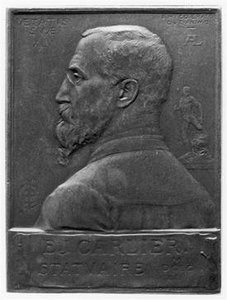
émile nestor joseph carlier
1849 - 1927 , Belgium
Quick Facts
- Artistic Movement Or Style: Art Nouveau & Art Deco sculpture
- Artists Who Influenced This Artist: ['Enguerrand de Monstrelet']
- Date Of Birth: 1849
- Full Name: Émile Nestor Joseph Carlier
- Nationality: French
- Notable Artworks:
- La Fraternité
- Baigneuse
- Jeune fille embrassant sa mère
- Place Of Birth: Liège, Belgium