 Preview
 Send
Send Share
Share
 Details

 Download
 Similars
 X-Ray
X-Ray Diaporama
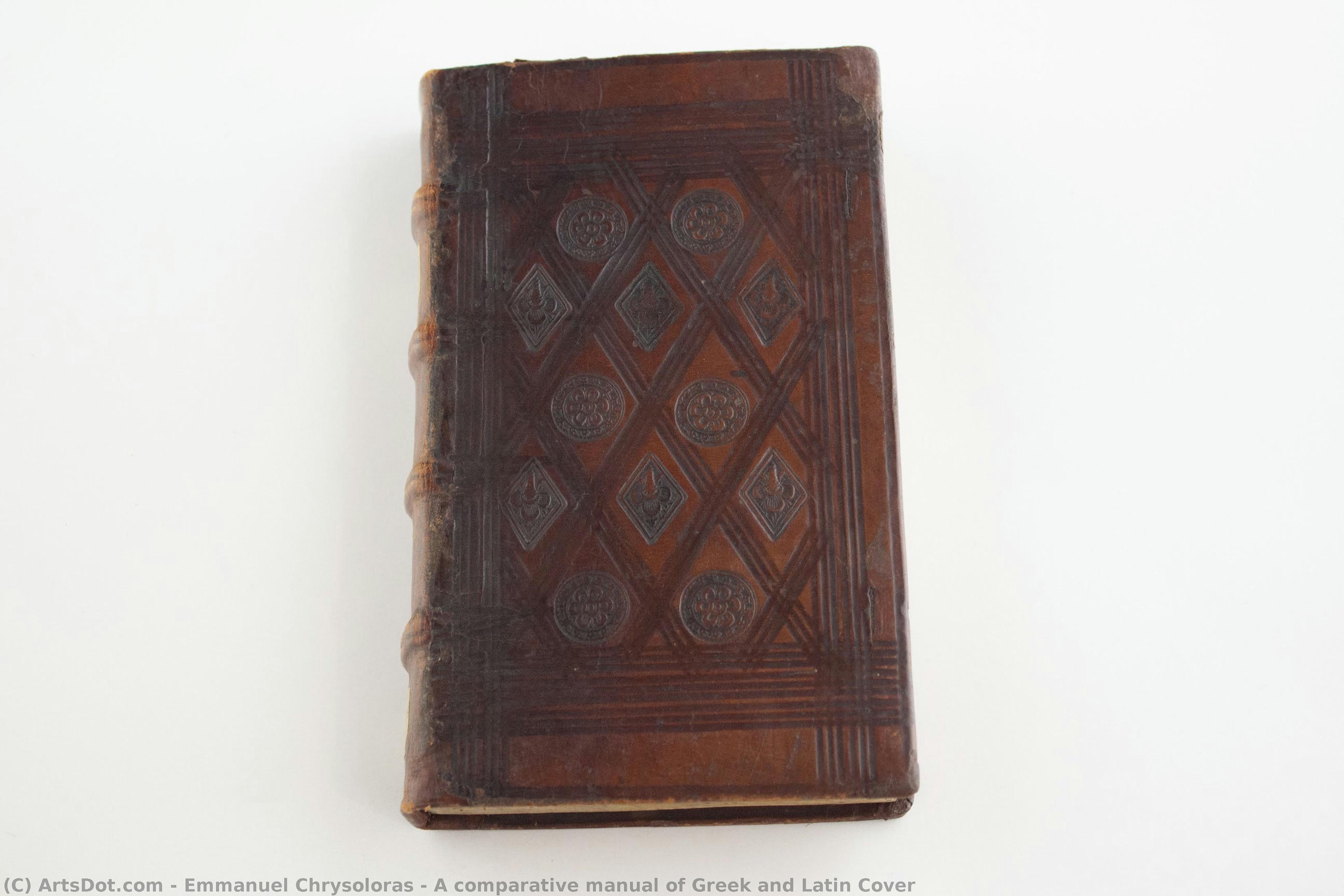
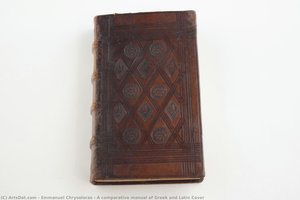
A comparative manual of Greek and Latin Cover

 Read More
Hand Made Oil Reproduction
Hand-painted oil on canvas in your size and frame, made to order by our artists. ( Buy Print Buy Image)




































Pick from our preset sizes that match the artwork's original proportions.

You may enter your own dimensions to fit a specific frame or space. If your selected size does not match the original image's proportions, we will either crop the artwork or extend the painting with additional hand-painted elements. A digital mockup will be sent for your approval before production begins.
Please note that the on-screen preview does not reflect the actual cropping or extension. Only the mockup will accurately show the final composition.
While custom sizes are available, we recommend selecting a dimension from the predefined list to preserve the original proportions.
After order, ArtsDot.com team will email client for instructions and provide a mockup preview
Worldwide Delivery () in 3/4 weeks instead of standard 5 weeks. (28 August). No compromise on quality.

Free Worldwide Express Shipping

High-Quality Linen Canvas

Full Shipping Insurance

Customs Tax Refund Guarantee

True Color Matching Guarantee

60-Day Return Policy (Defects Only)

100% Money-Back Guarantee

Bulk Discount Offer
 Glass option is only available in size under 110 CM

A comparative manual of Greek and Latin Cover
Reproduction Medium
Reproduction Size
-


Total Price
$ 263
Related Artworks




Artist Biography
The Bridge Between Two Worlds: The Legacy of Emmanuel Chrysoloras
In the twilight of the Middle Ages, as the shadows of the Ottoman expansion began to stretch across the Byzantine Empire, a singular figure emerged from the golden halls of Constantinople to ignite a flame in the West. Emmanuel Chrysoloras was not merely a scholar or a diplomat; he was the living bridge between the fading splendor of Byzantium and the burgeoning dawn of the Italian Renaissance. Born around 1350 into a noble Greek Orthodox family, his intellect was forged in an era where the preservation of classical knowledge was a sacred duty. His early education, spanning the vast disciplines of mathematics, astronomy, medicine, and theology, prepared him for a life that would transcend borders and redefine the intellectual landscape of Europe.
The journey that would alter history began not with a pen, but with a mission of survival. In 1390, dispatched by Emperor Manuel II Palaiologos, Chrysoloras arrived in Venice as part of an embassy tasked with securing much-needed military aid against the Turkish incursions. Yet, while his political objectives were rooted in the urgent realities of warfare, his true impact was found in the quiet exchange of ideas. In the vibrant maritime republic of Venice, he encountered the first wave of Italian humanists, establishing a connection that would soon transform the scholarly atmosphere of the entire peninsula. This period marked the beginning of a profound cultural transfusion, where the ancient wisdom of the Greeks began to flow into the Latin West.
The Florentine Renaissance and the Revival of Greek Letters
If Venice was the gateway, Florence was the heart of Chrysoloras’s transformative mission. Arriving in the winter of 1397, he was welcomed by Coluccio Salutati, the Chancellor of Florence, who recognized that the city's intellectual future lay in the recovery of lost antiquity. Chrysolans was appointed as a professor of Greek, a landmark achievement that turned Florence into a crucible for classical studies. He did not merely teach a language; he resurrected a way of seeing the world. Through his lectures, the works of Homer, Aristotle, and Plato—texts that had largely been lost to Western scholars—were breathed back into life through meticulous translation and rigorous analysis.
The influence of Chrysoloras can be traced through the lineage of his most illustrious students, men who would become the architects of Renaissance thought. Figures such as Leonardo Bruni and Pier Paolo Vergerio sat at his feet, absorbing the nuances of Greek grammar and the depth of classical philosophy. Under his guidance, the study of Greek became a cornerstone of humanism, fostering an era where the pursuit of knowledge was inextricably linked to the revival of ancient virtues. His pedagogical approach was revolutionary, blending linguistic precision with a deep appreciation for the historical and philosophical context of the texts he presented.
A Lasting Intellectual Architecture
The significance of Emmanuel Chrysoloras extends far beyond the classroom. He was a master of synthesis, capable of navigating the complex diplomatic corridors of Lombardy and the academic halls of Bologna with equal grace. His life’s work served as a catalyst for the studia humanitatis, ensuring that the intellectual heritage of the East would become the foundation upon which the Western Renaissance was built. Even as his political efforts to defend Byzantium faced the insurmountable tide of Ottoman conquest, his scholarly legacy remained unassailable.
To reflect on the life of Chrysoloras is to witness the moment when the medieval mind began to embrace the classical light. His achievements can be summarized by several enduring contributions:
- The Introduction of Greek Literacy: He provided the linguistic tools necessary for Western scholars to engage directly with original Greek manuscripts.
- Diplomatic and Scholarly Synthesis: He successfully merged the roles of a Byzantine statesman and a Renaissance educator, using diplomacy to facilitate cultural exchange.
- Founding a New Pedagogy: By establishing Greek studies in major Italian centers like Florence and Venice, he created a permanent infrastructure for classical learning.
- The Preservation of Antiquity: His work ensured that the philosophical and literary treasures of the ancient world survived the tumultuous transition from the Middle Ages to the modern era.
When Chrysoloras passed away on April 15, 1415, he left behind a Europe that was fundamentally changed. The intellectual boundaries between East and West had been blurred, replaced by a shared reverence for the classical past. He remains a monumental figure in history—a scholar whose devotion to the written word provided the essential spark for one of the greatest cultural rebirths in human history.
emmanuel chrysoloras
1415 , Greece
Quick Facts
- Artistic Movement Or Style: Renaissance Humanism
- Artists Or Movements Influenced By This Artist: ['Pier Paolo Vergerio']
- Artists Who Influenced This Artist: ['Roberto de’ Rossi']
- Date Of Death: 1415
- Full Name: Emmanuel Chrysoloras
- Nationality: Greek Orthodox
- Place Of Birth: Constantinople, Greece