 Preview
 Send
Send Share
Share
 Details

 Download
 Similars
 X-Ray
X-Ray Diaporama
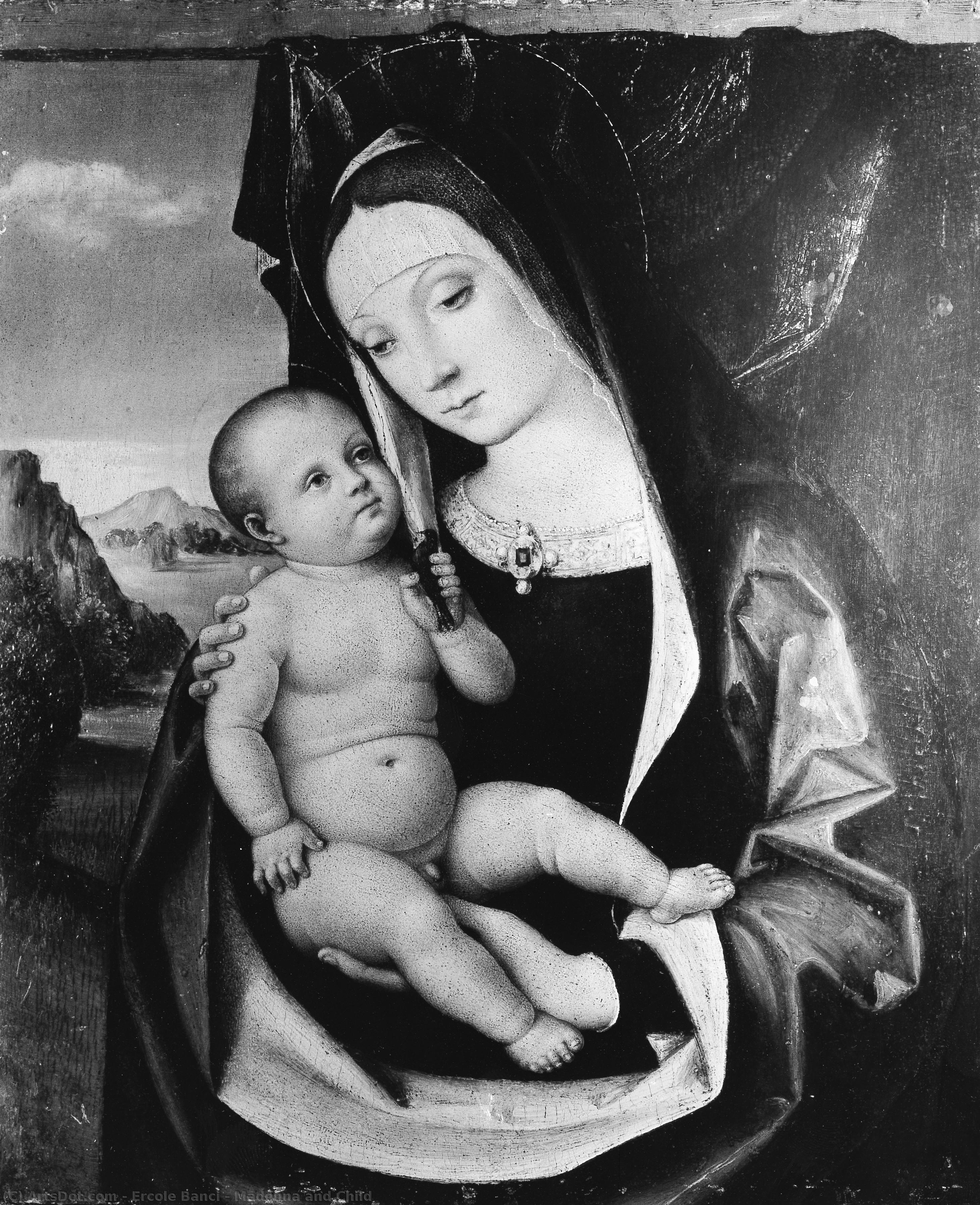
Madonna and Child
 Early Renaissance
 39.0 x 31.0 cm
 Read More
Giclée / Art Print
Museum-quality giclée or canvas print with fast production and flexible finish options. ( Buy Hand Made Painting Buy Image)




































Pick from our preset sizes that match the artwork's original proportions.

You may enter your own dimensions to fit a specific frame or space. If your selected size does not match the original image's proportions, we will either crop the artwork or extend the image with a mirrored or solid-fill edge. A digital mockup will be sent for your approval before production begins.
Please note that the on-screen preview does not reflect the actual cropping or extension. Only the mockup will accurately show the final composition.
While custom sizes are available, we recommend selecting a dimension from the predefined list to preserve the original proportions.
Worldwide Delivery () in 2 weeks instead of standard 4/5 weeks. (1 September)

Free Worldwide Express Shipping

High-Quality Linen Canvas

Full Shipping Insurance

Customs Tax Refund Guarantee

True Color Matching Guarantee

60-Day Return Policy (Defects Only)

100% Money-Back Guarantee

Bulk Discount Offer
 Glass option is only available in size under 110 CM

Madonna and Child
Giclée / Art Print
Reproduction Size
-


Total Price
$ 63
Related Artworks

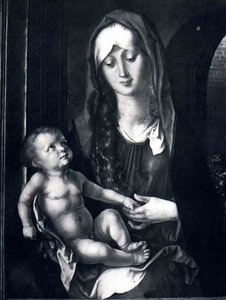
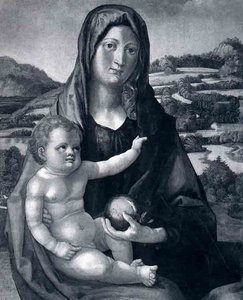
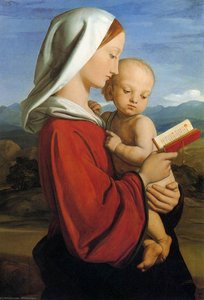
Artist Biography
The Visionary of Bologna: The Life and Legacy of Ercole de Banzi
In the vibrant, intellectual heart of the Italian Renaissance, where the shadows of medieval tradition met the dawn of humanist inquiry, there emerged a painter of singular, almost mystical vision. Ercole de Banzi, known variously in historical records as Ercole da Bologna or Hercules Banciis, remains one of the most enigmatic yet evocative figures of the Bolognese school. Active between approximately 1470 and 1531, his life was deeply intertwined with the cultural flourishing of Bologna, a city that served as a crucible for artistic innovation. While the precise details of his early training and familial origins remain shrouded in the mists of time, his presence in the artistic records of the period is undeniable, marking him as a master who could weave together the disparate threads of Northern European precision and Italian emotional depth.
The artistry of de Banzi is defined by an extraordinary ability to marry fantasy with expressive power. Unlike many of his contemporaries who sought strictly anatomical or perspectival perfection, Banci pursued a more spiritualized reality. His work often feels as though it exists in a liminal space between the earthly and the divine. This was achieved through a masterful command of chiaroscuro, utilizing dramatic contrasts between light and shadow to sculpt forms out of darkness. By manipulating tonal values, he could imbue even the most static religious icons with a palpable sense of movement and psychological weight, inviting the viewer into a state of quiet, contemplative wonder.
Flemish Echoes and Symbolic Narratives
One cannot discuss the evolution of de Banzi’s style without acknowledging the profound influence of the Flemish tradition. During his era, the cultural exchange between Flanders and Italy was at its zenith, bringing with it a fascination for meticulous detail and a specific approach to light. Banci absorbed these Northern techniques, integrating them into the warmer, more narrative-driven framework of the Italian Renaissance. This synthesis is perhaps most breathtakingly realized in his religious iconographies, where the tenderness of a Madonna and Child is heightened by a muted, sophisticated palette and an almost tactile rendering of textures.
Beyond mere devotion, Banci’s canvases are layered with a complex web of symbolism. He frequently moved beyond conventional biblical representation to infuse his scenes with imaginative elements that suggest a deep fascination with the natural world and its esoteric meanings. His work often features:
- Stylized Flora and Fauna: Elements of nature that serve as more than mere decoration, acting instead as symbolic conduits for spiritual truths.
- Atmospheric Mysticism: The use of soft, diffused light to create an aura of sanctity and otherworldly presence.
- Narrative Depth: The infusion of imaginative, often dreamlike stories into traditional religious subjects, captivating the viewer's imagination.
A Lasting Impression on the Bolognese School
The historical significance of Ercole de Banzi lies in his refusal to be confined by the rigid boundaries of his era. While he operated within the established framework of religious patronage, his penchant for the fantastical and his unique handling of light set him apart from the more strictly naturalistic painters of Bologna. He contributed to a stylistic lineage that valued emotional resonance as much as technical accuracy, helping to shape the distinctive character of the Emilian artistic tradition.
Though many of his biographical details have been lost to history, his artistic footprint remains visible in the way he bridged the gap between the 15th and 16th centuries. He stands as a testament to a period of profound transition, where the artist was not merely a craftsman, but a visionary capable of translating the complexities of the human soul into the language of pigment and light. To study the works of de Banzi is to encounter a master who found beauty in the shadows and divinity in the details, ensuring his place as a true pioneer of the Bolognese Renaissance.
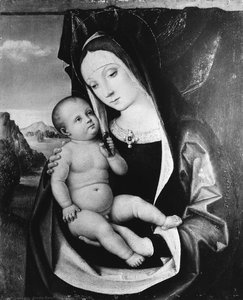
ercole de banzi, ercole da bologna, hercule de banciis and hercules banciis
1470 - 1531 , Italy
Quick Facts
- Artistic Movement Or Style: Early Renaissance, Flemish influence
- Artists Or Movements Influenced By This Artist: ['Flemish Primitives']
- Artists Who Influenced This Artist: ['Jan van Eyck']
- Date Of Birth: 1470 Bologna Italy
- Date Of Death: 1531
- Full Name: Ercole Banci
- Nationality: Italian
- Notable Artworks: ['Madonna and Child']
- Place Of Birth: Bologna Italy
Related Articles

Goya's Masterpieces: Explore 25 Iconic Paintings & Art Prints | ArtsDot
Delve into the world of Francisco Goya with ArtsDot. Explore 25 iconic paintings – from 'The Third of May' to his haunting Black Paintings. Discover the stories, techniques & emotions behind these Spanish masterpieces. Find museum-quality art reproductions for your home at ArtsDot.com!

About Us
Discover our story! We bring world-class art into your life through expert curation, personalized creations, and free previews. Trusted by individuals and businesses since 2000.
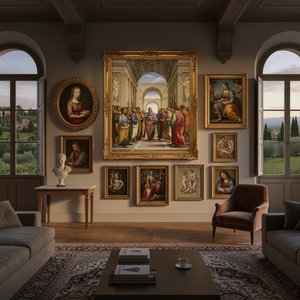
Raphael's Masterpieces: 25 Iconic Paintings & Renaissance Art for Your Home
Explore 25 breathtaking Raphael paintings! Journey through the Italian Renaissance with masterpieces like 'School of Athens' & iconic Madonnas. Find museum-quality art reproductions and elevate your home decor on ArtsDot.com.
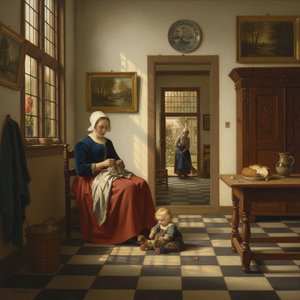
Pieter de Hooch: Illuminating Dutch Domestic Life & Golden Age Charm
Explore the captivating world of Pieter de Hooch, a master of Dutch Golden Age painting. Discover his innovative use of light, intimate domestic scenes, and lasting influence on art history. Learn more at ArtsDot.
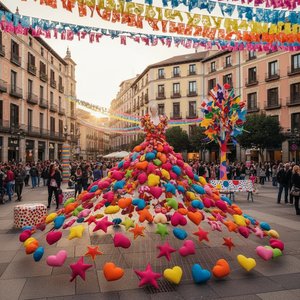
Águeda Ruiz de la Prada: A Study of Eclecticism & Emotional Resonance in Contemporary Spanish Painting
Discover the vibrant world of Ágatha Ruiz de la Prada, a leading figure in contemporary Spanish art. Explore her eclectic style, emotional depth & legacy – a must-read for discerning collectors.