 Preview
 Send
Send Share
Share
 Details

 Download
 Similars
 X-Ray
X-Ray Diaporama
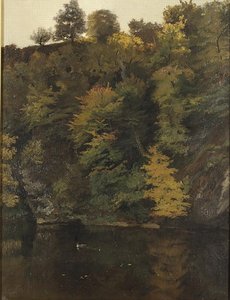
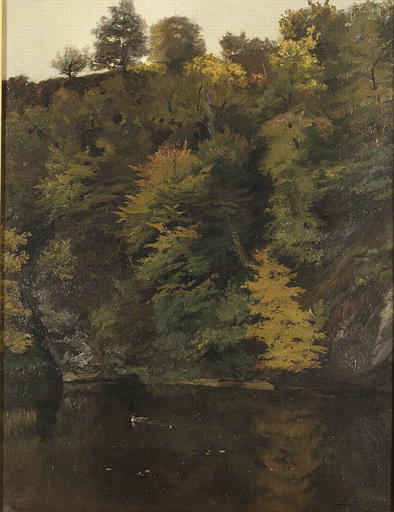
Une mare à Fresselines (Creuse)
 Read More
Giclée / Art Print
Museum-quality giclée or canvas print with fast production and flexible finish options. ( Buy Hand Made Painting Buy Image)




































Pick from our preset sizes that match the artwork's original proportions.

You may enter your own dimensions to fit a specific frame or space. If your selected size does not match the original image's proportions, we will either crop the artwork or extend the image with a mirrored or solid-fill edge. A digital mockup will be sent for your approval before production begins.
Please note that the on-screen preview does not reflect the actual cropping or extension. Only the mockup will accurately show the final composition.
While custom sizes are available, we recommend selecting a dimension from the predefined list to preserve the original proportions.
Worldwide Delivery () in 2 weeks instead of standard 4/5 weeks. (25 August)

Free Worldwide Express Shipping

High-Quality Linen Canvas

Full Shipping Insurance

Customs Tax Refund Guarantee

True Color Matching Guarantee

60-Day Return Policy (Defects Only)

100% Money-Back Guarantee

Bulk Discount Offer
 Glass option is only available in size under 110 CM

Une mare à Fresselines (Creuse)
Giclée / Art Print
Reproduction Size
-


Total Price
$ 63
Related Artworks


Artist Biography
The Painter of Light and Mountainous Majesty
Born in the vibrant heart of Paris on February 18, 1847, Ernest Victor Hareux emerged as a master of atmosphere, a painter whose brush captured the ephemeral dance of light across the French landscape. While his origins were rooted in the metropolitan epicenter of the nineteenth-century art world, his soul found its true expression far from the city's bustle. His early years were marked by an innate, precocious talent for drawing that surfaced as early as age ten, leading him toward a rigorous academic training that would eventually allow him to bridge the gap between classical precision and the burgeoning naturalism of his era.
The trajectory of Hareux’s career was shaped by the profound influence of several masters. Under the guidance of Léon Germain Pelouse, he learned the delicate art of observing the French countryside, absorbing a sensitivity to color and composition that would become his hallmark. His studies with Pascal Dagnan-Bouveret further refined his ability to infuse landscapes with psychological depth and realism. These formative years in Parisian ateliers provided him with a technical foundation that was both sturdy and versatile, preparing him for the diverse terrains he would later traverse, from the lush greenery of Normandy to the rugged, mist-shrouded peaks of the Dauphiné mountains.
A Journey Through the French Landscape
Hareux’s artistic odyssey was one of constant movement and geographical discovery. He became deeply entwined with the École de Crozant in La Creuse, a period where he met the painter-priest Laurent Guétal. This connection facilitated his move toward the mountains, a transition that would define his mature style. Though the unpredictable weather of Grenoble initially presented challenges to his plein-air pursuits, Hareux persevered, eventually finding solace and inspiration in the high altitudes. He became a central figure in the École Dauphinoise, fostering a community of artists who sought to capture the unique character of the Alpine scenery.
His oeuvre is a testament to his ability to adapt his technique to the specific mood of his subject matter:
- Mountainous Grandeur: In his depictions of the Dauphiné, Hareux utilized textured brushwork to convey the ruggedness of rock and the weight of snow.
- Luminous Landscapes: His works in Normandy and La Creuse often focused on the interplay of light and shadow, capturing the soft, diffused glow of overcast days or the sharp clarity of morning sun.
- Genre Scenes: Beyond pure landscape, he possessed a keen eye for the human element within nature, painting scenes that felt lived-in and authentic to the French countryside.
Legacy and Artistic Distinction
The recognition of Hareux’s talent was widespread throughout his lifetime. His regular presence at the prestigious Paris Salon, beginning in 1868, established him as a respected figure in the national art scene. The accolades he received—including a third-class medal in 1880 and being named a member of the Société des Artistes Français in 1883—speak to his technical mastery and the enduring appeal of his vision. Perhaps his most significant honor came in 1906, when he was named a Knight in the Légion d'Honneur, a testament to his profound contribution to French culture.
As a founding member of the Société des peintres de la montagne, Hareux did more than just paint mountains; he helped define a movement dedicated to the celebration of high-altitude beauty. His legacy lives on through works that continue to evoke the quiet majesty of the natural world, reminding viewers of a time when the artist's greatest tool was their ability to translate the fleeting breath of the wind and the shifting light of the sun onto canvas. Through his eyes, the landscapes of France are not merely scenery, but living, breathing entities of immense emotional power.
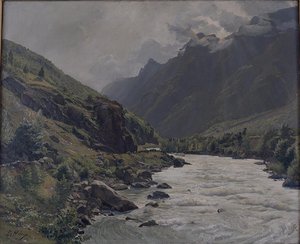
ernest victor hareux
1847 - 1909
Quick Facts
- Artistic Movement Or Style: Impressionism
- Artists Or Movements Influenced By This Artist: ['Jean Alexis Achard']
- Artists Who Influenced This Artist:
- Léon Germain Pelouse
- Charles Busson
- Date Of Birth: February 18, 1847
- Date Of Death: February 16, 1909
- Full Name: Ernest Victor Hareux
- Nationality: French
- Notable Artworks:
- La Romanche à Livet
- Le chemin du petit séminaire
- Place Of Birth: Paris, France