 Send
Send Share
Share
 Details

 Download
 Similars
 Diaporama
Erwin Wurm: The Body As The House


 Read More
Hand Made Oil Reproduction
Hand-painted oil on canvas in your size and frame, made to order by our artists. ( Buy Print Buy Image)




































Pick from our preset sizes that match the artwork's original proportions.

You may enter your own dimensions to fit a specific frame or space. If your selected size does not match the original image's proportions, we will either crop the artwork or extend the painting with additional hand-painted elements. A digital mockup will be sent for your approval before production begins.
Please note that the on-screen preview does not reflect the actual cropping or extension. Only the mockup will accurately show the final composition.
While custom sizes are available, we recommend selecting a dimension from the predefined list to preserve the original proportions.
After order, ArtsDot.com team will email client for instructions and provide a mockup preview
Worldwide Delivery () in 3/4 weeks instead of standard 5 weeks. (24 August). No compromise on quality.

Free Worldwide Express Shipping

High-Quality Linen Canvas

Full Shipping Insurance

Customs Tax Refund Guarantee

True Color Matching Guarantee

60-Day Return Policy (Defects Only)

100% Money-Back Guarantee

Bulk Discount Offer
 Glass option is only available in size under 110 CM

Erwin Wurm: The Body As The House
Reproduction Medium
Reproduction Size
-


Total Price
$ 263
Artwork Description
The Architecture of Existence: Unveiling Erwin Wurm’s Vision
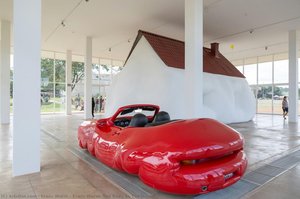
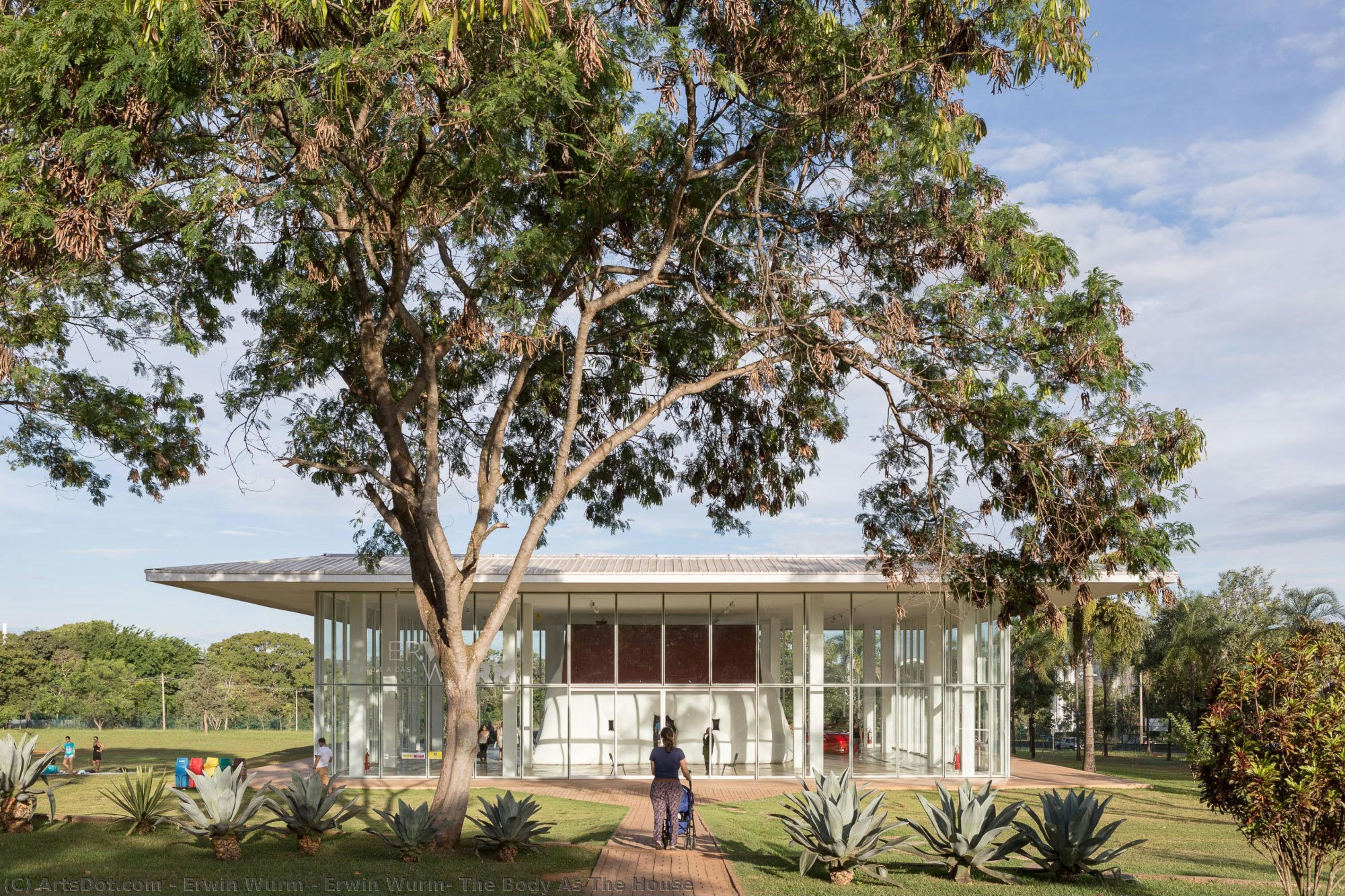
In the surreal landscape of contemporary installation art, few works command attention with as much profound curiosity as Erwin Wurm’s "The Body As The House." Created in 2003, this evocative piece serves as a breathtaking intersection between human biology and architectural form. At first glance, the viewer is met with the sight of a massive, white structure—a building that appears to possess the windows and facades of a traditional museum or estate. However, upon closer inspection, the very fabric of this edifice reveals itself to be composed of the human form. It is an extraordinary feat of conceptual imagination that blurs the boundary between the inhabitant and the habitat, challenging our fundamental understanding of where the self ends and the world begins.
Wurm, a master of the absurd and the satirical, utilizes this installation to provoke a deep, visceral reaction. The image captures a scene of quiet movement; visitors wander through the periphery of this fleshy monument, their smallness emphasizing the monumental scale of the "body-house." This juxtaposition creates a sense of wonder and slight disorientation, pulling the observer into a dreamlike state where the familiar becomes alien. For the collector or the enthusiast of avant-garde art, this work represents more than just a visual spectacle; it is an invitation to contemplate the fragility and the structural complexity of our own existence.
Symbolism and the Critique of Modernity
To understand the depth of Wurm’s creation, one must delve into his philosophical roots. Born in Austria, Wurm has long been fascinated by the psychological and political dimensions of the human entity. In "The Body As The House," the symbolism is layered and rich. By transforming the body into a dwelling, Wurm suggests that our identities are not merely contained within our skin, but are built through the structures we inhabit and the societies we construct. There is an inherent vulnerability in seeing the human form used as a literal building material, hinting at how modern life can consume and reshape the individual to fit the rigid frameworks of urbanity and consumerism.
The piece functions as a critique of Western lifestyle and the post-war mentality, using Dada-inspired humor to mask a deeper, more poignant inquiry. The white, pristine nature of the building evokes a sense of clinical perfection, yet the organic reality of its composition provides a startling contrast. This tension between the sterile architectural aesthetic and the raw human element creates an emotional resonance that lingers long after the initial viewing. It is a work that speaks to the soul, questioning whether we are the masters of our environments or merely the bricks and mortar used to build them.
A Masterpiece for the Discerning Collector
For interior designers and art connoisseurs seeking to infuse a space with intellectual depth and conversational power, a high-quality reproduction of this work offers an unparalleled opportunity. The visual impact of Wurm’s concept—the striking white palette, the intricate textures of the human forms, and the grand scale of the composition—makes it a centerpiece capable of transforming any sophisticated gallery or modern living space. It brings an element of the surreal into the domestic sphere, acting as a window into a world where the boundaries of reality are delightfully dissolved.
Owning a piece inspired by "The Body As The House" is an investment in a conversation. It is a work that demands engagement, prompting guests and viewers to pause, reflect, and interpret. Whether placed in a minimalist contemporary setting or a more eclectic, curated collection, this artwork serves as a testament to the power of conceptual art to challenge, delight, and ultimately expand our perception of what it means to be alive.
Related Artworks


Artist Biography
Erwin Wurm: A Biography
- Born: Braunau am Inn, Austria (1954)
- Current Status: Living
Early Life and Artistic Philosophy
Erwin Wurm was born in 1954 in Bruck an der Mur, Austria. His upbringing was notably influenced by his father, a detective who discouraged artistic pursuits. Despite this early resistance, Wurm developed a keen interest in art from a young age. His philosophy, as articulated in "The Artist Who Swallowed the World," centers on observing and utilizing everyday life and materials. He states he is interested in “the whole entity of a human being: the physical, the spiritual, the psychological and the political.” This perspective informs his humorous yet critical approach to formalism, challenging conventional artistic boundaries.
Artistic Style and Themes
Wurm's work frequently critiques Western society, its mentality, and the lifestyle prevalent during post-World War II Austria. While often characterized by humor and absurdity, his sculptures possess a deeper seriousness. He employs satire and sarcasm to expose societal truths and explore the complexities of human existence. His pieces are known for their use of everyday objects and materials, transforming them into thought-provoking installations and sculptures that question perceptions of art and reality.
Influences and Development
Wurm's artistic development has been shaped by a diverse range of influences. He draws inspiration from artists such as Adriaen de Vries, Wenzel Jamnitzer, and Johann Gregor van der Schardt. His incorporation of commonplace materials echoes the principles of the Dada art movement, which actively sought to challenge traditional artistic norms and societal conventions. This influence is evident in his playful subversion of expectations and his willingness to embrace unconventional forms and media.
Notable Works and Historical Significance
Erwin Wurm's work can be found in prestigious institutions such as the Museum Galerie Würthle in Vienna, Austria, and the Lehmbruck Museum in Duisburg, Germany. His "The Body As The House" series is particularly noteworthy, showcasing his ability to blend furniture and human form into surreal and contemplative installations. Wurm's contribution to contemporary art lies in his unique approach to sculpture, blurring the lines between object and performance, and using humor as a tool for social commentary. His work continues to be exhibited internationally, solidifying his position as a significant figure in the contemporary art scene.
- Museum Galerie Würthle: Features Wurm's works alongside other notable artists.
- Lehmbruck Museum: Showcases Wurm’s sculptures within its collection of modern and contemporary art.
- ALBERTINA KLOSTERNEUBURG: A museum near Vienna featuring post-1945 art, including works by Wurm and Franz West.
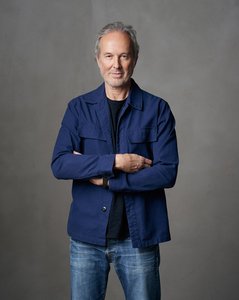
Erwin Wurm
1954 - , Austria
Quick Facts
- Artistic Movement Or Style: Dada Art Movement
- Artists Who Influenced This Artist:
- Adriaen de Vries
- Wenzel Jamnitzer
- Johann Gregor van der Schardt
- Date Of Birth: 1954
- Full Name: Erwin Wurm
- Nationality: Austrian
- Notable Artworks: ['The Body As The House']
- Place Of Birth (City And Country): Braunau am Inn, Austria
Related Articles

White on Canvas: 10 Masterpieces & Timeless Elegance for Your Home Decor
Explore 10 iconic white paintings by Monet, Whistler & Rothko! Discover the stories behind these serene masterpieces and their impact on art history. Find museum-quality reproductions for your home decor at .

Bronze Sculptures That Defined Art History | ArtsDot
Journey through art history with our Top 10 bronze sculptures! Explore masterpieces by Rodin, Michelangelo & more. Discover stories behind iconic statues and find museum-quality reproductions for your home decor at ArtsDot.com.

The Enduring Form: Exploring Themes & Techniques in Sculpture Across Historical Periods
Explore the rich history of sculpture from ancient masterpieces to contemporary innovations. Discover key techniques, influential artists & investment potential for discerning art collectors.

Bronze Age to Modern Masters: 10 Sculptures That Redefined Art | ArtsDot
Journey through art history with 10 legendary bronze sculptures – from Michelangelo's David to Rodin’s Thinker. Explore the stories, techniques & timeless beauty of these masterpieces. Find museum-quality reproductions & elevate your home decor on ArtsDot.com.
The Enduring Form: Sculpture Across History, Technique & Emotional Resonance
Explore the rich history of sculpture with ArtsDot. Discover key techniques, influential artists & investment potential for discerning collectors. Expert insights into valuing and collecting timeless masterpieces.