

 Send
Send Share
Share
 Details

 Download
 Similars
 Diaporama
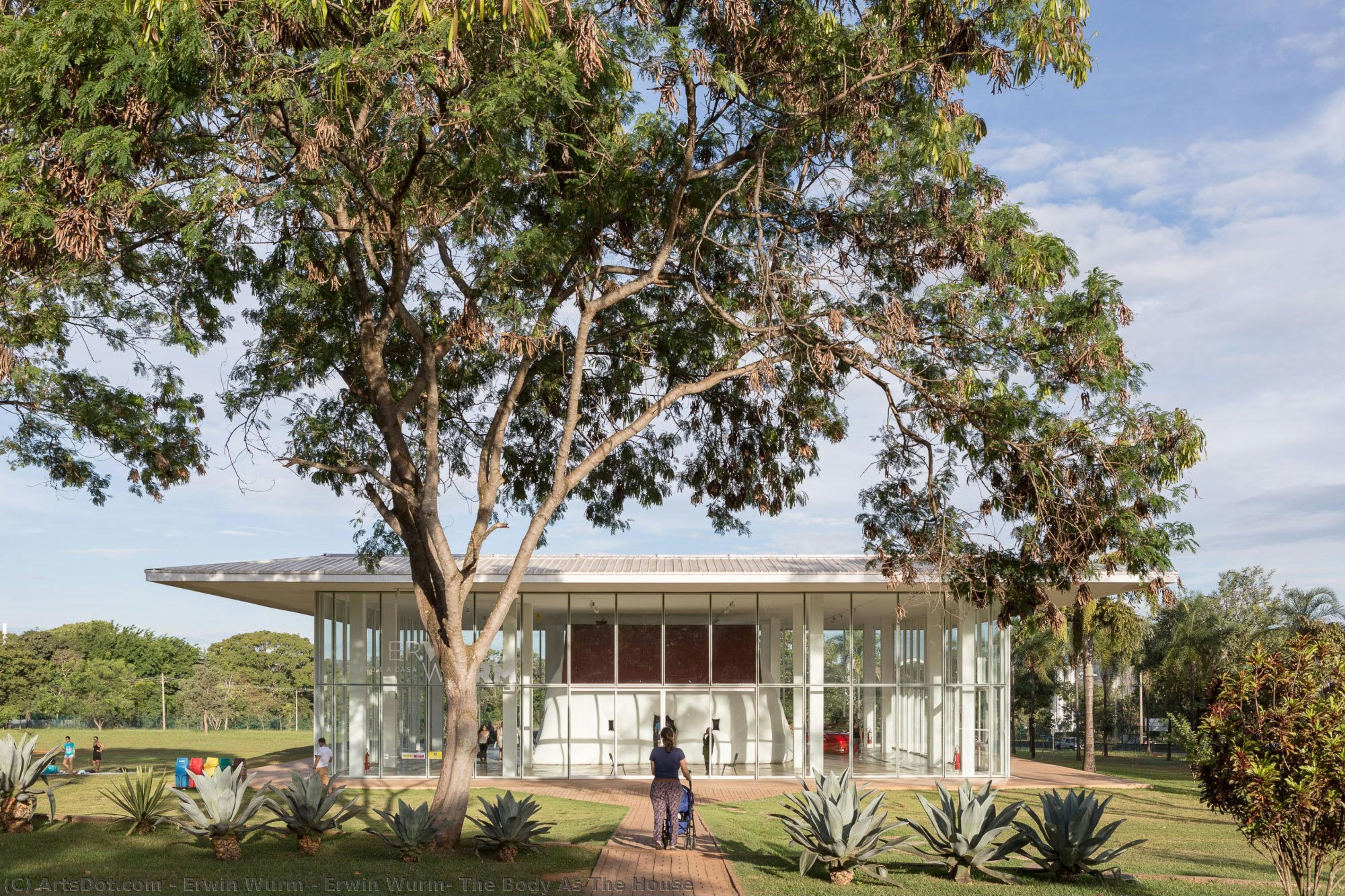
Erwin Wurm: The Body As The House


 Read More
Purchase a high-resolution, enhanced digital image, far superior to the online preview.
Each file is meticulously prepared by our in-house specialists using advanced tools and expert manual retouching. We ensure every image has exceptional clarity, precise color accuracy, and fine detail.
The final file is delivered via email within 72 hours, optimized for immediate use in professional, editorial, and print environments. This is the same quality trusted by top-tier design studios, publishers, and galleries.
Digital Image
Download a high-resolution file for personal display, printing, and creative projects. ( Buy Print Buy Hand Made Painting)
Included in Every Digital Image Order
Expert Digital Delivery, Guaranteed
When you choose ArtsDot.com, you're not just getting an image - you're receiving a professionally enhanced digital artwork, crafted with precision and backed by a satisfaction guarantee. Here's everything that comes with your order, automatically:

Fast Email Delivery
Your high-resolution digital image file will be emailed to you within 72 hours of ordering - ready for immediate use.

AI-Enhanced Digital File
Your artwork is professionally optimized using advanced AI tools and manual editing, ensuring maximum detail, clarity, and color accuracy.

Free Lifetime Re-Delivery
Accidentally deleted or lost your file? No worries - we'll resend it to you anytime, free of charge.

No Import Fees - Ever
Enjoy your artwork instantly with zero customs, duties, or delivery fees - digital downloads are always tax-free.

Color Accuracy Guarantee
We ensure your digital image reflects the original colors as closely as possible using professional tools and color management.

60-Day Satisfaction Guarantee
If you're not satisfied with your digital image, we'll revise it or refund 100% within 60 days - no questions asked.

100% Money-Back Guarantee
Not satisfied? Get a full refund within 60 days of receiving your digital file - no questions asked.

Bulk Order Discounts
Buy 3 images, save 10% - Buy 5, save 15% - Buy 10+, save 20%. Great for creative projects, galleries, and agencies.
Collectible Description
The Architecture of Existence: Unveiling Erwin Wurm’s Vision
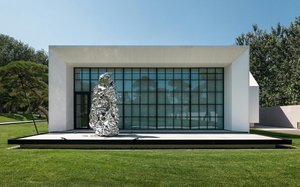
In the surreal landscape of contemporary installation art, few works command attention with as much profound curiosity as Erwin Wurm’s "The Body As The House." Created in 2003, this evocative piece serves as a breathtaking intersection between human biology and architectural form. At first glance, the viewer is met with the sight of a massive, white structure—a building that appears to possess the windows and facades of a traditional museum or estate. However, upon closer inspection, the very fabric of this edifice reveals itself to be composed of the human form. It is an extraordinary feat of conceptual imagination that blurs the boundary between the inhabitant and the habitat, challenging our fundamental understanding of where the self ends and the world begins.
Wurm, a master of the absurd and the satirical, utilizes this installation to provoke a deep, visceral reaction. The image captures a scene of quiet movement; visitors wander through the periphery of this fleshy monument, their smallness emphasizing the monumental scale of the "body-house." This juxtaposition creates a sense of wonder and slight disorientation, pulling the observer into a dreamlike state where the familiar becomes alien. For the collector or the enthusiast of avant-garde art, this work represents more than just a visual spectacle; it is an invitation to contemplate the fragility and the structural complexity of our own existence.
Symbolism and the Critique of Modernity
To understand the depth of Wurm’s creation, one must delve into his philosophical roots. Born in Austria, Wurm has long been fascinated by the psychological and political dimensions of the human entity. In "The Body As The House," the symbolism is layered and rich. By transforming the body into a dwelling, Wurm suggests that our identities are not merely contained within our skin, but are built through the structures we inhabit and the societies we construct. There is an inherent vulnerability in seeing the human form used as a literal building material, hinting at how modern life can consume and reshape the individual to fit the rigid frameworks of urbanity and consumerism.
The piece functions as a critique of Western lifestyle and the post-war mentality, using Dada-inspired humor to mask a deeper, more poignant inquiry. The white, pristine nature of the building evokes a sense of clinical perfection, yet the organic reality of its composition provides a startling contrast. This tension between the sterile architectural aesthetic and the raw human element creates an emotional resonance that lingers long after the initial viewing. It is a work that speaks to the soul, questioning whether we are the masters of our environments or merely the bricks and mortar used to build them.
A Masterpiece for the Discerning Collector
For interior designers and art connoisseurs seeking to infuse a space with intellectual depth and conversational power, a high-quality reproduction of this work offers an unparalleled opportunity. The visual impact of Wurm’s concept—the striking white palette, the intricate textures of the human forms, and the grand scale of the composition—makes it a centerpiece capable of transforming any sophisticated gallery or modern living space. It brings an element of the surreal into the domestic sphere, acting as a window into a world where the boundaries of reality are delightfully dissolved.
Owning a piece inspired by "The Body As The House" is an investment in a conversation. It is a work that demands engagement, prompting guests and viewers to pause, reflect, and interpret. Whether placed in a minimalist contemporary setting or a more eclectic, curated collection, this artwork serves as a testament to the power of conceptual art to challenge, delight, and ultimately expand our perception of what it means to be alive.
Related Artworks


Artist Biography
Erwin Wurm: A Biography
- Born: Braunau am Inn, Austria (1954)
- Current Status: Living
Early Life and Artistic Philosophy
Erwin Wurm was born in 1954 in Bruck an der Mur, Austria. His upbringing was notably influenced by his father, a detective who discouraged artistic pursuits. Despite this early resistance, Wurm developed a keen interest in art from a young age. His philosophy, as articulated in "The Artist Who Swallowed the World," centers on observing and utilizing everyday life and materials. He states he is interested in “the whole entity of a human being: the physical, the spiritual, the psychological and the political.” This perspective informs his humorous yet critical approach to formalism, challenging conventional artistic boundaries.
Artistic Style and Themes
Wurm's work frequently critiques Western society, its mentality, and the lifestyle prevalent during post-World War II Austria. While often characterized by humor and absurdity, his sculptures possess a deeper seriousness. He employs satire and sarcasm to expose societal truths and explore the complexities of human existence. His pieces are known for their use of everyday objects and materials, transforming them into thought-provoking installations and sculptures that question perceptions of art and reality.
Influences and Development
Wurm's artistic development has been shaped by a diverse range of influences. He draws inspiration from artists such as Adriaen de Vries, Wenzel Jamnitzer, and Johann Gregor van der Schardt. His incorporation of commonplace materials echoes the principles of the Dada art movement, which actively sought to challenge traditional artistic norms and societal conventions. This influence is evident in his playful subversion of expectations and his willingness to embrace unconventional forms and media.
Notable Works and Historical Significance
Erwin Wurm's work can be found in prestigious institutions such as the Museum Galerie Würthle in Vienna, Austria, and the Lehmbruck Museum in Duisburg, Germany. His "The Body As The House" series is particularly noteworthy, showcasing his ability to blend furniture and human form into surreal and contemplative installations. Wurm's contribution to contemporary art lies in his unique approach to sculpture, blurring the lines between object and performance, and using humor as a tool for social commentary. His work continues to be exhibited internationally, solidifying his position as a significant figure in the contemporary art scene.
- Museum Galerie Würthle: Features Wurm's works alongside other notable artists.
- Lehmbruck Museum: Showcases Wurm’s sculptures within its collection of modern and contemporary art.
- ALBERTINA KLOSTERNEUBURG: A museum near Vienna featuring post-1945 art, including works by Wurm and Franz West.
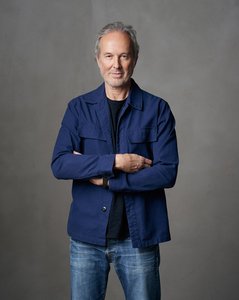
Erwin Wurm
1954 - , Austria
Quick Facts
- Artistic Movement Or Style: Dada Art Movement
- Artists Who Influenced This Artist:
- Adriaen de Vries
- Wenzel Jamnitzer
- Johann Gregor van der Schardt
- Date Of Birth: 1954
- Full Name: Erwin Wurm
- Nationality: Austrian
- Notable Artworks: ['The Body As The House']
- Place Of Birth (City And Country): Braunau am Inn, Austria

