

 Preview
 Send
Send Share
Share
 Details

 Download
 Similars
 X-Ray
X-Ray Diaporama
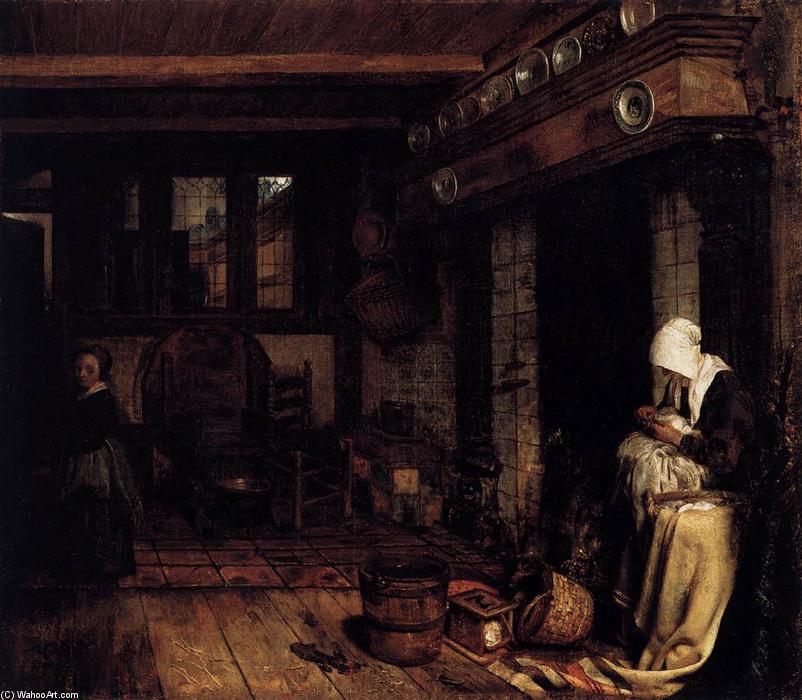
Dutch Interior with Woman Sewing
 Oil On Canvas
- WallArt
- Dutch Golden Age
 1660
1660 52.0 x 59.0 cm
 Staatliche Museen
 Read More
Purchase a high-resolution, enhanced digital image, far superior to the online preview.
Each file is meticulously prepared by our in-house specialists using advanced tools and expert manual retouching. We ensure every image has exceptional clarity, precise color accuracy, and fine detail.
The final file is delivered via email within 72 hours, optimized for immediate use in professional, editorial, and print environments. This is the same quality trusted by top-tier design studios, publishers, and galleries.
Digital Image
Download a high-resolution file for personal display, printing, and creative projects. ( Buy Print Buy Hand Made Painting)
Included in Every Digital Image Order
Expert Digital Delivery, Guaranteed
When you choose ArtsDot.com, you're not just getting an image - you're receiving a professionally enhanced digital artwork, crafted with precision and backed by a satisfaction guarantee. Here's everything that comes with your order, automatically:

Fast Email Delivery
Your high-resolution digital image file will be emailed to you within 72 hours of ordering - ready for immediate use.

AI-Enhanced Digital File
Your artwork is professionally optimized using advanced AI tools and manual editing, ensuring maximum detail, clarity, and color accuracy.

Free Lifetime Re-Delivery
Accidentally deleted or lost your file? No worries - we'll resend it to you anytime, free of charge.

No Import Fees - Ever
Enjoy your artwork instantly with zero customs, duties, or delivery fees - digital downloads are always tax-free.

Color Accuracy Guarantee
We ensure your digital image reflects the original colors as closely as possible using professional tools and color management.

60-Day Satisfaction Guarantee
If you're not satisfied with your digital image, we'll revise it or refund 100% within 60 days - no questions asked.

100% Money-Back Guarantee
Not satisfied? Get a full refund within 60 days of receiving your digital file - no questions asked.

Bulk Order Discounts
Buy 3 images, save 10% - Buy 5, save 15% - Buy 10+, save 20%. Great for creative projects, galleries, and agencies.
Collectible Description
A Quiet Moment in Dutch Domesticity: Esaias Boursse’s “Dutch Interior with Woman Sewing”
Esaias Boursse's "Dutch Interior with Woman Sewing," painted around 1660, isn’t a grand statement of artistic ambition; it’s a carefully observed and profoundly intimate glimpse into the heart of 17th-century Dutch life. Often overshadowed by the towering figures of Vermeer and Rembrandt, Boursse carved out a unique niche for himself – documenting the quiet rhythms of family existence with an almost unnerving level of detail and emotional resonance. This painting, now residing in the Gemäldegalerie in Berlin, offers a rare window into a world of domestic routine, imbued with a subtle melancholy that speaks volumes about the era’s social fabric.
The scene unfolds within a dimly lit room, dominated by the earthy tones of dark browns and ochres – a palette characteristic of Dutch Golden Age painting. The composition is deliberately restrained, divided into distinct zones: a foreground scattered with everyday objects—a basket overflowing with linen, a simple wooden stool—a midground featuring two figures engaged in separate activities, and a background subtly suggesting an open doorway, hinting at the world beyond. The perspective isn’t aggressively realistic; instead, it creates a sense of depth through careful use of lines and shadows, drawing the viewer into this contained space.
A Masterclass in Realist Detail
Boursse's skill lies not in dramatic flourishes but in his meticulous rendering of texture and light. The wooden floorboards are rendered with an almost tactile quality, each groove and knot painstakingly depicted. The fabrics—the woman’s satin dress, the linen basket—are richly textured, their folds and creases conveying a sense of weight and volume. The lighting is particularly masterful; it's minimal, emanating primarily from a window to the left, casting long, dramatic shadows that emphasize form and create an atmosphere of subdued intimacy. The artist employs oil paint with a deliberate layering technique, building up color gradually to achieve remarkable luminosity despite the overall darkness.
The painting’s technical brilliance is further underscored by Boursse's attention to detail—the way the light catches on the woman’s hands as she works, the subtle wrinkles around her eyes, the slight slump of her shoulders. These small details contribute to a powerful sense of realism, making the scene feel utterly authentic and immediate. It’s a testament to Boursse’s ability to capture not just appearances but also the quiet dignity and inherent weariness of everyday life.
Symbolism and Social Context
“Dutch Interior with Woman Sewing” is more than simply a depiction of domestic activity; it's imbued with symbolic meaning. The woman, absorbed in her needlework, represents the countless hours spent within the confines of the home, contributing to the family’s well-being. Her posture suggests both diligence and a certain solitude—a quiet acceptance of her role within the household. The man, standing slightly apart, is engaged in reading a letter, perhaps receiving news from afar or contemplating his place in the world. The interaction between them is understated but subtly charged with unspoken emotions.
Painted during the Dutch Golden Age, this work reflects the era’s fascination with domesticity and the importance of family life. The rise of literacy and correspondence created a cultural shift, elevating the role of women within the home while simultaneously highlighting the complexities of personal relationships. Boursse's choice to focus on such a commonplace scene—a woman sewing—is itself significant, suggesting a deliberate effort to elevate the ordinary into something worthy of artistic contemplation.
A Legacy of Quiet Observation
Esaias Boursse’s “Dutch Interior with Woman Sewing” is a poignant reminder that beauty can be found in the most unassuming moments. It's a testament to his remarkable ability to capture the essence of human experience—the quiet joys, the subtle sorrows, and the enduring rhythms of daily life. While he may not have achieved the same level of fame as some of his contemporaries, Boursse’s work continues to resonate with viewers today, offering a timeless glimpse into the heart of Dutch domesticity.
Related Artworks
Artist Biography
Esaias Boursse: A Quiet Master of Dutch Domesticity
Esaias Boursse, a name perhaps less familiar than those of Vermeer or Rembrandt, nevertheless stands as a significant figure in the rich tapestry of 17th-century Dutch painting. Born in Amsterdam in 1631 and tragically lost at sea in 1672, Boursse’s life was marked by both artistic talent and financial pragmatism. Unlike many of his contemporaries who sought fame and fortune through grand commissions, Boursse remained largely unmarried and childless, dedicating himself primarily to the meticulous depiction of everyday family life – a path that ultimately proved remarkably lucrative for him. His legacy rests on approximately 28 surviving paintings, predominantly housed in private collections across Europe, offering intimate glimpses into the domestic interiors and quiet moments of his era.A Life Shaped by Travel and Trade
Boursse’s early life remains somewhat shrouded in mystery. Records indicate he was the youngest son of Walloon immigrants who settled in Amsterdam, marrying Anna des Forest in 1618. Crucially, Boursse embarked on a journey to Italy around 1650, a common practice for young Dutch artists seeking to immerse themselves in the artistic traditions of the Renaissance. However, unlike many of his peers who returned brimming with new ideas and techniques, Boursse’s Italian sojourn appears to have yielded little discernible influence on his subsequent work. Instead, he joined the Verenigde Oostindische Compagnie (VOC), the Dutch East India Company, a decision that profoundly shaped both his life and his art. His voyages to Ceylon (modern-day Sri Lanka) provided him with unparalleled opportunities to observe and document the lives of its inhabitants – scenes which would later form the core of his artistic output. This experience, coupled with his financial struggles, led him to return to Amsterdam in 1663, only to be compelled to rejoin the VOC a year later, ultimately meeting his demise aboard the ship *Rhenen* on November 16, 1672.Stylistic Influences and Distinctive Vision
Boursse’s artistic style is often described as being reminiscent of Pieter de Hooch, Quiringh van Brekelenkam, and Cornelis de Man – masters known for their subtle use of light, atmospheric perspective, and depictions of urban interiors. However, Boursse possesses a unique sensibility that distinguishes his work from these contemporaries. His paintings are characterized by an almost unsettling stillness—a sense of suspended time within the confines of a domestic space. He eschewed dramatic narratives or overtly emotional scenes, instead focusing on capturing the quiet rhythms of daily life: women diligently spinning wool, children playing quietly in the background, families gathered around a warm hearth. The lighting is typically soft and diffused, creating an atmosphere of intimacy and tranquility. His compositions are carefully constructed, often employing a shallow depth of field to draw the viewer into the scene, as if they too were silently observing the unfolding drama within the room.The Intimate World of Domestic Scenes
Boursse’s oeuvre is overwhelmingly devoted to scenes of domestic life. These aren't grand celebrations or momentous events; rather, they are snapshots of ordinary moments – a woman meticulously sewing, children engaged in playful pursuits, a family sharing a simple meal. These seemingly mundane subjects are rendered with remarkable detail and sensitivity, revealing Boursse’s keen eye for capturing the nuances of human interaction and the subtle beauty of everyday objects. The figures within his paintings are often anonymous, contributing to the universality of his themes. He avoids explicit portraits, instead focusing on portraying the collective experience of family life. Works like “Dutch Interior with Woman Sewing” (Wallace Collection, London) and "Interior with a Woman Cooking" (Ryksmuseum Amsterdam) exemplify this approach, offering viewers a poignant glimpse into the lives of ordinary people during the Dutch Golden Age. The meticulous rendering of fabrics, furniture, and domestic utensils further enhances the realism and authenticity of these scenes.A Financial Success Despite Personal Modesty
Interestingly, despite his modest personal life – lacking a family to support and seemingly eschewing grand artistic ambitions – Boursse enjoyed considerable financial success during his lifetime. His commissions from the VOC, documenting the lives and landscapes of Ceylon, provided him with a steady income. Art historians have noted that he was one of the highest-paid artists of his time, a testament to the value placed on his detailed depictions of everyday life. This remarkable achievement underscores the evolving role of the artist in 17th-century Dutch society – where artistic skill and observation could translate into substantial wealth, even without seeking fame or recognition. His paintings continue to be admired for their quiet beauty, offering a valuable window into the domestic realities of a bygone era.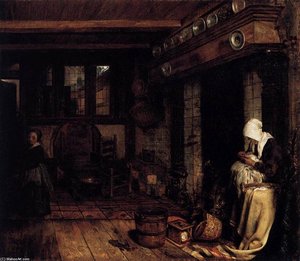
Esaias Boursse
1631 - 1672 , Netherlands
Quick Facts
- Artistic Movement Or Style: Genre painting
- Artists Or Movements Influenced By This Artist: ['Cornelis de Man']
- Artists Who Influenced This Artist:
- Pieter de Hooch
- Johannes Vermeer
- Date Of Birth: March 3, 1631
- Date Of Death: November 16, 1672
- Full Name: Esaias Boursse
- Nationality: Dutch
- Notable Artworks:
- Interior with Woman Sewing
- Boys blowing bubbles
- Place Of Birth: Amsterdam, Netherlands

