 Preview
 Send
Send Share
Share
 Details

 Download
 Similars
 X-Ray
X-Ray Diaporama
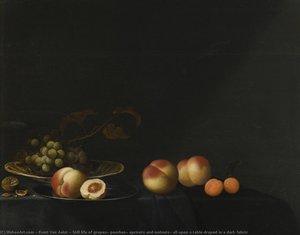
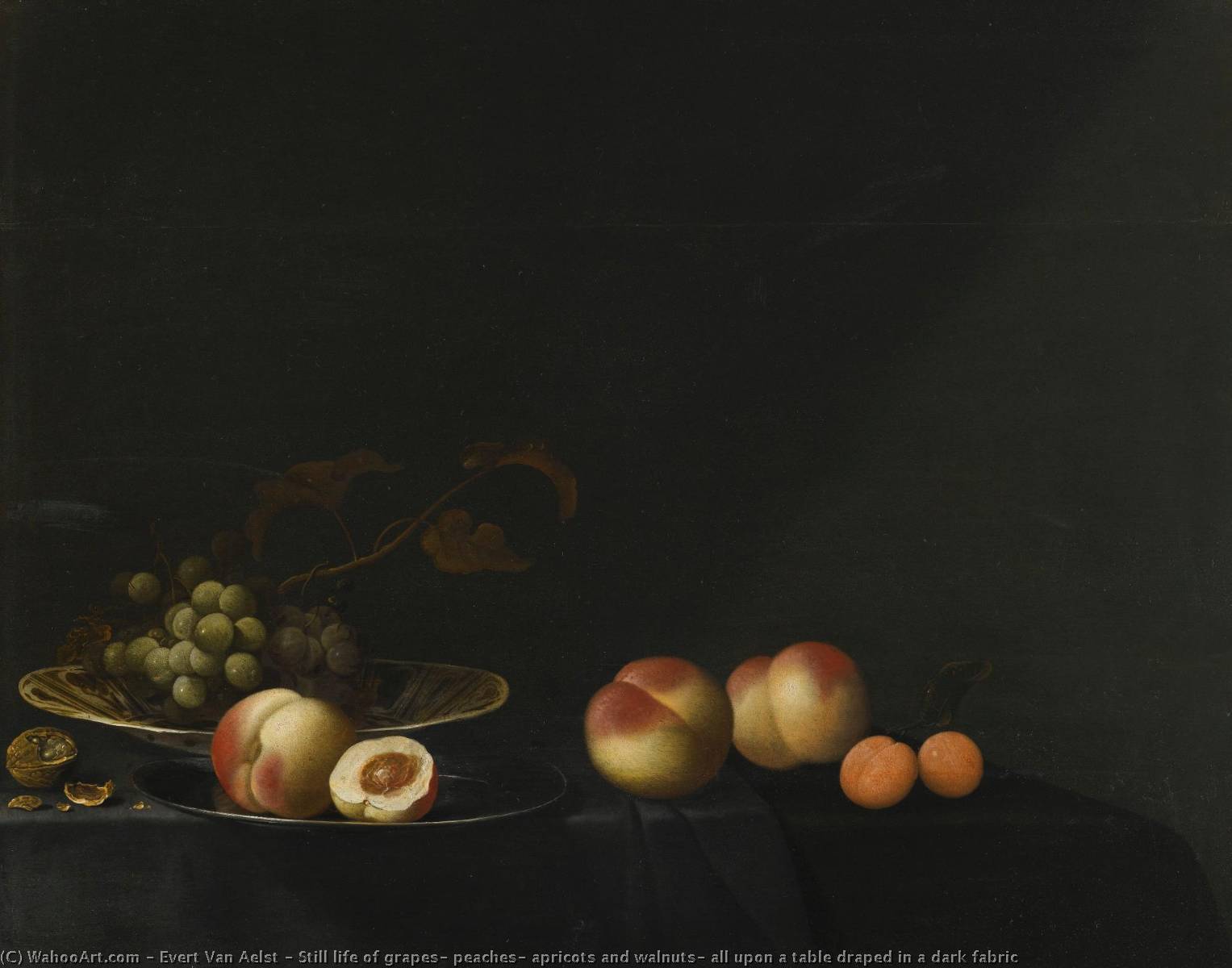
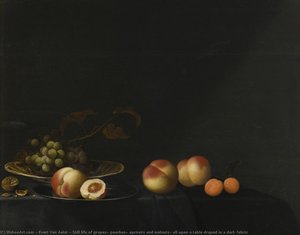
Still life of grapes, peaches, apricots and walnuts, all upon a table draped in a dark fabric
 52.0 x 65.0 cm
 Read More
Giclée / Art Print
Museum-quality giclée or canvas print with fast production and flexible finish options. ( Buy Hand Made Painting Buy Image)




































Pick from our preset sizes that match the artwork's original proportions.

You may enter your own dimensions to fit a specific frame or space. If your selected size does not match the original image's proportions, we will either crop the artwork or extend the image with a mirrored or solid-fill edge. A digital mockup will be sent for your approval before production begins.
Please note that the on-screen preview does not reflect the actual cropping or extension. Only the mockup will accurately show the final composition.
While custom sizes are available, we recommend selecting a dimension from the predefined list to preserve the original proportions.
Worldwide Delivery () in 2 weeks instead of standard 4/5 weeks. (29 August)

Free Worldwide Express Shipping

High-Quality Linen Canvas

Full Shipping Insurance

Customs Tax Refund Guarantee

True Color Matching Guarantee

60-Day Return Policy (Defects Only)

100% Money-Back Guarantee

Bulk Discount Offer
 Glass option is only available in size under 110 CM

Still life of grapes, peaches, apricots and walnuts, all upon a table draped in a dark fabric
Giclée / Art Print
Reproduction Size
-


Total Price
$ 63
Related Artworks








Artist Biography
The Luminous Legacy of Evert van Aelst
In the golden twilight of the seventeenth century, few artists possessed the ability to transform the mundane into the magnificent quite like Evert van Aelst. Born in the vibrant artistic hub of Delft around 1602, Van Aelst emerged as a master of the Dutch Golden Age, a period defined by an unparalleled obsession with light, texture, and the quiet drama of everyday existence. While his contemporaries often sought glory in sweeping landscapes or grand historical portraits, Van Aelst turned his gaze inward, finding profound beauty in the delicate veins of a leaf, the glistening skin of a grape, and the cold, silvery sheen of a fish. His work serves as a window into a world where even the most fleeting moment—the dewdrop on a petal or the decay of a fallen fruit—was captured with eternal precision.
The foundations of his mastery were laid early in his youth through a profound familial connection to the arts. As the nephew and pupil of the esteemed painter Willem van Aelst, he was immersed in a tradition of meticulous observation from his earliest years. This lineage provided him with more than just technical instruction; it instilled a deep-seated reverence for the classical principles that would later allow him to bridge the gap between Northern realism and the elegance of Italian Mannerism. His early training was further enriched by the profound influence of Pieter Claesz, whose revolutionary use of chiaroscuro—the dramatic tension between shadow and illumination—became a cornerstone of Van Aelst’s own aesthetic language. Through this influence, Van Aelst learned to manipulate light not merely as a tool for visibility, but as an emotional force capable of breathing life into inanimate objects.
A Journey Through Light and Patronage
Van Aelst’s artistic evolution was significantly shaped by his extensive travels across the European continent. During the 1630s and 1640s, his wanderings took him through the heart of France and into the sun-drenched landscapes of Italy. These expeditions were far more than mere sightseeing; they were essential periods of intellectual and stylistic expansion. In Italy, he encountered the humanist ideals and the sophisticated grandeur of the Mediterranean, which added a layer of refined grace to his already precise Dutch technique. It was during these formative years that he secured the prestigious patronage of Grand Duke Ferdinand II of Tuscany. This relationship with the Medici court not only provided him with financial stability but also elevated his status, allowing him to produce works that reflected the intellectual fervor and aristocratic elegance of the era.
Upon returning to the Netherlands, Van Aelst settled in Delft, where he established a highly successful studio that became a beacon for aspiring talents. His technique was nothing short of miraculous, characterized by a painstaking glazing method. By applying successive, translucent layers of pigment over dried underpaintings, he achieved a depth and luminosity that seemed to radiate from within the canvas itself. This meticulous approach allowed him to capture the subtle nuances of texture—the velvety softness of a peach, the brittle translucency of an insect's wing, or the heavy, cold weight of pewter—with such startling realism that the viewer is often tempted to reach out and touch the painted surface.
The Art of Vanitas and Lasting Significance
Beyond the mere technical brilliance of his execution, Van Aelst’s oeuvre is deeply imbued with the philosophical weight of the Vanitas tradition. His still lifes were rarely just celebrations of abundance; they were profound meditations on the ephemeral nature of life. By juxtaposing ripe, succulent fruits with symbols of decay or the presence of insects, he reminded his audience of the inevitable passage of time and the fragility of earthly pleasures. This delicate balance between the sensory delight of the subject matter and the underlying somber message created a tension that is both captivating and haunting.
The historical significance of Evert van Aelst lies in his ability to elevate the still life genre to a level of high art that commanded respect across Europe. His legacy was not only found in his own canvases but also in the lineage of artists he influenced, including his nephew Willem and other notable students who carried forward his devotion to detail and light. Today, his works remain cherished treasures in prestigious collections worldwide, standing as enduring testaments to a period when the smallest details of the natural world were seen as reflections of the divine and the eternal.
evert van aelst
1602 - 1657
Quick Facts
- Artistic Movement Or Style: Golden Age Painting
- Artists Or Movements Influenced By This Artist: Vanitas paintings
- Artists Who Influenced This Artist: Pieter Claesz.
- Date Of Death: 1657
- Full Name: Evert van Aelst
- Nationality: Dutch
- Notable Artworks: ['Still Life with Fruit and Flowers']
- Place Of Birth: Delft, Netherlands