 Preview
 Send
Send Share
Share
 Details

 Download
 Similars
 X-Ray
X-Ray Diaporama
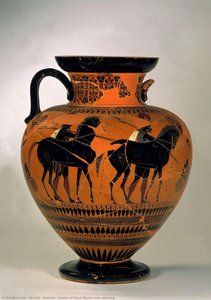
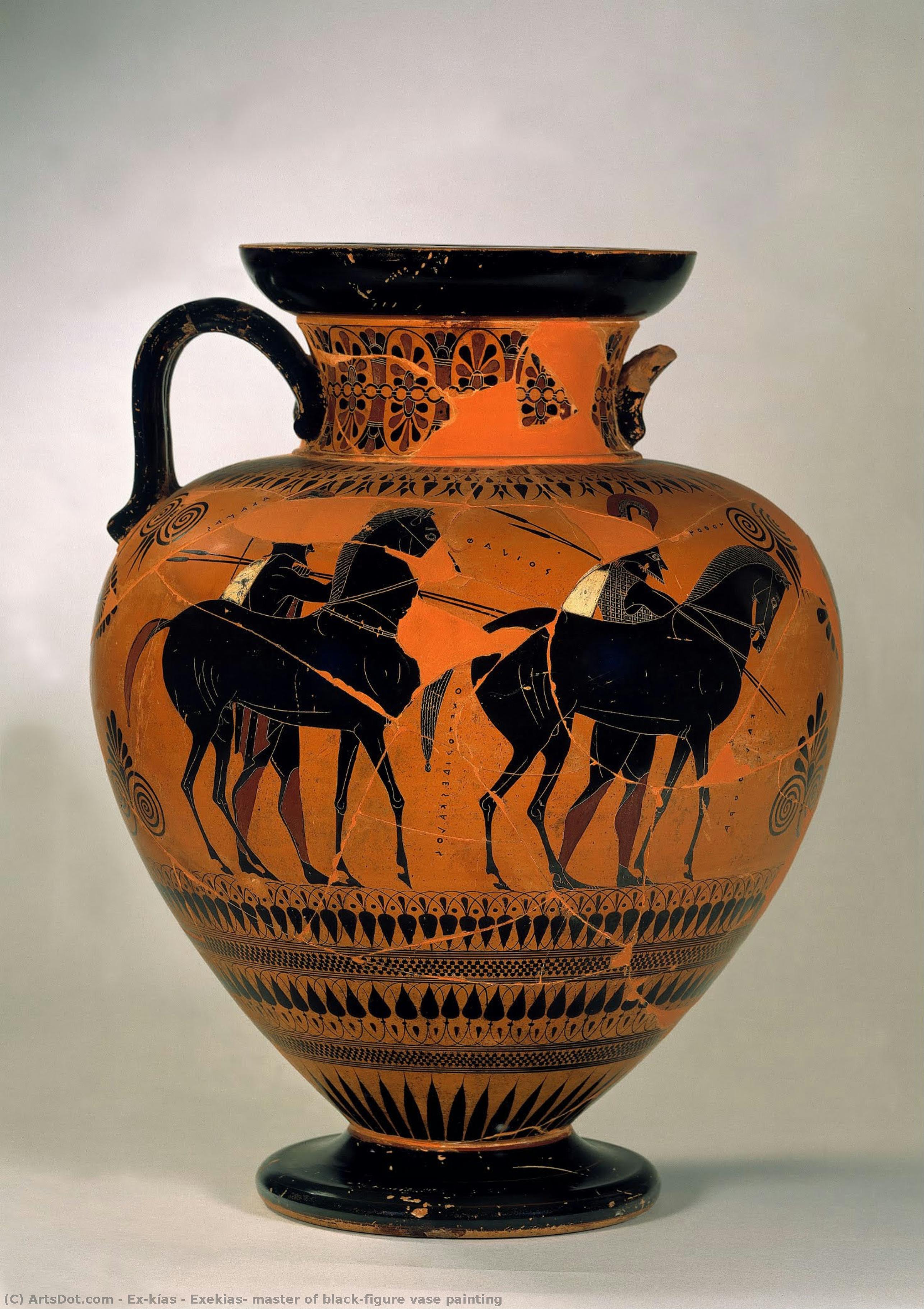
Exekias, master of black-figure vase painting


 Read More
Giclée / Art Print
Museum-quality giclée or canvas print with fast production and flexible finish options. ( Buy Hand Made Painting Buy Image)




































Pick from our preset sizes that match the artwork's original proportions.

You may enter your own dimensions to fit a specific frame or space. If your selected size does not match the original image's proportions, we will either crop the artwork or extend the image with a mirrored or solid-fill edge. A digital mockup will be sent for your approval before production begins.
Please note that the on-screen preview does not reflect the actual cropping or extension. Only the mockup will accurately show the final composition.
While custom sizes are available, we recommend selecting a dimension from the predefined list to preserve the original proportions.
Worldwide Delivery () in 2 weeks instead of standard 4/5 weeks. (2 September)

Free Worldwide Express Shipping

High-Quality Linen Canvas

Full Shipping Insurance

Customs Tax Refund Guarantee

True Color Matching Guarantee

60-Day Return Policy (Defects Only)

100% Money-Back Guarantee

Bulk Discount Offer
 Glass option is only available in size under 110 CM

Exekias, master of black-figure vase painting
Giclée / Art Print
Reproduction Size
-


Total Price
$ 63
Related Artworks
Artist Biography
The Silent Genius of Athenian Vase Painting
Exekias remains one of the most enigmatic figures in ancient Greek art history, a potter and painter whose mastery of the black-figure technique continues to inspire awe centuries later. Born around 545 BC in Athens—a city brimming with artistic innovation during the Archaic Period—he emerged as a pivotal voice within Athenian vase painting circles, shaping the aesthetic sensibilities of his time and establishing himself as arguably the greatest of all Attic vase artists. Despite leaving no written record of his life or personal beliefs, scholars reconstruct his existence through stylistic analysis of his surviving works and corroborating evidence from contemporary sources. He was a rare master who achieved the dual distinction of both potter and painter, a feat evidenced by the rare signatures on his vessels where he declares, “Exekias painted and made me.”A Pioneer of Psychological Depth
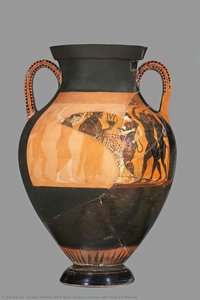
What distinguishes Exekias’s oeuvre is not merely technical brilliance—though undeniably impressive—but a profound understanding of human psychology that was remarkably advanced for its era. Unlike many of his contemporaries who focused on depicting mythological narratives with stylized, static figures, Exekias imbued his scenes with palpable emotion and nuanced characterization. His work often captures the quiet, heavy moments before or after great drama. Consider the famed Herakles & Warrior Amphora, where the musculature of Herakles is rendered with meticulous detail to convey a sense of determined effort and unwavering resolve. Yet, even within this display of strength, there is a subtle vulnerability in the accompanying warrior that speaks volumes about the anxieties inherent in warfare. This psychological realism was achieved through masterful incision techniques—carefully scratched lines etched into the clay surface before firing—which allowed for shading and contouring that surpassed anything seen previously in the Athenian workshops.Technical Mastery and Narrative Innovation
The artistry of Exekias is defined by a meticulous attention to detail that transformed functional clay vessels into profound narrative canvases. His use of the black-figure technique involved painting silhouettes in a slip that turned black during firing, followed by incredibly fine incisions to define anatomy, armor, and drapery. He often enriched these compositions with added red and white pigments to enhance the texture of chitons or the glint of weaponry. His ability to compose complex scenes is perhaps best seen in his depictions of Dionysian themes, such as his Athenian Black-figure Amphora featuring Dionysos surrounded by satyrs and maenads. In these works, he balances the chaotic energy of the mythological retinue with a structured, rhythmic grace. His compositions often utilized decorative elements like lotus flowers, palmettes, and volutes to frame his central dramas, creating a cohesive visual experience that guided the viewer's eye through the mythic landscape.Legacy and Historical Significance
The influence of Exekias extended far beyond his own lifetime, leaving an indelible mark on the trajectory of Greek art. His artistic vision profoundly impacted his pupils, most notably the Lysippides Painter, who is considered one of the foremost sculptors and painters of the subsequent generation. This lineage of excellence ensured that the principles of anatomical accuracy and dramatic tension established by Exekias became cornerstones of the Classical tradition. By elevating vase painting from mere craft to a medium capable of profound psychological expression, Exekias bridged the gap between the decorative and the profound. His work stands as a testament to a period of unparalleled creativity in Athens, representing the pinnacle of Archaic Greek art and serving as a foundational pillar for the development of Western visual storytelling.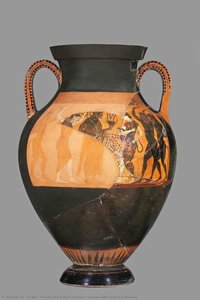
exēkías
Greece
Quick Facts
- Artistic Movement Or Style: Black-figure technique
- Artists Who Influenced This Artist:
- Andokides Painter
- Lysippides Painter
- Full Name: exēkías
- Nationality: Greek
- Notable Artworks: ['Dionysos with Satyrs and Maenads']
- Place Of Birth: Athens, Greece
Related Articles

Dark Masterpieces: 10 Iconic Paintings Dominated by Black Tones |
Explore 10 iconic paintings dominated by black tones, from Rembrandt’s chiaroscuro to Goya's dark expressions. Discover the stories behind these masterpieces & find museum-quality art reproductions for your home at .
Echoes of Olympus: Mythological Narratives in Western Art Through the Ages
Explore the captivating history of mythological narratives in Western art! From ancient Greece to modern masterpieces, discover iconic artworks & symbolism. Expert analysis and high-quality reproductions at ArtsDot.
Mars Black Masterpieces: 10 Iconic Paintings & Timeless Art Decor Ideas
Delve into the power of 'Mars Black' with 10 iconic paintings by masters like Rembrandt & Caravaggio. Explore dramatic chiaroscuro, gothic art, and timeless beauty. Find museum-quality reproductions & elevate your home decor on .
Lamp Black & Masterpieces: 10 Paintings That Define Shadow & Light |
Delve into the captivating world of 'Lamp Black' tones with 10 iconic paintings by masters like Rembrandt & Caravaggio. Explore Baroque chiaroscuro, dramatic lighting & shadow in art history. Find museum-quality reproductions at
Ivory Black Masters: 10 Paintings That Define Dramatic Art |
Delve into the power of 'Ivory Black' with 10 iconic paintings by masters like Rembrandt & Caravaggio. Explore dramatic chiaroscuro, gothic moods & timeless art history. Find museum-quality reproductions and elevate your home decor at