

 Preview
 Send
Send Share
Share
 Details

 Download
 Similars
 X-Ray
X-Ray Diaporama
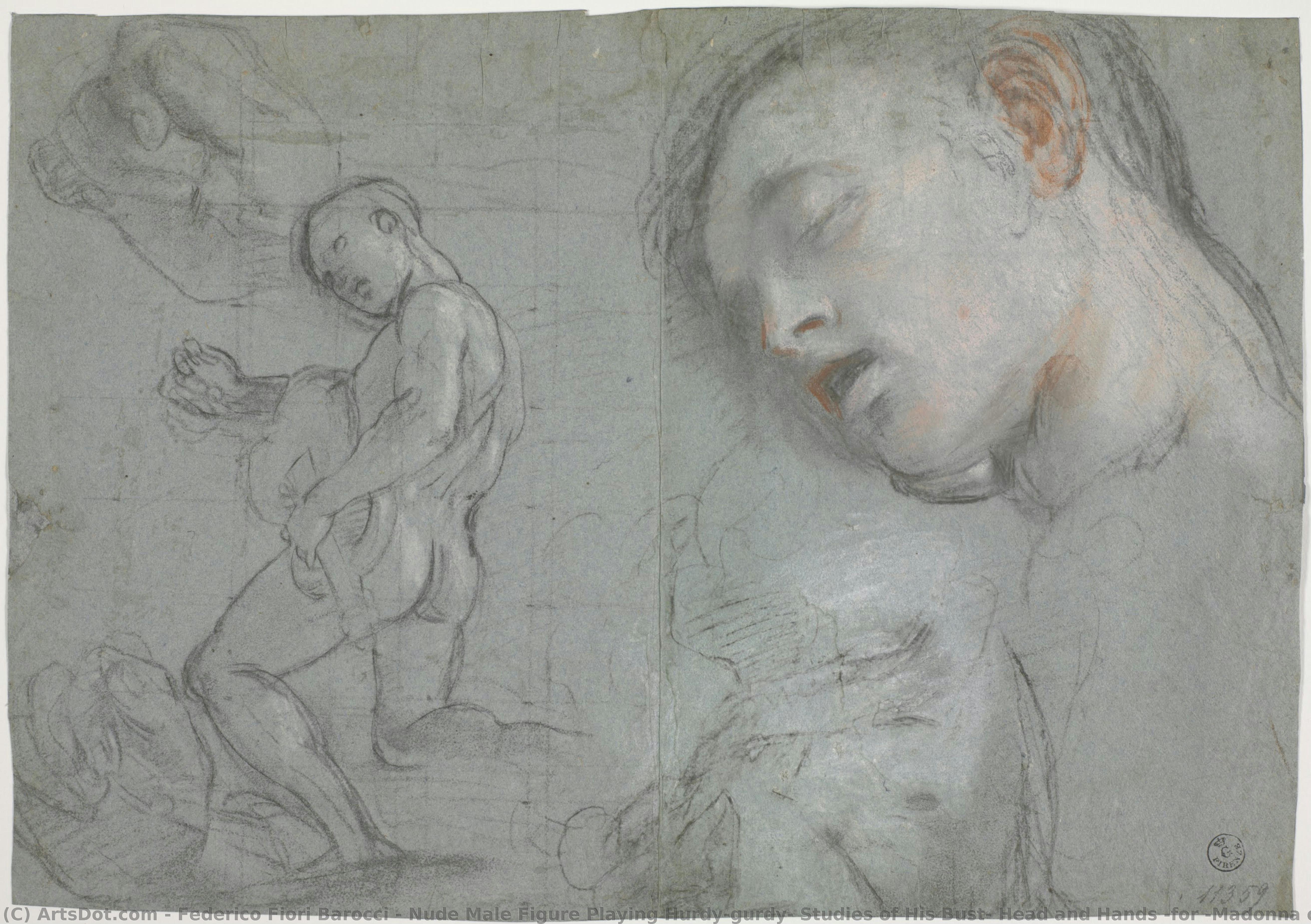
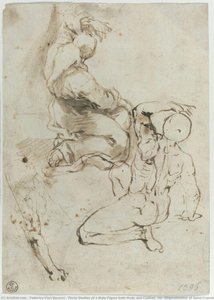
Nude Male Figure Playing Hurdy-gurdy, Studies of His Bust, Head and Hands (for “Madonna del Popolo”, Firenze, Galleria degli Uffizi)
 Acrylic On Canvas
- WallArt
- Baroque
 1579
1579 29.0 x 41.0 cm
 Galleria degli Uffizi
 Read More
Purchase a high-resolution, enhanced digital image, far superior to the online preview.
Each file is meticulously prepared by our in-house specialists using advanced tools and expert manual retouching. We ensure every image has exceptional clarity, precise color accuracy, and fine detail.
The final file is delivered via email within 72 hours, optimized for immediate use in professional, editorial, and print environments. This is the same quality trusted by top-tier design studios, publishers, and galleries.
Digital Image
Download a high-resolution file for personal display, printing, and creative projects. ( Buy Print Buy Hand Made Painting)
Included in Every Digital Image Order
Expert Digital Delivery, Guaranteed
When you choose ArtsDot.com, you're not just getting an image - you're receiving a professionally enhanced digital artwork, crafted with precision and backed by a satisfaction guarantee. Here's everything that comes with your order, automatically:

Fast Email Delivery
Your high-resolution digital image file will be emailed to you within 72 hours of ordering - ready for immediate use.

AI-Enhanced Digital File
Your artwork is professionally optimized using advanced AI tools and manual editing, ensuring maximum detail, clarity, and color accuracy.

Free Lifetime Re-Delivery
Accidentally deleted or lost your file? No worries - we'll resend it to you anytime, free of charge.

No Import Fees - Ever
Enjoy your artwork instantly with zero customs, duties, or delivery fees - digital downloads are always tax-free.

Color Accuracy Guarantee
We ensure your digital image reflects the original colors as closely as possible using professional tools and color management.

60-Day Satisfaction Guarantee
If you're not satisfied with your digital image, we'll revise it or refund 100% within 60 days - no questions asked.

100% Money-Back Guarantee
Not satisfied? Get a full refund within 60 days of receiving your digital file - no questions asked.

Bulk Order Discounts
Buy 3 images, save 10% - Buy 5, save 15% - Buy 10+, save 20%. Great for creative projects, galleries, and agencies.
Federico Fiori Barocci: A Study in Anatomical Precision and Renaissance Gesture
Federico Fiori Barocci (1535 – 1612), affectionately nicknamed “il Baroccio,” stands as a pivotal figure bridging the gap between High Renaissance idealism and the burgeoning Baroque dynamism. Born in Urbino, Italy—a city renowned for its artistic patronage under Federico II Gonzaga—Barocci’s formative years were steeped in sculptural tradition, instilled by his father, Ambrogio Barocci, who sculpted monumental works celebrating papal grandeur.
His apprenticeship with Battista Franco honed his observational skills and established him as a student of meticulous detail. However, it was his association with Taddeo and Federico Zuccari’s studio in Rome that truly propelled him toward artistic innovation. Surrounded by masters like Michelangelo Buonarroti and Raphael Sanzio, Barocci absorbed influences shaping the stylistic landscape of the era.
His debut masterpiece, “St. Margaret,” commissioned for the confraternity of the Holy Sacrament, showcased his ability to capture spiritual contemplation with anatomical accuracy—a hallmark that would foreshadow Rubens’s expressive Baroque style. Subsequently, Pope Pius IV invited him to collaborate on the decoration of St. Peter's Basilica, marking a significant step in establishing Barocci’s reputation as one of Rome’s foremost artists.
Technique and Material Considerations
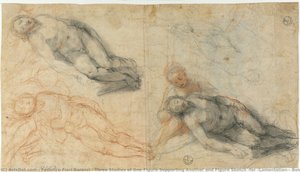
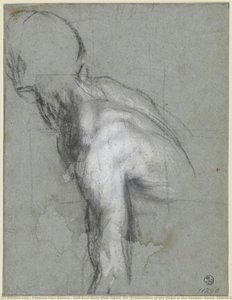
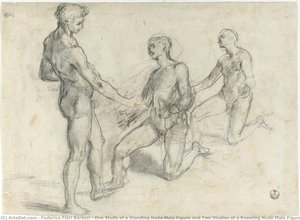
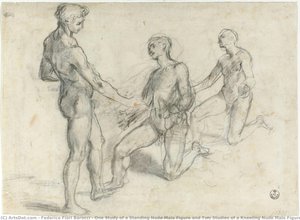
Barocci’s artistic approach prioritized anatomical study alongside gesture—a characteristic that distinguishes his oeuvre from the more polished idealism prevalent during Raphael's time. He excelled at rendering the human form with remarkable precision, utilizing charcoal as his primary medium, often supplemented by red chalk or pastel for shading and highlights. The artist employed hatching and cross-hatching techniques to build up tonal values, creating a palpable illusion of volume and musculature.
Detailed observation informed every stroke—the subtle contours of the torso, the expressive pose of the hand reaching upwards—reflecting a commitment to capturing not merely physical likeness but also psychological nuance. Texture was achieved through varied charcoal densities, resulting in areas of deep shadow and luminous highlights that imbue the artwork with an atmospheric quality.
Historical Context: Renaissance Anatomy and Artistic Dialogue
Barocci’s work emerged during a period of intense artistic dialogue—a concerted effort to synthesize classical ideals with emerging Baroque sensibilities. The Zuccari studio served as a crucible for stylistic experimentation, exposing Barocci to the influences of Michelangelo Buonarroti and Raphael Sanzio, artists who had championed anatomical realism and expressive dynamism.
His preparatory sketches for “Madonna del Popolo,” commissioned by Cardinal Ludovico Gonzaga—a monumental altarpiece destined for Florence’s Galleria degli Uffizi—demonstrate this preoccupation with anatomical precision. The sketch captures a male figure engaged in playing a hurdy-gurdy, embodying both physical movement and spiritual contemplation—themes central to Renaissance art.
Symbolism and Emotional Resonance
Beyond mere representation, Barocci’s artwork communicates profound symbolic meaning. The nude male figure serves as an emblem of vulnerability yet simultaneously embodies strength—a duality reflecting the humanist ethos underpinning Renaissance thought. The posture conveys a sense of yearning or aspiration, inviting contemplation on themes of faith and transcendence.
The subdued palette—primarily charcoal tones accented by subtle red chalk highlights—contributes to the artwork’s emotional resonance. It evokes a mood of quiet introspection, mirroring the contemplative spirit characteristic of Renaissance art. Barocci's meticulous technique captures not only anatomical accuracy but also the expressive power inherent in human gesture.
Conclusion: An Enduring Legacy
Federico Fiori Barocci’s “Nude Male Playing Hurdy-gurdy” remains an enduring testament to Renaissance artistic achievement. Its masterful execution—characterized by anatomical precision, expressive gesture, and atmospheric shading—continues to inspire artists and collectors alike. Reproductions of this exquisite sketch offer a glimpse into the mind of a visionary artist who profoundly shaped the trajectory of European art.
Related Artworks
Artist Biography
Early Life and Training
- Born: Urbino, Italy (1535)
- Died: 1612
- Federico Fiori Barocci, an Italian Renaissance painter and printmaker, was born in 1535 in Urbino, Italy.
- His original name was Federico Fiori, and he was nicknamed "il Baroccio," which means a two-wheel cart drawn by oxen in northwestern Italian dialects.
- Barocci received his earliest apprenticeship with his father, Ambrogio Barocci, a sculptor of some local eminence.
- He was then apprenticed with the painter Battista Franco in Urbino. This training laid the foundation for his future success.
Artistic Career and Influences
- Barocci's work was highly esteemed and influential, foreshadowing the Baroque style of Peter Paul Rubens.
- He worked in the pre-eminent studio of Taddeo and Federico Zuccari in Rome, where he was exposed to various artistic influences.
- His first notable work was a "St. Margaret" executed for the confraternity of the Holy Sacrament.
- He was invited by Pope Pius IV to assist in the decoration of the Vatican Belvedere Palace at Rome, where he painted the Virgin Mary and infant, with several saints and a ceiling in fresco, representing the Annunciation.
- Barocci's style was characterized by a mix of Mannerism and Baroque elements.
Notable Works and Legacy
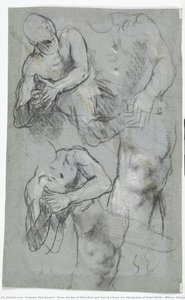
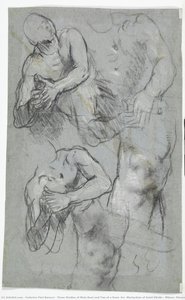
- Five Studies of Male Figure and two of His Right Hand and Arm (Uffizi Gallery, Florence, Italy) - A testament to Barocci’s skill in capturing the human form.
- Composition Study (for “Circumcision”, Paris, Musée du Louvre) – Demonstrates his ability to balance composition and emotion.
- Man’s Head (for “Calling of Saint Andrew”, Bruxelles, Musées Royaux des Beaux-Arts de Belgique) - Showcases Barocci's attention to detail and expression.
- The Nativity (1597 oil painting at the Prado).
- Madonna del Popolo (Uffizi Gallery, Florence, Italy).
- The Madonna of the Cat (La Madonna del Gatto)
- Annunciation (1582)
Artistic Impact and Followers
- Barocci's influence can be seen in the work of various artists, including Peter Paul Rubens, who was inspired by Barocci’s dramatic and emotive brushwork.
- His legacy continues to be celebrated through his numerous works, now housed in museums such as the Uffizi Gallery (Florence, Italy) and the Musée du Louvre (Paris, France).
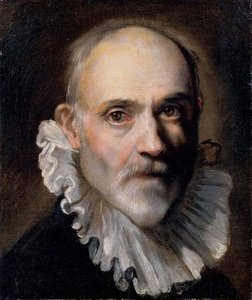
Federico Fiori Barocci
1535 - 1612 , Italy
Quick Facts
- Artistic Movement Or Style: Renaissance, Baroque
- Artists Or Movements Influenced By This Artist: ['Peter Paul Rubens']
- Artists Who Influenced This Artist: ['Battista Franco']
- Date Of Birth: 1535
- Date Of Death: 1612
- Full Name: Federico Fiori Barocci
- Nationality: Italian
- Notable Artworks:
- The Nativity
- Madonna del Popolo
- Annunciation
- Stigmatization of Saint Francis
- Rest on the Flight to Egypt
- Place Of Birth: Urbino, Italy

