 Preview
 Send
Send Share
Share
 Details

 Download
 Similars
 X-Ray
X-Ray Diaporama
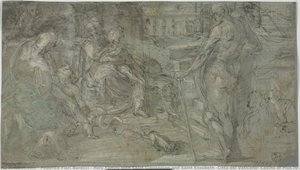
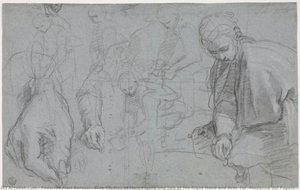
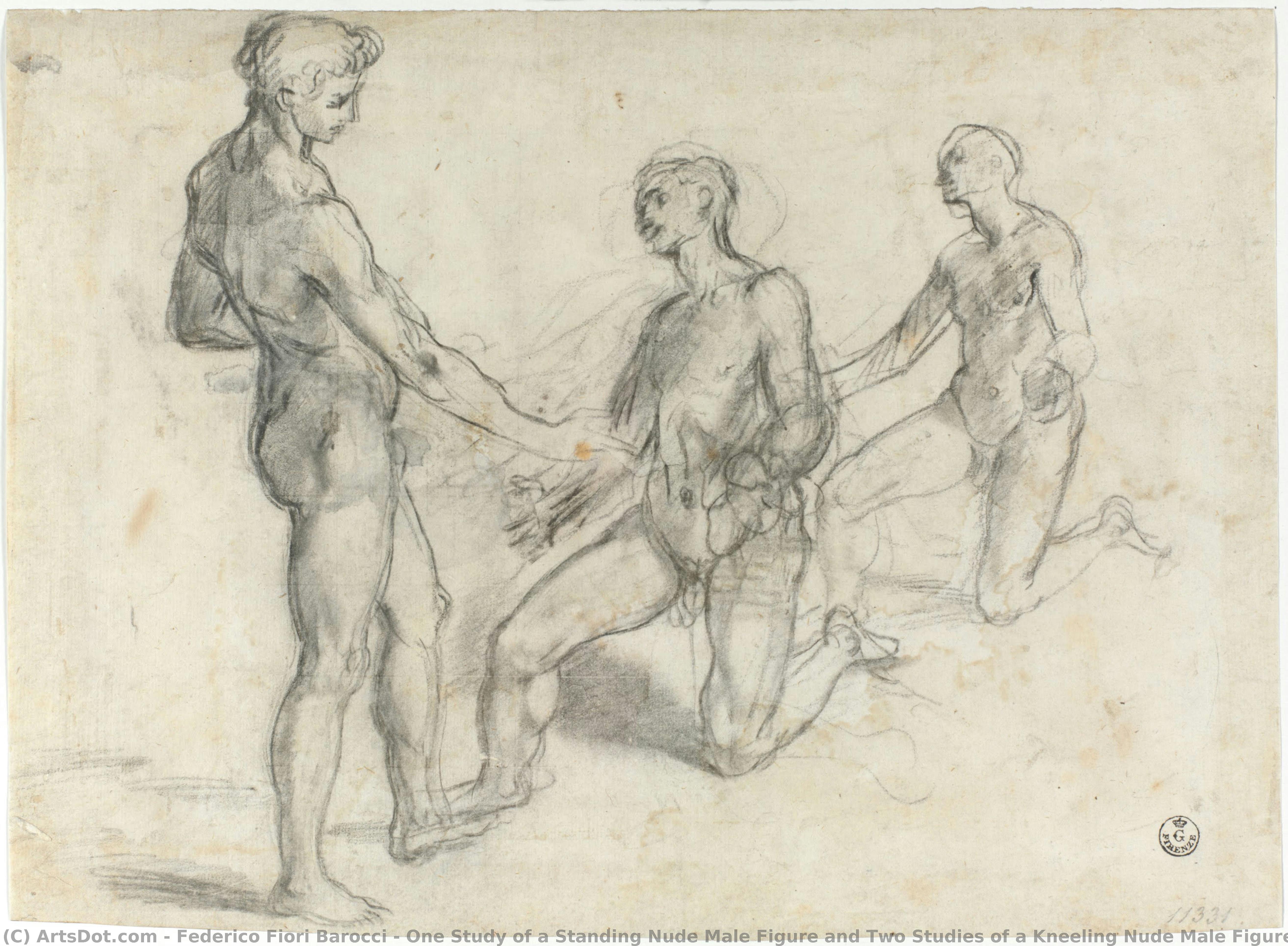
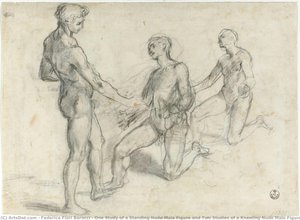
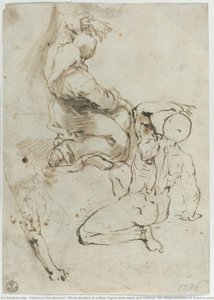
One Study of a Standing Nude Male Figure and Two Studies of a Kneeling Nude Male Figure (for “Calling of Saint Andrew”, Bruxelles, Musées royaux des Beaux-Arts de Belgique)
 Acrylic On Canvas
- WallArt
- Baroque Style
 1583
1583 28.0 x 38.0 cm
 Galleria degli Uffizi
 Read More
Hand Made Oil Reproduction
Hand-painted oil on canvas in your size and frame, made to order by our artists. ( Buy Print Buy Image)




P118B $10

P118H $10

P118W $10

P438Z $10

P508JH $12

P508YH $12

P805H $10

P805Z $10

P919BZ $10

P919G $10

P919XJ $10

P959ZH $10

P968JZ $12

W106C $8

W218G $10

W218JH $8

W218Y $10

W307PJ $10

W316G $10

W316PJ $8

W316Y $10

W398PJ $8

W4111J $10

W500HY $15

W500JH $15

W692G $12

W849H $8

W940BG $15

W953PJ $8




Pick from our preset sizes that match the artwork's original proportions.

You may enter your own dimensions to fit a specific frame or space. If your selected size does not match the original image's proportions, we will either crop the artwork or extend the painting with additional hand-painted elements. A digital mockup will be sent for your approval before production begins.
Please note that the on-screen preview does not reflect the actual cropping or extension. Only the mockup will accurately show the final composition.
While custom sizes are available, we recommend selecting a dimension from the predefined list to preserve the original proportions.
After order, ArtsDot.com team will email client for instructions and provide a mockup preview
Worldwide Delivery () in 3/4 weeks instead of standard 5 weeks. (16 August). No compromise on quality.

Free Worldwide Express Shipping

High-Quality Linen Canvas

Full Shipping Insurance

Customs Tax Refund Guarantee

True Color Matching Guarantee

60-Day Return Policy (Defects Only)

100% Money-Back Guarantee

Bulk Discount Offer
 Glass option is only available in size under 110 CM

One Study of a Standing Nude Male Figure and Two Studies of a Kneeling Nude Male Figure (for “Calling of Saint Andrew”, Bruxelles, Musées royaux des Beaux-Arts de Belgique)
Reproduction Medium
Reproduction Size
-


Total Price
$ 263
Artwork Description
Federico Barocci’s Nude Studies: Echoes of Grace and Foreshadowing Baroque Intensity
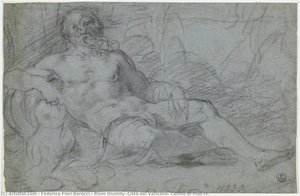
Federico Fiori Barocci's "One Study of a Standing Nude Male Figure and Two Studies of a Kneeling Nude Male Figure (for ‘Calling of Saint Andrew’, Bruxelles, Musées royaux des Beaux-Arts de Belgique)" offers a captivating glimpse into the artist’s meticulous process and burgeoning genius. Completed in 1583, this small yet profoundly insightful work transcends mere anatomical study; it's a meditation on form, gesture, and the nascent drama that would define the Baroque era. The painting itself—a modest 28 x 38 cm canvas—is deceptively simple in its composition: three male figures arranged in dynamic poses, hinting at a narrative yet withholding its full revelation. The monochrome palette, rendered with charcoal and chalk, emphasizes the sculptural quality of the bodies, inviting viewers to contemplate their lines and volumes with an almost tactile intensity.
Barocci’s artistic journey is one marked by both rigorous training and a fiercely independent spirit. Born in Urbino, he initially apprenticed under his father, a sculptor, before honing his skills with Battista Franco. His time in Rome, working within the influential studio of Taddeo Zuccari, exposed him to the Mannerist style—a period characterized by elongated forms, complex compositions, and an emphasis on elegance and refinement. However, Barocci quickly transcended these influences, developing a distinctly personal voice that foreshadowed the dramatic intensity and emotional depth of Peter Paul Rubens. The “Calling of Saint Andrew” commission itself demonstrates this shift; it wasn’t simply a devotional scene but a carefully constructed theatrical event, ripe with psychological complexity and visual dynamism.
The Anatomy of Gesture: A Study in Human Form
What immediately draws the eye is Barocci's masterful rendering of the human figure. The standing nude, poised as if about to extend his hand, embodies a potent blend of strength and vulnerability. His musculature is meticulously observed, yet rendered with a remarkable sensitivity—a testament to Barocci’s deep understanding of anatomy. The kneeling figures, positioned below him, are equally compelling. Their postures suggest supplication, anticipation, or perhaps even resignation, creating a layered dynamic within the composition. Notice how Barocci subtly manipulates the light and shadow to sculpt each form, highlighting contours and revealing the underlying structure of the body. The slight asymmetry in their poses—a subtle shift in weight, a turn of the head—adds a crucial element of realism and prevents the figures from appearing static or idealized.
The choice of charcoal and chalk as the primary medium is particularly significant. These materials allowed Barocci to achieve an unparalleled level of detail and tonal variation. The soft, velvety textures created by the chalk evoke a sense of ethereal beauty, while the sharp lines of the charcoal provide definition and structure. Crucially, these studies weren’t merely preparatory sketches; they were integral components of Barocci's elaborate working method. He produced hundreds of drawings—gestural sketches, compositional studies, color explorations—each contributing to the final masterpiece. This painstaking process reflects his commitment to achieving a level of realism and emotional resonance that was unparalleled in his time.
Symbolism and the Dawn of Baroque Drama
While ostensibly depicting three nude figures, the painting is rich with symbolic potential. The “Calling of Saint Andrew” itself carries significant religious weight—the apostle’s reluctance to embrace his vocation and the divine intervention that compels him to follow Christ. The standing figure's outstretched hand could represent both invitation and command, while the kneeling figures embody faith and obedience. Barocci masterfully uses gesture and posture to convey these complex ideas without resorting to explicit narrative details. The composition’s dynamism—the diagonal lines created by the figures’ positions—suggests movement and energy, foreshadowing the dramatic intensity that would characterize the Baroque style.
Furthermore, Barocci's work anticipates the emotionalism of the Baroque period. Unlike the cool detachment of Mannerism, his paintings are infused with a palpable sense of drama and feeling. The figures’ expressions—subtle shifts in their eyes and mouths—suggest a range of emotions: doubt, hope, fear, and devotion. This emphasis on psychological realism would become a hallmark of the Baroque style, influencing generations of artists to come. The “Calling of Saint Andrew” is not just a study of the human form; it’s a profound exploration of faith, obedience, and the transformative power of divine grace—a testament to Federico Barocci's enduring legacy.
Related Artworks
Artist Biography
Early Life and Training
- Born: Urbino, Italy (1535)
- Died: 1612
- Federico Fiori Barocci, an Italian Renaissance painter and printmaker, was born in 1535 in Urbino, Italy.
- His original name was Federico Fiori, and he was nicknamed "il Baroccio," which means a two-wheel cart drawn by oxen in northwestern Italian dialects.
- Barocci received his earliest apprenticeship with his father, Ambrogio Barocci, a sculptor of some local eminence.
- He was then apprenticed with the painter Battista Franco in Urbino. This training laid the foundation for his future success.
Artistic Career and Influences
- Barocci's work was highly esteemed and influential, foreshadowing the Baroque style of Peter Paul Rubens.
- He worked in the pre-eminent studio of Taddeo and Federico Zuccari in Rome, where he was exposed to various artistic influences.
- His first notable work was a "St. Margaret" executed for the confraternity of the Holy Sacrament.
- He was invited by Pope Pius IV to assist in the decoration of the Vatican Belvedere Palace at Rome, where he painted the Virgin Mary and infant, with several saints and a ceiling in fresco, representing the Annunciation.
- Barocci's style was characterized by a mix of Mannerism and Baroque elements.
Notable Works and Legacy
- Five Studies of Male Figure and two of His Right Hand and Arm (Uffizi Gallery, Florence, Italy) - A testament to Barocci’s skill in capturing the human form.
- Composition Study (for “Circumcision”, Paris, Musée du Louvre) – Demonstrates his ability to balance composition and emotion.
- Man’s Head (for “Calling of Saint Andrew”, Bruxelles, Musées Royaux des Beaux-Arts de Belgique) - Showcases Barocci's attention to detail and expression.
- The Nativity (1597 oil painting at the Prado).
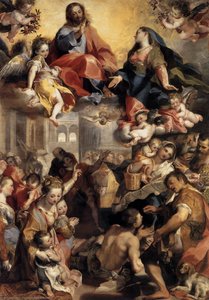
- Madonna del Popolo (Uffizi Gallery, Florence, Italy).
- The Madonna of the Cat (La Madonna del Gatto)
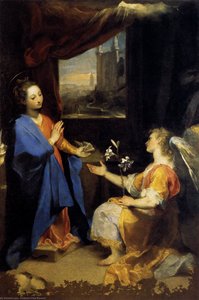
- Annunciation (1582)
Artistic Impact and Followers
- Barocci's influence can be seen in the work of various artists, including Peter Paul Rubens, who was inspired by Barocci’s dramatic and emotive brushwork.
- His legacy continues to be celebrated through his numerous works, now housed in museums such as the Uffizi Gallery (Florence, Italy) and the Musée du Louvre (Paris, France).
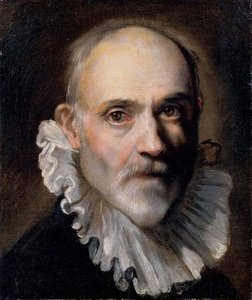
Federico Fiori Barocci
1535 - 1612 , Italy
Quick Facts
- Artistic Movement Or Style: Renaissance, Baroque
- Artists Or Movements Influenced By This Artist: ['Peter Paul Rubens']
- Artists Who Influenced This Artist: ['Battista Franco']
- Date Of Birth: 1535
- Date Of Death: 1612
- Full Name: Federico Fiori Barocci
- Nationality: Italian
- Notable Artworks:
- The Nativity
- Madonna del Popolo
- Annunciation
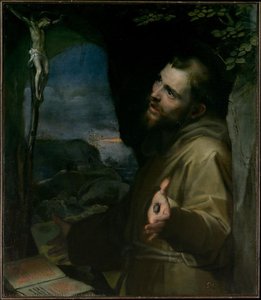
- Stigmatization of Saint Francis
- Rest on the Flight to Egypt
- Place Of Birth: Urbino, Italy
Related Articles
Leonardo da Vinci's Masterpieces: Explore 25 Iconic Artworks for Your Home | ArtsDot
Journey through Leonardo da Vinci's genius with our curated selection of 25 iconic artworks. Explore the stories behind Mona Lisa, The Last Supper & more Renaissance masterpieces. Find museum-quality art reproductions for your home at ArtsDot.com.
Federico Barocci: A Master of Emotive Spirituality & the Transition from Mannerism
Explore the captivating world of Federico Barocci, a pivotal figure bridging Mannerism & Baroque art. Discover his emotive spirituality, innovative techniques, and lasting influence on Italian Renaissance painting.
The Enduring Allure of the Nude: A Historical & Artistic Exploration of the Human Form
Explore the captivating history of nude art! Discover iconic paintings & artists from classical to modern eras. Uncover symbolism, techniques & find museum-quality reproductions at ArtsDot.
The Eloquent Form: A Historical & Aesthetic Exploration of the Nude in Art
Explore the captivating history of the nude in art! From ancient Greece to modern masters, discover its evolving symbolism, techniques & enduring beauty. Expert insights for collectors and enthusiasts.
The Intimate Gaze: Study & Intellectual Pursuit in Western Art
Explore the fascinating history of study and intellectual pursuit in Western art! Discover Renaissance scholars, iconic portraits like Holbein's Erasmus, and Leonardo’s studies – a journey through humanist ideals & artistic mastery. Learn more at ArtsDot.