 Preview
 Send
Send Share
Share
 Details

 Download
 Similars
 X-Ray
X-Ray Diaporama
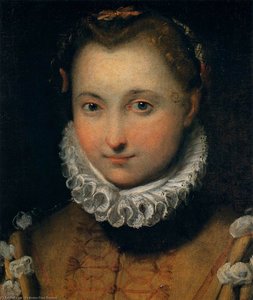
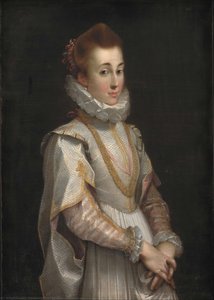
Portrait of a Young Woman
 Oil On Canvas
- WallArt
- Baroque
 1570
1570 45.0 x 33.0 cm
 Galleria degli Uffizi
 Read More
Hand Made Oil Reproduction
Hand-painted oil on canvas in your size and frame, made to order by our artists. ( Buy Print Buy Image)




P118B $10

P118H $10

P118W $10

P438Z $10

P508JH $12

P508YH $12

P805H $10

P805Z $10

P919BZ $10

P919G $10

P919XJ $10

P959ZH $10

P968JZ $12

W106C $8

W218G $10

W218JH $8

W218Y $10

W307PJ $10

W316G $10

W316PJ $8

W316Y $10

W398PJ $8

W4111J $10

W500HY $15

W500JH $15

W692G $12

W849H $8

W940BG $15

W953PJ $8




Pick from our preset sizes that match the artwork's original proportions.

You may enter your own dimensions to fit a specific frame or space. If your selected size does not match the original image's proportions, we will either crop the artwork or extend the painting with additional hand-painted elements. A digital mockup will be sent for your approval before production begins.
Please note that the on-screen preview does not reflect the actual cropping or extension. Only the mockup will accurately show the final composition.
While custom sizes are available, we recommend selecting a dimension from the predefined list to preserve the original proportions.
After order, ArtsDot.com team will email client for instructions and provide a mockup preview
Worldwide Delivery () in 3/4 weeks instead of standard 5 weeks. (17 August). No compromise on quality.

Free Worldwide Express Shipping

High-Quality Linen Canvas

Full Shipping Insurance

Customs Tax Refund Guarantee

True Color Matching Guarantee

60-Day Return Policy (Defects Only)

100% Money-Back Guarantee

Bulk Discount Offer
 Glass option is only available in size under 110 CM

Portrait of a Young Woman
Reproduction Medium
Reproduction Size
-


Total Price
$ 263
Artwork Description
Federico Fiori Barocci’s “Portrait of a Young Woman” – A Window into Renaissance Grace
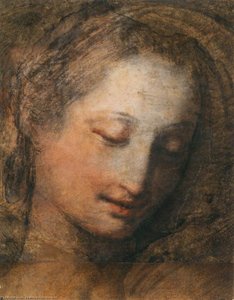
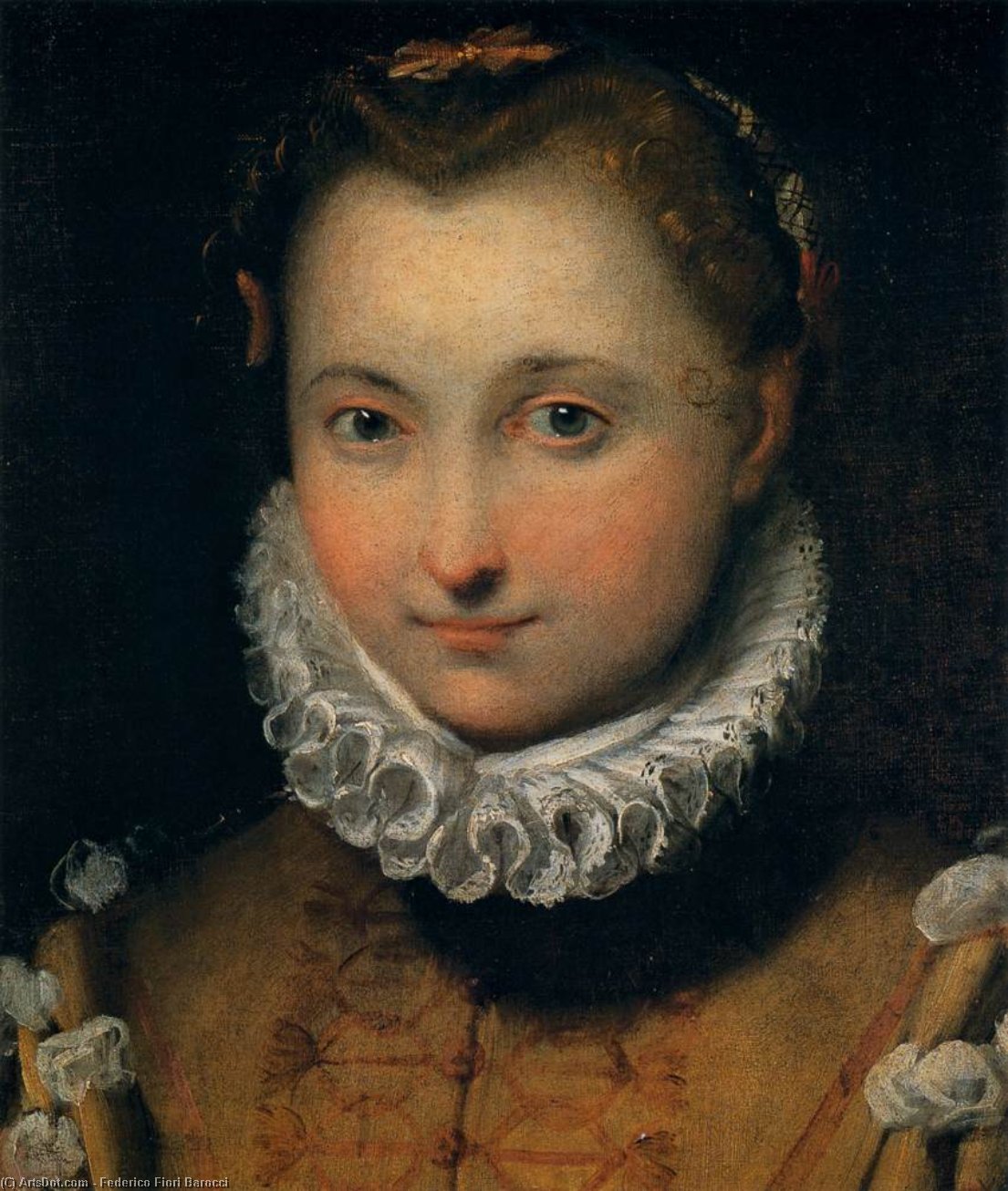
Federico Fiori Barocci, better known as "Il Baroccio," stands as a pivotal figure bridging the elegant formality of the High Renaissance with the burgeoning dynamism of the Baroque. His 1570-75 painting, “Portrait of a Young Woman,” housed within the Galleria degli Uffizi in Florence, is not merely a likeness; it’s a carefully constructed tableau brimming with symbolism and reflecting the artistic currents of its time. The work immediately captivates with its delicate beauty – a young woman presented in profile, her gaze direct and inviting, yet subtly imbued with an air of contemplative serenity.
The painting's style is distinctly Mannerist, inheriting the refined grace and elongated forms characteristic of artists like Pontormo and Bronzino. However, Barocci departs from strict adherence to this style, introducing a softer, more luminous quality that anticipates the Baroque’s emphasis on emotional intensity. Notice the subtle modeling of her face – not sharply defined as in earlier portraiture, but rendered with a delicate blending of tones that creates an almost ethereal effect. The background is deliberately dark, drawing attention entirely to the subject and enhancing the sense of intimacy.
A Medallion of Antiquity: Symbolism and Context
Central to the painting’s visual richness is the cameo medallion she wears around her neck – a meticulously crafted copy of “Nero’s Seal,” an antique carnelian depicting Apollo and Marsyas. This reference to classical antiquity was immensely popular during the Renaissance, signifying intellectual refinement and connection to the wisdom of the ancients. The inclusion of this emblem elevates the portrait beyond a simple likeness, transforming it into a statement of cultural awareness and artistic erudition. The choice of Nero’s Seal is particularly intriguing; Nero himself was a controversial figure, associated with both brilliance and tyranny, adding layers of complexity to the image.
Furthermore, the three “tassels” of hair at her center are often interpreted as stylized flames – a visual metaphor for the passions and desires that the portrait evokes. This interpretation aligns with Renaissance Neoplatonic thought, which sought to reconcile earthly beauty with spiritual ideals. The artist’s subtle manipulation of light and shadow further reinforces this sense of heightened emotion, creating an atmosphere of both allure and mystery.
Technique and Innovation: A Pioneer of Pastel
Barocci's mastery is evident in his innovative use of technique. While primarily employing oil paint, he was a pioneer in the application of pastel – a medium known for its delicate luminosity and ability to capture subtle nuances of color. His preparatory drawings reveal an extraordinary level of detail and experimentation, showcasing his meticulous approach to composition and color. These studies demonstrate not just his artistic skill but also his intellectual curiosity—he meticulously explored light, shadow, and the effects of different pigments.
The painting’s palette is restrained yet sophisticated, dominated by muted earth tones – ochres, siennas, and umbers – that create a harmonious and elegant effect. The use of white highlights adds to the sense of luminosity and emphasizes the contours of her face and clothing. Barocci's ability to achieve such depth and richness with a limited palette is a testament to his exceptional technical skill.
A Timeless Portrait: Emotional Resonance and Legacy
“Portrait of a Young Woman” transcends its historical context, continuing to resonate with viewers today. The subject’s direct gaze invites us into her world, while the painting's subtle symbolism offers layers of interpretation. It is not simply a representation of beauty; it is an exploration of human emotion, cultural references, and artistic innovation. Barocci’s legacy lies in his ability to seamlessly blend Renaissance refinement with Baroque dynamism, creating works that are both intellectually stimulating and emotionally engaging – a testament to the enduring power of art.
Related Artworks
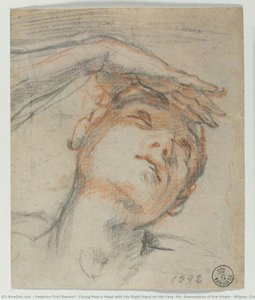

Artist Biography
Early Life and Training
- Born: Urbino, Italy (1535)
- Died: 1612
- Federico Fiori Barocci, an Italian Renaissance painter and printmaker, was born in 1535 in Urbino, Italy.
- His original name was Federico Fiori, and he was nicknamed "il Baroccio," which means a two-wheel cart drawn by oxen in northwestern Italian dialects.
- Barocci received his earliest apprenticeship with his father, Ambrogio Barocci, a sculptor of some local eminence.
- He was then apprenticed with the painter Battista Franco in Urbino. This training laid the foundation for his future success.
Artistic Career and Influences
- Barocci's work was highly esteemed and influential, foreshadowing the Baroque style of Peter Paul Rubens.
- He worked in the pre-eminent studio of Taddeo and Federico Zuccari in Rome, where he was exposed to various artistic influences.
- His first notable work was a "St. Margaret" executed for the confraternity of the Holy Sacrament.
- He was invited by Pope Pius IV to assist in the decoration of the Vatican Belvedere Palace at Rome, where he painted the Virgin Mary and infant, with several saints and a ceiling in fresco, representing the Annunciation.
- Barocci's style was characterized by a mix of Mannerism and Baroque elements.
Notable Works and Legacy
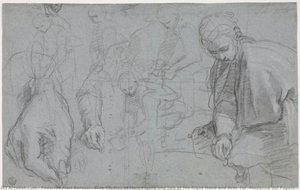
- Five Studies of Male Figure and two of His Right Hand and Arm (Uffizi Gallery, Florence, Italy) - A testament to Barocci’s skill in capturing the human form.
- Composition Study (for “Circumcision”, Paris, Musée du Louvre) – Demonstrates his ability to balance composition and emotion.
- Man’s Head (for “Calling of Saint Andrew”, Bruxelles, Musées Royaux des Beaux-Arts de Belgique) - Showcases Barocci's attention to detail and expression.
- The Nativity (1597 oil painting at the Prado).
- Madonna del Popolo (Uffizi Gallery, Florence, Italy).
- The Madonna of the Cat (La Madonna del Gatto)
- Annunciation (1582)
Artistic Impact and Followers
- Barocci's influence can be seen in the work of various artists, including Peter Paul Rubens, who was inspired by Barocci’s dramatic and emotive brushwork.
- His legacy continues to be celebrated through his numerous works, now housed in museums such as the Uffizi Gallery (Florence, Italy) and the Musée du Louvre (Paris, France).
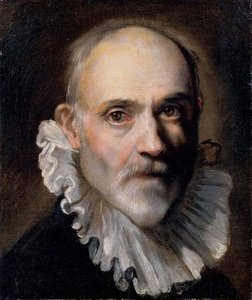
Federico Fiori Barocci
1535 - 1612 , Italy
Quick Facts
- Artistic Movement Or Style: Renaissance, Baroque
- Artists Or Movements Influenced By This Artist: ['Peter Paul Rubens']
- Artists Who Influenced This Artist: ['Battista Franco']
- Date Of Birth: 1535
- Date Of Death: 1612
- Full Name: Federico Fiori Barocci
- Nationality: Italian
- Notable Artworks:
- The Nativity
- Madonna del Popolo
- Annunciation
- Stigmatization of Saint Francis
- Rest on the Flight to Egypt
- Place Of Birth: Urbino, Italy
Related Articles
Federico Barocci: A Master of Emotive Spirituality & the Transition from Mannerism
Explore the captivating world of Federico Barocci, a pivotal figure bridging Mannerism & Baroque art. Discover his emotive spirituality, innovative techniques, and lasting influence on Italian Renaissance painting.

Baroque Masterpieces: 10 Paintings That Defined an Era |
Journey through the drama & grandeur of Baroque art! Explore 10 masterpieces by Caravaggio, Rembrandt, Rubens & more. Discover stunning oil paintings, rich colors & timeless stories. Find museum-quality reproductions at .
The Grandeur of Baroque Portraiture: Power, Emotion & Artistic Innovation
Explore the grandeur of Baroque portraiture! Discover Rubens, Van Dyck & the masters of 17th-century art. Uncover symbolism, techniques & lasting influence. Expert insights for collectors and enthusiasts.

Baroque Drama: Bringing Opulence & Emotion into Contemporary Interiors
Explore the opulent world of Baroque interior design! Discover key elements, modern applications & how to bring dramatic elegance into your home with 's authentic reproductions.

Dutch Baroque Masters: 10 Paintings That Shaped an Era | ArtsDot
Journey through the Golden Age with our guide to the Top 10 Dutch Baroque masterpieces! Explore iconic paintings by Rembrandt, Vermeer & Frans Hals. Find museum-quality art reproductions and elevate your home decor at ArtsDot.com.