 Preview
 Send
Send Share
Share
 Details

 Download
 Similars
 X-Ray
X-Ray Diaporama
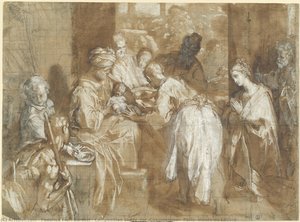
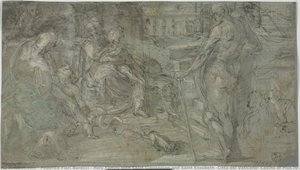
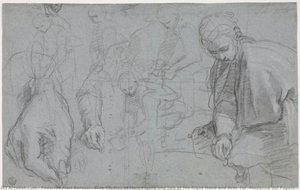
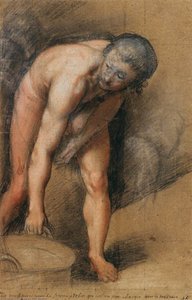
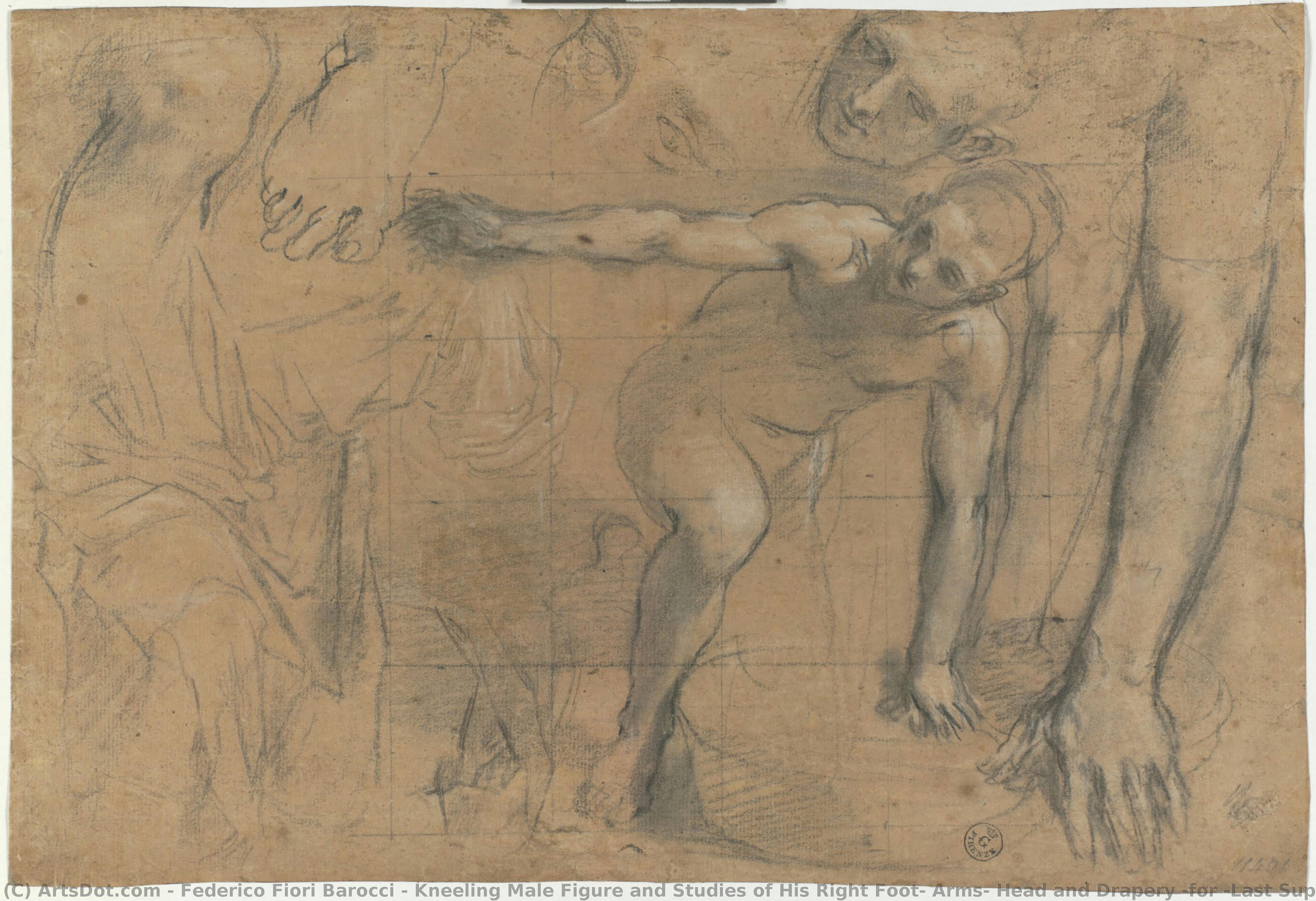
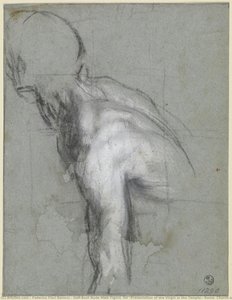
Kneeling Male Figure and Studies of His Right Foot, Arms, Head and Drapery (for “Last Supper”, Urbino, Cathedral of Santa Maria Vergine Assunta)
 Oil On Canvas
- WallArt
- Baroque Style
 28.0 x 41.0 cm
 Galleria degli Uffizi
 Read More
Hand Made Oil Reproduction
Hand-painted oil on canvas in your size and frame, made to order by our artists. ( Buy Print Buy Image)




P118B $10

P118H $10

P118W $10

P438Z $10

P508JH $12

P508YH $12

P805H $10

P805Z $10

P919BZ $10

P919G $10

P919XJ $10

P959ZH $10

P968JZ $12

W106C $8

W218G $10

W218JH $8

W218Y $10

W307PJ $10

W316G $10

W316PJ $8

W316Y $10

W398PJ $8

W4111J $10

W500HY $15

W500JH $15

W692G $12

W849H $8

W940BG $15

W953PJ $8




Pick from our preset sizes that match the artwork's original proportions.

You may enter your own dimensions to fit a specific frame or space. If your selected size does not match the original image's proportions, we will either crop the artwork or extend the painting with additional hand-painted elements. A digital mockup will be sent for your approval before production begins.
Please note that the on-screen preview does not reflect the actual cropping or extension. Only the mockup will accurately show the final composition.
While custom sizes are available, we recommend selecting a dimension from the predefined list to preserve the original proportions.
After order, ArtsDot.com team will email client for instructions and provide a mockup preview
Worldwide Delivery () in 3/4 weeks instead of standard 5 weeks. (17 August). No compromise on quality.

Free Worldwide Express Shipping

High-Quality Linen Canvas

Full Shipping Insurance

Customs Tax Refund Guarantee

True Color Matching Guarantee

60-Day Return Policy (Defects Only)

100% Money-Back Guarantee

Bulk Discount Offer
 Glass option is only available in size under 110 CM

Kneeling Male Figure and Studies of His Right Foot, Arms, Head and Drapery (for “Last Supper”, Urbino, Cathedral of Santa Maria Vergine Assunta)
Reproduction Medium
Reproduction Size
-


Total Price
$ 263
Artwork Description
A Moment Frozen in Grace: Federico Barocci’s Kneeling Figure
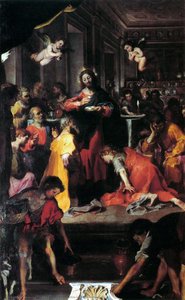
Federico Fiori Barocci's "Kneeling Male Figure and Studies of His Right Foot, Arms, Head and Drapery (for “Last Supper”, Urbino, Cathedral of Santa Maria Vergine Assunta)” is not merely a depiction of a man in prayer; it’s a profound exploration of human vulnerability, devotion, and the meticulous process of artistic creation. Painted around 1583, this work, originally conceived as part of the monumental altarpiece for the cathedral of Santa Maria Vergine Assunta in Urbino, captures a pivotal moment – a silent plea, a gesture of supplication rendered with an almost unbearable intensity. The figure, identified as likely representing Christ himself, is presented in a posture of profound humility, his head bowed and arms outstretched, seemingly reaching towards an unseen divine presence. The composition isn’t about grand gestures or dramatic action; instead, it focuses on the quiet dignity of a soul seeking solace, a stillness that invites contemplation.
Barocci's style during this period exemplifies a masterful synthesis of Mannerism and nascent Baroque elements. He inherited the refined elegance and complex spatial arrangements characteristic of his early training with Federico Zuccari in Rome, yet he infused it with a heightened emotionality and a vibrant use of color that foreshadowed the dynamism of Rubens. Notice how the figure’s drapery flows with an almost liquid quality, creating folds and shadows that seem to shift and breathe. The subtle variations in tone – from the deep blues and purples of the background to the warmer ochres and browns of the figure's garments – contribute to a remarkable sense of depth and volume. The meticulous detail evident in the rendering of his hands, clasped together in prayer, speaks volumes about Barocci’s dedication to anatomical accuracy and expressive realism.
The Studio of Creation: A Study in Process
What truly distinguishes this work is its intimate connection to Barocci's unique artistic method. This painting wasn’t conceived as a finished product but rather as the culmination of an extensive series of preparatory studies – hundreds of sketches, drawings, and color experiments that document every stage of his creative process. These preliminary works, now housed in various collections, offer an unparalleled glimpse into Barocci's working habits. The image itself is a testament to this approach; it’s not simply a painting but a carefully constructed composite of numerous smaller studies, each contributing to the final composition. The background, for instance, appears almost like a collage of fragmented architectural elements and atmospheric effects – a deliberate choice that reflects Barocci's fascination with perspective and his desire to create an illusion of space.
The inclusion of what appears to be a handbag in the lower right corner is particularly intriguing. While seemingly out of place, it adds a layer of human interest and perhaps even a subtle commentary on earthly concerns amidst spiritual devotion. It’s a detail that invites speculation – was it a personal item, a symbol of worldly possessions, or simply an element introduced to further complicate the composition? Barocci's genius lay in his ability to imbue even the most mundane objects with symbolic significance.
Symbolism and Spiritual Resonance
The kneeling posture itself is laden with symbolism. It’s a gesture of submission, reverence, and humility – a direct appeal to the divine. The outstretched arms suggest a reaching out, not just physically but spiritually, embodying a fervent desire for connection and grace. Considering the painting's original context within the cathedral, it’s likely intended to evoke feelings of piety and encourage contemplation among the faithful. Barocci was deeply influenced by the Counter-Reformation, and his art often served as a powerful tool for religious propaganda – conveying complex theological ideas through evocative imagery and emotional resonance.
Furthermore, the figure's face, though partially obscured, conveys an expression of profound sorrow and longing. This vulnerability is amplified by the soft lighting that bathes the scene in a gentle glow, creating a sense of intimacy and encouraging viewers to connect with the subject on a deeply personal level. The overall effect is one of quiet contemplation, inviting us to reflect on our own faith, hopes, and struggles.
A Timeless Masterpiece: Reproduction Possibilities
Reproductions of “Kneeling Male Figure” offer an exceptional opportunity to bring this remarkable artwork into your home or office. Available in a range of sizes and mediums – from high-quality canvas prints to meticulously crafted framed reproductions – these faithful recreations capture the essence of Barocci’s original vision with stunning accuracy. The rich colors, intricate details, and evocative atmosphere are faithfully reproduced, allowing you to experience the profound beauty and spiritual depth of this timeless masterpiece. Whether as a statement piece in a contemporary setting or a cherished addition to a traditional interior, a reproduction of this work will undoubtedly serve as a source of inspiration and contemplation for years to come.
Related Artworks
Artist Biography
Early Life and Training
- Born: Urbino, Italy (1535)
- Died: 1612
- Federico Fiori Barocci, an Italian Renaissance painter and printmaker, was born in 1535 in Urbino, Italy.
- His original name was Federico Fiori, and he was nicknamed "il Baroccio," which means a two-wheel cart drawn by oxen in northwestern Italian dialects.
- Barocci received his earliest apprenticeship with his father, Ambrogio Barocci, a sculptor of some local eminence.
- He was then apprenticed with the painter Battista Franco in Urbino. This training laid the foundation for his future success.
Artistic Career and Influences
- Barocci's work was highly esteemed and influential, foreshadowing the Baroque style of Peter Paul Rubens.
- He worked in the pre-eminent studio of Taddeo and Federico Zuccari in Rome, where he was exposed to various artistic influences.
- His first notable work was a "St. Margaret" executed for the confraternity of the Holy Sacrament.
- He was invited by Pope Pius IV to assist in the decoration of the Vatican Belvedere Palace at Rome, where he painted the Virgin Mary and infant, with several saints and a ceiling in fresco, representing the Annunciation.
- Barocci's style was characterized by a mix of Mannerism and Baroque elements.
Notable Works and Legacy
- Five Studies of Male Figure and two of His Right Hand and Arm (Uffizi Gallery, Florence, Italy) - A testament to Barocci’s skill in capturing the human form.
- Composition Study (for “Circumcision”, Paris, Musée du Louvre) – Demonstrates his ability to balance composition and emotion.
- Man’s Head (for “Calling of Saint Andrew”, Bruxelles, Musées Royaux des Beaux-Arts de Belgique) - Showcases Barocci's attention to detail and expression.
- The Nativity (1597 oil painting at the Prado).
- Madonna del Popolo (Uffizi Gallery, Florence, Italy).
- The Madonna of the Cat (La Madonna del Gatto)
- Annunciation (1582)
Artistic Impact and Followers
- Barocci's influence can be seen in the work of various artists, including Peter Paul Rubens, who was inspired by Barocci’s dramatic and emotive brushwork.
- His legacy continues to be celebrated through his numerous works, now housed in museums such as the Uffizi Gallery (Florence, Italy) and the Musée du Louvre (Paris, France).
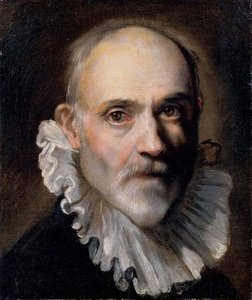
Federico Fiori Barocci
1535 - 1612 , Italy
Quick Facts
- Artistic Movement Or Style: Renaissance, Baroque
- Artists Or Movements Influenced By This Artist: ['Peter Paul Rubens']
- Artists Who Influenced This Artist: ['Battista Franco']
- Date Of Birth: 1535
- Date Of Death: 1612
- Full Name: Federico Fiori Barocci
- Nationality: Italian
- Notable Artworks:
- The Nativity
- Madonna del Popolo
- Annunciation
- Stigmatization of Saint Francis
- Rest on the Flight to Egypt
- Place Of Birth: Urbino, Italy
Related Articles
Federico Barocci: A Master of Emotive Spirituality & the Transition from Mannerism
Explore the captivating world of Federico Barocci, a pivotal figure bridging Mannerism & Baroque art. Discover his emotive spirituality, innovative techniques, and lasting influence on Italian Renaissance painting.
Maria Primachenko: A Legacy of Ukrainian Folk Art & Naive Expression
Discover the captivating world of Maria Primachenko, Ukraine's celebrated naive artist. Explore her vibrant paintings, unique style, and enduring legacy with ArtsDot – your source for authentic art insights & reproductions.
Federico Zandomeneghi: Bridging Venetian Tradition & Parisian Impressionism
Discover Federico Zandomeneghi (1841-1917), a captivating Italian Impressionist bridging Venetian tradition and Parisian modernity. Explore his intimate scenes, unique style & legacy with ArtsDot.
Giuseppe Maria Crespi: Pioneering Genre Painting & the Bolognese Baroque
Explore the life & art of Giuseppe Maria Crespi, a pivotal Bolognese Baroque painter. Discover his groundbreaking genre scenes, religious works, and lasting influence on Italian art history. Learn more at ArtsDot.

Uffizi's 25 Masterpieces: Renaissance Art & Timeless Decor Inspiration
Journey through the Uffizi Gallery's 25 most iconic Renaissance artworks! Explore Botticelli, Leonardo da Vinci & Michelangelo’s masterpieces. Find museum-quality art reproductions and curated decor ideas to bring timeless Italian beauty into your home. Discover all masterpieces on ArtsDot.com