 Preview
 Send
Send Share
Share
 Details

 Download
 Similars
 X-Ray
X-Ray Diaporama
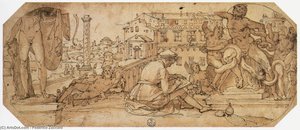
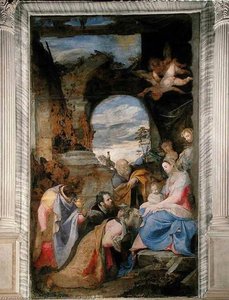
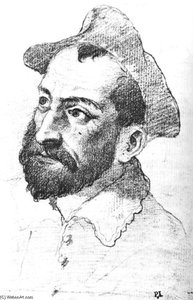
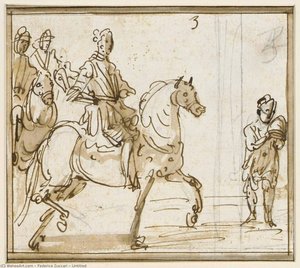
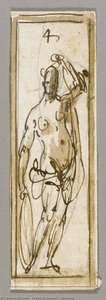
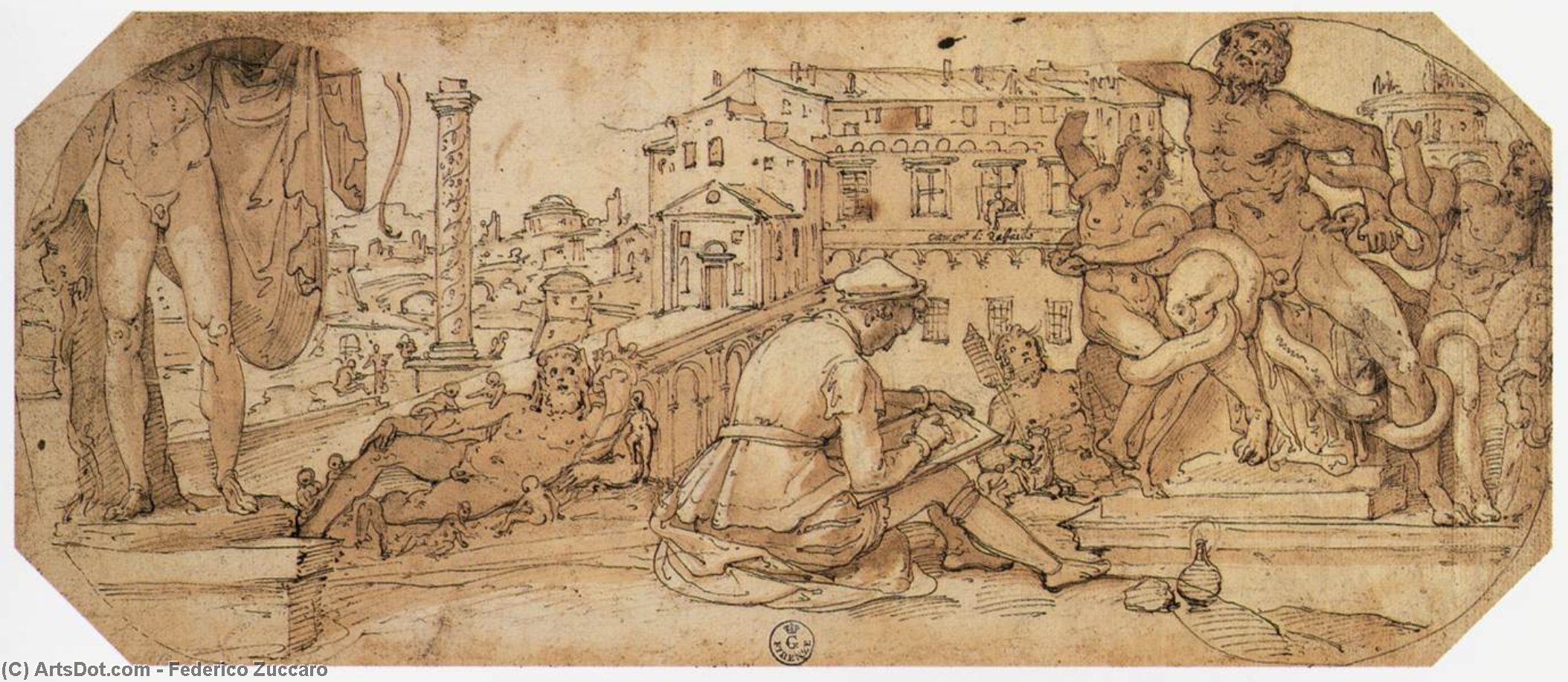
Taddeo Zuccaro Copying the Antique Statues in Rome
 Ink On Paper
- Mannerism
 Renaissance
 183.0 x 425.0 cm
 Galleria degli Uffizi
 Read More
Giclée / Art Print
Museum-quality giclée or canvas print with fast production and flexible finish options. ( Buy Hand Made Painting Buy Image)




P118B $10

P118H $10

P118W $10

P438Z $10

P508JH $12

P508YH $12

P805H $10

P805Z $10

P919BZ $10

P919G $10

P919XJ $10

P959ZH $10

P968JZ $12

W106C $8

W218G $10

W218JH $8

W218Y $10

W307PJ $10

W316G $10

W316PJ $8

W316Y $10

W398PJ $8

W4111J $10

W500HY $15

W500JH $15

W692G $12

W849H $8

W940BG $15

W953PJ $8




Pick from our preset sizes that match the artwork's original proportions.

You may enter your own dimensions to fit a specific frame or space. If your selected size does not match the original image's proportions, we will either crop the artwork or extend the image with a mirrored or solid-fill edge. A digital mockup will be sent for your approval before production begins.
Please note that the on-screen preview does not reflect the actual cropping or extension. Only the mockup will accurately show the final composition.
While custom sizes are available, we recommend selecting a dimension from the predefined list to preserve the original proportions.
Worldwide Delivery () in 2 weeks instead of standard 4/5 weeks. (29 August)

Free Worldwide Express Shipping

High-Quality Linen Canvas

Full Shipping Insurance

Customs Tax Refund Guarantee

True Color Matching Guarantee

60-Day Return Policy (Defects Only)

100% Money-Back Guarantee

Bulk Discount Offer
 Glass option is only available in size under 110 CM

Taddeo Zuccaro Copying the Antique Statues in Rome
Giclée / Art Print
Reproduction Size
-


Total Price
$ 63
A Window into the Renaissance Mind
In the grand tapestry of the Italian Mannerist period, few works capture the profound intellectual hunger of the era as intimately as Federico Zuccaro’s Taddeo Zuccaro Copying the Antique Statues in Rome. This breathtaking composition serves as more than just a depiction of an artist at work; it is a poetic tribute to the very foundation of Western art. Through his masterful use of pen and ink, Zuccaro invites us into a sacred moment of discovery, where the dust of ancient ruins meets the sharp, focused intent of the creative spirit. The scene captures Taddeo Zuccaro, the artist's brother, deeply immersed in the act of studying classical sculptures, embodying the Renaissance ideal of imitatio—the practice of learning from the greatness of antiquity to achieve artistic perfection.
The sheer scale of this work, measuring an impressive 183 x 425 cm, allows the viewer to become a silent participant in this historical tableau. As we gaze upon the intricate linework, we are transported to the heart of Rome, surrounded by the weathered majesty of classical architecture. The play of light and shadow across the stone columns and marble figures creates a palpable sense of atmosphere, evoking the quiet, contemplative stillness of an afternoon spent among the ghosts of the Roman Empire. It is a scene that resonates with anyone who has ever found inspiration in the remnants of the past.
The Artistry of Observation and Line
Technically, this piece is a triumph of precision and delicate execution. Utilizing the medium of pen and ink on paper, Federico Zuccaro demonstrates an extraordinary ability to translate complex textures into fluid, rhythmic lines. Every fold of the figures' historical attire, every crack in the ancient masonry, and every subtle contour of the statues is rendered with a meticulousness that speaks to the artist's profound respect for his subject matter. The technique relies heavily on hatching and cross-hatching to build volume, creating a sense of three-dimensional weight that makes the classical ruins feel remarkably present.
The composition is masterfully balanced, guiding the eye from the focused intensity of the seated artist in the foreground toward the soaring arches and silent sentinels of the background. This movement creates a narrative flow that mirrors the process of artistic creation itself: starting with the singular, concentrated observation of a detail and expanding into a grander understanding of historical and architectural context. For collectors and interior designers, this piece offers a sophisticated layer of depth, providing a focal point that is both intellectually stimulating and visually arresting.
A Legacy for the Modern Collector
Beyond its technical brilliance, Taddeo Zuccaro Copying the Antique Statues in Rome carries an emotional weight that transcends centuries. It celebrates the lineage of talent and the continuity of human knowledge. To possess a high-quality reproduction of this masterpiece is to bring a piece of the Galleria degli Uffizi into one's own space, fostering an environment of culture, reflection, and timeless elegance. It is an ideal selection for those seeking to anchor a room with a sense of history and scholarly grace.
Whether displayed in a private library, a grand salon, or a curated gallery space, this work serves as a constant reminder of the beauty found in study and the enduring power of classical inspiration. It is an invitation to slow down, to observe, and to find, much like the figures depicted, our own moments of profound connection with the world around us.
Related Artworks


Artist Biography
The Architect of Roman Mannerism
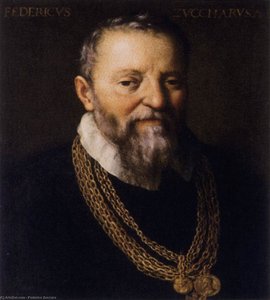
Federico Zuccaro stands as a pivotal figure in the Italian Renaissance, specifically within the burgeoning Roman Mannerist movement. He was far more than a mere painter; he was an architect, a historian, and a champion of artistic innovation—a rare combination of talents that cemented his legacy as one of the era's most influential creators. Born around 1539, Zuccaro’s early life was deeply rooted in the traditions of the masters. He received a robust artistic education from his father, Giovanni Zuccaro, a celebrated sculptor and painter. This familial connection instilled within Federico a profound appreciation for classical ideals, establishing him firmly on a path toward mastering the delicate balance between painting, sculpture, and structural design.
His formative years were spent honing his skills in Florence, where he studied under the legendary Andrea Palladio. From Palladio, Zuccaro absorbed a meticulous attention to proportion and architectural harmony, principles that would later define his grander compositions. He quickly gained recognition for his breathtaking frescoes, particularly those adorning the Palazzo Vecchio, which demonstrated an exceptional ability to convey deep emotion and narrative complexity within a restrained, sophisticated stylistic framework. As his reputation grew, so did his reach, with commissions flowing from wealthy Florentine families and eventually extending into the heart of Rome.
A Legacy of Collaboration and Innovation
One cannot discuss the brilliance of Federico Zuccaro without acknowledging the profound influence of his brother, Taddeo Zuccaro. Together, the brothers formed an unparalleled creative partnership that pushed the boundaries of Mannerist aesthetics. While Taddeo’s mastery of sculpture provided a structural strength to their shared visions, Federico’s painting prowess brought them to life with ethereal light and movement. Their collaborative spirit yielded masterpieces such as “The Holy Family” in Palazzo Vecchio, a work that serves as a testament to their unified artistic language.
Zuccaro's versatility allowed him to transcend the canvas. As an architect, he undertook ambitious projects throughout Rome and Italy, designing palaces, churches, and villas that reflected his deep understanding of classical space. His architectural achievements were not merely functional but were intended to elevate the very status of the artist. This ambition is perhaps most tangibly felt in Casa Zuccari in Florence, a residence built around 1578. Conceived as an emblem of lineage and creative emancipation, this architectural jewel was inspired by the pioneering spirit of Giorgio Vasari, transforming a private sanctuary into a stage for intellectual and aesthetic triumph.
The Spirit of Mannerist Mastery
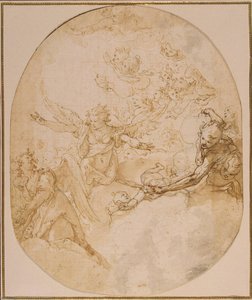
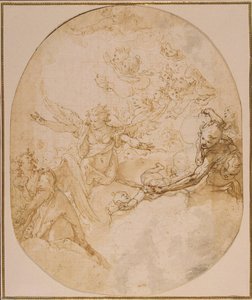
The true essence of Zuccaro’s work lies in his ability to blend the physical with the divine. In works such as “Angels and Cherubim Among Clouds,” dating from 1566, one can witness a celestial vision painted with sublime transcendence. He masterfully orchestrated gatherings of heavenly beings amidst billowing clouds, creating scenes that were simultaneously grand and intimately peaceful. His technique involved building luminosity through delicate gradations of color and shadow, allowing for a dynamic tension between solid forms and weightless vapor.
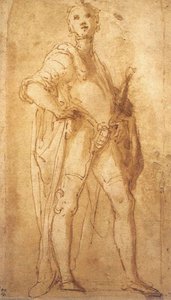
Beyond the grandeur of his large-scale frescoes, Zuccaro possessed a remarkable ability to capture quiet, spiritual introspection. His drawings, such as the exquisite “St Mennas,” reveal a master of light and shadow, where figures appear suspended between the earthly realm and the divine. This intellectual rigor and technical versatility allowed him to leave an indelible mark on the history of art, influencing generations of artists across Italy, Spain, France, and England. Through his leadership in founding the Accademia di San Luca, he ensured that the principles of classical beauty and artistic discipline would endure long after his passing in 1609.
federico zuccaro
1539 - 1609
Quick Facts
- Artistic Movement Or Style: Mannerism
- Artists Or Movements Influenced By This Artist: ['Bartolomeo Carducci']
- Artists Who Influenced This Artist:
- Giorgio Vasari
- Taddei Zuccaro
- Date Of Birth: 1539
- Date Of Death: 1609
- Full Name: Federico Zuccaro
- Nationality: Italian
- Notable Artworks:
- The Last Judgment
- Saint Jerome in His Study
- Place Of Birth: Rome, Italy
Related Articles
The Enduring Legacy of Classicism: Principles, Evolution & Influence in Western Art
Explore the enduring legacy of Classicism in Western art! Discover its historical context, key principles, iconic masterpieces & lasting influence. Learn about Renaissance and Neoclassical movements with ArtsDot.
Neo-Classicism's Greatest Hits: 10 Masterpieces for Your Home |
Journey through Neo-Classicism's finest! Explore 10 iconic masterpieces by David, Ingres & Canova. Discover art history, techniques & timeless beauty – perfect for inspiring your home decor. Find museum-quality reproductions at
Timeless Resonance: Exploring Classic Vibe in Art – A Historical & Aesthetic Analysis
Explore the rich history & enduring aesthetic of Classicism art! Discover key movements, iconic artists like Raphael & David, and its lasting influence on Western art. Deepen your appreciation today.

Ephemeral Expressions: Exploring the Nuances of Ink on Paper Through History & Contemporary Art
Explore the captivating world of ink wash painting – from its ancient origins to contemporary masters. Discover techniques, symbolism & conservation insights with ArtsDot.com.

Ephemeral Lines: Exploring Emotional Resonance in Ink Sketching Traditions
Explore the profound art of ink sketching! Discover techniques to express emotion, master line work, and cultivate artistic sensitivity. Learn from historical masters & unlock your creative potential.