

 Preview
 Send
Send Share
Share
 Details

 Download
 Similars
 X-Ray
X-Ray Diaporama
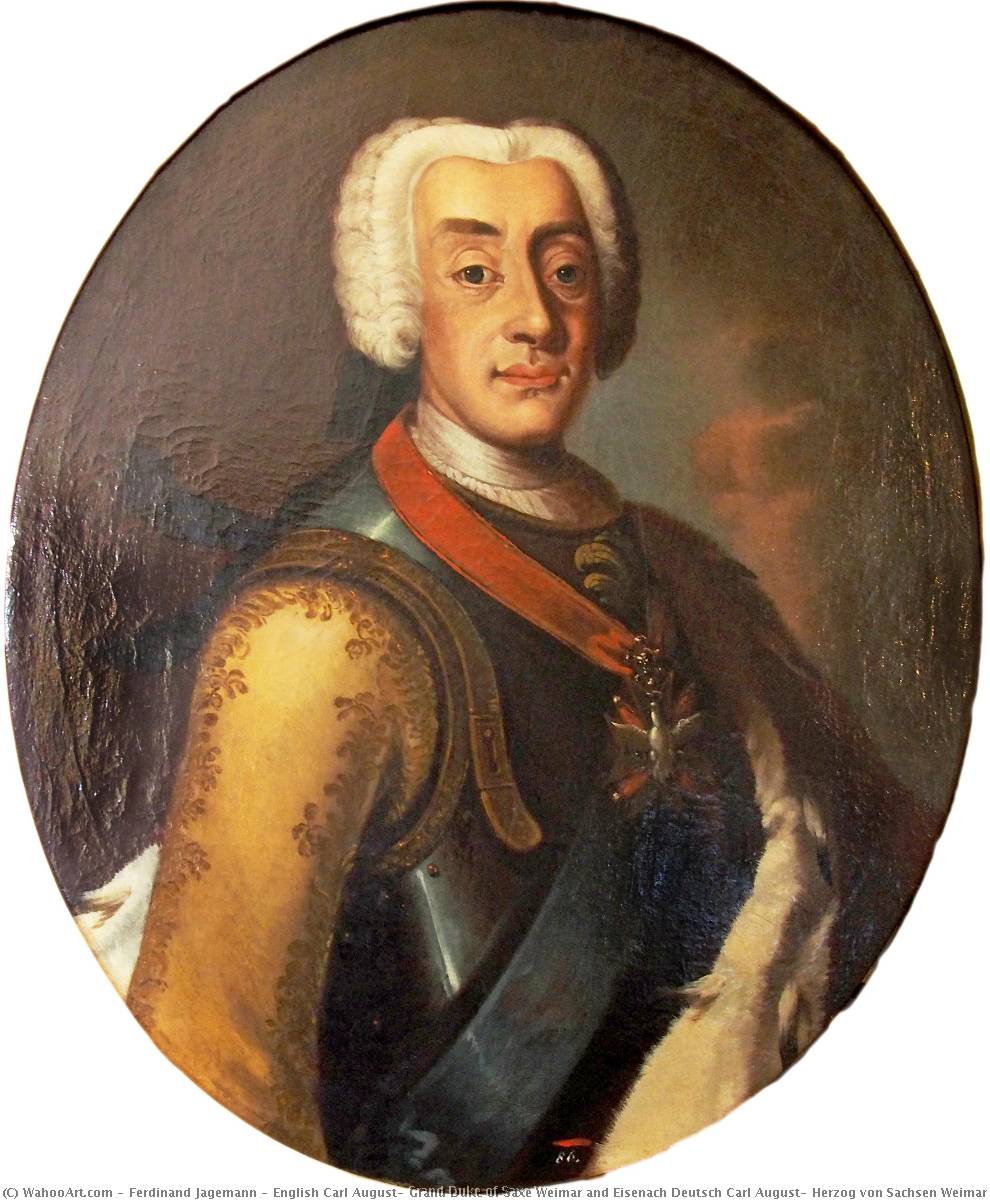
English Carl August, Grand Duke of Saxe Weimar and Eisenach Deutsch Carl August, Herzog von Sachsen Weimar und Eisenach, in der Uniform der Ascherslebener Kürassiere


 Read More
Purchase a high-resolution, enhanced digital image, far superior to the online preview.
Each file is meticulously prepared by our in-house specialists using advanced tools and expert manual retouching. We ensure every image has exceptional clarity, precise color accuracy, and fine detail.
The final file is delivered via email within 72 hours, optimized for immediate use in professional, editorial, and print environments. This is the same quality trusted by top-tier design studios, publishers, and galleries.
Digital Image
Download a high-resolution file for personal display, printing, and creative projects. ( Buy Print Buy Hand Made Painting)
Included in Every Digital Image Order
Expert Digital Delivery, Guaranteed
When you choose ArtsDot.com, you're not just getting an image - you're receiving a professionally enhanced digital artwork, crafted with precision and backed by a satisfaction guarantee. Here's everything that comes with your order, automatically:

Fast Email Delivery
Your high-resolution digital image file will be emailed to you within 72 hours of ordering - ready for immediate use.

AI-Enhanced Digital File
Your artwork is professionally optimized using advanced AI tools and manual editing, ensuring maximum detail, clarity, and color accuracy.

Free Lifetime Re-Delivery
Accidentally deleted or lost your file? No worries - we'll resend it to you anytime, free of charge.

No Import Fees - Ever
Enjoy your artwork instantly with zero customs, duties, or delivery fees - digital downloads are always tax-free.

Color Accuracy Guarantee
We ensure your digital image reflects the original colors as closely as possible using professional tools and color management.

60-Day Satisfaction Guarantee
If you're not satisfied with your digital image, we'll revise it or refund 100% within 60 days - no questions asked.

100% Money-Back Guarantee
Not satisfied? Get a full refund within 60 days of receiving your digital file - no questions asked.

Bulk Order Discounts
Buy 3 images, save 10% - Buy 5, save 15% - Buy 10+, save 20%. Great for creative projects, galleries, and agencies.
Related Artworks









Artist Biography
The Silent Chronicler of Weimar’s Golden Age
Ferdinand Jagemann stands as a quietly influential figure within the artistic landscape of Weimar during its most luminous era, primarily recognized for his meticulous portraits that captured the very spirit of the age's intellectual and cultural dynamism. Born in 1780 into a scholarly environment, Jagemनांक’s life was deeply intertwined with the intellectual fabric of Saxe-Weimar. His father, Christian Joseph Jagemann, served as the esteemed librarian to Duchess Anna Amalia, an upbringing that undoubtedly instilled in the young artist a profound appreciation for both art and erudition. This familial connection to the heart of German Enlightenment culture shaped his artistic trajectory, allowing him to move through the highest circles of Weimar society with ease and purpose.
The artist’s early training was marked by the guidance of Johann Heinrich Tischbein II, a celebrated painter who championed Neoclassical ideals. Under Tischbein’s tutelage, Jagemann mastered a disciplined approach to technique and developed an understanding of classical aesthetics that would become a cornerstone of his work. Seeking to expand his horizons beyond the borders of Germany, Jagemann traveled to Paris between 1802 and 1804. It was in this vibrant, revolutionary atmosphere that he encountered the burgeoning influence of masters such as Jacques-Louis David and Jean-Baptiste Regnault. This Parisian exposure broadened his artistic vocabulary, infusing his portraiture with a sense of grandeur, theatricality, and a commitment to capturing dramatic emotion through precise, classical forms.
A Legacy Captured in Flesh and Spirit
Upon his return to Weimar in 1805, Jagemann transitioned from a student of the world to a pivotal figure in his home city's cultural institutions. He collaborated closely with prominent artists like Georg Melchior Kraus and Heinrich Friedrich Füger, contributing to the establishment and vitality of the Fürstliche Zeichenschule (Royal Drawing School). His role was not merely that of a painter but also of an educator, eventually serving as a professor and co-director of the school. This period of his life saw him documenting the most significant figures of the German Enlightenment, creating a visual record of the minds that were reshaping European thought.
One of his most poignant and historically significant undertakings was the commission to portray Friedrich Schiller on his deathbed. Such an intimate and somber task required a delicate balance of technical skill and profound empathy, capturing not just a likeness, but the fading light of a literary giant. His ability to navigate both the monumental and the deeply personal is further evidenced by his numerous portraits of Johann Wolfgang von Goethe. These works do more than present formal likenesses; they showcase the wealth, dignity, and intellectual weight of the era's protagonists through a Neoclassical lens.
Jagemann’s life was tragically short, as he passed away in 1820 at the age of thirty-nine. Yet, his impact resonated far beyond his years. The significance of his work can be summarized by several key contributions to art history:
- Documentary Importance: He provided a definitive visual archive of the Weimar Classicism period, capturing the likenesses of figures like Goethe and Schiller.
- Technical Synthesis: His style successfully merged the disciplined Neoclassicism of his German training with the dramatic, emotive influences of the French school.
- Institutional Impact: Through his leadership at the Zeichenschule, he helped foster the next generation of artistic talent in Saxe-Weimar.
- Cultural Connection: His work serves as a bridge between the scholarly world of the German Enlightenment and the visual language of European high art.
Though his name may not carry the same immediate weight today as those he painted, Ferdinand Jagemann remains an essential figure for anyone seeking to understand the soul of Weimar. He was the painter who looked upon the giants of his age and, through the tip of his brush, ensured their presence would endure long after their voices had fallen silent.
ferdinand jagemann
1780 - 1820
Quick Facts
- Artistic Movement Or Style: Neoclassical Portraiture
- Artists Or Movements Influenced By This Artist: ['Johann Wolfgang von Goethe']
- Artists Who Influenced This Artist:
- Georg Melchior Kraus
- Heinrich Friedrich Füger
- Date Of Death: 1820
- Full Name: Ferdinand Jagemann
- Nationality: German
- Notable Artworks:
- Goethe Portraits
- Schiller Paintings
- Place Of Birth: Germany

