

 Preview
 Send
Send Share
Share
 Details

 Download
 Similars
 X-Ray
X-Ray Diaporama
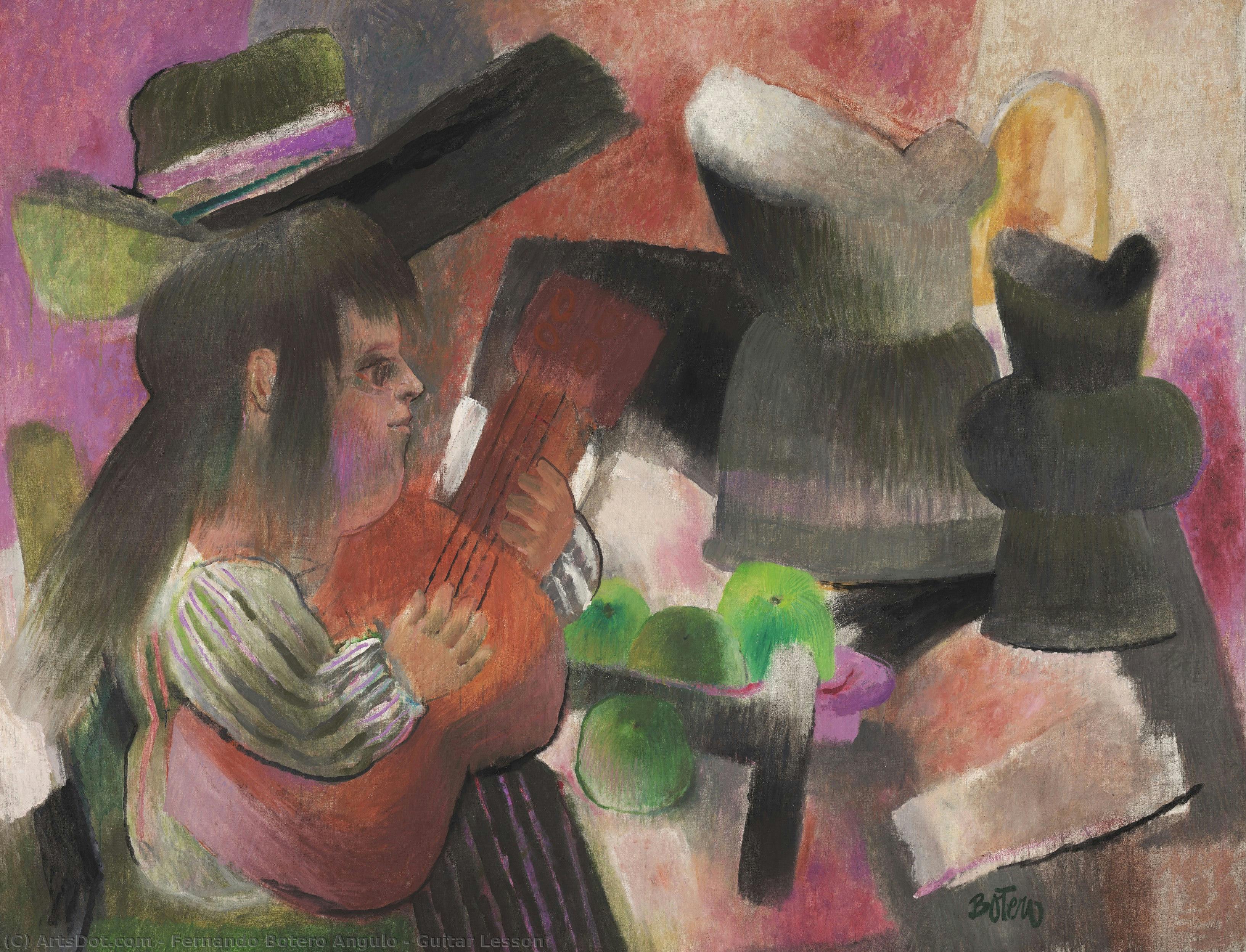
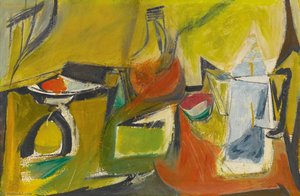
Guitar Lesson
 Acrylic On Canvas
- WallArt
- Boterismo
 1960
1960 192.0 x 248.0 cm
 National Museum of Colombia
 Read More
Purchase a high-resolution, enhanced digital image, far superior to the online preview.
Each file is meticulously prepared by our in-house specialists using advanced tools and expert manual retouching. We ensure every image has exceptional clarity, precise color accuracy, and fine detail.
The final file is delivered via email within 72 hours, optimized for immediate use in professional, editorial, and print environments. This is the same quality trusted by top-tier design studios, publishers, and galleries.
Digital Image
Download a high-resolution file for personal display, printing, and creative projects. ( Buy Print Buy Hand Made Painting)
Included in Every Digital Image Order
Expert Digital Delivery, Guaranteed
When you choose ArtsDot.com, you're not just getting an image - you're receiving a professionally enhanced digital artwork, crafted with precision and backed by a satisfaction guarantee. Here's everything that comes with your order, automatically:

Fast Email Delivery
Your high-resolution digital image file will be emailed to you within 72 hours of ordering - ready for immediate use.

AI-Enhanced Digital File
Your artwork is professionally optimized using advanced AI tools and manual editing, ensuring maximum detail, clarity, and color accuracy.

Free Lifetime Re-Delivery
Accidentally deleted or lost your file? No worries - we'll resend it to you anytime, free of charge.

No Import Fees - Ever
Enjoy your artwork instantly with zero customs, duties, or delivery fees - digital downloads are always tax-free.

Color Accuracy Guarantee
We ensure your digital image reflects the original colors as closely as possible using professional tools and color management.

60-Day Satisfaction Guarantee
If you're not satisfied with your digital image, we'll revise it or refund 100% within 60 days - no questions asked.

100% Money-Back Guarantee
Not satisfied? Get a full refund within 60 days of receiving your digital file - no questions asked.

Bulk Order Discounts
Buy 3 images, save 10% - Buy 5, save 15% - Buy 10+, save 20%. Great for creative projects, galleries, and agencies.
Collectible Description
The Genesis of a Masterpiece: Fernando Botero's "Guitar Lesson"
Fernando Botero’s “Guitar Lesson,” painted in 1960, isn’t merely a depiction of a musical scene; it’s an embodiment of the artist’s signature style – what he himself termed “Boterismo.” This vibrant canvas captures a moment of quiet instruction, yet explodes with a palpable sense of volume and rounded forms that immediately draw the eye. Born in Medellín, Colombia, Botero’s artistic journey began far from the polished halls of formal academies, instead rooted in the exuberant architecture and bustling street life of his native city. This early exposure to the baroque grandeur of colonial churches instilled within him a deep appreciation for simplified shapes and a deliberate distortion of perspective – a foundation that would become the cornerstone of his distinctive visual language.
The painting’s genesis lies in Botero's fascination with the human figure, particularly its capacity for expressive volume. He wasn’t interested in photographic realism but rather in conveying an emotional truth through exaggerated proportions and a playful manipulation of space. “Guitar Lesson” exemplifies this perfectly; the figures are not rendered as they appear to the eye, but rather sculpted with a deliberate emphasis on their rounded forms, creating a sense of both solidity and gentle movement.
A Symphony of Volume: Technique and Style
Botero’s technique is characterized by bold, flat planes of color applied with thick impasto – a visible texture that adds to the painting's tactile quality. He employs a limited palette of rich hues—primarily reds, yellows, blues, and greens—that are layered and blended to create depth and luminosity. The background, rendered in muted tones, serves as a subtle counterpoint to the vibrant figures, further emphasizing their presence. Notice how the curves of the guitar, the rounded forms of the teacher and student, and even the simple objects on the table all contribute to this overwhelming sense of volume – it’s an illusionistic trick that simultaneously delights and disorients the viewer.
- Impasto Technique: Thickly applied paint creates a tactile surface.
- Limited Palette: Bold, saturated colors dominate the composition.
- Exaggerated Proportions: Figures are deliberately oversized, reflecting Botero’s “Boterismo.”
Symbolism and Social Commentary
While seemingly a straightforward scene of musical instruction, "Guitar Lesson" subtly hints at deeper themes. The rounded forms can be interpreted as representing the inherent joy and sensuality of life – a characteristic often found in Botero’s work. The setting itself—a humble table laden with objects—suggests a domestic scene, inviting viewers to contemplate the everyday rituals of family and community. Some art historians have also noted that the painting subtly critiques consumerism through the abundance of items on the table, hinting at an excessiveness often associated with modern society.
The teacher’s posture, attentive and patient, suggests a nurturing role – a passing down of knowledge and skill. The student's focused gaze conveys a desire to learn, creating a dynamic interplay between instruction and absorption. It is this delicate balance between observation and participation that elevates the painting beyond a simple snapshot.
A Timeless Appeal: Emotional Resonance and Legacy
“Guitar Lesson” resonates with viewers on multiple levels. Its playful composition, vibrant colors, and deceptively simple subject matter create an immediate sense of warmth and familiarity. Yet, beneath this surface lies a deeper exploration of human connection, the transmission of knowledge, and the beauty found in everyday moments. Botero’s work continues to captivate audiences worldwide, solidifying his place as one of the most recognizable and beloved artists of our time. Reproductions of “Guitar Lesson” offer a wonderful opportunity to bring this iconic image into your home, allowing you to experience its charm and emotional depth firsthand.
Related Artworks


Artist Biography
A Colombian Visionary: The Life and Art of Fernando Botero
Born in Medellín, Colombia, in 1932, Fernando Botero Angulo emerged as one of Latin America’s most celebrated and internationally recognized artists. His journey began not within the hallowed halls of art academies, but amidst the vibrant life and Baroque splendor of his native city. Isolated from mainstream artistic currents during his youth, young Botero found inspiration in the ornate colonial churches and bustling urban scenes of Medellín—a formative experience that would profoundly shape his unique aesthetic vision. This early exposure instilled a primitivist sensibility, an appreciation for simple yet powerful forms, which became a hallmark of his style. Initially drawn to the drama of bullfighting, he honed his skills through drawing, but quickly realized his path lay beyond the arena and towards a broader exploration of form and volume.The Genesis of ‘Boterismo’
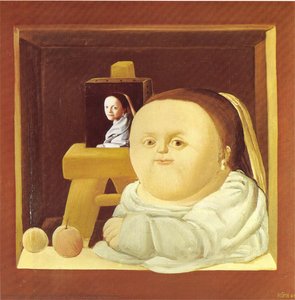
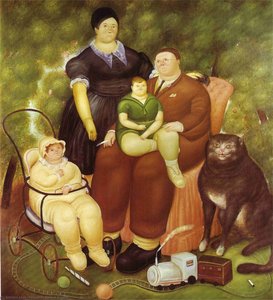
Botero's artistic development was marked by a deliberate rejection of European modernism. After periods studying in Madrid and Paris, he found himself disillusioned with the prevailing avant-garde movements. Instead, he turned inward, seeking inspiration from the Old Masters—Velázquez, Goya, and Titian—and rediscovering the power of classical form. This exploration led to the birth of what would become known as ‘Boterismo,’ a style characterized by generous, exaggerated volumes. It wasn’t merely about depicting “fat people,” as some critics simplistically suggested; it was a conscious manipulation of proportion, a celebration of sensuality and abundance, and a subtle commentary on social and political realities. His figures—human, animal, or still life—possess a monumental presence, radiating both warmth and a quiet dignity. The early 1960s saw the solidification of this style, with paintings like *Presidential Family* (1967) becoming iconic representations of his burgeoning aesthetic. This work, in particular, subtly satirized Colombian political elites while simultaneously showcasing the captivating allure of Botero’s rounded forms.Expanding Horizons: Sculpture and Beyond
While initially renowned for his paintings, Botero's artistic ambition extended to sculpture in 1973 after relocating to Paris. This transition proved transformative, allowing him to explore volume and form in three dimensions. His monumental bronze sculptures began appearing in public spaces around the world—parks in New York, Florence, and Medellín—becoming beloved landmarks and symbols of his artistic vision. These sculptures weren’t merely scaled-up versions of his paintings; they possessed a unique physicality, inviting viewers to engage with them on a tactile level. Beyond painting and sculpture, Botero also demonstrated versatility through drawings and collages, often tackling politically charged subjects. His *Violence* series, created in response to the escalating conflict in Colombia, stands as a powerful testament to his commitment to social commentary. Similarly, his *Abu Ghraib* series directly addressed the abuses at the Iraqi prison, demonstrating his willingness to confront difficult truths through art.Legacy and Influence
Fernando Botero’s impact on the art world is undeniable. He became a cultural icon in Colombia, donating generously to museums and public spaces, solidifying his place as a national treasure. His work transcends geographical boundaries, resonating with audiences worldwide through its universal themes of humanity, sensuality, and social critique. While some initially dismissed ‘Boterismo’ as mere stylistic quirk, it has since been recognized as a significant contribution to figurative art. He challenged conventional notions of beauty and proportion, inviting viewers to reconsider their perceptions of the human form. His influence can be seen in the work of numerous contemporary artists who explore themes of body image, social satire, and cultural identity. Botero’s legacy extends beyond his artistic achievements; he inspired a generation of Latin American artists to embrace their own unique voices and perspectives on the world. He passed away in September 2023 at the age of 91, leaving behind an extraordinary body of work that continues to captivate and provoke thought.Key Characteristics & Notable Works
- Style: Boterismo – characterized by exaggerated volumes and proportions.
- Influences: Baroque art, Old Masters (Velázquez, Goya), Latin American folk art, pre-Columbian art.
- Themes: Colombian culture, social satire, political commentary, sensuality, the human form.
- Notable Works: *Mona Lisa, Age Twelve* (1959), *The Presidential Family* (1967), *Dancers* (1987), *Death of Pablo Escobar* (1999), *La Paloma de la Paz* (2016).
- Awards: International Sculpture Center’s Lifetime Achievement in Contemporary Sculpture Award (2012).

Fernando Botero
1932 - 1959 , Colombia
Quick Facts
- Artistic Movement Or Style: Boterismo, Primitivism
- Artists Who Influenced This Artist:
- Diego Rivera
- Francisco de Goya
- Diego Velázquez
- Date Of Birth: April 19, 1932
- Date Of Death: September 15, 2023
- Full Name: Fernando Botero Angulo
- Nationality: Colombian
- Notable Artworks:
- Mona Lisa, Age Twelve
- The Presidential Family
- Walk in the hills
- Place Of Birth: Medellín, Colombia

