 Send
Send Share
Share
 Details

 Download
 Similars
 Diaporama
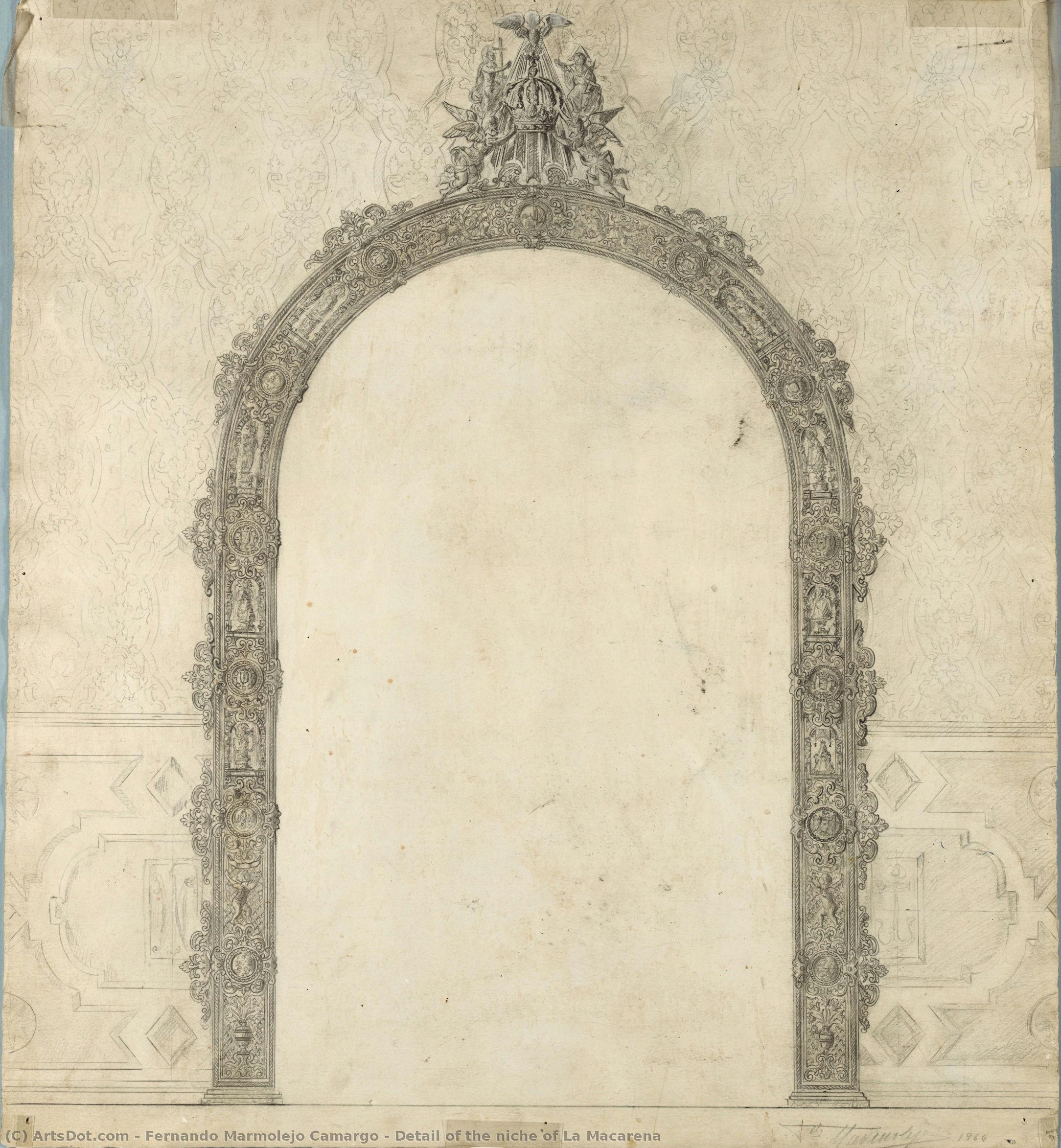
Detail of the niche of La Macarena
 Black and White Photography
- Photo
- Religious Art
 1966
1966- Modern
 Museum of Arts and Popular Customs of Seville
 Read More
Giclée / Art Print
Museum-quality giclée or canvas print with fast production and flexible finish options. ( Buy Hand Made Painting Buy Image)




































Pick from our preset sizes that match the artwork's original proportions.

You may enter your own dimensions to fit a specific frame or space. If your selected size does not match the original image's proportions, we will either crop the artwork or extend the image with a mirrored or solid-fill edge. A digital mockup will be sent for your approval before production begins.
Please note that the on-screen preview does not reflect the actual cropping or extension. Only the mockup will accurately show the final composition.
While custom sizes are available, we recommend selecting a dimension from the predefined list to preserve the original proportions.
Worldwide Delivery () in 2 weeks instead of standard 4/5 weeks. (6 September)

Free Worldwide Express Shipping

High-Quality Linen Canvas

Full Shipping Insurance

Customs Tax Refund Guarantee

True Color Matching Guarantee

100-Day Return Policy (Defects Only)

100% Money-Back Guarantee

Bulk Discount Offer
 Glass option is only available in size under 110 CM

Detail of the niche of La Macarena
Giclée / Art Print
Reproduction Size
-


Total Price
$ 63
A Glimpse into Devotion: The Intricacy of La Macarena
In the quiet, hallowed spaces of Sevillian tradition, certain works of art act as windows into the soul of Andalusia. Detail of the niche of La Macarena, a profound creation by the master goldsmith Fernando Marmoleton Camargo from 1966, offers more than just a visual encounter; it provides an intimate communion with religious heritage. This piece captures a moment of frozen splendor, focusing on the ornate architectural elements that frame the sacred. Through the lens of this detail, we see the breathtaking complexity of an archway that serves as a gateway between the earthly and the divine, where every carved flourish tells a story of devotion and meticulous craftsmanship.
The artistry of Marmolejo Camargo is rooted in the ancient lineage of Spanish orfebres. As a master of metalwork, his technique transcends simple decoration, moving into the realm of sculptural storytelling. In this specific detail, the viewer is invited to trace the rhythmic patterns of the carvings and the structural elegance of the niche. The interplay of light and shadow—even when viewed through the monochromatic depth of historical photography—reveals a mastery over texture. The artist’s ability to manipulate form creates a sense of weight and permanence, making the metal feel as fluid as silk yet as enduring as stone. For the collector, this work represents the pinnacle of cerrajero artístico tradition, where the boundary between blacksmithing and fine art dissolves.
Symbolism and the Andalusian Spirit
To understand this work is to understand the heart of Seville. The niche itself is not merely a structural component but a symbolic vessel for the veneration of the Virgin. Marmolejo Camargo, influenced by the legendary workshops of his youth, infused this piece with the symbolic language of the Baroque. The intricate carvings and the presence of the statue atop the archway evoke a sense of celestial hierarchy. Every curve and ornament is designed to draw the eye upward, mirroring the spiritual ascent of the faithful. This piece captures the essence of Andalusian culture—a blend of intense passion, rigorous discipline, and an unshakeable connection to religious iconography.
For interior designers and connoisseurs of fine art reproductions, integrating a piece with such historical gravity offers an opportunity to introduce a sense of timelessness into a space. A high-quality reproduction of this detail allows the grandeur of Spanish liturgical art to reside within a modern setting, providing a focal point that commands respect and invites contemplation. It is an invitation to surround oneself with the echoes of 1960s craftsmanship and the eternal beauty of Seville’s most cherished traditions.
Related Artworks




Artist Biography
The Soul of Andalusian Metalwork: The Legacy of Fernando Marmolejo Camargo
In the hallowed, sun-drenched streets of Seville, where tradition is etched into every stone and silvered ornament, the name Fernando Marmole and Camargo resonates with the weight of a master craftsman. Born on December 10, 1915, in the historic Arenal neighborhood, Marmolejo was destined for a life defined by the rhythmic hammer and the delicate flame. He was a child of the forge, raised in a family where art and utility were inseparable; his father, José Marmolejo Díaz, was a skilled blacksmith and artistic locksmith. From his childhood window on Calle Varflora, the young Fernando would watch, spellbound, as the goldsmith Andrés Contreras Rodríguez labored for the 1929 Ibero-American Exposition. These early glimpses of shimmering precious metals and intricate designs planted the seeds of a lifelong devotion to the art of orfebrería.
His journey from a curious observer to a titan of Spanish goldsmithing was paved with rigorous discipline and classical training. After entering the School of Fine Arts in 1931, Marmolejo began his formal apprenticeship within his father’s workshop, blending the rugged strength of blacksmithing with the refined elegance of fine metalwork. This period of development was further enriched by the mentorship of the celebrated goldsmith Cayetano González Gómez. Under González, Marmolejo did not merely learn the technicalities of embossing and chasing; he absorbed a profound understanding of religious iconography. He learned to speak the symbolic language of the Baroque, drawing inspiration from the spiritual depth found in Murillo’s sacred imagery, particularly the tender depictions of Saint John the Baptist and the Virgin Mary. This fusion of technical mastery and theological reverence would become the hallmark of his career.
A Masterpiece Forged in Devotion
The zenith of Marmolejo Camargo’s illustrious career is perhaps most vibrantly embodied in his monumental contribution to Seville’s religious landscape: the camarín (chalice shrine) dedicated to Our Lady of Sorrows within the Basilica of La Macarena. This was not merely a structural undertaking but a spiritual mission. Through the meticulous manipulation of silver and the delicate embossing of floral motifs, he created a space where the earthly and the divine appear to converge. His work on this project showcased an unparalleled ability to transform cold metal into something that feels as fluid as silk and as enduring as stone. The camarín stands as a testament to his skill, capturing the very essence of Andalusian piety through intricate architectural details that frame the sacred with breathtaking complexity.
Beyond the grand scale of religious shrines, Marmolejo’s artistry extended to the intimate and the evocative. His ability to capture moments of profound devotion—such as the poignant, monochromatic depictions of the procession of Our Lady of Sorrows—reveals a master who understood that true art lies in the interplay of light, shadow, and emotion. His work remains a cornerstone of 20th-century Spanish metalwork, representing a rare lineage where the boundaries between the blacksmith’s strength and the goldsmith’s delicacy dissolve into pure, sculptural storytelling. Even today, his legacy continues to inspire, serving as a luminous reminder of a time when every carved flourish told a story of faith, heritage, and an unwavering commitment to beauty.
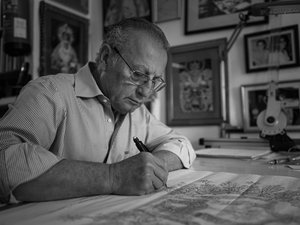
fernando marmolejo camargo
1915 - 2006 , Spain
Quick Facts
- Artistic Movement Or Style: Religious Metalwork
- Artists Or Movements Influenced By This Artist: ['Cayetano González Gómez']
- Artists Who Influenced This Artist: ['Bartolome Esteban Murillo']
- Date Of Birth: December 10, 1915
- Date Of Death: September 20, 2006
- Full Name: Fernando Marmolejo Camargo
- Nationality: Spanish
- Notable Artworks:
- Detail of the procession of Our Lady of Sorrows
- Design and realization of the Camarín de la Virgen de la Macarena
- Place Of Birth: Seville, Spain
Related Articles
Sacred Narratives Embodied: A Comprehensive Exploration of Religious Iconography in Art History
Explore the rich history of religious iconography in art! Discover symbolism, movements & masterpieces from Byzantine to Renaissance periods. Expert insights for collectors and enthusiasts at ArtsDot.
Sacred Narratives on Canvas: Exploring Religious Painting Through History
Explore the rich history of religious painting with ArtsDot.com! Discover iconic artworks, symbolism & techniques from antiquity to the Renaissance. Enhance your art appreciation today.
The Subtleties of Shade: Exploring Monochrome's Enduring Power in Art History & Contemporary Practice
Explore the captivating world of monochrome painting! Discover its rich history, from Renaissance chiaroscuro to contemporary minimalism. Uncover the emotional power and artistic techniques behind this enduring art form.
Sacred Narratives on Canvas: Exploring Religious Scenes & Their Enduring Influence
Explore the rich history of religious art from Giotto to the Renaissance masters with ArtsDot. Discover symbolism, techniques & enduring legacies. Museum-quality reproductions available.

Monochrome Visions: Exploring the Aesthetic & Historical Significance of Black & White Photography
Explore the rich history & artistic power of black and white photography. From early techniques to iconic masters like Ansel Adams, discover why monochrome continues to captivate art lovers today. Expert insights for collectors.