 Preview
 Send
Send Share
Share
 Details

 Download
 Similars
 X-Ray
X-Ray Diaporama
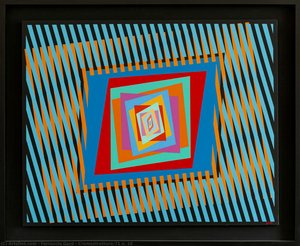
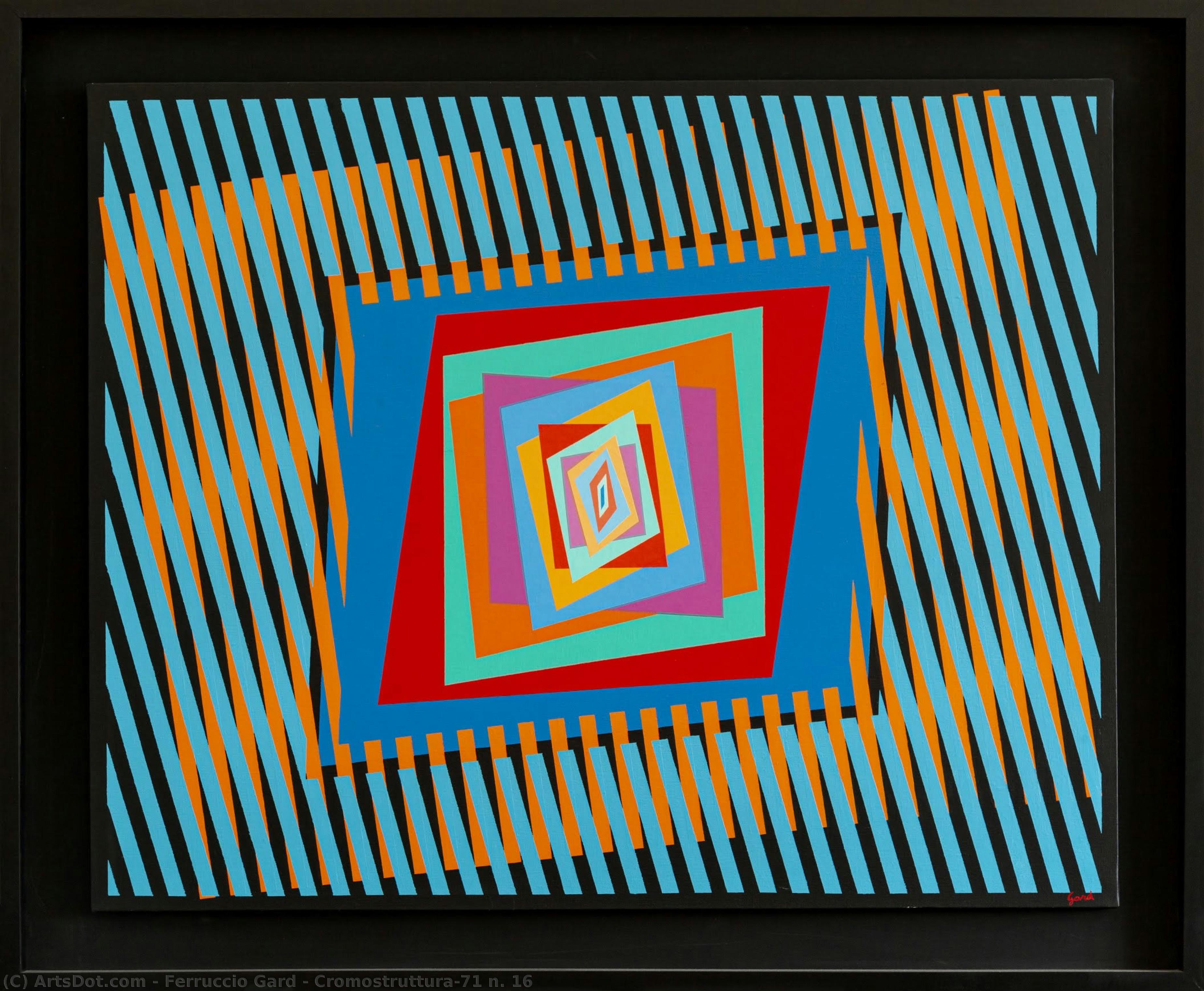
Cromostruttura/71 n. 16
 Acrylic On Canvas
- WallArt
- Contemporary Abstract
 Contemporary
 100.0 x 80.0 cm
 Ministero degli Affari Esteri e della Cooperazione Internazionale. Collezione Farnesina
 Read More
Hand Made Oil Reproduction
Hand-painted oil on canvas in your size and frame, made to order by our artists. ( Buy Print Buy Image)




































Pick from our preset sizes that match the artwork's original proportions.

You may enter your own dimensions to fit a specific frame or space. If your selected size does not match the original image's proportions, we will either crop the artwork or extend the painting with additional hand-painted elements. A digital mockup will be sent for your approval before production begins.
Please note that the on-screen preview does not reflect the actual cropping or extension. Only the mockup will accurately show the final composition.
While custom sizes are available, we recommend selecting a dimension from the predefined list to preserve the original proportions.
After order, ArtsDot.com team will email client for instructions and provide a mockup preview
Worldwide Delivery () in 3/4 weeks instead of standard 5 weeks. (20 August). No compromise on quality.

Free Worldwide Express Shipping

High-Quality Linen Canvas

Full Shipping Insurance

Customs Tax Refund Guarantee

True Color Matching Guarantee

60-Day Return Policy (Defects Only)

100% Money-Back Guarantee

Bulk Discount Offer
 Glass option is only available in size under 110 CM

Cromostruttura/71 n. 16
Reproduction Medium
Reproduction Size
-


Total Price
$ 263
Artwork Description
A Symphony of Geometry and Light
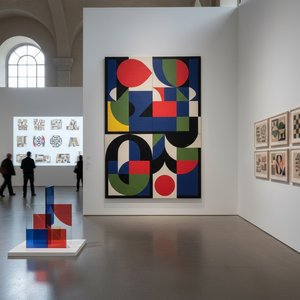
In the vibrant realm of contemporary abstraction, few works capture the kinetic energy of movement as effectively as Ferruccio Gard’s Cromostruttura/71 n. 16. This masterpiece serves as a profound exploration of neo-constructivist principles, where the canvas becomes a stage for a rhythmic dance of intersecting lines and bold geometric forms. At first glance, the viewer is met with a striking collision of color; deep, resonant blues clash and harmonize with energetic oranges and fiery reds. The composition is anchored by a central rectangular focal point that commands attention, acting as the heart from which various stripes and shapes radiate outward. It is a work that does not merely sit upon a wall but seems to vibrate with an internal life, pulling the observer into its complex, layered architecture.
The technique employed in this piece speaks to Gard’s mastery of Op Art influences and the precision of programmed art. Through the deliberate use of thick, directional brushwork and what appears to be a smooth application of acrylic paint, the artist creates an optical illusion of depth within a flattened plane. The overlapping rectangles and stripes are not merely static shapes; they create a sense of layered transparency and structural complexity. This meticulous layering suggests a carefully constructed chaos, where every line serves a purpose in guiding the eye through a labyrinth of color. For the discerning collector or interior designer, this piece offers a sophisticated interplay of texture and light, making it an ideal centerpiece for modern spaces that demand both intellectual depth and visual impact.
The Intersection of Order and Emotion
Beyond its striking aesthetic, Cromostruttura/71 n. 16 invites a deeper contemplation of the relationship between order and chaos. The geometric rigidity of the squares and rectangles provides a sense of structural stability, yet the energetic, diagonal movement of the stripes introduces an element of unpredictability. This tension mirrors the human experience—the constant struggle to find structure within the swirling complexities of life. The use of contrasting primary and secondary colors generates a psychological pulse; the coolness of the blue offers moments of respite, while the warmth of the orange and red injects a sense of urgency and passion. It is an evocative piece that transcends simple decoration, offering instead a window into the interconnectedness of all things.
As a pioneer of Italian programmed art, Ferruccio Gard utilizes this work to demonstrate how color and geometry can function as a language of their own. There are no recognizable figures or landscapes here, yet the painting feels deeply inhabited. For those looking to curate an environment of inspiration, this reproduction brings with it the legacy of 20th-century abstraction. It is a piece that complements minimalist interiors by adding much-needed vitality, while also standing strong in more eclectic settings as a testament to the enduring power of geometric expression. To possess such a work is to hold a fragment of a dynamic, ongoing dialogue between color, shape, and the human spirit.
Related Artworks
Artist Biography
Paul Klee: A Life Painted in Light and Shadow – 1940 and Beyond
The year 1940 marked a pivotal, yet tragically brief, chapter in the life and work of Paul Klee, a Swiss-born German artist whose singular vision continues to resonate across generations. Born in Bern in 1879, Klee’s artistic journey was one of relentless experimentation, fueled by an insatiable curiosity and a profound engagement with color theory, music, and the human condition. While his career spanned decades, the events of 1940 – marked by exile, war, and ultimately, his untimely death – profoundly shaped both his oeuvre and his legacy, solidifying his place as one of the most influential figures of the 20th century.
Klee’s early artistic development was deeply rooted in traditional academic training. He studied at the Kunstlerausschule Bern and later at the Academy of Fine Arts Munich, absorbing influences from a diverse range of sources – from the meticulous draftsmanship of Ingres to the expressive distortions of Van Gogh. However, it was during his time in Munich that he encountered Wassily Kandinsky, a key figure in the development of abstract art, whose teachings profoundly impacted Klee’s approach to color and form. Kandinsky encouraged Klee to explore the emotional power of color, moving beyond mere representation towards a more subjective and symbolic language. This influence is particularly evident in his later works, where color becomes not just descriptive but deeply expressive, conveying mood, emotion, and even musicality.
The years leading up to 1940 saw Klee’s artistic style evolve dramatically. He moved away from the more representational tendencies of his earlier work, embracing a looser, more spontaneous approach characterized by fragmented forms, whimsical imagery, and an exploration of children's drawings – a fascination that would remain a constant throughout his career. His use of color became increasingly vibrant and expressive, often employing bold juxtapositions and unexpected combinations to create visually arresting effects. During this period, Klee also began to experiment with printmaking, particularly lithography and woodcut, techniques that allowed him to explore new possibilities for composition and texture.
The Shadow of War: 1940 and Exile
1940 proved to be a year of immense upheaval for Europe, and for Klee, it brought with it the devastating consequences of war and political persecution. As Germany expanded its influence across the continent, Klee, who held Swiss citizenship, found himself increasingly marginalized. His Jewish ancestry, coupled with his German nationality, made him vulnerable to Nazi scrutiny. In 1940, he was forced to flee Munich and sought refuge in Zurich, where he remained until his death. This exile profoundly impacted his artistic practice, forcing him to abandon his studio and work in temporary locations, often under difficult circumstances.
Despite the challenges of wartime displacement, Klee continued to create prolifically during this period. His works from 1940 are characterized by a heightened sense of urgency and emotional intensity. The looming threat of war is subtly reflected in his imagery – fragmented forms, distorted perspectives, and a pervasive atmosphere of anxiety. However, amidst the darkness, there’s also a remarkable resilience and an enduring belief in the power of art to transcend adversity. His series *Ships in the Dark*, created during this time, powerfully embodies this duality, depicting vessels navigating uncertain waters under a turbulent sky – a metaphor for the human condition itself.
The Bauhaus and Beyond: Influences and Techniques
Klee’s artistic development was shaped by a complex interplay of influences. His early training in Munich exposed him to the traditions of academic art, while his encounter with Kandinsky opened up new possibilities for abstraction. He also drew inspiration from folk art, children's drawings, and the graphic arts – particularly the work of Henri Matisse. The Bauhaus school, where he taught alongside Kandinsky, further broadened his artistic horizons, exposing him to innovative ideas in design and typography.
Klee’s technical approach was equally diverse. He mastered a wide range of media, including painting, drawing, printmaking, book illustration, and stage design. His use of color was particularly distinctive, characterized by bold contrasts, unexpected harmonies, and an intuitive understanding of the emotional power of hue. He frequently employed techniques such as layering, masking, and spontaneous brushwork to create textured surfaces and dynamic compositions. His work is often described as “naive,” but this label obscures the sophisticated intellectual and artistic rigor that underpinned his creative process.
A Lasting Legacy: Klee's Enduring Influence
Paul Klee died in Zurich on 29 June 1940, at the age of 61, succumbing to illness contracted during his exile. His untimely death cut short a brilliant career, but his artistic legacy has only grown stronger over time. His work continues to inspire artists and viewers alike with its originality, emotional depth, and playful spirit.
Klee’s influence can be seen in the works of countless contemporary artists, including Jackson Pollock, Mark Rothko, and Gerhard Richter. His exploration of color theory, his embrace of abstraction, and his willingness to experiment with new techniques have had a profound impact on the course of modern art. Furthermore, Klee's notebooks, filled with sketches, diagrams, and theoretical reflections, offer invaluable insights into his creative process – a testament to his intellectual curiosity and artistic vision. Today, Paul Klee remains not just an artist but a symbol of resilience, creativity, and the enduring power of art in the face of adversity.
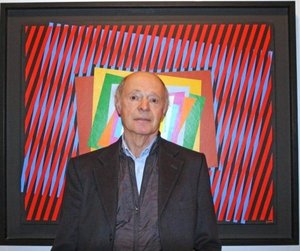
ferruccio gard
1940 - , Italy
Quick Facts
- Artistic Movement Or Style: Expressionism, Cubism, Surrealism
- Artists Or Movements Influenced By This Artist:
- Wassily Kandinsky
- Bauhaus
- Artists Who Influenced This Artist:
- Paul Cézanne
- Henri Matisse
- Date Of Birth: 18 December 1879
- Date Of Death: 29 June 1940
- Full Name: Paul Klee
- Nationality: Swiss-German
- Notable Artworks:
- Ships in the Dark
- Autumn
- Fantastic Vahnsinn
- Place Of Birth: Bern, Switzerland
Related Articles

Geometric Abstraction's 10 Defining Masterpieces | Art for Your Home - ArtsDot
Explore 10 defining masterpieces of Geometric Abstraction! Discover Kandinsky, Mondrian & Malevich’s iconic works. Find museum-quality art reproductions and curated decor ideas to elevate your home at ArtsDot.com.
Beyond Form & Color: Geometric Abstraction's Evolution in 20th/21st Century Art
Explore the evolution of geometric abstraction from Cubism to contemporary art. Discover key artists like Malevich & Mondrian, investment insights, and expert collecting advice at ArtsDot.
Beyond Form & Color: Geometric Abstraction's Enduring Legacy in Art History
Explore the captivating world of geometric abstraction! Discover its origins, key artists like Malevich & Mondrian, and why this movement remains highly valued by art collectors today. Expert insights at ArtsDot.
Geometric Design in Art: A Historical Survey & Contemporary Appeal for Collectors
Explore the enduring legacy of geometric abstraction! Discover key artists, historical movements & investment insights for discerning art collectors. Expert guidance from ArtsDot.
Beyond Form: Exploring Geometric Abstraction's Enduring Legacy in Art History
Explore the captivating world of geometric abstraction! Discover its origins, key artists like Kandinsky & Mondrian, and why this movement remains highly valued by art collectors today. Expert insights at ArtsDot.