 Preview
 Send
Send Share
Share
 Details

 Download
 Similars
 X-Ray
X-Ray Diaporama
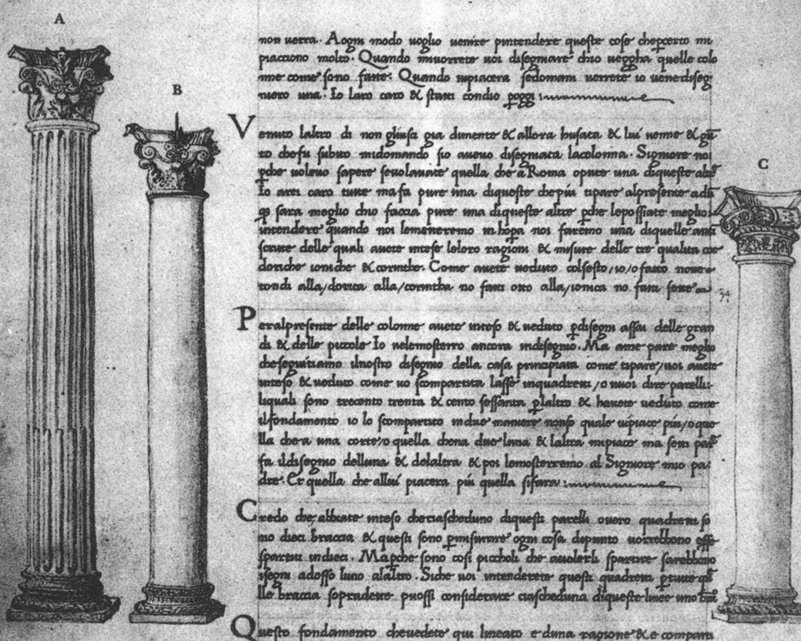
Page from the Trattato d'architettura


 Read More
Giclée / Art Print
Museum-quality giclée or canvas print with fast production and flexible finish options. ( Buy Hand Made Painting Buy Image)




P118B $10

P118H $10

P118W $10

P438Z $10

P508JH $12

P508YH $12

P805H $10

P805Z $10

P919BZ $10

P919G $10

P919XJ $10

P959ZH $10

P968JZ $12

W106C $8

W218G $10

W218JH $8

W218Y $10

W307PJ $10

W316G $10

W316PJ $8

W316Y $10

W398PJ $8

W4111J $10

W500HY $15

W500JH $15

W692G $12

W849H $8

W940BG $15

W953PJ $8




Pick from our preset sizes that match the artwork's original proportions.

You may enter your own dimensions to fit a specific frame or space. If your selected size does not match the original image's proportions, we will either crop the artwork or extend the image with a mirrored or solid-fill edge. A digital mockup will be sent for your approval before production begins.
Please note that the on-screen preview does not reflect the actual cropping or extension. Only the mockup will accurately show the final composition.
While custom sizes are available, we recommend selecting a dimension from the predefined list to preserve the original proportions.
Worldwide Delivery () in 2 weeks instead of standard 4/5 weeks. (24 August)

Free Worldwide Express Shipping

High-Quality Linen Canvas

Full Shipping Insurance

Customs Tax Refund Guarantee

True Color Matching Guarantee

60-Day Return Policy (Defects Only)

100% Money-Back Guarantee

Bulk Discount Offer
 Glass option is only available in size under 110 CM

Page from the Trattato d'architettura
Giclée / Art Print
Reproduction Size
-


Total Price
$ 63
Collectible Description
A Monument to Proportion and Harmony: Decoding Filarete’s Architectural Treatise
The fifteenth century witnessed an artistic awakening unlike any seen before, a gradual shedding of medieval constraints in favor of the humanist spirit that would define the coming centuries. Among the luminaries shaping this burgeoning era was Filarete (c. 1400-1469), Florentine architect and engineer whose magnum opus – *Trattato d'architettura* – remains an unparalleled testament to Renaissance architectural thought.
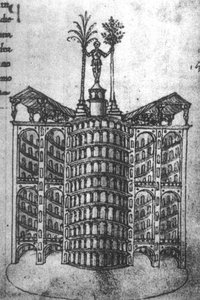
This meticulously crafted page, painstakingly reproduced in photographic detail, offers a glimpse into Filarete’s groundbreaking approach. It isn’t merely a depiction of columns; it’s a distillation of centuries-old classical principles reimagined for the burgeoning artistic sensibilities of his time. The artist's dedication to capturing the essence of architectural theory speaks volumes about the intellectual fervor that characterized the period.
The Anatomy of Form: Column Styles and Symbolic Representation
Three distinct column designs – labeled A, B, and C – dominate the left side of the page. These aren’t simply decorative elements; they embody specific stylistic traditions derived from ancient Greece and Rome. Filarete's meticulous renderings demonstrate a profound understanding of proportion and geometric harmony—concepts central to Renaissance aesthetics. Each column style reflects a particular aesthetic ideal: Column A, for instance, draws inspiration from Doric architecture, prioritizing strength and simplicity, while Column B leans towards Ionic ornamentation, emphasizing grace and elegance.
The lettering itself is equally significant. Executed in dense Italian script, it conveys complex ideas about structural stability and visual balance. The artist’s careful attention to detail underscores the importance of intellectual rigor alongside artistic expression—a hallmark of Renaissance scholarship.
Materiality and Technique: Preserving a Legacy Through Reproduction
The original manuscript, penned on vellum or parchment – now rendered as a high-quality photographic reproduction – speaks volumes about the artistry of its time. Ink was skillfully applied to create precise drawings alongside handwritten text, capturing the nuances of Filarete’s intellectual vision.
The paper's texture—a subtle roughness hinting at its age—adds another layer of authenticity to this visual record. The diffused lighting reflects the conditions under which the photograph was taken, avoiding any artificial enhancements that might detract from the original manuscript’s character. This reproduction allows art lovers and collectors alike to appreciate Filarete’s masterpiece with unparalleled clarity.
A Reflection of Renaissance Ideals
More than just a technical illustration, this page embodies the core tenets of Renaissance humanism—a belief in reason, observation, and the pursuit of beauty rooted in classical antiquity. It serves as a poignant reminder that art is not merely decoration but a vehicle for conveying profound philosophical ideas. By studying Filarete’s *Trattato d'architettura*, we gain insight into the intellectual currents that propelled Europe toward a new era of artistic innovation.
Related Artworks

Artist Biography
The Dawn of a New Era: Exploring the Art of the 1400s
The fifteenth century stands as a pivotal moment in art history, a time of profound transformation where the rigid formality of the Gothic era began to yield to the burgeoning dynamism and humanism of the Renaissance. While often viewed as a singular “Renaissance,” this period was far more nuanced, unfolding differently across Europe and marked by a fascinating interplay between established traditions and revolutionary innovations. This article delves into the world of artists who shaped this transformative century, exploring their lives, works, and lasting legacy. It’s crucial to remember that labeling art movements is often an oversimplification; the 1400s witnessed a gradual shift rather than a sudden revolution, with various styles and approaches coexisting within a complex artistic landscape.Early Influences: Gothic Legacy and Emerging Styles
The artists of the early 1400s were deeply rooted in the traditions of the late Medieval period, particularly the Gothic style. Gothic art, characterized by its soaring verticality, intricate ornamentation, and emphasis on religious symbolism, provided a foundational framework for subsequent developments. However, even during this time, subtle changes were already taking place. Artists like Gentile da Fabriano (c. 1370-1427) exemplified the late Gothic style with his elaborate illuminated manuscripts and panel paintings—works like *The Carrying of the Cross* – a testament to the meticulous detail and rich color palettes characteristic of the period. Robert Campin, also known as the Master of Flémalle (ca. 1375-1444), further refined this style with his realistic depictions of everyday life within religious settings, showcasing an increasing interest in portraying human figures with greater naturalism. Simultaneously, in Northern Europe, artists like Jan van Eyck were experimenting with oil paints, a medium that would revolutionize painting techniques and allow for unprecedented levels of detail and luminosity. The influence of Byzantine art, particularly its use of gold leaf and symbolic imagery, continued to be felt throughout the century, providing a rich source of inspiration for many artists.Florentine Innovation: The Rise of Humanism
Florence emerged as the epicenter of artistic innovation during the 1400s, largely due to the patronage of wealthy families like the Medici. This city-state fostered an environment where humanist ideals—a renewed interest in classical antiquity and a celebration of human potential—were embraced by artists and intellectuals alike. Filippo Brunelleschi (1377-1446), initially known for his architectural achievements, including the innovative design of the Florence Baptistery doors, also contributed significantly to painting through his meticulous study of perspective – a technique that would become central to Renaissance art. Lorenzo Ghiberti (ca. 1378-1455) won the competition for those same Baptistery doors, demonstrating the power of artistic skill and patronage in shaping Florentine culture. Donatello (c. 1386-1466), a sculptor who profoundly influenced subsequent generations, pushed the boundaries of realism and emotional expression in his works, notably his iconic bronze statue of David – a revolutionary depiction of the biblical hero that challenged traditional notions of beauty and heroism. Masaccio (1401-1428) is considered one of the pioneers of Renaissance painting, introducing linear perspective and chiaroscuro (the use of light and shadow) to create a sense of depth and volume in his frescoes, such as those in the Brancacci Chapel.Beyond Italy: Artistic Developments Across Europe
While Florence led the charge, artistic developments were not confined to Italy. In Flanders (modern-day Belgium), artists like Jan van Eyck (c. 1390-1441) and Rogier van der Weyden (c. 1390-1464) pioneered oil painting techniques, achieving remarkable levels of detail and realism in their portraits and religious scenes. The Limbourg Brothers, working in Bruges, created exquisitely detailed illuminated manuscripts that showcased a sophisticated understanding of perspective and color theory. In Spain, artists like Pedro Berruguete (c. 1407-1463) continued to develop the Gothic style while incorporating elements of Italian Renaissance art. Throughout Europe, artists were experimenting with new materials, techniques, and subject matter, reflecting the changing social, political, and intellectual landscape of the time.Legacy and Historical Significance
The 1400s witnessed a fundamental shift in artistic thinking—a move away from purely symbolic representation towards a more naturalistic and human-centered approach. The innovations in perspective, anatomy, and color theory laid the groundwork for the High Renaissance of the following century. Artists like Donatello and Masaccio challenged established conventions and paved the way for future generations of artists to explore new possibilities. While the period was marked by continuity with the Gothic tradition, it also represented a crucial step towards the artistic achievements that would define the Renaissance—a testament to the enduring power of human creativity and innovation. The legacy of these 1400s artists continues to inspire and influence art today, reminding us of the rich and complex history of Western art.
filarete
1400 - 1469 , Italy
Quick Facts
- Artistic Movement Or Style: Early Renaissance
- Artists Or Movements Influenced By This Artist: ['Renaissance art']
- Artists Who Influenced This Artist: ['Gothic artists']
- Date Of Death: 1469
- Nationality: Italian
- Notable Artworks:
- Gentile da Fabriano's Altarpiece
- Robert Campin’s Nativity
Related Articles
High Medieval Art: 10 Masterpieces That Shaped an Era | ArtsDot
Journey through High Medieval Art! Explore 10 iconic masterpieces – from Giotto's frescoes to stunning Gothic cathedrals. Discover the stories behind these timeless paintings, sculptures & illuminated manuscripts. Find museum-quality art reproductions at ArtsDot.com.
Timeless Elegance: How to Integrate High Medieval Art into Your Modern Interior Design
Discover how to infuse your modern home with the divine light of High Medieval art. From gilded illuminated manuscripts to Gothic-inspired textures, learn expert tips for integrating timeless elegance and historical grandeur into contemporary interior design.
Late Medieval Masterpieces: 10 Artworks That Defined an Era | ArtsDot
Journey through 10 defining Late Medieval masterpieces – from Giotto's frescoes to Jan van Eyck’s realism. Explore the stories, techniques & vibrant colors of Gothic art. Find museum-quality reproductions and elevate your home decor with ArtsDot.com! Discover all masterpieces on ArtsDot.com
Timeless Elegance: Transform Your Home with the Enchanting Beauty of Medieval Italian Artworks
Transform your home with the timeless magic of Medieval Italy. Explore our curated collection of hand-painted Gothic frescoes and Sienese masterpieces. At ArtsDot.com, we bring art history to life through exquisite oil reproductions and custom commissions tailored to your unique style.
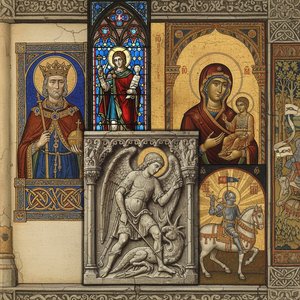
Illuminating Faith & Power: A Journey Through Medieval Art (c. 500 – c. 1500)
Explore the rich history of Medieval Art (c. 500 – c. 1500) with ArtsDot. Discover Byzantine mosaics, Gothic cathedrals & Renaissance masterpieces. Expert insights & museum-quality reproductions.