 Preview
 Send
Send Share
Share
 Details

 Download
 Similars
 X-Ray
X-Ray Diaporama
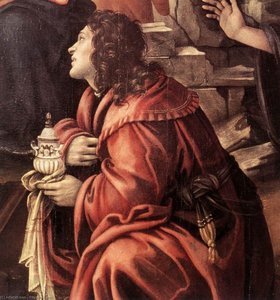
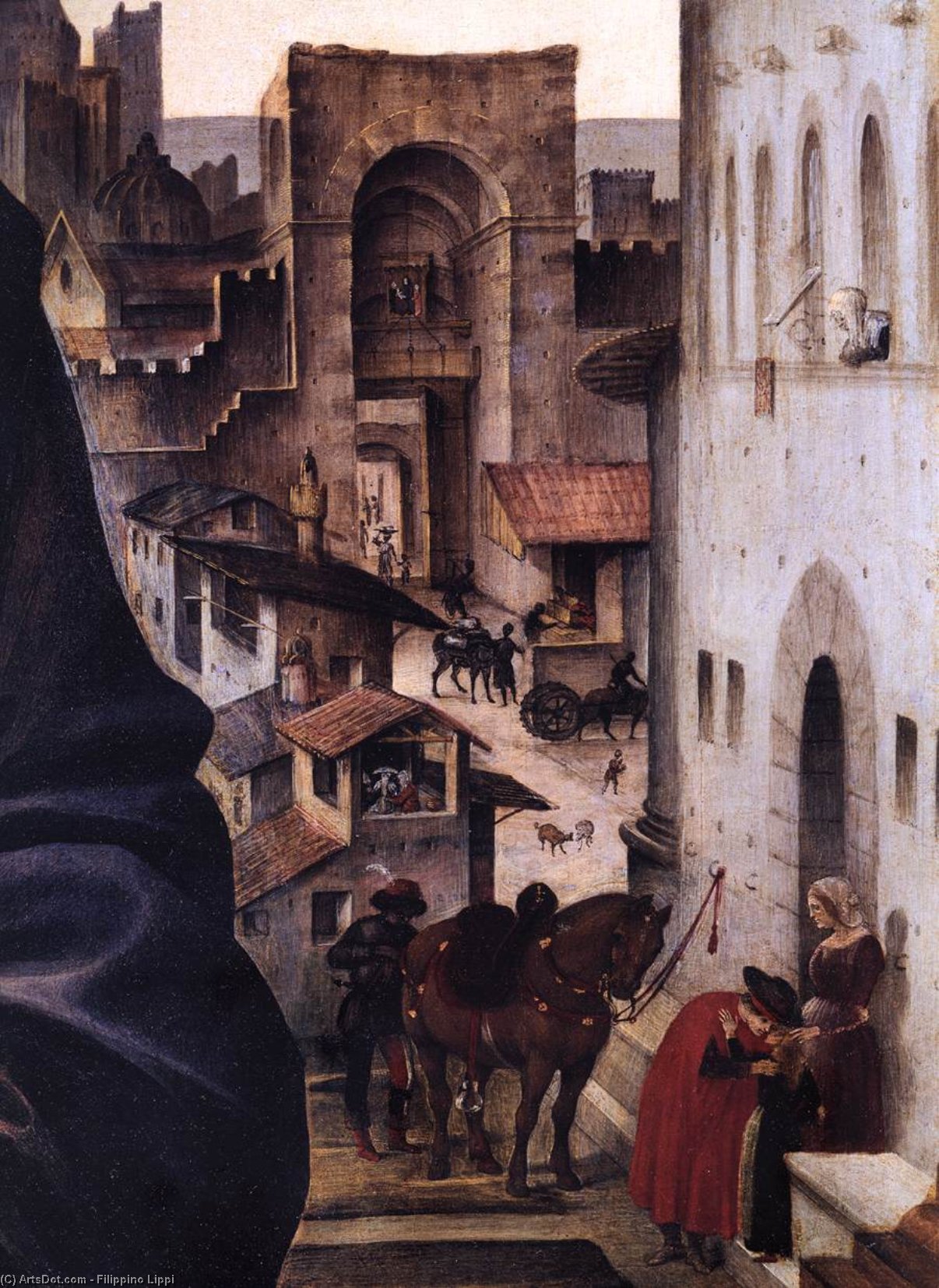
Madonna with Child and Saints (detail)


 Read More
Hand Made Oil Reproduction
Hand-painted oil on canvas in your size and frame, made to order by our artists. ( Buy Print Buy Image)




P118B $10

P118H $10

P118W $10

P438Z $10

P508JH $12

P508YH $12

P805H $10

P805Z $10

P919BZ $10

P919G $10

P919XJ $10

P959ZH $10

P968JZ $12

W106C $8

W218G $10

W218JH $8

W218Y $10

W307PJ $10

W316G $10

W316PJ $8

W316Y $10

W398PJ $8

W4111J $10

W500HY $15

W500JH $15

W692G $12

W849H $8

W940BG $15

W953PJ $8




Pick from our preset sizes that match the artwork's original proportions.

You may enter your own dimensions to fit a specific frame or space. If your selected size does not match the original image's proportions, we will either crop the artwork or extend the painting with additional hand-painted elements. A digital mockup will be sent for your approval before production begins.
Please note that the on-screen preview does not reflect the actual cropping or extension. Only the mockup will accurately show the final composition.
While custom sizes are available, we recommend selecting a dimension from the predefined list to preserve the original proportions.
After order, ArtsDot.com team will email client for instructions and provide a mockup preview
Worldwide Delivery () in 3/4 weeks instead of standard 5 weeks. (25 August). No compromise on quality.

Free Worldwide Express Shipping

High-Quality Linen Canvas

Full Shipping Insurance

Customs Tax Refund Guarantee

True Color Matching Guarantee

60-Day Return Policy (Defects Only)

100% Money-Back Guarantee

Bulk Discount Offer
 Glass option is only available in size under 110 CM

Madonna with Child and Saints (detail)
Reproduction Medium
Reproduction Size
-


Total Price
$ 263
Artwork Description
The Madonna with Child and Saints – A Renaissance Tapestry of Faith and Beauty
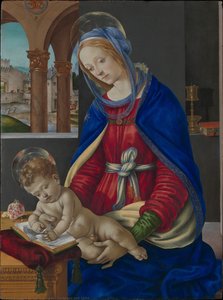
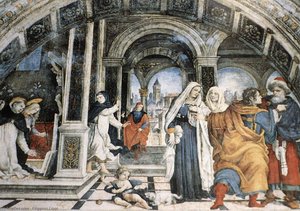
Filippino Lippi’s “Madonna with Child and Saints,” painted around 1488, isn't merely a depiction of the Virgin Mary; it’s a vibrant window into the heart of late Quattrocento Florence—a city pulsating with artistic innovation, religious fervor, and burgeoning humanist ideals. This exquisite panel painting, now housed in the Pinacoteca Nazionale di Bologna, immediately captivates with its rich palette, intricate detail, and a palpable sense of serene devotion. Lippi, an illegitimate son of a renowned painter himself, possessed a unique ability to imbue his works with both technical mastery and deeply personal emotion, qualities that shine brilliantly through in this masterpiece.
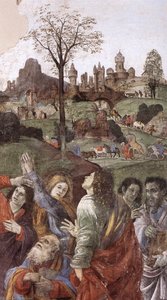
The composition is remarkably dynamic for its time, eschewing the rigid formality often associated with earlier Renaissance art. A bustling cityscape forms the backdrop—a carefully constructed illusion of a Florentine street scene, complete with arched buildings, a busy thoroughfare, and even a horse-drawn carriage. This urban setting subtly contrasts with the intimate domesticity of the Madonna’s chamber, creating an intriguing tension between the sacred and the secular. The figures themselves are arranged in a pyramidal structure, lending stability to the composition while simultaneously drawing the viewer's eye towards the central figure of Mary and Child.
A Masterclass in Technique – Color, Light, and Texture
Lippi’s technical skill is immediately apparent. He employs a masterful use of tempera and oil on wood, layering thin glazes to achieve an astonishing level of luminosity and depth. The colors are remarkably vibrant—deep blues, rich reds, and earthy greens—creating a visual feast that draws the eye. Notice particularly the delicate rendering of fabrics, from the voluminous robes of the saints to the folds in Mary’s garments; each detail is meticulously executed, demonstrating Lippi's keen observation of the natural world. The artist skillfully uses light to sculpt forms, creating a sense of three-dimensionality and highlighting key features like the Virgin’s face and the intricate details of the architectural setting.
Symbolism Woven into the Scene – Saints and Their Significance
Beyond its aesthetic beauty, “Madonna with Child and Saints” is laden with symbolic meaning. Each saint depicted—John the Baptist, Paul, Mary Magdalene, and Jerome—represents a specific virtue or theological concept. John the Baptist, holding his head in his hand, symbolizes repentance and baptism. Paul, often associated with conversion and faith, points towards Christ. Mary Magdalene embodies forgiveness and redemption, while Saint Jerome, known for his devotion to prayer and scholarship, is depicted with his quill and inkhorn, representing intellectual pursuits. The inclusion of these figures elevates the painting beyond a simple representation of the Virgin Mary; it becomes a visual sermon on Christian doctrine.
A Window into Renaissance Florence – Context and Legacy
Painted during a period of immense artistic and cultural change in Florence, “Madonna with Child and Saints” reflects the evolving sensibilities of the era. The influence of Masaccio’s groundbreaking frescoes in the Brancacci Chapel is evident in Lippi's use of perspective and his dramatic lighting effects. However, Lippi departs from Masaccio’s more austere style, embracing a greater sense of warmth and emotional expressiveness. This painting stands as a testament to Lippi’s artistic development—a pivotal work that bridged the gap between the Early Renaissance and the High Renaissance, showcasing both technical brilliance and profound spiritual depth.
Reproductions of this stunning artwork offer an exceptional opportunity to bring its beauty and symbolism into any space. Whether adorning a grand salon or a more intimate room, “Madonna with Child and Saints” continues to inspire awe and contemplation, reminding us of the enduring power of art to connect us to our faith, our history, and to one another.
Related Artworks


Artist Biography
Early Life and Training
- Born: April 1457, Prato, Italy
- Died: April 1504
- Parents: Fra Filippo Lippi (painter) and Lucrezia Buti
- Filippino was the illegitimate son of a renowned painter.
- Early training under his father laid the foundation for his artistic career.
Artistic Career and Development
- Early Period (1475-1480): Initial works, such as Madonnas, showed a less refined style. These were initially attributed to an anonymous artist known as "amico di Sandro."
- Evolution (1480-1485): Development of a more personal and effective approach in works like the *Journeys of Tobias*.
- Maturity (1485-1504): Mastery of the High Renaissance style, exemplified by *The Apparition of Christ to the Virgin*.
Major Works and Collaborations
- Collaboration with Perugino, Ghirlandaio, and Botticelli on frescoes at Lorenzo de' Medici’s villa.
- Completion of Masaccio's unfinished decoration in the Brancacci Chapel alongside Masolino.
- Notable works include: *The Coronation of the Virgin*, *Tobias and the Angel*, *St Jerome*, and *Scene from the Life of St Thomas Aquinas*.
Influences and Artistic Style
- Early Influences: Sandro Botticelli, Fra Filippo Lippi.
- Style Characteristics: Animated form and line, warm colorism, detailed landscapes, expressive figures, and a blend of perspective geometry with intimate interiors.
- Roman Antiquities: Studies after Roman antiquities during his time in Rome influenced his work, incorporating an antique vocabulary into his art.
Historical Significance and Legacy
- A leading Florentine exponent of the tradition of great fresco cycles.
- His influence on the High Renaissance is undeniable.
- Works are found in museums worldwide, including the Uffizi Gallery in Florence.
- Known for bridging the gap between earlier Renaissance styles and the emerging High Renaissance aesthetic.
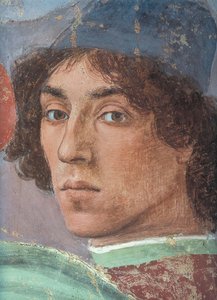
Filippino Lippi
1457 - 1504 , Italy
Quick Facts
- Artistic Movement Or Style: High Renaissance
- Artists Or Movements Influenced By This Artist: ['Raffaellino del Garbo']
- Artists Who Influenced This Artist:
- Fra Filippo Lippi
- Sandro Botticelli
- Date Of Birth: April 1457
- Date Of Death: April 1504
- Full Name: Filippino Lippi
- Nationality: Italian
- Notable Artworks:
- The Coronation of the Virgin
- Tobias and the Angel
- Scene from the Life of St Thomas Aquinas
- St Jerome
- Place Of Birth: Prato, Italy
Related Articles

Raphael's Masterpieces: 25 Iconic Paintings & Renaissance Art for Your Home
Explore 25 breathtaking Raphael paintings! Journey through the Italian Renaissance with masterpieces like 'School of Athens' & iconic Madonnas. Find museum-quality art reproductions and elevate your home decor on ArtsDot.com.
Titian: Innovation, Technique & the Venetian Renaissance Portrait Tradition
Explore the revolutionary techniques & enduring legacy of Titian, the master of Venetian Renaissance portraiture. Discover insights for collectors & appreciate his impact on art history.
Alte Pinakothek's Masterpieces: 25 Iconic Paintings for Art Lovers | ArtsDot
Journey through Alte Pinakothek's 25 most iconic paintings! Explore masterpieces by Dürer, Rembrandt & Rubens. Discover art history, techniques & find museum-quality reproductions for your home at ArtsDot.com.
Uffizi's 25 Masterpieces: Renaissance Art & Timeless Decor Inspiration
Journey through the Uffizi Gallery's 25 most iconic Renaissance artworks! Explore Botticelli, Leonardo da Vinci & Michelangelo’s masterpieces. Find museum-quality art reproductions and curated decor ideas to bring timeless Italian beauty into your home. Discover all masterpieces on ArtsDot.com

Fra Angelico's Masterpieces: 25 Renaissance Paintings for Your Home | ArtsDot
Explore 25 breathtaking masterpieces by Fra Angelico, a Renaissance master. Discover the stories behind his iconic frescoes, Annunciations & religious art. Find museum-quality reproductions and elevate your home decor with ArtsDot.com.