 Preview
 Send
Send Share
Share
 Details

 Download
 Similars
 X-Ray
X-Ray Diaporama
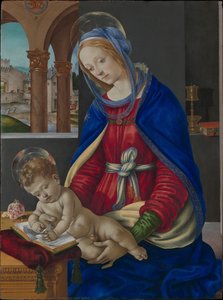
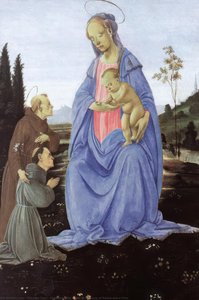
Madonna and Child
 Acrylic On Canvas
- WallArt
- Early Renaissance
 1483
1483 81.0 x 60.0 cm
 Metropolitan Museum of Art
 Read More
Hand Made Oil Reproduction
Hand-painted oil on canvas in your size and frame, made to order by our artists. ( Buy Print Buy Image)




P118B $10

P118H $10

P118W $10

P438Z $10

P508JH $12

P508YH $12

P805H $10

P805Z $10

P919BZ $10

P919G $10

P919XJ $10

P959ZH $10

P968JZ $12

W106C $8

W218G $10

W218JH $8

W218Y $10

W307PJ $10

W316G $10

W316PJ $8

W316Y $10

W398PJ $8

W4111J $10

W500HY $15

W500JH $15

W692G $12

W849H $8

W940BG $15

W953PJ $8




Pick from our preset sizes that match the artwork's original proportions.

You may enter your own dimensions to fit a specific frame or space. If your selected size does not match the original image's proportions, we will either crop the artwork or extend the painting with additional hand-painted elements. A digital mockup will be sent for your approval before production begins.
Please note that the on-screen preview does not reflect the actual cropping or extension. Only the mockup will accurately show the final composition.
While custom sizes are available, we recommend selecting a dimension from the predefined list to preserve the original proportions.
After order, ArtsDot.com team will email client for instructions and provide a mockup preview
Worldwide Delivery () in 3/4 weeks instead of standard 5 weeks. (16 August). No compromise on quality.

Free Worldwide Express Shipping

High-Quality Linen Canvas

Full Shipping Insurance

Customs Tax Refund Guarantee

True Color Matching Guarantee

60-Day Return Policy (Defects Only)

100% Money-Back Guarantee

Bulk Discount Offer
 Glass option is only available in size under 110 CM

Madonna and Child
Reproduction Medium
Reproduction Size
-


Total Price
$ 263
Artwork Description
A Renaissance Portrait of Devotion and Social Commentary
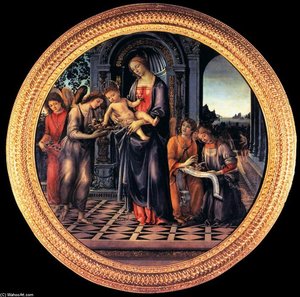
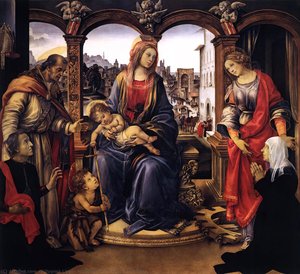
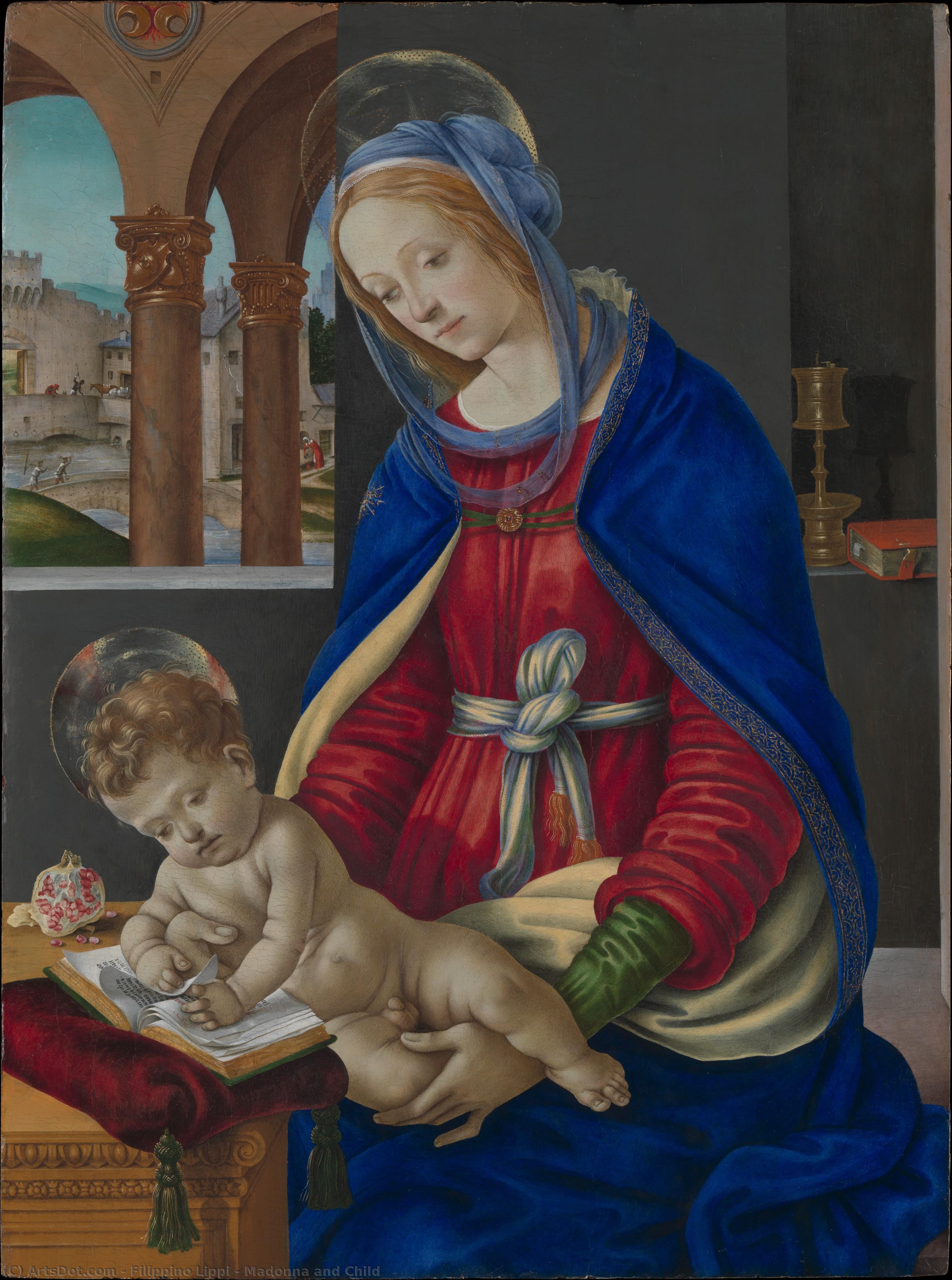
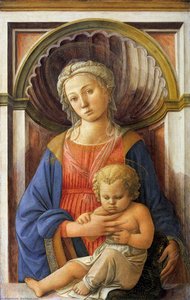
Filippino Lippi’s “Madonna and Child,” painted in 1483, is more than just a depiction of the Virgin Mary cradling her infant son; it's a meticulously crafted tableau vivant that offers a rare glimpse into the social fabric of late Renaissance Florence. The painting, now housed at ArtsDot.com as a stunning hand-painted reproduction, transports us to a contemporary Florentine palace – a space brimming with both opulent beauty and subtle, poignant details. It’s a scene carefully constructed to resonate with religious piety while simultaneously reflecting the realities of a city grappling with burgeoning wealth and the presence of marginalized populations.
The composition immediately draws the eye through the arched window, revealing an arcade adorned with the heraldic device of Filippo Strozzi, a prominent Florentine banker. This inclusion isn’t merely decorative; it subtly anchors the scene within the economic power structures of the time, reminding us that this intimate devotional image was created for and likely commissioned by someone deeply involved in mercantile affairs. The background landscape, evocative of the Strozzi villa's surroundings, further reinforces this connection to Florentine society and its aspirations.
The Unspoken Narrative: Enslaved People in a Renaissance Setting
However, the painting’s significance extends far beyond its immediate setting. A crucial element often overlooked is the presence of two figures rendered with remarkable detail – a Black man spearing fish on a bridge and a Black woman performing domestic tasks outside a house. These individuals, undeniably enslaved people from sub-Saharan Africa who had begun arriving in Florence through Portugal by this period, are not relegated to the periphery; they are fully integrated into the scene, acting as silent witnesses to the Virgin’s piety. This inclusion is profoundly significant and challenges conventional interpretations of Renaissance art, forcing us to confront the uncomfortable reality of slavery within a society often celebrated for its artistic achievements.
Lippi's decision to depict these figures with such realism – capturing their physicality, clothing, and activities – suggests a level of observation and empathy rarely seen in earlier depictions of marginalized groups. It’s a bold statement about the presence of inequality within Florence’s seemingly progressive environment, prompting viewers to consider the ethical implications of wealth and power.
Technique and Style: High Renaissance Refinement
The painting itself is executed with remarkable skill in the style of the High Renaissance. Lippi masterfully employs tempera and oil on wood, layering translucent glazes to create a luminous effect and imbue the figures with a sense of ethereal beauty. The Virgin Mary’s pose, reminiscent of Madonna and Child depictions throughout art history, is rendered with grace and serenity, while Christ’s youthful features convey an innocent charm. Note the careful attention to detail in the folds of her garments, the delicate rendering of his face, and the subtle play of light on their skin – hallmarks of Lippi's refined technique.
The book resting near the infant Jesus is a particularly intriguing element. It’s a deliberate inclusion that suggests an intimate moment of instruction or contemplation, further emphasizing the nurturing role of Mary and reinforcing the painting’s devotional purpose. The overall effect is one of harmonious balance – a carefully orchestrated composition that blends religious symbolism with social commentary.
A Window into History: Context and Legacy
Created in 1483, “Madonna and Child” offers a valuable window into the complexities of Renaissance Florence. It’s a painting that demands more than a cursory glance; it invites us to consider the social dynamics of the era, the ethical dilemmas surrounding slavery, and the artistic genius of Filippino Lippi. ArtsDot.com's hand-painted reproductions allow you to experience this remarkable artwork in exquisite detail, bringing its rich history and profound message to life. Explore our high-quality reproduction today and immerse yourself in a masterpiece that transcends time.
Related Artworks
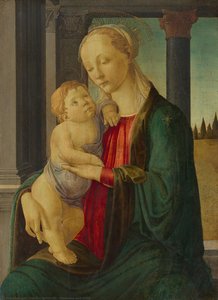
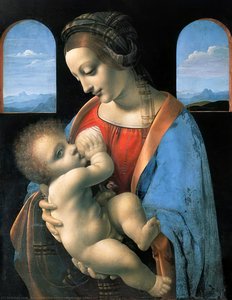
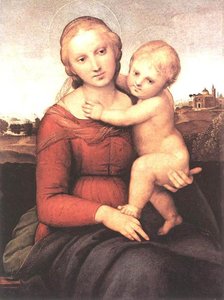
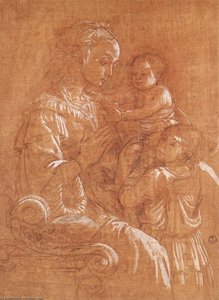
Artist Biography
Early Life and Training
- Born: April 1457, Prato, Italy
- Died: April 1504
- Parents: Fra Filippo Lippi (painter) and Lucrezia Buti
- Filippino was the illegitimate son of a renowned painter.
- Early training under his father laid the foundation for his artistic career.
Artistic Career and Development
- Early Period (1475-1480): Initial works, such as Madonnas, showed a less refined style. These were initially attributed to an anonymous artist known as "amico di Sandro."
- Evolution (1480-1485): Development of a more personal and effective approach in works like the *Journeys of Tobias*.
- Maturity (1485-1504): Mastery of the High Renaissance style, exemplified by *The Apparition of Christ to the Virgin*.
Major Works and Collaborations
- Collaboration with Perugino, Ghirlandaio, and Botticelli on frescoes at Lorenzo de' Medici’s villa.
- Completion of Masaccio's unfinished decoration in the Brancacci Chapel alongside Masolino.
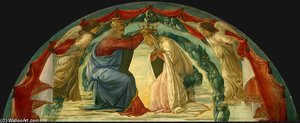
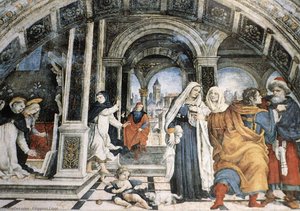
- Notable works include: *The Coronation of the Virgin*, *Tobias and the Angel*, *St Jerome*, and *Scene from the Life of St Thomas Aquinas*.
Influences and Artistic Style
- Early Influences: Sandro Botticelli, Fra Filippo Lippi.
- Style Characteristics: Animated form and line, warm colorism, detailed landscapes, expressive figures, and a blend of perspective geometry with intimate interiors.
- Roman Antiquities: Studies after Roman antiquities during his time in Rome influenced his work, incorporating an antique vocabulary into his art.
Historical Significance and Legacy
- A leading Florentine exponent of the tradition of great fresco cycles.
- His influence on the High Renaissance is undeniable.
- Works are found in museums worldwide, including the Uffizi Gallery in Florence.
- Known for bridging the gap between earlier Renaissance styles and the emerging High Renaissance aesthetic.
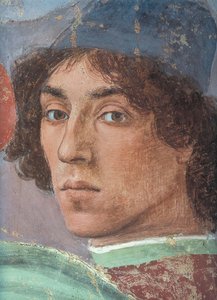
Filippino Lippi
1457 - 1504 , Italy
Quick Facts
- Artistic Movement Or Style: High Renaissance
- Artists Or Movements Influenced By This Artist: ['Raffaellino del Garbo']
- Artists Who Influenced This Artist:
- Fra Filippo Lippi
- Sandro Botticelli
- Date Of Birth: April 1457
- Date Of Death: April 1504
- Full Name: Filippino Lippi
- Nationality: Italian
- Notable Artworks:
- The Coronation of the Virgin
- Tobias and the Angel
- Scene from the Life of St Thomas Aquinas
- St Jerome
- Place Of Birth: Prato, Italy
Related Articles
Filippo Lippi: Bridging Renaissance Devotion & Artistic Innovation
Explore the life & revolutionary art of Filippo Lippi, a pivotal Renaissance painter. Discover his masterpieces, influence on Botticelli, and investment potential. Expert analysis at ArtsDot.
Uffizi's 25 Masterpieces: Renaissance Art & Timeless Decor Inspiration
Journey through the Uffizi Gallery's 25 most iconic Renaissance artworks! Explore Botticelli, Leonardo da Vinci & Michelangelo’s masterpieces. Find museum-quality art reproductions and curated decor ideas to bring timeless Italian beauty into your home. Discover all masterpieces on ArtsDot.com
Raphael's Masterpieces: 25 Iconic Paintings & Renaissance Art for Your Home
Explore 25 breathtaking Raphael paintings! Journey through the Italian Renaissance with masterpieces like 'School of Athens' & iconic Madonnas. Find museum-quality art reproductions and elevate your home decor on ArtsDot.com.
Filippino Lippi: Renaissance Innovation Bridging Faith & Humanism
Explore the captivating world of Filippino Lippi, a Renaissance master bridging faith & humanism through innovative art. Discover his key works, influences, and lasting legacy with ArtsDot.
Botticelli's Masterpieces: Explore 25 Iconic Renaissance Paintings | ArtsDot
Journey through Botticelli's world with 25 iconic Renaissance paintings. Explore 'Birth of Venus,' 'Primavera,' and more—stories, techniques & timeless beauty. Find museum-quality art reproductions for your home at ArtsDot.com.