 Preview
 Send
Send Share
Share
 Details

 Download
 Similars
 X-Ray
X-Ray Diaporama
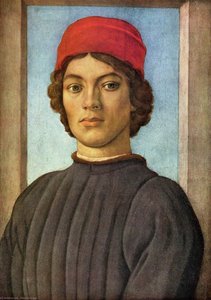
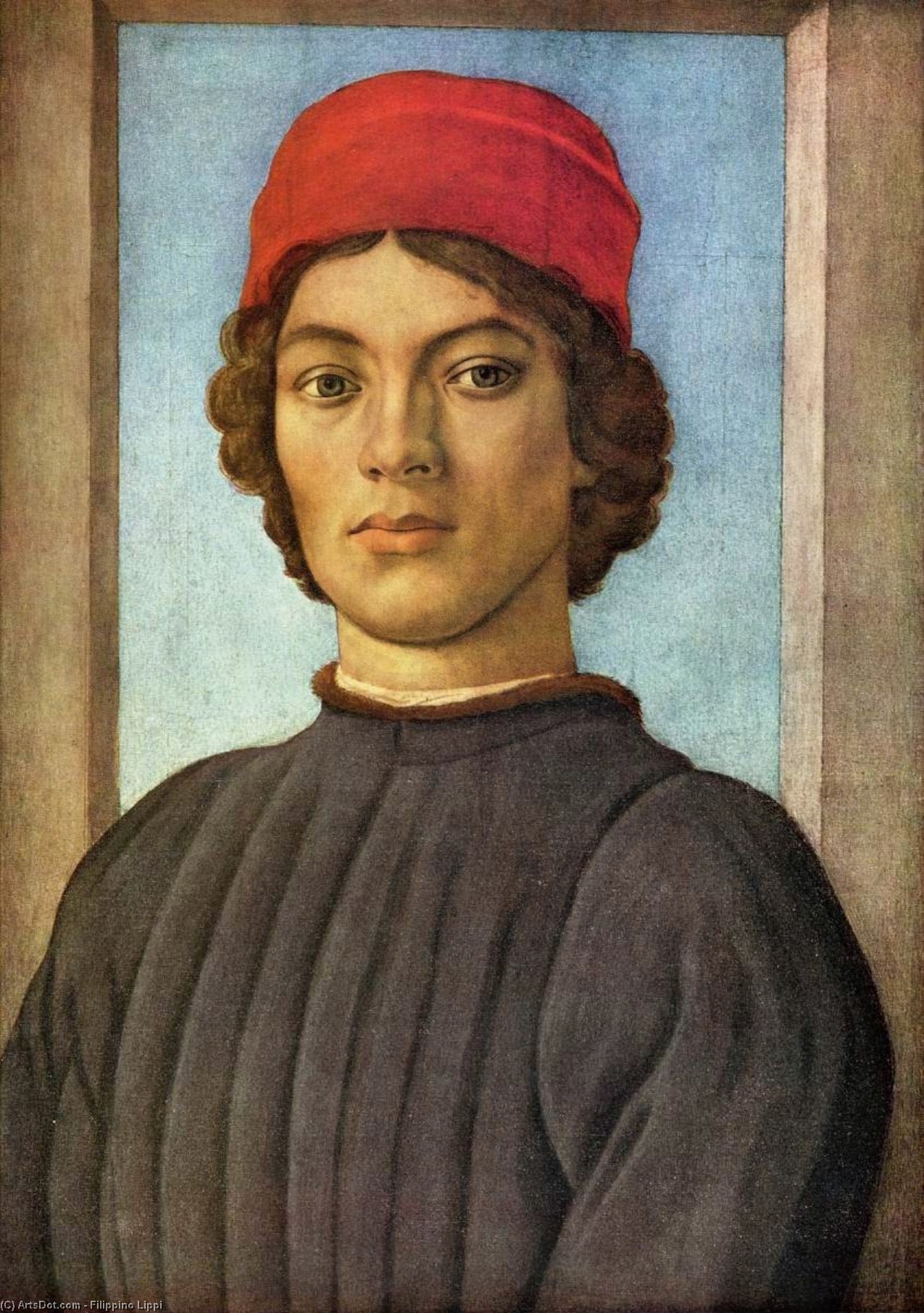
Portrait of a Youth
 Oil On Canvas
- WallArt
- High Renaissance
 1485
1485 52.0 x 37.0 cm
 National Gallery of Art
 Read More
Hand Made Oil Reproduction
Hand-painted oil on canvas in your size and frame, made to order by our artists. ( Buy Print Buy Image)




P118B $10

P118H $10

P118W $10

P438Z $10

P508JH $12

P508YH $12

P805H $10

P805Z $10

P919BZ $10

P919G $10

P919XJ $10

P959ZH $10

P968JZ $12

W106C $8

W218G $10

W218JH $8

W218Y $10

W307PJ $10

W316G $10

W316PJ $8

W316Y $10

W398PJ $8

W4111J $10

W500HY $15

W500JH $15

W692G $12

W849H $8

W940BG $15

W953PJ $8




Pick from our preset sizes that match the artwork's original proportions.

You may enter your own dimensions to fit a specific frame or space. If your selected size does not match the original image's proportions, we will either crop the artwork or extend the painting with additional hand-painted elements. A digital mockup will be sent for your approval before production begins.
Please note that the on-screen preview does not reflect the actual cropping or extension. Only the mockup will accurately show the final composition.
While custom sizes are available, we recommend selecting a dimension from the predefined list to preserve the original proportions.
After order, ArtsDot.com team will email client for instructions and provide a mockup preview
Worldwide Delivery () in 3/4 weeks instead of standard 5 weeks. (16 August). No compromise on quality.

Free Worldwide Express Shipping

High-Quality Linen Canvas

Full Shipping Insurance

Customs Tax Refund Guarantee

True Color Matching Guarantee

60-Day Return Policy (Defects Only)

100% Money-Back Guarantee

Bulk Discount Offer
 Glass option is only available in size under 110 CM

Portrait of a Youth
Reproduction Medium
Reproduction Size
-


Total Price
$ 263
Artwork Description
A Portrait of Youthful Promise: Filippo Lippi’s Masterpiece
Filippino Lippi's "Portrait of a Youth," painted circa 1485, is more than just a depiction of a young man; it’s a window into the burgeoning artistic spirit of Renaissance Florence. Held within the National Gallery of Art in Washington D.C., this tempera-on-panel work embodies a delicate balance between Botticelli's graceful elegance and Lippi’s own developing, intensely expressive style. The painting immediately draws the viewer in with its subject’s direct gaze – an arresting combination of youthful confidence and quiet contemplation. He is presented against a subtly rendered background, a simple window and doorway hinting at a world beyond, yet his focus remains entirely on the present moment.
Lippi's artistic journey was one marked by both collaboration and independent innovation. Initially apprenticed to his father, Fra Filippo Lippi, a renowned painter in his own right, Filippino quickly absorbed the lessons of masters like Botticelli, whose influence is undeniably visible in the portrait’s refined lines and harmonious composition. However, unlike a mere imitation, Filippino swiftly forged his own path, injecting a palpable emotional depth into his work that distinguished him from his predecessors. This painting stands as a testament to this transition – a moment where youthful innocence meets nascent artistic maturity.
Technique and Materials: A Study in Light and Color
The remarkable quality of “Portrait of a Youth” lies not only in its subject matter but also in Lippi’s masterful handling of color and texture. He employs a technique known as *tempera*, meticulously layering thin washes of pigment onto the panel, creating a luminous surface that seems to glow from within. The palette is restrained yet sophisticated – primarily blues, grays, and beiges—allowing the subtle nuances of light and shadow to define the subject’s features with remarkable precision. Note particularly the delicate modeling of the face, where Lippi skillfully uses variations in tone to create a sense of volume and form.
The artist's attention to detail is evident in every brushstroke. The folds of the clothing are rendered with subtle gradations of color, while the texture of the skin is suggested through delicate highlights and shadows. Even the simple background—a window and doorway—is treated with a remarkable degree of care, contributing to the overall sense of depth and realism. This careful attention to detail speaks volumes about Lippi’s dedication to his craft and his desire to capture not just an image but also a feeling.
Symbolism and Context: A Portrait of Renaissance Values
The portrait itself is deeply rooted in the values of the High Renaissance, reflecting a renewed interest in humanism and individual expression. The young man’s direct gaze invites the viewer into his world, fostering a sense of intimacy and connection. His posture—relaxed yet alert—suggests confidence and self-awareness, qualities highly valued during this period. The inclusion of the window and doorway can be interpreted as symbolic, representing both the limitations and possibilities of human existence.
Furthermore, the painting’s provenance offers intriguing insights into its history. Initially attributed to Botticelli by Bernard Berenson, it later gained recognition as a work by Filippino Lippi himself. The portrait's journey through various collections—from the Liechtenstein family to Mr. and Mrs. Frank D. Stout—testifies to its enduring appeal and artistic merit. The inclusion of the inscription “is perfecit opus” on an angel’s scroll, originally thought to be a self-portrait, adds another layer of complexity and intrigue to this captivating work.
A Timeless Masterpiece: Inspiration for Art & Design
“Portrait of a Youth” remains a powerful example of Renaissance portraiture, showcasing Lippi's unique artistic vision. Its delicate beauty, nuanced emotion, and masterful technique continue to inspire artists, collectors, and interior designers alike. Reproductions of this painting offer an exceptional opportunity to bring its timeless elegance into any space, serving as a reminder of the enduring power of art to capture the essence of human experience. Consider how the subtle color palette and balanced composition can inform contemporary design choices – a testament to Lippi’s lasting legacy.
Related Artworks

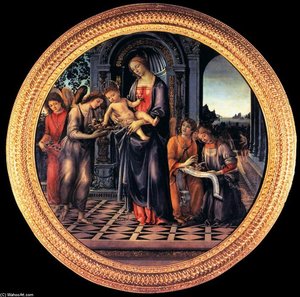
Artist Biography
Early Life and Training
- Born: April 1457, Prato, Italy
- Died: April 1504
- Parents: Fra Filippo Lippi (painter) and Lucrezia Buti
- Filippino was the illegitimate son of a renowned painter.
- Early training under his father laid the foundation for his artistic career.
Artistic Career and Development
- Early Period (1475-1480): Initial works, such as Madonnas, showed a less refined style. These were initially attributed to an anonymous artist known as "amico di Sandro."
- Evolution (1480-1485): Development of a more personal and effective approach in works like the *Journeys of Tobias*.
- Maturity (1485-1504): Mastery of the High Renaissance style, exemplified by *The Apparition of Christ to the Virgin*.
Major Works and Collaborations
- Collaboration with Perugino, Ghirlandaio, and Botticelli on frescoes at Lorenzo de' Medici’s villa.
- Completion of Masaccio's unfinished decoration in the Brancacci Chapel alongside Masolino.
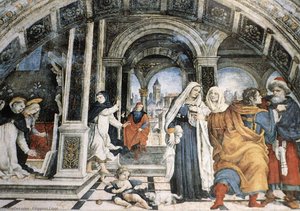
- Notable works include: *The Coronation of the Virgin*, *Tobias and the Angel*, *St Jerome*, and *Scene from the Life of St Thomas Aquinas*.
Influences and Artistic Style
- Early Influences: Sandro Botticelli, Fra Filippo Lippi.
- Style Characteristics: Animated form and line, warm colorism, detailed landscapes, expressive figures, and a blend of perspective geometry with intimate interiors.
- Roman Antiquities: Studies after Roman antiquities during his time in Rome influenced his work, incorporating an antique vocabulary into his art.
Historical Significance and Legacy
- A leading Florentine exponent of the tradition of great fresco cycles.
- His influence on the High Renaissance is undeniable.
- Works are found in museums worldwide, including the Uffizi Gallery in Florence.
- Known for bridging the gap between earlier Renaissance styles and the emerging High Renaissance aesthetic.
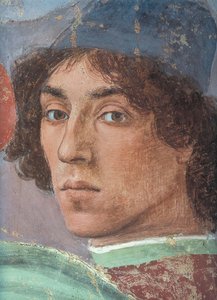
Filippino Lippi
1457 - 1504 , Italy
Quick Facts
- Artistic Movement Or Style: High Renaissance
- Artists Or Movements Influenced By This Artist: ['Raffaellino del Garbo']
- Artists Who Influenced This Artist:
- Fra Filippo Lippi
- Sandro Botticelli
- Date Of Birth: April 1457
- Date Of Death: April 1504
- Full Name: Filippino Lippi
- Nationality: Italian
- Notable Artworks:
- The Coronation of the Virgin
- Tobias and the Angel
- Scene from the Life of St Thomas Aquinas
- St Jerome
- Place Of Birth: Prato, Italy
Related Articles
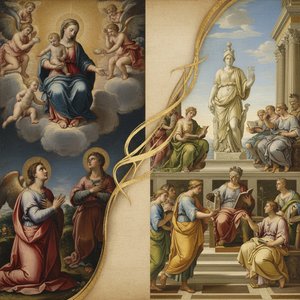
Filippino Lippi: Renaissance Innovation Bridging Faith & Humanism
Explore the captivating world of Filippino Lippi, a Renaissance master bridging faith & humanism through innovative art. Discover his key works, influences, and lasting legacy with ArtsDot.

Crimson Threads of Narrative: Exploring Symbolism & Representation in Artworks Featuring the Red Dress
Explore the rich symbolism of the red dress in art history! From ancient power displays to iconic portraits like Cézanne’s 'Madame Cezanne', discover the cultural and artistic significance behind this captivating color. Expert analysis & insights.
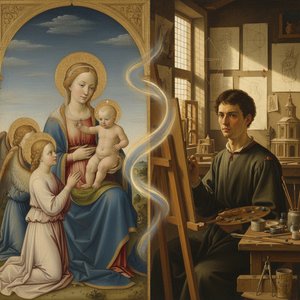
Filippo Lippi: Bridging Renaissance Devotion & Artistic Innovation
Explore the life & revolutionary art of Filippo Lippi, a pivotal Renaissance painter. Discover his masterpieces, influence on Botticelli, and investment potential. Expert analysis at ArtsDot.
Illuminating Surfaces: A Comprehensive Exploration of Tempera on Panel Painting Techniques & Historical Significance
Explore the rich history & techniques of tempera painting! Discover Renaissance masters like Botticelli & Fra Angelico, conservation insights, and the enduring legacy of this captivating art form. Learn more now!
Illuminating History: A Comprehensive Exploration of Tempera Painting Techniques & Artistic Legacy
Explore the rich history & techniques of tempera painting! Discover Renaissance masters like Botticelli & Fra Angelico, conservation insights, and the enduring legacy of this captivating art form.