

 Send
Send Share
Share
 Details

 Download
 Similars
 Diaporama
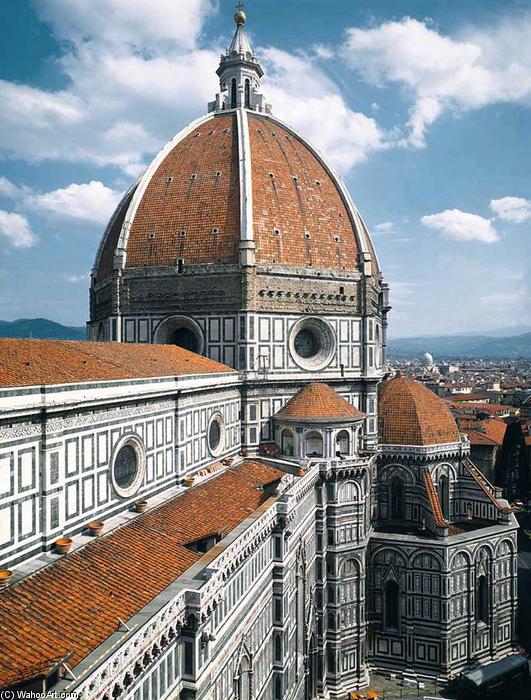
Dome of the Cathedral


 Read More
Purchase a high-resolution, enhanced digital image, far superior to the online preview.
Each file is meticulously prepared by our in-house specialists using advanced tools and expert manual retouching. We ensure every image has exceptional clarity, precise color accuracy, and fine detail.
The final file is delivered via email within 72 hours, optimized for immediate use in professional, editorial, and print environments. This is the same quality trusted by top-tier design studios, publishers, and galleries.
Digital Image
Download a high-resolution file for personal display, printing, and creative projects. ( Buy Print Buy Hand Made Painting)
Included in Every Digital Image Order
Expert Digital Delivery, Guaranteed
When you choose ArtsDot.com, you're not just getting an image - you're receiving a professionally enhanced digital artwork, crafted with precision and backed by a satisfaction guarantee. Here's everything that comes with your order, automatically:

Fast Email Delivery
Your high-resolution digital image file will be emailed to you within 72 hours of ordering - ready for immediate use.

AI-Enhanced Digital File
Your artwork is professionally optimized using advanced AI tools and manual editing, ensuring maximum detail, clarity, and color accuracy.

Free Lifetime Re-Delivery
Accidentally deleted or lost your file? No worries - we'll resend it to you anytime, free of charge.

No Import Fees - Ever
Enjoy your artwork instantly with zero customs, duties, or delivery fees - digital downloads are always tax-free.

Color Accuracy Guarantee
We ensure your digital image reflects the original colors as closely as possible using professional tools and color management.

60-Day Satisfaction Guarantee
If you're not satisfied with your digital image, we'll revise it or refund 100% within 60 days - no questions asked.

100% Money-Back Guarantee
Not satisfied? Get a full refund within 60 days of receiving your digital file - no questions asked.

Bulk Order Discounts
Buy 3 images, save 10% - Buy 5, save 15% - Buy 10+, save 20%. Great for creative projects, galleries, and agencies.
Collectible Description
The Genius of Brunelleschi: Reconstructing Florence’s Cathedral Dome
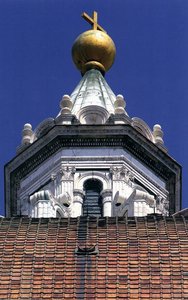
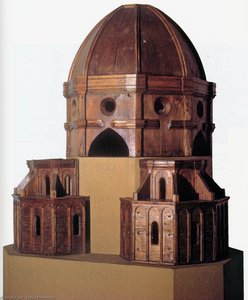
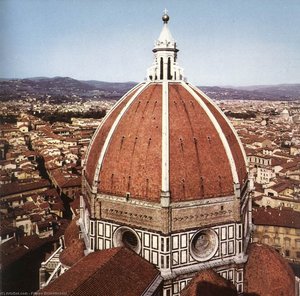
Florence Cathedral, formally known as Santa Maria del Fiore, stands as an unparalleled testament to Renaissance ingenuity and artistic ambition. Completed in 1436 after decades of painstaking effort by Filippo Brunelleschi—a feat considered impossible at the time—the dome remains a breathtaking achievement of engineering and sculptural artistry, captivating visitors from across centuries. Its construction represents not merely building a structure but redefining architectural principles and elevating human creativity to new heights.A Breakthrough in Structural Innovation
Before Brunelleschi’s arrival, cathedral domes relied on traditional centering techniques – arches supported by ribs radiating outwards from the center—a method that had been perfected during the Romanesque period. Brunelleschi boldly rejected this established approach, opting instead for a revolutionary system based on independent masonry supports arranged in a herringbone pattern. This innovative design allowed him to construct a dome without scaffolding, overcoming logistical challenges and demonstrating an unprecedented understanding of structural mechanics. The sheer scale of the undertaking—approximately 46 meters (151 feet) in diameter—further underscored Brunelleschi’s brilliance and cemented his reputation as a visionary architect.The Artistry Behind the Form
Beyond its structural marvel, the dome is adorned with exquisite sculptural ornamentation crafted by Lorenzo Ghiberti and Andrea Pisano. The intricate carvings depict biblical scenes and heraldic emblems, reflecting Florentine civic pride and artistic patronage during the Renaissance. Furthermore, Brunelleschi’s meticulous attention to detail extended beyond sculpture; he painstakingly calculated every dimension of the dome, ensuring perfect proportions and achieving a harmonious aesthetic balance. This dedication to precision exemplifies the humanist ideals that characterized the era—a belief in reason and observation as pathways to understanding beauty and truth.Symbolism and Spiritual Significance
The dome’s soaring height symbolizes divine aspiration and embodies the spiritual fervor of the Florentine Renaissance. Its circular form represents eternity and unity, mirroring the celestial realm envisioned by theologians and artists alike. The oculus—the central opening at the apex—allows natural light to flood into the cathedral nave, illuminating the altar and creating a contemplative atmosphere conducive to prayer. This deliberate use of symbolism reinforces the dome’s role as a focal point for religious devotion and elevates it beyond mere architectural grandeur.A Legacy Enduring Through Time
Brunelleschi's dome continues to inspire awe and admiration today, serving as an enduring symbol of Florentine artistic excellence and Renaissance innovation. Its influence can be seen in countless subsequent buildings across Europe and beyond—a testament to the transformative power of a single visionary mind. Studying its construction techniques and appreciating its aesthetic beauty offers invaluable insight into the intellectual and cultural landscape of the fifteenth century, reminding us that true artistry transcends time and speaks directly to the human spirit.- Artist: Filippo Brunelleschi
- Born Year: 1377
- Death Year: 1446
- Birth City: Florence
- Birth Country: Italy
- Useful Links: Explore the enduring legacy of Renaissance masterpieces
- Further Research: Brunelleschi, Dome of the Cathedral - Khan Academy
Related Artworks
Artist Biography
A Renaissance Pioneer: The Life and Legacy of Filippo Brunelleschi
Filippo Brunelleschi, born in Florence in 1377, stands as a monumental figure bridging the medieval world and the burgeoning Renaissance. Initially destined for a life aligned with his father’s legal profession, young Filippo's artistic inclinations quickly asserted themselves. He was apprenticed to a goldsmith, a craft that honed his meticulous attention to detail and mastery of materials—skills that would prove invaluable in his later architectural endeavors. This early training wasn’t confined to mere technical skill; it fostered an understanding of form, proportion, and the expressive potential inherent in manipulating physical substances. His participation in the 1401 competition for the Florence Baptistery doors, though ultimately unsuccessful against Lorenzo Ghiberti, revealed a burgeoning talent and a bold artistic vision. This experience, while initially disheartening, proved pivotal, redirecting his energies toward architecture—a field where he would indelibly shape the course of Western art and engineering.Architectural Innovations and the Rebirth of Classical Ideals
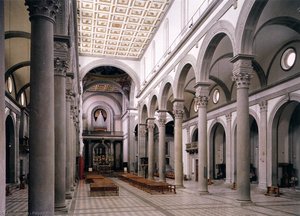
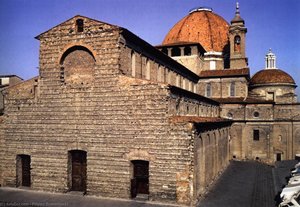
Brunelleschi’s architectural achievements are nothing short of revolutionary. He didn't simply build structures; he solved seemingly insurmountable problems, pushing the boundaries of what was thought possible. His most celebrated triumph is undoubtedly the dome of Florence Cathedral—a feat that had baffled architects for decades. The sheer scale and complexity of the project demanded innovative solutions, and Brunelleschi delivered them in abundance. Abandoning traditional scaffolding methods, he devised a self-supporting double shell structure, employing ingenious hoisting mechanisms and interlocking brick patterns to distribute weight and ensure stability. This wasn’t merely an engineering marvel; it was a testament to human ingenuity and a symbol of Florence's ambition. Beyond the dome, Brunelleschi championed a return to classical principles in his designs. He meticulously studied Roman ruins, absorbing their sense of proportion, harmony, and spatial organization. This influence is evident in works like the Old Sacristy of San Lorenzo, where he employed symmetrical layouts, rounded arches, and classical ornamentation to create spaces imbued with serenity and balance. Other notable projects—the Spedale degli Innocenti (foundling hospital), Palazzo Rucellai, and the Basilica di San Lorenzo—all bear the hallmarks of his distinctive style: a harmonious blend of classical inspiration and innovative structural solutions.The Dawn of Linear Perspective
Brunelleschi’s impact extends far beyond architecture; he is credited with rediscovering and formalizing the principles of linear perspective, a technique that fundamentally altered the course of art history. Prior to Brunelleschi, depictions of space lacked a consistent system for representing depth and realism. His meticulous investigations into optics and geometry led him to develop a method for creating illusions of three-dimensional space on a two-dimensional surface. This involved establishing a vanishing point—a single point on the horizon line toward which all parallel lines converge—and using mathematical calculations to accurately represent spatial relationships. The implications were profound. Linear perspective provided artists with a powerful tool for achieving greater realism and emotional impact in their work, influencing generations of painters and sculptors. It wasn’t simply about technical accuracy; it was about creating a more immersive and believable visual experience for the viewer.Influences and a Lasting Historical Significance
Brunelleschi's genius didn’t emerge in a vacuum. He drew inspiration from diverse sources, synthesizing them into something entirely new. The ancient Roman architecture he studied provided a foundation of classical principles, while his exposure to Gothic structures instilled an understanding of structural challenges and innovative building techniques. Crucially, the burgeoning humanist movement of the Renaissance—with its emphasis on human potential and achievement—resonated deeply with Brunelleschi’s own innovative spirit. He believed in the power of reason, observation, and experimentation, qualities that underpinned his groundbreaking work. His legacy is immense. He is rightfully regarded as one of the founding fathers of the Renaissance, a pivotal figure who ushered in a new era of artistic and intellectual flourishing. His engineering innovations continue to inform modern construction practices, while his development of linear perspective remains a cornerstone of representational art. But perhaps most importantly, Brunelleschi embodied a new way of thinking—a belief in human ingenuity, a commitment to rational inquiry, and a celebration of the beauty and order inherent in the natural world. He didn’t just change the skyline of Florence; he changed the way we see the world.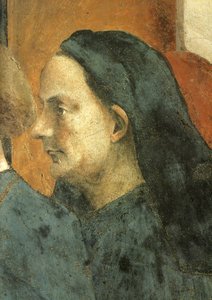
Filippo Brunelleschi
1377 - 1446 , Italy
Quick Facts
- Artistic Movement Or Style: Early Renaissance
- Artists Or Movements Influenced By This Artist:
- Renaissance architecture
- Linear perspective artists
- Artists Who Influenced This Artist: ['Ancient Roman architects']
- Date Of Birth: 1377
- Date Of Death: 1446
- Full Name: Filippo Brunelleschi
- Nationality: Italian
- Notable Artworks:
- Florence Cathedral Dome
- Old Sacristy San Lorenzo
- Spedale degli Innocenti
- Palazzo Rucellai
- Place Of Birth: Florence, Italy

