 Preview
 Send
Send Share
Share
 Details

 Download
 Similars
 X-Ray
X-Ray Diaporama
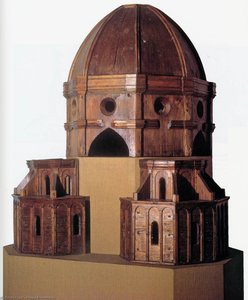
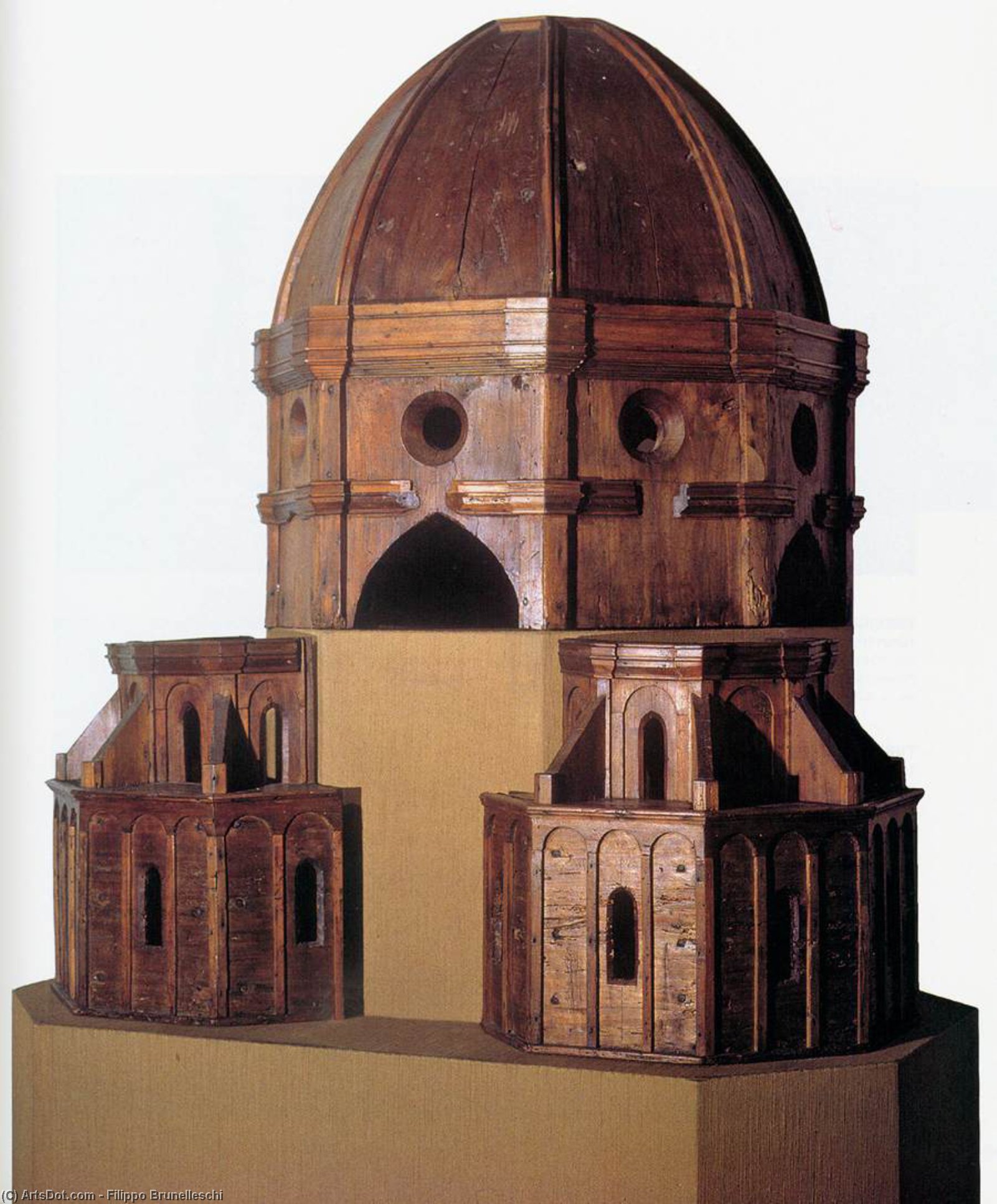
Wood model for the dome
 Acrylic On Canvas
- WallArt
- Early Renaissance
 1418
1418 100.0 x 90.0 cm
 Museo dell'Opera del Duomo
 Read More
Hand Made Oil Reproduction
Hand-painted oil on canvas in your size and frame, made to order by our artists. ( Buy Print Buy Image)




P118B $10

P118H $10

P118W $10

P438Z $10

P508JH $12

P508YH $12

P805H $10

P805Z $10

P919BZ $10

P919G $10

P919XJ $10

P959ZH $10

P968JZ $12

W106C $8

W218G $10

W218JH $8

W218Y $10

W307PJ $10

W316G $10

W316PJ $8

W316Y $10

W398PJ $8

W4111J $10

W500HY $15

W500JH $15

W692G $12

W849H $8

W940BG $15

W953PJ $8




Pick from our preset sizes that match the artwork's original proportions.

You may enter your own dimensions to fit a specific frame or space. If your selected size does not match the original image's proportions, we will either crop the artwork or extend the painting with additional hand-painted elements. A digital mockup will be sent for your approval before production begins.
Please note that the on-screen preview does not reflect the actual cropping or extension. Only the mockup will accurately show the final composition.
While custom sizes are available, we recommend selecting a dimension from the predefined list to preserve the original proportions.
After order, ArtsDot.com team will email client for instructions and provide a mockup preview
Worldwide Delivery () in 3/4 weeks instead of standard 5 weeks. (17 August). No compromise on quality.

Free Worldwide Express Shipping

High-Quality Linen Canvas

Full Shipping Insurance

Customs Tax Refund Guarantee

True Color Matching Guarantee

60-Day Return Policy (Defects Only)

100% Money-Back Guarantee

Bulk Discount Offer
 Glass option is only available in size under 110 CM

Wood model for the dome
Reproduction Medium
Reproduction Size
-


Total Price
$ 263
Artwork Description
A Vision of Florence: Unveiling Brunelleschi’s Dome Model
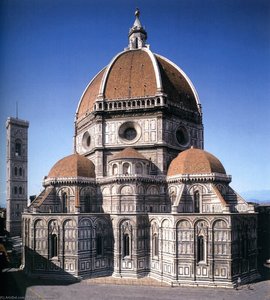
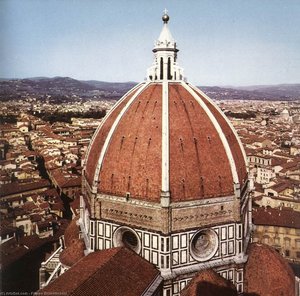
The image before you isn't merely a depiction of wood and pigment; it’s a tangible echo of a revolutionary mind. This meticulously crafted model, representing Filippo Brunelleschi’s groundbreaking design for the dome of Florence Cathedral (Duomo), offers an intimate glimpse into the genesis of one of architecture’s most enduring achievements. More than just a technical blueprint, it embodies a profound shift in thinking – a rejection of established methods and a bold embrace of mathematical precision and innovative engineering.
Created between 1418 and 1420 during a period of intense artistic and intellectual ferment in Florence, this model speaks volumes about the Renaissance’s burgeoning spirit. Brunelleschi, a goldsmith by trade, possessed an extraordinary ability to synthesize disparate disciplines – geometry, mathematics, sculpture, and engineering – into a cohesive whole. The model itself is constructed primarily from wood, reinforced with brick elements, demonstrating a pragmatic approach to construction while simultaneously showcasing the elegance of his design. The intricate detailing—the spiraling ribs, the herringbone pattern of the bricks, the carefully considered proportions—reveal not just a builder’s plan but also an artist's vision.
Engineering Innovation and the Dawn of Modernism
Brunelleschi’s genius lay in his audacious solution to a seemingly insurmountable challenge: constructing a massive dome without traditional centering or buttresses. The prevailing wisdom dictated that such a feat was impossible, yet Brunelleschi, drawing inspiration from Roman architectural principles and employing groundbreaking mathematical techniques – including linear perspective, which he later applied to painting – devised a system of self-supporting arches and a double shell structure. This model is a testament to his ingenuity; it’s a physical manifestation of the complex calculations and spatial reasoning that underpinned his success.
Crucially, this design represented a departure from medieval construction practices. The dome's innovative use of compression – distributing weight evenly across its surface – allowed for a lighter, more streamlined structure than previous attempts. It’s no exaggeration to say that Brunelleschi’s dome fundamentally altered the course of architectural history, paving the way for subsequent innovations and establishing him as a pioneer of modern engineering.
Symbolism and Florentine Identity
The Florence Cathedral Dome wasn't simply a magnificent structure; it was a potent symbol of Florentine civic pride and ambition. Commissioned during a period of political instability, the dome’s construction became a unifying project, demonstrating the city’s wealth, ingenuity, and determination to assert its cultural dominance. Brunelleschi’s model, therefore, carries significant symbolic weight – representing not just architectural achievement but also Florence's rise as a center of art, learning, and innovation.
The dome itself, with its soaring height and harmonious proportions, became an iconic emblem of the city, instantly recognizable across the globe. It’s a visual shorthand for Renaissance artistry and Florentine identity – a legacy that continues to inspire awe and admiration centuries later. This model serves as a tangible link to that extraordinary moment in history.
A Reproduction Worthy of Display
Reproductions of Brunelleschi's dome models are highly sought after by collectors, interior designers, and art enthusiasts alike. This piece offers an exceptional opportunity to bring this pivotal artifact into your home or office – a reminder of the ingenuity and artistic vision that shaped the Renaissance. Its rich detail and historical significance make it a captivating addition to any collection, while its elegant design complements a wide range of interior styles.
Related Artworks

Artist Biography
A Renaissance Pioneer: The Life and Legacy of Filippo Brunelleschi
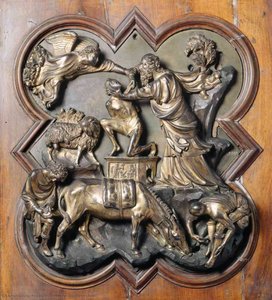
Filippo Brunelleschi, born in Florence in 1377, stands as a monumental figure bridging the medieval world and the burgeoning Renaissance. Initially destined for a life aligned with his father’s legal profession, young Filippo's artistic inclinations quickly asserted themselves. He was apprenticed to a goldsmith, a craft that honed his meticulous attention to detail and mastery of materials—skills that would prove invaluable in his later architectural endeavors. This early training wasn’t confined to mere technical skill; it fostered an understanding of form, proportion, and the expressive potential inherent in manipulating physical substances. His participation in the 1401 competition for the Florence Baptistery doors, though ultimately unsuccessful against Lorenzo Ghiberti, revealed a burgeoning talent and a bold artistic vision. This experience, while initially disheartening, proved pivotal, redirecting his energies toward architecture—a field where he would indelibly shape the course of Western art and engineering.Architectural Innovations and the Rebirth of Classical Ideals
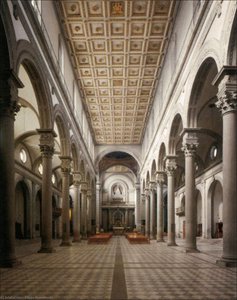
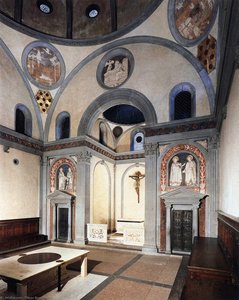
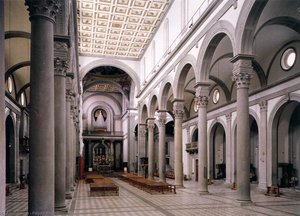
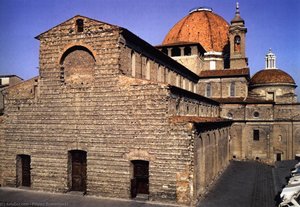
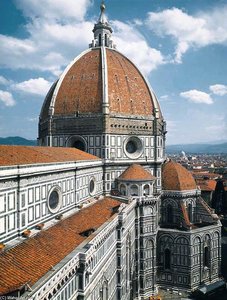
Brunelleschi’s architectural achievements are nothing short of revolutionary. He didn't simply build structures; he solved seemingly insurmountable problems, pushing the boundaries of what was thought possible. His most celebrated triumph is undoubtedly the dome of Florence Cathedral—a feat that had baffled architects for decades. The sheer scale and complexity of the project demanded innovative solutions, and Brunelleschi delivered them in abundance. Abandoning traditional scaffolding methods, he devised a self-supporting double shell structure, employing ingenious hoisting mechanisms and interlocking brick patterns to distribute weight and ensure stability. This wasn’t merely an engineering marvel; it was a testament to human ingenuity and a symbol of Florence's ambition. Beyond the dome, Brunelleschi championed a return to classical principles in his designs. He meticulously studied Roman ruins, absorbing their sense of proportion, harmony, and spatial organization. This influence is evident in works like the Old Sacristy of San Lorenzo, where he employed symmetrical layouts, rounded arches, and classical ornamentation to create spaces imbued with serenity and balance. Other notable projects—the Spedale degli Innocenti (foundling hospital), Palazzo Rucellai, and the Basilica di San Lorenzo—all bear the hallmarks of his distinctive style: a harmonious blend of classical inspiration and innovative structural solutions.The Dawn of Linear Perspective
Brunelleschi’s impact extends far beyond architecture; he is credited with rediscovering and formalizing the principles of linear perspective, a technique that fundamentally altered the course of art history. Prior to Brunelleschi, depictions of space lacked a consistent system for representing depth and realism. His meticulous investigations into optics and geometry led him to develop a method for creating illusions of three-dimensional space on a two-dimensional surface. This involved establishing a vanishing point—a single point on the horizon line toward which all parallel lines converge—and using mathematical calculations to accurately represent spatial relationships. The implications were profound. Linear perspective provided artists with a powerful tool for achieving greater realism and emotional impact in their work, influencing generations of painters and sculptors. It wasn’t simply about technical accuracy; it was about creating a more immersive and believable visual experience for the viewer.Influences and a Lasting Historical Significance
Brunelleschi's genius didn’t emerge in a vacuum. He drew inspiration from diverse sources, synthesizing them into something entirely new. The ancient Roman architecture he studied provided a foundation of classical principles, while his exposure to Gothic structures instilled an understanding of structural challenges and innovative building techniques. Crucially, the burgeoning humanist movement of the Renaissance—with its emphasis on human potential and achievement—resonated deeply with Brunelleschi’s own innovative spirit. He believed in the power of reason, observation, and experimentation, qualities that underpinned his groundbreaking work. His legacy is immense. He is rightfully regarded as one of the founding fathers of the Renaissance, a pivotal figure who ushered in a new era of artistic and intellectual flourishing. His engineering innovations continue to inform modern construction practices, while his development of linear perspective remains a cornerstone of representational art. But perhaps most importantly, Brunelleschi embodied a new way of thinking—a belief in human ingenuity, a commitment to rational inquiry, and a celebration of the beauty and order inherent in the natural world. He didn’t just change the skyline of Florence; he changed the way we see the world.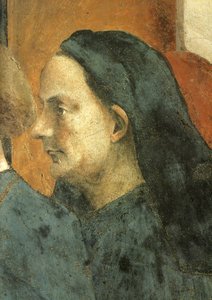
Filippo Brunelleschi
1377 - 1446 , Italy
Quick Facts
- Artistic Movement Or Style: Early Renaissance
- Artists Or Movements Influenced By This Artist:
- Renaissance architecture
- Linear perspective artists
- Artists Who Influenced This Artist: ['Ancient Roman architects']
- Date Of Birth: 1377
- Date Of Death: 1446
- Full Name: Filippo Brunelleschi
- Nationality: Italian
- Notable Artworks:
- Florence Cathedral Dome
- Old Sacristy San Lorenzo
- Spedale degli Innocenti
- Palazzo Rucellai
- Place Of Birth: Florence, Italy
Related Articles
Uffizi's 25 Masterpieces: Renaissance Art & Timeless Decor Inspiration
Journey through the Uffizi Gallery's 25 most iconic Renaissance artworks! Explore Botticelli, Leonardo da Vinci & Michelangelo’s masterpieces. Find museum-quality art reproductions and curated decor ideas to bring timeless Italian beauty into your home. Discover all masterpieces on ArtsDot.com
The Allure of the Pose: Representations of 'Model' Through Art History
Explore the fascinating history of the 'art model' through centuries of painting! Discover academic techniques, social contexts & the evolving role of models in art. ArtsDot offers custom reproductions and expert consultation.

Earthy Masters: 10 Famous Paintings Rich in Burly Wood Tones | ArtsDot
Explore 10 famous paintings bathed in rich 'burly wood' tones! Discover masterpieces by Rembrandt, Van Gogh & more. Learn their stories and find museum-quality art reproductions for your home at ArtsDot.com.

Civic Virtue and Artistic Rivalry: Patronage and Innovation in the Italian Renaissance Republics, 1400–1600
Explore the Italian Renaissance! Discover how competitive patronage & humanist ideals fueled artistic innovation in republics like Florence & Venice. Expert insights for art lovers and collectors.

Filippo Lippi: Bridging Renaissance Devotion & Artistic Innovation
Explore the life & revolutionary art of Filippo Lippi, a pivotal Renaissance painter. Discover his masterpieces, influence on Botticelli, and investment potential. Expert analysis at ArtsDot.