 Send
Send Share
Share
 Details

 Download
 Similars
 Diaporama
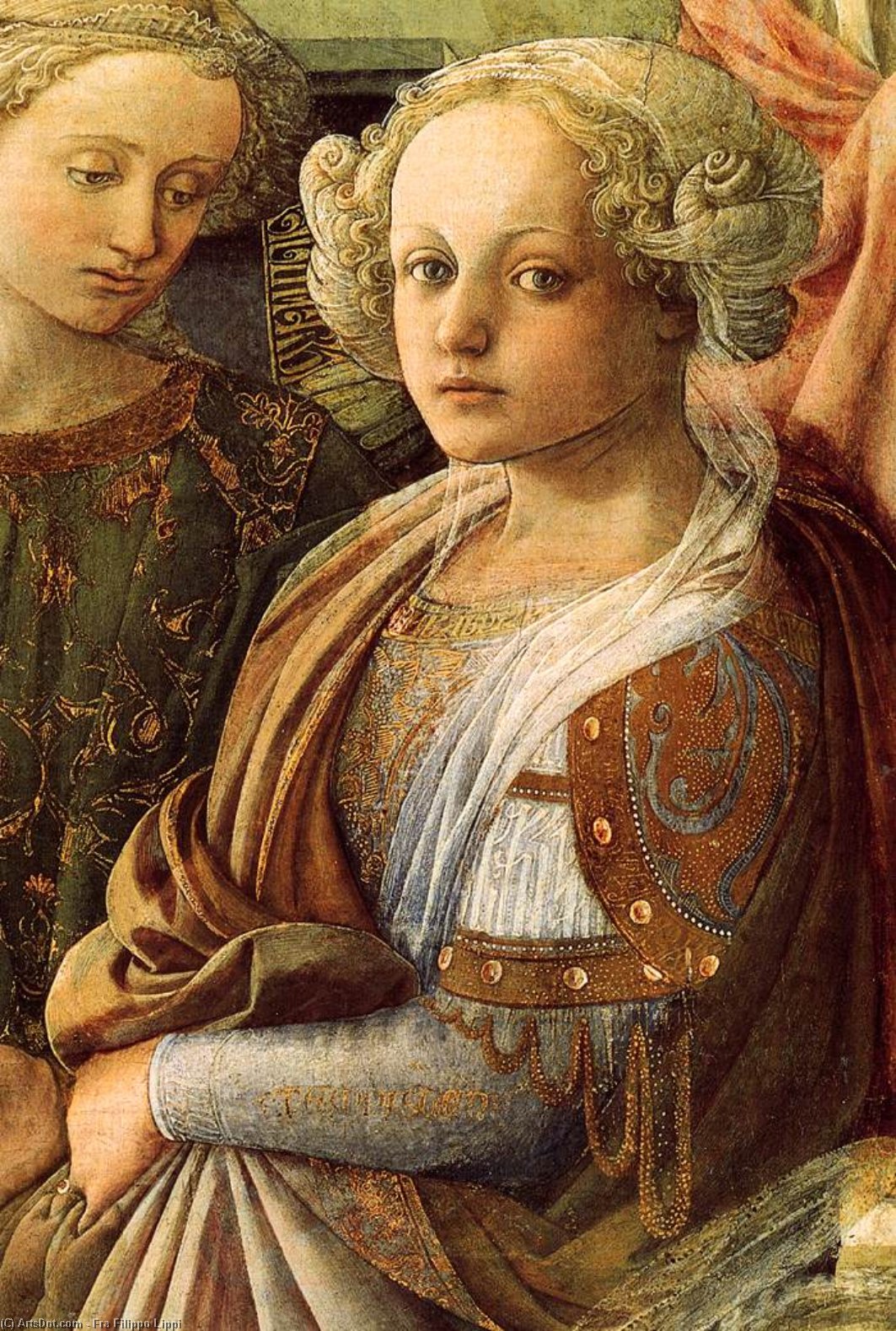
Coronation of the Virgin (detail) (15)


 Read More
Hand Made Oil Reproduction
Hand-painted oil on canvas in your size and frame, made to order by our artists. ( Buy Print Buy Image)




































Pick from our preset sizes that match the artwork's original proportions.

You may enter your own dimensions to fit a specific frame or space. If your selected size does not match the original image's proportions, we will either crop the artwork or extend the painting with additional hand-painted elements. A digital mockup will be sent for your approval before production begins.
Please note that the on-screen preview does not reflect the actual cropping or extension. Only the mockup will accurately show the final composition.
While custom sizes are available, we recommend selecting a dimension from the predefined list to preserve the original proportions.
After order, ArtsDot.com team will email client for instructions and provide a mockup preview
Worldwide Delivery () in 3/4 weeks instead of standard 5 weeks. (3 September). No compromise on quality.

Free Worldwide Express Shipping

High-Quality Linen Canvas

Full Shipping Insurance

Customs Tax Refund Guarantee

True Color Matching Guarantee

60-Day Return Policy (Defects Only)

100% Money-Back Guarantee

Bulk Discount Offer
 Glass option is only available in size under 110 CM

Coronation of the Virgin (detail) (15)
Reproduction Medium
Reproduction Size
-


Total Price
$ 263
A Window into Florentine Grace
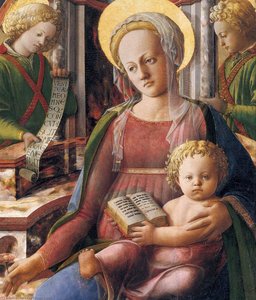
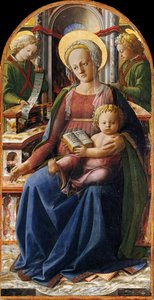
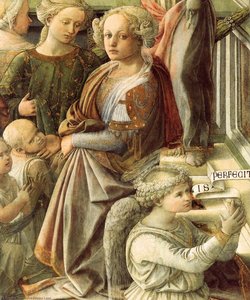
In the delicate fragment of Filippo di Tommaso Lippi’s Coronation of the Virgin, we are invited to step through a portal into the heart of the Italian Renaissance. This specific detail, captured around 1441, serves as more than just a remnant of a larger altarpiece; it is a profound meditation on the intersection of human intellect and divine presence. As one gazes upon the two women positioned within the frame, there is an immediate sense of being a silent witness to a sacred, quiet moment. The composition avoids the overwhelming grandeur often associated with religious epolls, opting instead for an intimate, scholarly atmosphere that reflects the burgeoning humanist spirit of Florence. One figure, lost in the contemplation of a manuscript, embodies the era's reverence for knowledge and literacy, while her companion meets the viewer’s gaze with a startling, lifelike vulnerability that bridges the gap between the celestial and the earthly.
The artistry of Fra Filippo Lippi is nowhere more evident than in his masterful command of light and texture. Utilizing the meticulous traditions of the Florentine fresco technique, Lippi achieved a surface that feels almost ethereal, as if the pigments themselves were infused with a soft, internal glow. The way the light dances across the intricate folds of the women's elaborate costumes reveals a painterly precision that was revolutionary for its time. Every drape of fabric and every subtle shadow is rendered with such care that the viewer can almost sense the weight of the textiles and the coolness of the air within the scene. For the discerning collector or interior designer, this piece offers a sophisticated layer of historical depth, providing a focal point that is both visually stimulating and intellectually grounding.
Symbolism and the Renaissance Soul
Beyond its aesthetic splendor, this detail is rich with the symbolic language of the 15th century. The presence of the manuscript is not merely a decorative element; it represents the Renaissance pursuit of truth through study and the belief that understanding the written word was a pathway to understanding the divine. This intellectual rigor is balanced by the soft, emotive qualities of the figures' expressions, creating a tension between the cerebral and the spiritual. Even the subtle inclusion of background elements—the hint of a third figure and the delicate placement of decorative vessels—contributes to a sense of a larger, harmonious universe where every object holds a place in the divine order.
To possess a reproduction of such a significant work is to bring a piece of Florentine history into a contemporary space. It serves as an evocative conversation starter, offering a sense of timelessness and elegance. Whether placed in a sunlit library or a formal gallery setting, this artwork radiates a serene authority. It does not merely decorate a room; it transforms the atmosphere, inviting contemplation and providing a sanctuary of beauty amidst the complexities of modern life. For those who appreciate art that speaks to both the eye and the soul, Lippi’s masterpiece remains an enduring testament to the heights of human creativity.
Related Artworks



Artist Biography
A Florentine Rebel: The Life and Art of Filippo Lippi
Filippo di Tommaso Lippi, known as Fra Filippo Lippi, was a figure both blessed by artistic genius and shadowed by a life brimming with scandal and unconventional choices. Born in Florence in 1406 to a butcher family, his early years were marked by loss; orphaned at the tender age of two, he found himself entrusted to the care of his aunt, Mona Lapaccia. This arrangement ultimately led him, at eight years old, to the Carmelites’ convent – a path that would shape not only his artistic development but also define the complexities of his character. It was within those cloistered walls that young Filippo began his formal education and, crucially, discovered his passion for painting. The influence of this environment is palpable in much of his work; a delicate balance between spiritual devotion and an increasingly humanistic sensibility.From Religious Vows to Artistic Innovation
Lippi’s entry into the Carmelite order in 1420 wasn't merely a matter of circumstance, but seemingly ignited within him a fervent artistic drive. He took his vows at sixteen and was ordained as a priest around 1425, remaining at the priory until 1432. It’s during this period that art historian Giorgio Vasari recounts how Lippi became captivated by Masaccio's groundbreaking frescoes in the Brancacci Chapel – an encounter that proved pivotal. The impact of Masaccio’s naturalism and innovative use of light is clearly visible in Lippi’s early works, such as the *Tarquinia Madonna*, where a newfound realism begins to emerge. However, Lippi wasn’t simply an imitator; he quickly developed his own distinctive style, characterized by lyrical grace, delicate coloring, and a subtle emotional depth that set him apart from his contemporaries. He began to infuse religious scenes with a sense of intimacy and human connection, moving away from the more rigid formality of earlier devotional art.A Master of Composition and Controversy
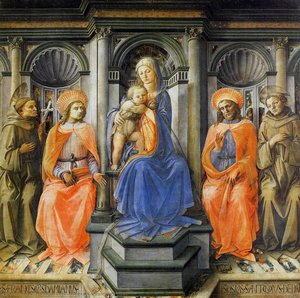
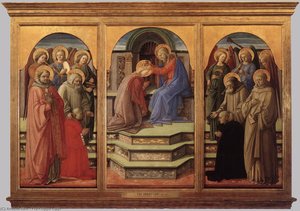
Lippi’s artistic career flourished in Florence, attracting commissions from prominent families like the Medici. Works such as *The Annunciation and the Seven Saints* demonstrate his ability to create complex compositions filled with symbolic meaning and elegant detail. The *Coronation of the Virgin*, completed in 1441 for the nuns of Sant'Ambrogio, is particularly noteworthy; it features a half-length figure that many believe to be a self-portrait of Lippi himself – a bold assertion of artistic identity within a religious context. But his life was far from serene. He frequently found himself embroiled in financial difficulties, legal disputes, and accusations of forgery. Perhaps the most sensational episode involved his abduction of Lucrezia Buti, a nun from Prato, with whom he eventually married after years of scandal and controversy. This act, while shocking for its time, speaks to Lippi’s rebellious spirit and his willingness to defy societal norms in pursuit of personal happiness.Legacy and Influence
Despite the turbulence of his life, Filippo Lippi left an indelible mark on Renaissance art. He was a highly sought-after painter, and his workshop became a breeding ground for future masters. Among his most distinguished pupils were Sandro Botticelli and Francesco di Pesello (Pesellino), both of whom would go on to achieve significant acclaim in their own right. Lippi’s influence can be seen in the lyrical beauty and emotional expressiveness that characterize much of Florentine painting during the late Quattrocento. He bridged the gap between the early Renaissance naturalism of Masaccio and the more refined aesthetic of the High Renaissance, paving the way for a new generation of artists to explore the possibilities of human form and emotion. His ability to blend religious piety with worldly realism, coupled with his innovative compositions and exquisite technique, cemented his place as one of the most important and captivating figures of the Italian Renaissance. He died in Spoleto in 1469, leaving behind a legacy that continues to inspire awe and admiration centuries later. His art remains a testament to the power of human creativity and the enduring allure of beauty.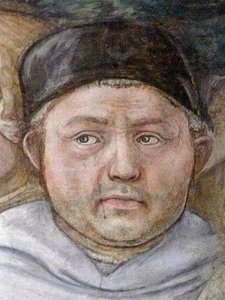
Filippo di Tommaso Lippi
1406 - 1469 , Italy
Quick Facts
- Artistic Movement Or Style: Early Renaissance
- Artists Or Movements Influenced By This Artist:
- Sandro Botticelli
- Filippino Lippi
- Artists Who Influenced This Artist: ['Masaccio']
- Date Of Birth: 1406
- Date Of Death: 1469
- Full Name: Filippo di Tommaso Lippi
- Nationality: Italian
- Notable Artworks:
- Tarquinia Madonna
- The Annunciation
- Coronation of the Virgin
- Place Of Birth: Florence, Italy
Related Articles

Giclée Prints: Archival Quality & Aesthetic Nuances for the Discerning Collector
Explore the world of giclée prints with ArtsDot. Learn about archival quality, aesthetic nuances & investment potential. Expert guidance for discerning art collectors seeking museum-quality reproductions and lasting value.

Echoes of Time: Exploring the Enduring Appeal & Historical Context of Vintage Art Prints
Explore the captivating world of vintage art prints! Discover their history, collecting tips & enduring appeal. Expert insights on chromolithography and building a legacy collection with ArtsDot.

The Enduring Legacy of Fine Art Prints: Technique, History & Aesthetic Impact
Explore the rich history & techniques of fine art prints. Discover investment potential, assess authenticity, and learn how to preserve your collection with expert guidance. Trusted insights for discerning collectors.
Filippo Lippi: Bridging Renaissance Devotion & Artistic Innovation
Explore the life & revolutionary art of Filippo Lippi, a pivotal Renaissance painter. Discover his masterpieces, influence on Botticelli, and investment potential. Expert analysis at ArtsDot.

The Enduring Legacy of Printmaking: Techniques, Themes & Artistic Innovation Across Centuries
Explore the rich history of printmaking with ArtsDot. Discover techniques from intaglio to lithography, learn about collecting valuable prints & find museum-quality reproductions. Expert insights for art enthusiasts and collectors.