 Send
Send Share
Share
 Details

 Download
 Similars
 Diaporama
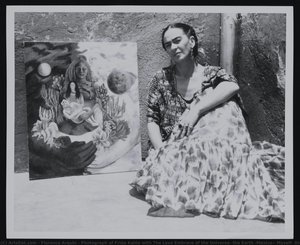
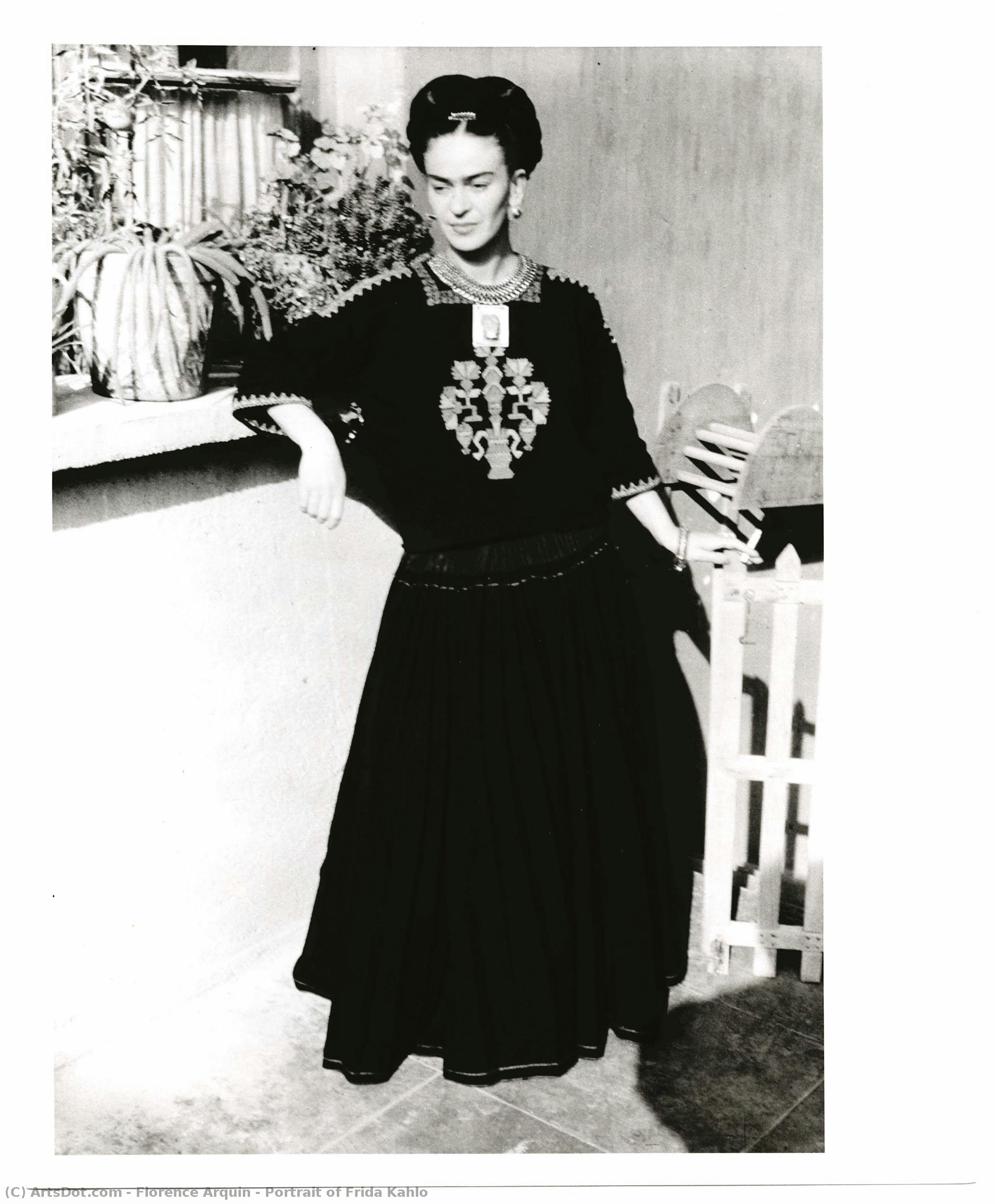
Portrait of Frida Kahlo
 Giclée Print
- Digital
- Documentary Realism
 1948
1948- 19th Century
 25.0 x 21.0 cm
 Archives of American Art
 Read More
Giclée / Art Print
Museum-quality giclée or canvas print with fast production and flexible finish options. ( Buy Hand Made Painting Buy Image)




































Pick from our preset sizes that match the artwork's original proportions.

You may enter your own dimensions to fit a specific frame or space. If your selected size does not match the original image's proportions, we will either crop the artwork or extend the image with a mirrored or solid-fill edge. A digital mockup will be sent for your approval before production begins.
Please note that the on-screen preview does not reflect the actual cropping or extension. Only the mockup will accurately show the final composition.
While custom sizes are available, we recommend selecting a dimension from the predefined list to preserve the original proportions.
Worldwide Delivery () in 2 weeks instead of standard 4/5 weeks. (24 August)

Free Worldwide Express Shipping

High-Quality Linen Canvas

Full Shipping Insurance

Customs Tax Refund Guarantee

True Color Matching Guarantee

60-Day Return Policy (Defects Only)

100% Money-Back Guarantee

Bulk Discount Offer
 Glass option is only available in size under 110 CM

Portrait of Frida Kahlo
Giclée / Art Print
Reproduction Size
-


Total Price
$ 63
Collectible Description
A Timeless Gaze: Florence Arquin's Portrait of Frida Kahlo
This meticulously crafted hand-painted reproduction captures a pivotal moment in the life of Frida Kahlo, as immortalized by photographer Florence Arquin in 1948. The image, rendered in evocative grayscale tones, transcends a simple portrait; it’s an intimate glimpse into the strength and quiet dignity of a revolutionary artist. Arquin's documentary style, honed through years of study in Latin American art and culture – reflected in her background as a painter, photographer, educator, writer, and critic – allows us to connect directly with Kahlo’s presence, offering a tangible link to a figure who continues to inspire generations.
- Technical Mastery: The reproduction faithfully recreates Arquin's original photographic techniques. Utilizing traditional black and white film processing, the artist skillfully manipulated tonal values to create a dramatic interplay of light and shadow. The smooth gradients and subtle textures – from the sheen of Kahlo’s dress to the rough foliage of the potted plants – are meticulously rendered, demonstrating an exceptional level of detail achieved through hand-painting.
- Composition & Perspective: Arquin's composition is deliberately balanced, with Frida positioned slightly off-center yet commanding the viewer’s attention. The use of a neutral white wall as a backdrop amplifies the subject’s presence while subtly hinting at the studio environment where this iconic image was created. The layering of elements – the plants, the table, and the chair – creates a sense of depth that draws us into the scene.
Symbolism Within the Frame
More than just a likeness, this portrait is laden with symbolic resonance. Frida’s direct gaze, unwavering and confident, speaks volumes about her resilience and artistic conviction. The cross pendant she wears – a recurring motif in Kahlo's self-portraits – likely holds deep personal significance, representing her Catholic faith and perhaps reflecting on themes of suffering and redemption that permeated her life and work. The carefully arranged plants within the composition add an element of nature, symbolizing growth, fertility, and connection to the earth—themes frequently explored in Kahlo’s art.
Historical Context & Artistic Influences
Created in 1948, this photograph represents a significant moment in Frida Kahlo's career. Arquin, a respected figure in Latin American studies and an educator herself, was uniquely positioned to capture the essence of Kahlo’s artistic spirit. Her background, influenced by artists like Stanislaw Ignacy Witkiewicz, contributed to her ability to portray Kahlo with both realism and a deep understanding of cultural symbolism. The photograph's creation coincided with a period of increasing recognition for Kahlo's work, solidifying her place as one of the most important figures in 20th-century art.
Emotional Impact & Collector’s Value
This hand-painted reproduction offers more than just an image; it provides a tangible connection to Frida Kahlo’s enduring legacy. The meticulous detail and evocative grayscale palette transport the viewer directly into the scene, allowing for contemplation of Kahlo's strength, vulnerability, and artistic genius. A piece like this is not merely decoration; it’s an investment in art history, a testament to Florence Arquin’s skill, and a beautiful addition to any discerning collection or interior space. Its size (25 x 21 cm) makes it ideal for a variety of settings, from a gallery wall to a bedside table.
Related Artworks
Artist Biography
The Multifaceted Legacy of Florence Arquin
Born in the vibrant atmosphere of New York City in 1900, Florence Arquin emerged as a polymath whose creative spirit transcended the boundaries of a single medium. As the daughter of Russian immigrants, her identity was shaped by a rich tapestry of cultural influences that would later define her profound dedication to Latin American studies. Her journey through the arts was not merely a pursuit of aesthetic beauty but a scholarly and emotional exploration of identity, culture, and human connection. Arquin’s early training led her to the prestigious School of the Art Institute of Chicago, where she earned her Master’s degree in Art Education, a milestone that laid the foundation for her multifaceted career as a painter, photographer, educator, writer, and critic.
Arquin’s artistic evolution was deeply intertwined with her intellectual pursuits. While many artists remain confined to the canvas, Arquin utilized the lens of photography and the precision of the written word to document and interpret the world around her. Her style is often celebrated for its bold use of color and expressive forms, elements that mirror the rhythmic vitality of the Latin American cultures she so passionately studied. This period of her life was marked by a deep-seated desire to foster cross-cultural understanding, using her art as a bridge between the Americas. Her work often drew inspiration from complex philosophical and artistic movements, including the avant-garde influences of Stanisław Ignacy Witkiewicz, which added layers of psychological depth to her compositions.
A Visionary Connection to Latin American Identity
Perhaps the most enduring aspect of Arquin’s legacy is her intimate connection to the icons of Mexican art. Her ability to capture the soul of her subjects is best exemplified in her photographic and painted portraits of Frida Kahlo. One of her most remarkable achievements is the photograph titled Portrait of Frida Kahlo on the Patio of her House in Coyoacán, Mexico. In this work, Arquin does more than document a moment; she captures the very essence of Kahlo’s spirit within the sanctuary of her home, blending the boundaries between the observer and the observed. This deep engagement with Mexican culture allowed Arquin to become a prominent figure in art education, as she sought to bring the nuances of Latin American history and aesthetics to a broader audience.
Her contributions extend far beyond individual portraits, reaching into the very institutions that preserve our global heritage. The significance of her work is cemented by its presence in esteemed collections such as:
- The Butler Institute of American Art, where her American roots and artistic mastery are honored.
- The Syracuse University Art Collection, reflecting her academic and educational impact.
- The Southwest Museum, a testament to her role in documenting the art, culture, and history of the American Southwest.
Historical Significance and Lasting Impact
Florence Arquin’s life was a continuous dialogue between different worlds. Through her dual roles as an artist and an educator, she championed the idea that art is a vital tool for social and cultural literacy. Her work serves as a historical record of a time when cross-cultural exchange was being redefined through the lens of modernism and post-colonial awareness. By integrating her expertise in Latin American studies into her visual practice, she helped pave the way for a more inclusive understanding of the Americas.
As we look back on her career, which spanned from the early 20th century until her passing in 1974, we see an artist who refused to be categorized. Whether through the striking pigments of her paintings or the evocative shadows of her photography, Arquin left behind a legacy of empathy and intellectual rigor. Her life remains a testament to the power of art to act as a universal language, capable of uniting disparate cultures through the shared experience of beauty and truth.
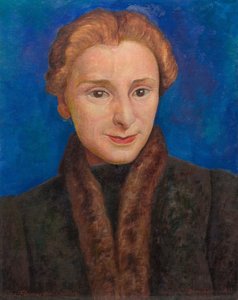
florence arquin
1900 - 1974 , United States of America
Quick Facts
- Artistic Movement Or Style: Various (including Art Nouveau)
- Artists Or Movements Influenced By This Artist: ['Wassily Kandinsky']
- Artists Who Influenced This Artist: ['Maurice Denis']
- Date Of Death: 1974
- Nationality: American
- Notable Artworks:
- Descent from the Cross
- Alphonse Mucha's posters
Related Articles

White on Canvas: 10 Masterpieces & Timeless Elegance for Your Home Decor
Explore 10 iconic white paintings by Monet, Whistler & Rothko! Discover the stories behind these serene masterpieces and their impact on art history. Find museum-quality reproductions for your home decor at .
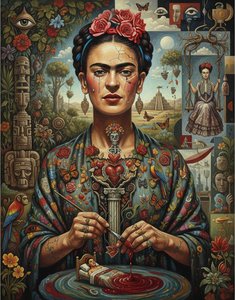
Frida Kahlo: A Life Painted – Surrealism, Identity & Autobiographical Narrative
Explore the life & art of Frida Kahlo – a journey through surrealism, identity, pain, and resilience. Discover her autobiographical masterpieces & lasting feminist legacy with ArtsDot.

Dark Masterpieces: 10 Iconic Paintings Dominated by Black Tones |
Explore 10 iconic paintings dominated by black tones, from Rembrandt’s chiaroscuro to Goya's dark expressions. Discover the stories behind these masterpieces & find museum-quality art reproductions for your home at .

Monochrome Visions: Exploring the Aesthetic & Historical Significance of Black & White Photography
Explore the rich history & artistic power of black and white photography. From early techniques to iconic masters like Ansel Adams, discover why monochrome continues to captivate art lovers today. Expert insights for collectors.

Mars Black Masterpieces: 10 Iconic Paintings & Timeless Art Decor Ideas
Delve into the power of 'Mars Black' with 10 iconic paintings by masters like Rembrandt & Caravaggio. Explore dramatic chiaroscuro, gothic art, and timeless beauty. Find museum-quality reproductions & elevate your home decor on .