 Preview
 Send
Send Share
Share
 Details

 Download
 Similars
 X-Ray
X-Ray Diaporama
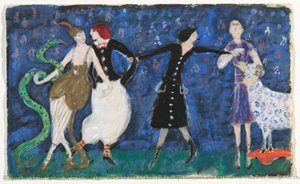
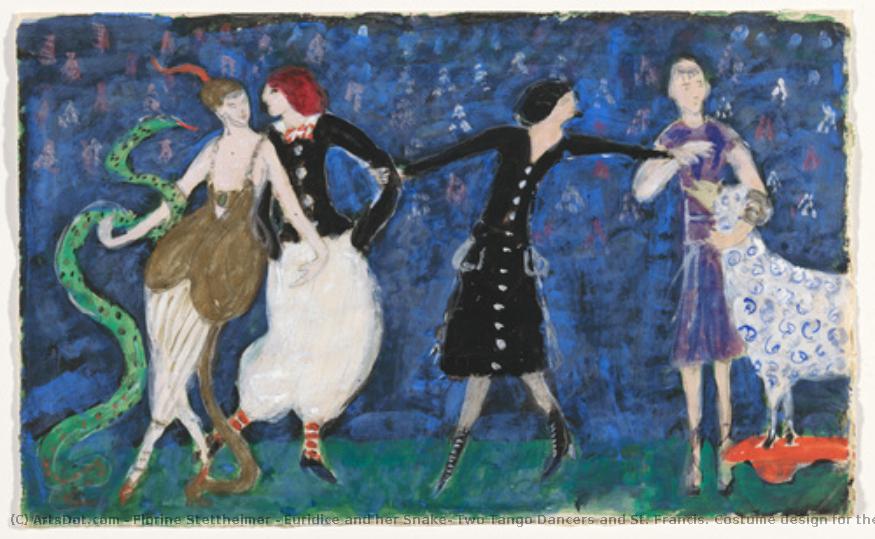
Euridice and her Snake, Two Tango Dancers and St. Francis. Costume design for the artist's ballet "Orphée of the Quat'z Arts"


 Read More
Hand Made Oil Reproduction
Hand-painted oil on canvas in your size and frame, made to order by our artists. ( Buy Print Buy Image)




P118B $10

P118H $10

P118W $10

P438Z $10

P508JH $12

P508YH $12

P805H $10

P805Z $10

P919BZ $10

P919G $10

P919XJ $10

P959ZH $10

P968JZ $12

W106C $8

W218G $10

W218JH $8

W218Y $10

W307PJ $10

W316G $10

W316PJ $8

W316Y $10

W398PJ $8

W4111J $10

W500HY $15

W500JH $15

W692G $12

W849H $8

W940BG $15

W953PJ $8




Pick from our preset sizes that match the artwork's original proportions.

You may enter your own dimensions to fit a specific frame or space. If your selected size does not match the original image's proportions, we will either crop the artwork or extend the painting with additional hand-painted elements. A digital mockup will be sent for your approval before production begins.
Please note that the on-screen preview does not reflect the actual cropping or extension. Only the mockup will accurately show the final composition.
While custom sizes are available, we recommend selecting a dimension from the predefined list to preserve the original proportions.
After order, ArtsDot.com team will email client for instructions and provide a mockup preview
Worldwide Delivery () in 3/4 weeks instead of standard 5 weeks. (27 August). No compromise on quality.

Free Worldwide Express Shipping

High-Quality Linen Canvas

Full Shipping Insurance

Customs Tax Refund Guarantee

True Color Matching Guarantee

60-Day Return Policy (Defects Only)

100% Money-Back Guarantee

Bulk Discount Offer
 Glass option is only available in size under 110 CM

Euridice and her Snake, Two Tango Dancers and St. Francis. Costume design for the artist's ballet "Orphée of the Quat'z Arts"
Reproduction Medium
Reproduction Size
-


Total Price
$ 263
Artwork Description
Florine Stettheimer’s Enchanting Vision of Myth and Modernity
Florine Stettheimer (1871-1944) stands as an extraordinary figure in the annals of American modernist art, a woman who defied categorization and carved out her own distinctive artistic universe. Born in Rochester, New York, Stettheimer’s life was marked by intellectual curiosity and unwavering independence—a rare combination for her era—allowing her to cultivate a singular visual language deeply rooted in both tradition and innovation.
Her artistic output spanned painting, poetry, theatrical design, and costume creation, yet it is arguably her ballet designs that cemented Stettheimer’s legacy. Particularly noteworthy is “Euridice and her Snake,” conceived for Serge Diaghilev’s Ballet Russes in 1912—a collaboration that catapulted Stettheimer onto the international stage and established her as a pioneer of feminist aesthetics.
This monumental artwork exemplifies Stettheimer's signature style: Naïve Art, infused with Expressionist sensibilities. Rejecting academic conventions, Stettheimer embraced bold color palettes, flattened perspectives, and decorative embellishments—techniques reminiscent of Matisse’s celebrated “Luxury, Calmness and Voluptuousness.” The painting isn’t merely a depiction; it's an immersive experience designed to transport the viewer into a fantastical realm.
The composition centers around four figures: Eurydice dancing with a serpent, two tango dancers embodying passion and movement, and St. Francis holding a lamb—symbols of innocence and pastoral serenity. Stettheimer meticulously crafted costumes adorned with shimmering beads and metallic fabric, reflecting the opulent atmosphere of Parisian balls during Diaghilev’s ballet season.
More than just aesthetically pleasing, “Euridice and her Snake” speaks to profound themes of love, loss, and transformation. Stettheimer's deliberate use of color—deep blues dominating the background—creates a theatrical mood, mirroring the grandeur of the ballet itself. The artwork’s emotional impact is palpable: it captures the bittersweet beauty of fleeting moments and celebrates the enduring power of imagination.
The piece resides in the Museum of Modern Art (MoMA), where its vibrant hues and intricate detailing continue to inspire admiration and intrigue. Stettheimer's contribution to ballet history—and her unwavering commitment to artistic freedom—solidifies her place as a visionary artist who dared to reimagine the boundaries of visual expression.
Related Artworks
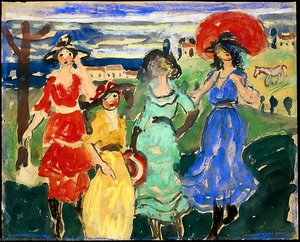
Artist Biography
A Life Illuminated: The World of Florine Stettheimer
Florine Stettheimer, a name that resonates with the spirit of early 20th-century American modernism, was an artist who defied easy categorization. Born in Rochester, New York, in 1871, she blossomed into a painter, poet, designer, and a central figure in the vibrant salon culture of New York City. Her life was one of deliberate artistic cultivation, shaped by both privilege and a determined independence that allowed her to forge a unique visual language. Stettheimer wasn’t merely *of* her time; she actively constructed a world within it, inviting fellow artists, writers, and intellectuals into a haven of creativity and intellectual exchange alongside her sisters, Carrie and Ettie. This familial triad created an environment where ideas flourished, and artistic boundaries were playfully challenged. The story of Florine Stettheimer is not simply the biography of an artist, but a portrait of a particular moment in American cultural history—a time of burgeoning modernism, shifting social norms, and the rise of a distinctly American aesthetic sensibility.European Influences and the Genesis of a Style
The foundations of Stettheimer’s artistic vision were laid during an extended period spent in Europe with her sisters between 1906 and 1914. Residing in cities like Berlin, Stuttgart, and Munich, she immersed herself in the diverse currents of European art. While formally trained at the Art Students League of New York from 1892 to 1895, it was this exposure to the avant-garde movements unfolding across Europe that truly ignited her artistic imagination. The influence of Symbolism and Post-Impressionism is subtly woven into the fabric of her work, yet Stettheimer never simply replicated these styles. Instead, she absorbed their lessons and began to synthesize them with her own burgeoning aesthetic—one characterized by a deliberate flattening of perspective, vibrant color palettes, and a playful embrace of decorative motifs. This period was crucial in fostering a cosmopolitan worldview that would inform both her art and the inclusive atmosphere of her later salons. It wasn’t about adopting a European identity, but rather using European artistic knowledge to create something distinctly *her own*.The Salon as Sanctuary: A Hub for Modernist Exchange
Upon returning to New York after World War I, Stettheimer and her sisters transformed their Manhattan home into a legendary salon. From 1915 to 1935, it became a vital center for modernist artists, writers, and expatriates—a space where Marcel Duchamp, Henry McBride, Carl Van Vechten, Georgia O'Keeffe, and countless others gathered to debate ideas, share work, and forge connections. This wasn’t merely a social gathering; it was an incubator of creativity. Stettheimer largely preferred exhibiting her art within the intimate setting of these salons, believing that a smaller, more engaged audience offered a richer experience than traditional gallery showings. Her only solo exhibition during her lifetime, held at Knoedler & Company in 1916, proved underwhelming—the “high-keyed, decorative paintings” were not well received by critics or buyers. This rejection solidified her preference for the salon as a space of artistic freedom and genuine appreciation. Despite this, she remained committed to engaging with the broader art world through regular submissions to the Society of Independent Artists, demonstrating a desire for dialogue even while maintaining her independence.Themes and Techniques: A Celebration of Modern Life
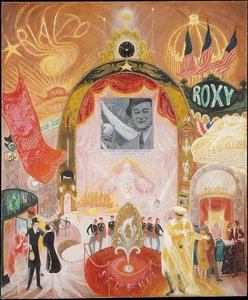
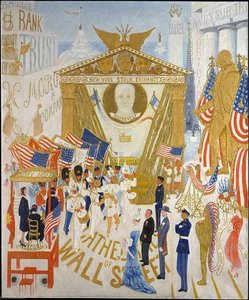
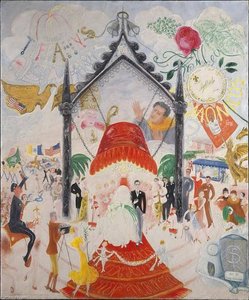
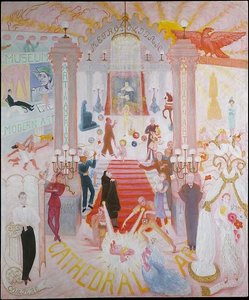
Stettheimer’s artistic style is immediately recognizable—a captivating blend of decorative elegance and theatrical composition. Her paintings often resemble elaborate stage sets, blurring the boundaries between reality and fantasy. Vibrant colors, intricate patterns, and a deliberate sense of artifice create a world that is both alluring and slightly unsettling. Recurring themes in her work include portraits of friends and family, scenes from New York City life, and explorations of androgyny and doubling. Her celebrated “Cathedral” series—depicting iconic landmarks like Wall Street, Fifth Avenue, and the city’s museums—are particularly noteworthy. These aren't straightforward depictions of architecture; they are allegorical representations of modern American culture, imbued with a subtle yet potent social commentary. Feminist undertones permeate much of her work, challenging societal norms through depictions of women in positions of power and agency. *Model (Nude Self-Portrait)* stands as a particularly striking example—a confident and autonomous self-representation that subverts traditional notions of the female nude. While influenced by European modernism and even Rococo aesthetics, Stettheimer developed a distinctly American style, reflecting her unique perspective and experiences. Her work is a testament to the power of individual vision, a celebration of the energy and contradictions of modern life.Legacy and Rediscovery: A Pioneer Recognized
Despite limited recognition during her lifetime, Florine Stettheimer’s reputation has grown significantly since her death in 1944. A pivotal moment came with a retrospective exhibition at the Museum of Modern Art in 1946, curated by Marcel Duchamp—a testament to his deep respect for her work and artistic vision. This exhibition helped solidify her place in art history, introducing her paintings to a wider audience and sparking renewed critical interest. Today, she is celebrated as a pioneering feminist artist who challenged conventional notions of femininity and artistic expression. Her work continues to inspire contemporary artists and scholars interested in the intersection of art, gender, and social change. The Stettheimer dollhouse—a whimsical miniature replica of their home filled with works by prominent artists—offers a fascinating glimpse into their artistic circle and aesthetic sensibilities. It stands as a tangible symbol of the creative energy that flourished within those walls, a legacy that continues to resonate today. Florine Stettheimer’s story is one of quiet determination, artistic innovation, and a profound understanding of the power of art to reflect—and reshape—the world around us.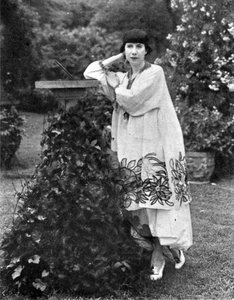
Florine Stettheimer
1871 - 1944 , United States of America
Quick Facts
- Artistic Movement Or Style: Modernism, Art Deco
- Artists Or Movements Influenced By This Artist:
- Feminist artists
- Contemporary artists
- Artists Who Influenced This Artist:
- European modernists
- Rococo aesthetics
- Date Of Birth: August 19, 1871
- Date Of Death: May 11, 1944
- Full Name: Florine Stettheimer
- Nationality: American
- Notable Artworks:
- Henry McBride
- Family Portrait II
- Portrait of My Mother
- Cathedral series
- Place Of Birth: Rochester, USA
Related Articles
Albert Kretschmer: Capturing 19th-Century Costume & the Seeds of Expressionism
Explore the exquisite costume studies of Albert Kretschmer (1825-1891). Discover his detailed illustrations, influence on art history & connection to early Expressionism. Learn about collecting this remarkable artist's work.
Unlocking Emotion: A Beginner's Guide to the Raw Power of Symbolic Expressionism Art
Discover the raw emotion of Symbolic Expressionism. Our expert guide explores how masters like Munch use color and form to convey inner feelings, offering inspiration for collectors looking to bring powerful, soulful art into their modern homes.
The Raw Emotion of Expressionism: A Deep Dive into its History, Characteristics & Enduring Influence
Explore the raw emotion of Expressionism with ArtsDot. Discover its history, key artists like Kirchner & Munch, and lasting influence on modern art. Expert insights for collectors & enthusiasts.
Figurative Expressionism: Emotional Intensity & Subjective Reality in 20th-Century Art
Explore the powerful world of Figurative Expressionism with ArtsDot. Discover key artists like Kirchner & Beckmann, understand its emotional depth, and learn how to collect this influential 20th-century art movement.
German Expressionism's 10 Defining Masterpieces | Art for Your Home
Explore 10 defining German Expressionism masterpieces – from Munch's 'The Scream' to Kandinsky’s abstracts. Discover the artists, stories & bold colors behind this powerful art movement. Find museum-quality reproductions at ArtsDot.com.