 Preview
 Send
Send Share
Share
 Details

 Download
 Similars
 X-Ray
X-Ray Diaporama
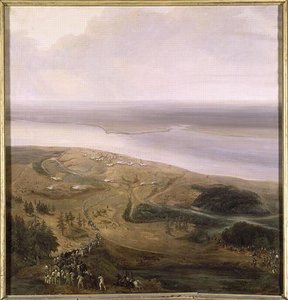
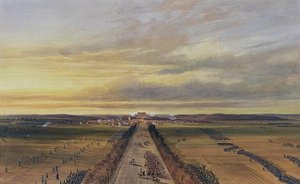
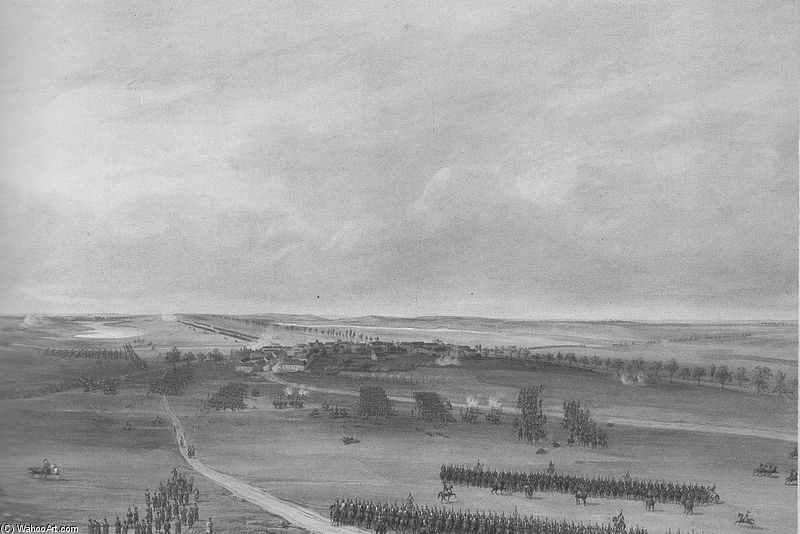
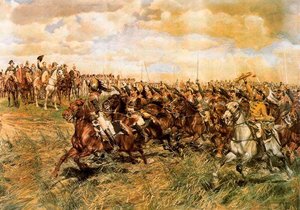
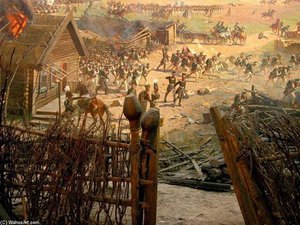
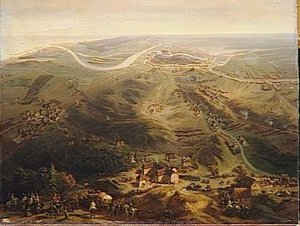
Fighting Champaubert

 Read More
Hand Made Oil Reproduction
Hand-painted oil on canvas in your size and frame, made to order by our artists. ( Buy Print Buy Image)




































Pick from our preset sizes that match the artwork's original proportions.

You may enter your own dimensions to fit a specific frame or space. If your selected size does not match the original image's proportions, we will either crop the artwork or extend the painting with additional hand-painted elements. A digital mockup will be sent for your approval before production begins.
Please note that the on-screen preview does not reflect the actual cropping or extension. Only the mockup will accurately show the final composition.
While custom sizes are available, we recommend selecting a dimension from the predefined list to preserve the original proportions.
After order, ArtsDot.com team will email client for instructions and provide a mockup preview
Worldwide Delivery () in 3/4 weeks instead of standard 5 weeks. (20 August). No compromise on quality.

Free Worldwide Express Shipping

High-Quality Linen Canvas

Full Shipping Insurance

Customs Tax Refund Guarantee

True Color Matching Guarantee

60-Day Return Policy (Defects Only)

100% Money-Back Guarantee

Bulk Discount Offer
 Glass option is only available in size under 110 CM

Fighting Champaubert
Reproduction Medium
Reproduction Size
-


Total Price
$ 263
Related Artworks
![[reproduction Of Napoleon On The Battlefield Of Eylau By Antoine-jean Gros] — Antoine-jean Gros, Romanticism](/media/artworks/images/thumbnails/21/5f/215f5a2e7799405c843b06696f167189.jpg)
Artist Biography
Early Life and Artistic Foundations
Jean-Antoine-Siméon Fort, born in Paris on August 28th, 1793, emerged into a France undergoing dramatic transformation—a nation still reeling from the Revolution and finding its footing under new leadership. While details of his earliest upbringing remain somewhat elusive, it is known that he received foundational training under Christian Brune, a respected landscape painter of the era. This early mentorship instilled in Fort a keen eye for detail and an appreciation for capturing the nuances of the natural world, qualities that would become hallmarks of his mature style. However, Fort’s artistic path wouldn't solely remain within the realm of idyllic landscapes; he was destined to become particularly renowned for his depictions of historical events, specifically those involving military conflict and royal grandeur.The Rise to Prominence: Royal Commissions and the Musée Historique de Versailles
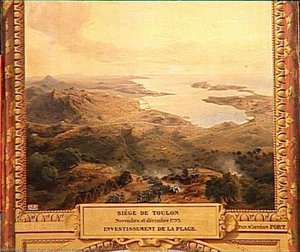
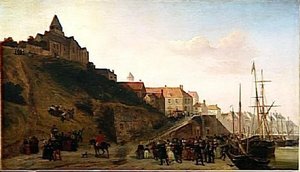
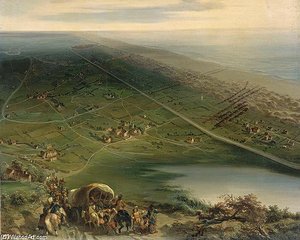
Fort’s career gained significant momentum in the 1840s, a period marked by the reign of King Louis-Philippe. The monarch, keen on establishing a visual narrative of French history, became a pivotal patron for Fort, commissioning a series of paintings intended to adorn the newly established Musée Historique de Versailles. This was not merely an artistic opportunity; it was a statement—a deliberate effort to shape public perception and legitimize the Orléanist regime through carefully curated historical representations. In 1842, Fort presented four canvases at the Salon, each depicting scenes of battles and sieges, all directly commissioned by Louis-Philippe for the museum’s collection. These works weren't simply recreations of past events; they were imbued with a sense of national pride and romanticized heroism, reflecting the political climate of the time. The success of these initial commissions solidified Fort’s position as a leading historical painter in France.A Master of Historical Narrative: Technique and Subject Matter
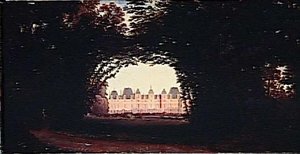
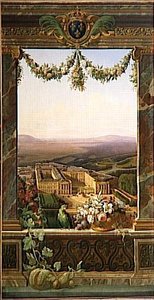
Fort's paintings are characterized by their meticulous attention to detail and panoramic scope. He possessed an exceptional ability to render vast landscapes populated with intricate figures, conveying the scale and drama of large-scale conflicts. His technique blended elements of realism—accurate depictions of uniforms, weaponry, and architectural settings—with a romantic sensibility that heightened the emotional impact of his scenes. While he often focused on military subjects – battles like “Battle Of The Dunes” showcase this perfectly – Fort wasn’t solely concerned with glorifying warfare. He also demonstrated a talent for capturing quieter moments of historical significance, such as views of royal residences, exemplified by his 1843 painting "View of the Palace of Compiègne". This versatility allowed him to cater to a diverse range of commissions and establish himself as a painter capable of both epic grandeur and intimate detail. His work often evokes a sense of being present on the battlefield or within the halls of power, drawing viewers into the heart of history.Beyond Versailles: Diverse Commissions and Lasting Legacy
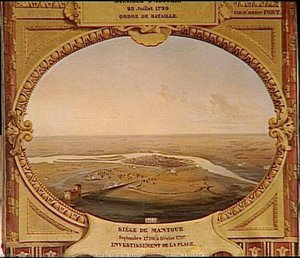
While his association with Louis-Philippe and the Musée Historique de Versailles remains central to his biography, Fort’s artistic output extended beyond these royal commissions. He undertook a variety of projects, including topographical maps – such as “PLAN DU SIEGE DE MANTOUE.SEPTEMBRE 1796 A FEVRIER 1797”– demonstrating his skill in precise draftsmanship and historical research. His painting "La Reine Victoria en Promenade au Treport" from 1843, illustrates a shift towards capturing contemporary events alongside historical ones. Fort’s ability to adapt his style to different subjects ensured continued demand for his work throughout his career. He died on December 24th, 1861, leaving behind a substantial body of paintings that offer valuable insights into the artistic and political landscape of 19th-century France. His works continue to be studied and admired for their historical accuracy, technical skill, and evocative power, serving as enduring testaments to his mastery of historical narrative.Influences and Artistic Context
Fort’s work exists within a complex web of artistic influences and historical currents. The legacy of Jacques-Louis David, with his emphasis on neoclassical form and moralizing narratives, undoubtedly shaped Fort's approach to historical painting. However, Fort also embraced elements of Romanticism, evident in the dramatic lighting, emotional intensity, and focus on individual heroism found in his battle scenes.- Neoclassicism: The influence of David’s precision and clarity is visible in Fort's detailed depictions of uniforms and weaponry.
- Romanticism: The heightened emotionality and dramatic compositions reflect the Romantic movement’s emphasis on passion and individualism.
- Dutch Golden Age Landscape Painting: The meticulous detail and atmospheric perspective in works like “La Reine Victoria en Promenade au Treport” suggest an appreciation for Dutch masters.
fort jean antoine siméon
1793 - 1861
Quick Facts
- Artistic Movement Or Style: Romanticism
- Artists Or Movements Influenced By This Artist:
- Romanticism
- French Painting
- Artists Who Influenced This Artist:
- Jacques-Louis David
- Eugène Delacroix
- Date Of Birth: August 28, 1793
- Date Of Death: December 24, 1861
- Full Name: Jean-Antoine Fort
- Nationality: French
- Notable Artworks:
- Plan du siège d'York Town du 6 au 19 octobre 1781
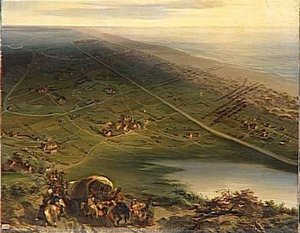
- VUE GENERALE DE CONSTANTINE ET DES ENVIRONS POUR SERVIR L'INTELLIGENCE DES OPERATIONS DU SIEGE.DU 6 AU 31 OCTOBRE 1837
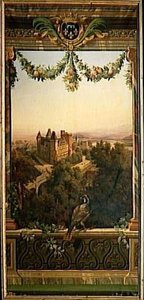
- VUE DU CHATEAU DE PAU
- The Fête Galante & Beyond: Exploring the Artistic World of Jean-Antoine Watteau
- Place Of Birth: Paris, France
Related Articles
Émile Jean Horace Vernet: Romantic Realism & Depicting 19th-Century Life
Explore the life & art of Émile Jean Horace Vernet, a master of Romantic Realism. Discover his captivating battle scenes, portraits, and Orientalist works – a window into 19th-century France. Learn about his techniques & enduring legacy.
19th Century Masterpieces: 10 Paintings That Defined an Era | ArtsDot
Journey through 19th century art with ArtsDot! Explore 10 iconic paintings – from Monet & Renoir to Courbet – and discover the stories behind Romanticism, Realism & Impressionism. Find museum-quality reproductions for your home decor. Explore the full collection online!
The Fête Galante & Beyond: Exploring the Artistic World of Jean-Antoine Watteau
Discover the captivating world of Jean-Antoine Watteau, master of the Fête Galante! Explore his iconic paintings, symbolism, and lasting influence on Rococo art. A deep dive for classic art enthusiasts.
The Power of One Hue: Mastering Monochrome Art for Sophisticated and Timeless Interiors
Elevate your interiors with the profound elegance of monochrome art. Explore ArtsDot.com’s curated collection of hand-painted oil reproductions and bespoke commissions, designed to bring sophisticated simplicity and timeless texture to every professional design project.
Eugène Lami: A Study in Academic Eclecticism & the Rise of 19th-Century Decorative Art
Explore the captivating world of Eugène Lami, a pivotal 19th-century French painter. Discover his eclectic style blending Romanticism & Academic traditions in history, fashion, and literary illustrations. Learn about his legacy today!