 Preview
 Send
Send Share
Share
 Details

 Download
 Similars
 X-Ray
X-Ray Diaporama
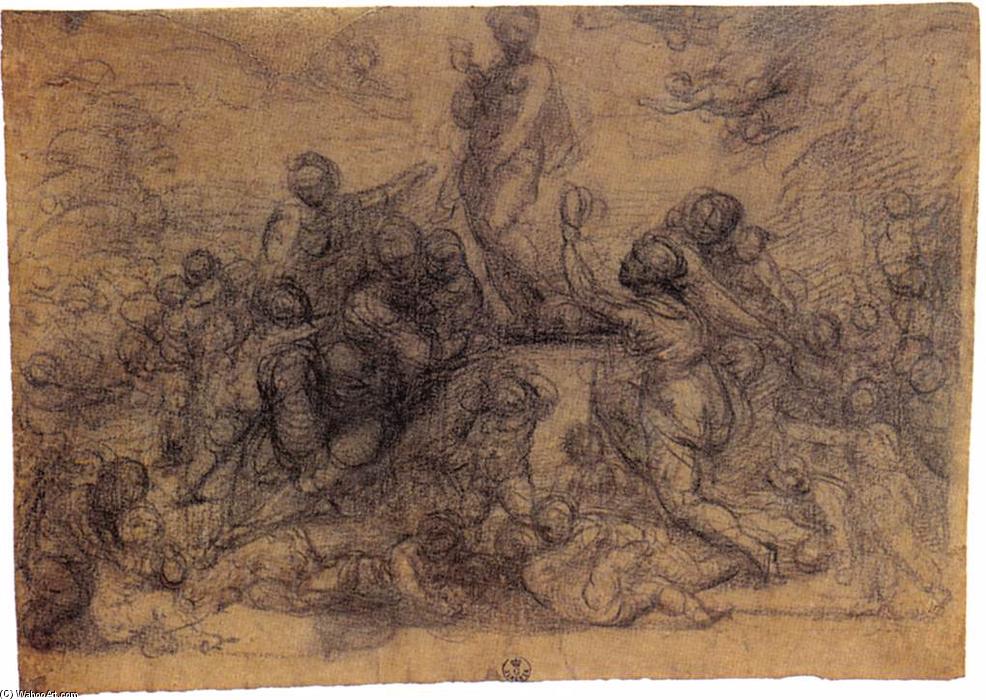
Worship of Venus
 Chalk
Chalk- Renaissance
 1516
1516 220.0 x 290.0 cm
 Galleria degli Uffizi
 Read More
Hand Made Oil Reproduction
Hand-painted oil on canvas in your size and frame, made to order by our artists. ( Buy Print Buy Image)




P118B $10

P118H $10

P118W $10

P438Z $10

P508JH $12

P508YH $12

P805H $10

P805Z $10

P919BZ $10

P919G $10

P919XJ $10

P959ZH $10

P968JZ $12

W106C $8

W218G $10

W218JH $8

W218Y $10

W307PJ $10

W316G $10

W316PJ $8

W316Y $10

W398PJ $8

W4111J $10

W500HY $15

W500JH $15

W692G $12

W849H $8

W940BG $15

W953PJ $8




Pick from our preset sizes that match the artwork's original proportions.

You may enter your own dimensions to fit a specific frame or space. If your selected size does not match the original image's proportions, we will either crop the artwork or extend the painting with additional hand-painted elements. A digital mockup will be sent for your approval before production begins.
Please note that the on-screen preview does not reflect the actual cropping or extension. Only the mockup will accurately show the final composition.
While custom sizes are available, we recommend selecting a dimension from the predefined list to preserve the original proportions.
After order, ArtsDot.com team will email client for instructions and provide a mockup preview
Worldwide Delivery () in 3/4 weeks instead of standard 5 weeks. (17 August). No compromise on quality.

Free Worldwide Express Shipping

High-Quality Linen Canvas

Full Shipping Insurance

Customs Tax Refund Guarantee

True Color Matching Guarantee

60-Day Return Policy (Defects Only)

100% Money-Back Guarantee

Bulk Discount Offer
 Glass option is only available in size under 110 CM

Worship of Venus
Reproduction Medium
Reproduction Size
-


Total Price
$ 313
Artwork Description
The Worship of Venus: A Renaissance Reverie
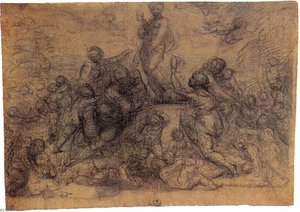
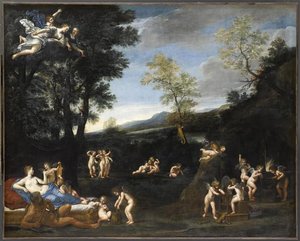
Fra Bartolomeo’s “Worship of Venus,” painted in 1516 and currently residing within the hallowed halls of the Galleria degli Uffizi, is more than just a depiction of a classical myth; it's a vibrant snapshot of Renaissance humanism, artistic innovation, and the enduring fascination with beauty. This chalk drawing, rendered with a remarkable sensitivity to light and shadow – a hallmark of Fra Bartolomeo’s style – transports us to a bustling Roman celebration dedicated to Venus, the goddess of love and fertility. The painting isn't merely static; it pulses with an almost palpable energy, capturing a moment of joyous abandon amidst a carefully orchestrated scene.
The composition immediately draws the eye to Venus herself, standing serenely upon a pedestal, a focal point radiating grace and authority. Surrounding her are figures engaged in various acts of homage – some offering gifts, others simply observing with delight. The background subtly shifts from architectural elements hinting at Roman grandeur to a pastoral landscape, providing context without overwhelming the central narrative. Fra Bartolomeo masterfully balances these layers, creating a scene that feels both grounded and ethereal.
Chiaroscuro and the Dance of Light
What truly elevates “Worship of Venus” is Fra Bartolomeo’s masterful use of chiaroscuro – the dramatic interplay of light and dark. This technique, so characteristic of the Renaissance, isn't simply applied for aesthetic effect; it actively shapes our understanding of the scene. Notice how the subtle shading defines the forms of the figures, lending them a remarkable sense of volume and depth. The darker areas create pools of shadow, drawing attention to key details – the folds of drapery, the expressions on faces – while the lighter zones illuminate the central action, emphasizing Venus’s regal presence.
The chalk medium itself contributes significantly to this effect. It possesses a soft, almost sketchy quality, allowing for delicate gradations and a sense of immediacy. This lends the painting an intimate feel, as if we are witnessing a fleeting moment captured in time. The artist's hand is clearly visible in the loose brushstrokes, adding to the work’s charm and authenticity.
Myth, Morality, and Renaissance Values
“Worship of Venus” isn’t simply a celebration of beauty; it’s deeply rooted in the philosophical currents of the Renaissance. The depiction of Venus as a goddess embodies classical ideals of harmony, proportion, and balance – values that were central to humanist thought. The scene subtly reinforces moral principles through its portrayal of communal joy and reverence. It speaks to the importance of honoring tradition while embracing the pleasures of life.
Furthermore, the inclusion of numerous putti – playful cherubic figures – reflects a fascination with childhood innocence and the promise of new beginnings. These youthful figures contribute to the painting’s overall sense of vitality and optimism. The scene is not just about worship; it's about celebrating the cycle of life and the enduring power of love.
A Window into Florentine Art
Fra Bartolomeo’s “Worship of Venus” offers a compelling glimpse into the artistic landscape of Renaissance Florence. It stands as a testament to his skill, his understanding of classical mythology, and his ability to translate complex ideas into a visually stunning work of art. The painting's influence can be seen in the works of Raphael, with whom Fra Bartolomeo maintained a close relationship.
As a hand-painted reproduction offered by ArtsDot.com, this artwork allows you to bring the beauty and intellectual depth of “Worship of Venus” into your own space. It’s an investment in art history, a celebration of Renaissance ideals, and a source of enduring inspiration.
Related Artworks
Artist Biography
Early Life and Artistic Formation in Florence
Born Baccio della Porta on March 28, 1472, in the Tuscan town of Savignano di Prato, Fra Bartolomeo’s early life was steeped in the vibrant artistic atmosphere of Renaissance Italy. The nickname “Baccio della Porta” itself—meaning “Kiss of the Gate”—hints at a humble beginning, his family dwelling near the Gate of San Pier Gattolini. His formal training began around 1483 or 1484 when he entered the workshop of Cosimo Rosselli, a well-regarded Florentine painter known for his expansive fresco cycles. This apprenticeship provided a crucial foundation in the technical skills and stylistic conventions of the period, exposing young Baccio to the burgeoning artistic innovations sweeping through Florence. It was during this formative time that he began to absorb the principles of perspective, composition, and color that would later define his own unique style. From 1490 or 1491, a significant collaboration with Mariotto Albertinelli further honed his skills; their partnership resulted in shared commissions and a fertile exchange of artistic ideas, solidifying Baccio’s position within the Florentine art scene.The Shadow of Savonarola and a Spiritual Awakening
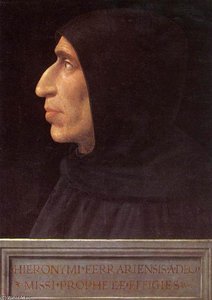
The late 1490s marked a turning point in Fra Bartolomeo's life, profoundly influenced by the fiery sermons and moralistic teachings of Girolamo Savonarola. The Dominican friar’s denunciation of worldly vanities and perceived corruption within Florentine society resonated deeply with Baccio, leading him to question the purpose and value of artistic representation. This spiritual crisis culminated in a pivotal moment: in 1500, profoundly moved by Savonarola's message, he renounced painting altogether and entered the Dominican Convent of San Marco as a friar. His most famous work from this period, the portrait of Savonarola painted in 1498, stands as a powerful visual testament to the reformer’s influence. The intensity of Savonarola’s gaze and the stark simplicity of the composition reflect the austere religious climate of the time. For several years, Fra Bartolomeo dedicated himself entirely to religious life, seemingly abandoning his artistic pursuits. However, fate—and the needs of his order—would soon intervene.Return to the Canvas: High Renaissance Serenity and Raphael’s Influence
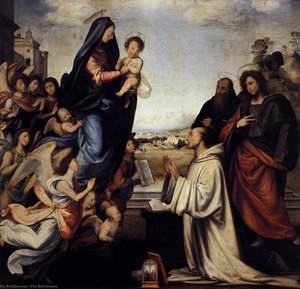
In 1504, at the behest of his superiors within the monastery, Fra Bartolomeo was asked to resume painting, becoming head of the San Marco workshop. This marked a remarkable return to artistic creation, but one transformed by his years of spiritual contemplation. His style began to evolve towards an idealized High Renaissance aesthetic, characterized by serene compositions, graceful figures, and a masterful use of light and shadow. The “Vision of St. Bernard” (1507), though now in fragile condition, exemplifies this new direction—its ethereal quality and harmonious balance reportedly captivated the young Raphael during his visit to Florence. A close friendship blossomed between the two artists, fostering a reciprocal exchange of ideas and techniques. Fra Bartolomeo eagerly absorbed Raphael’s knowledge of perspective, while imparting his own expertise in coloring and the delicate rendering of drapery. This collaboration proved pivotal in shaping both their artistic trajectories. His figures became more elegant, imbued with a sense of inner peace and spiritual grace, and he increasingly focused on capturing the subtle effects of light upon form.Legacy: A Pioneer of Landscape and Religious Devotion
Fra Bartolomeo’s contributions to Renaissance art extend beyond his religious paintings. He was also a pioneering figure in landscape art, creating some of the earliest pure landscape sketches from Italy—remarkable for their sensitive observation of nature and atmospheric effects. These drawings demonstrate an early interest in capturing the beauty of the natural world, foreshadowing later developments in landscape painting. Throughout his career, he produced numerous altarpieces for churches across Italy, including works commissioned in Venice, Lucca, and Besançon. His final work, a fresco of “Noli Me Tangere” (Do Not Touch Me) at Pian di Mugnone near Fiesole, stands as a poignant culmination of his artistic journey. Fra Bartolomeo’s influence on Raphael is undeniable, contributing to the development of High Renaissance art. He uniquely combined profound religious devotion with exceptional artistic skill, creating works that served both spiritual and aesthetic purposes. His career represents a crucial transition from the earlier Florentine style towards the idealized forms and balanced compositions characteristic of the High Renaissance. Fra Bartolomeo died in Florence on October 31, 1517, leaving behind a legacy of serene beauty, spiritual depth, and artistic innovation that continues to inspire awe and admiration today.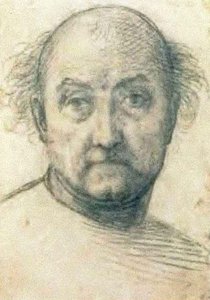
Fra Bartolomeo
1472 - 1517 , Italy
Quick Facts
- Artistic Movement Or Style: High Renaissance
- Artists Or Movements Influenced By This Artist:
- Raphael
- Mannerism
- Artists Who Influenced This Artist:
- Cosimo Rosselli
- Mariotto Albertinelli
- Raphael
- Date Of Birth: March 28, 1472
- Date Of Death: October 31, 1517
- Full Name: Fra Bartolomeo
- Nationality: Italian
- Notable Artworks:
- Savonarola Portrait
- Vision of St. Bernard
- Worship of Venus
- God the Father
- Place Of Birth: Prato, Italy
Related Articles

Fra Angelico's Masterpieces: 25 Renaissance Paintings for Your Home | ArtsDot
Explore 25 breathtaking masterpieces by Fra Angelico, a Renaissance master. Discover the stories behind his iconic frescoes, Annunciations & religious art. Find museum-quality reproductions and elevate your home decor with ArtsDot.com.
Echoes of Olympus: Mythological Narratives in Western Art Through the Ages
Explore the captivating history of mythological narratives in Western art! From ancient Greece to modern masterpieces, discover iconic artworks & symbolism. Expert analysis and high-quality reproductions at ArtsDot.
Botticelli's Masterpieces: Explore 25 Iconic Renaissance Paintings | ArtsDot
Journey through Botticelli's world with 25 iconic Renaissance paintings. Explore 'Birth of Venus,' 'Primavera,' and more—stories, techniques & timeless beauty. Find museum-quality art reproductions for your home at ArtsDot.com.
Chiaroscuro & Emotional Resonance: Exploring Dramatic Light in Western Painting
Explore the captivating world of chiaroscuro & tenebrism! Discover Caravaggio's influence, Baroque masters, and the enduring power of dramatic lighting in art history. Learn about these techniques with ArtsDot.
Illuminating Shadows: A Comprehensive Exploration of Chiaroscuro Technique in Art History
Explore the captivating world of chiaroscuro! Discover its history, masters like Caravaggio & de La Tour, and enduring influence on art. A comprehensive guide for enthusiasts.