 Preview
 Send
Send Share
Share
 Details

 Download
 Similars
 X-Ray
X-Ray Diaporama
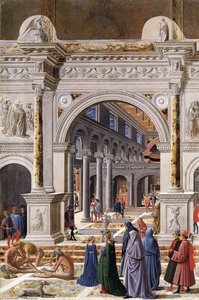
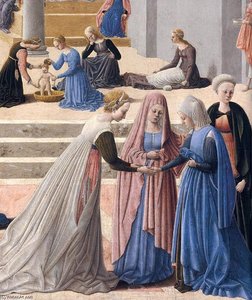
The Presentation of the Virgin in the Temple (.)
 Oil On Canvas
- WallArt
- Renaissance Early Renaissance
 1467
1467 147.0 x 97.0 cm
 Museum of Fine Arts
 Read More
Hand Made Oil Reproduction
Hand-painted oil on canvas in your size and frame, made to order by our artists. ( Buy Print Buy Image)




P118B $10

P118H $10

P118W $10

P438Z $10

P508JH $12

P508YH $12

P805H $10

P805Z $10

P919BZ $10

P919G $10

P919XJ $10

P959ZH $10

P968JZ $12

W106C $8

W218G $10

W218JH $8

W218Y $10

W307PJ $10

W316G $10

W316PJ $8

W316Y $10

W398PJ $8

W4111J $10

W500HY $15

W500JH $15

W692G $12

W849H $8

W940BG $15

W953PJ $8




Pick from our preset sizes that match the artwork's original proportions.

You may enter your own dimensions to fit a specific frame or space. If your selected size does not match the original image's proportions, we will either crop the artwork or extend the painting with additional hand-painted elements. A digital mockup will be sent for your approval before production begins.
Please note that the on-screen preview does not reflect the actual cropping or extension. Only the mockup will accurately show the final composition.
While custom sizes are available, we recommend selecting a dimension from the predefined list to preserve the original proportions.
After order, ArtsDot.com team will email client for instructions and provide a mockup preview
Worldwide Delivery () in 3/4 weeks instead of standard 5 weeks. (16 August). No compromise on quality.

Free Worldwide Express Shipping

High-Quality Linen Canvas

Full Shipping Insurance

Customs Tax Refund Guarantee

True Color Matching Guarantee

60-Day Return Policy (Defects Only)

100% Money-Back Guarantee

Bulk Discount Offer
 Glass option is only available in size under 110 CM

The Presentation of the Virgin in the Temple (.)
Reproduction Medium
Reproduction Size
-


Total Price
$ 263
Artwork Description
The Enigmatic Presentation: Fra Carnevale’s Vision of Mary's Temple Journey
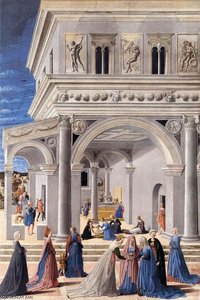
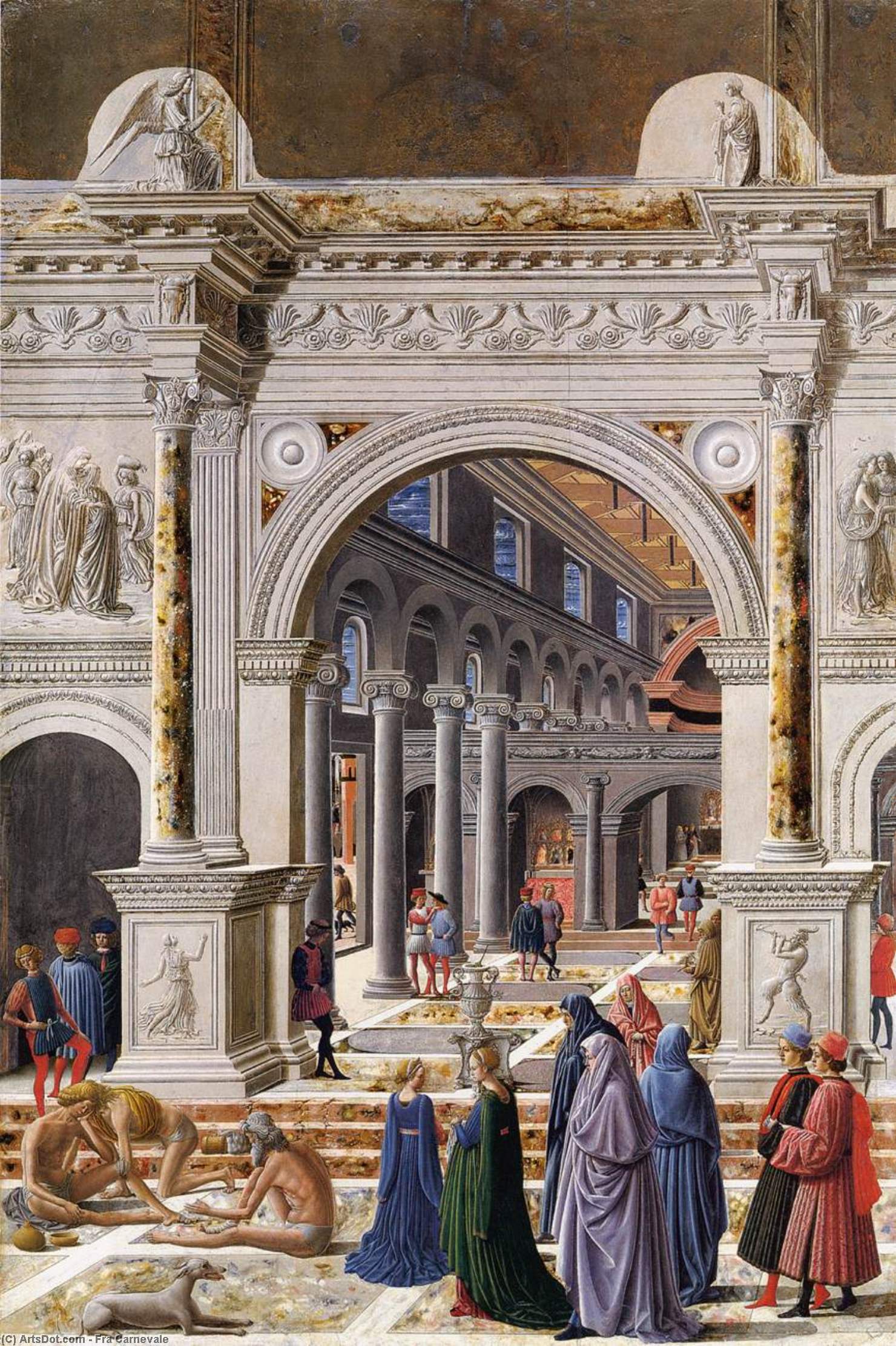
Fra Carnevale’s “The Presentation of the Virgin in the Temple,” painted around 1467, is not merely a religious depiction; it’s a profound meditation on faith, perspective, and the burgeoning humanist spirit of Renaissance Italy. This captivating work, currently residing within the Gallerie dell'Accademia in Venice, immediately draws the viewer into a meticulously constructed world—a world where architectural precision dances with intimate human emotion. The painting, executed primarily in tempera and oil on wood, showcases Carnevale’s unique approach to portraying biblical narratives, one that diverges significantly from the established conventions of his time.
Carnevale, a Dominican friar shrouded in mystery due to the scarcity of his known works, was a figure deeply rooted in Urbino's artistic landscape. He apprenticed under Jacopo Veneto, absorbing the master’s innovative use of perspective—a technique that would become central to Carnevale’s own distinctive style. Yet, unlike Veneto’s emphasis on naturalism, Carnevale infused his work with an architectural rigor, creating scenes that feel simultaneously grounded in reality and elevated into a realm of symbolic significance. The painting's composition is dominated by a precisely rendered temple interior, its columns echoing the grandeur of Roman architecture—a deliberate nod to the classical world that was experiencing a fervent revival during the Renaissance.
A Symphony of Perspective and Detail
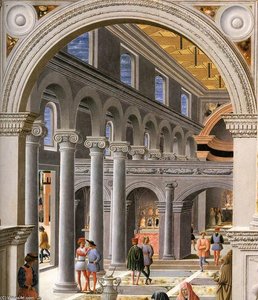
What immediately captivates the eye is Carnevale’s masterful manipulation of perspective. The scene unfolds within a meticulously constructed space, where lines converge with astonishing accuracy, drawing the viewer's gaze towards the central figure: the three-year-old Virgin Mary. The use of mirror-image perspective—a technique rarely seen in this period—creates an illusion of depth and spaciousness, transforming a simple temple into a monumental architectural marvel. This isn’t merely a technical exercise; it’s a deliberate choice to elevate the sacred event, imbuing it with a sense of timeless grandeur.
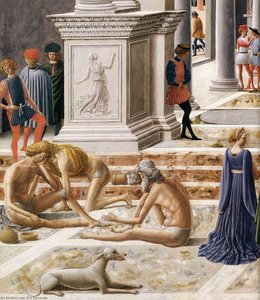
Beyond the architectural precision, Carnevale demonstrates remarkable attention to detail. The figures surrounding Mary—her parents, attendants, and even the three humble beggars positioned at the altar—are rendered with a sensitivity that belies their secondary roles. Each face is meticulously sculpted, conveying a range of emotions – from reverence and devotion to quiet contemplation. The inclusion of these seemingly insignificant details adds layers of complexity to the scene, inviting viewers to contemplate the multifaceted nature of faith and human experience.
Symbolism and the Humanist Spirit
“The Presentation of the Virgin in the Temple” is rich with symbolic meaning. The temple itself represents God’s presence—a space of holiness and divine grace. The three beggars, a recurring motif in Carnevale's work, symbolize humility and charity – virtues central to Christian teachings. Their placement at the altar underscores the importance of service and compassion. Furthermore, the architectural elements—the columns, arches, and vaulted ceilings—allude to classical antiquity, reflecting the humanist fascination with the achievements of the ancient world.
Interestingly, Carnevale’s work also hints at a broader cultural context. The inclusion of figures engaged in everyday activities – chatting, resting, and walking about – suggests a desire to integrate religious narrative into the fabric of daily life. This reflects the growing interest in humanism during the Renaissance, which emphasized the value of earthly experience alongside spiritual contemplation. The painting is not simply a depiction of a biblical event; it’s an exploration of the relationship between faith, humanity, and the world around us.
A Timeless Masterpiece: Reproduction and Beyond
Fra Carnevale's “The Presentation of the Virgin in the Temple” remains one of the most enigmatic and compelling works of the early Renaissance. Its innovative use of perspective, meticulous detail, and profound symbolism continue to fascinate art historians and viewers alike. A high-quality reproduction captures not only the visual splendor of this masterpiece but also its emotional depth and intellectual richness. Whether adorning a grand salon or a more intimate space, this painting offers a window into the artistic and cultural currents of Renaissance Italy—a testament to the enduring power of art to inspire, provoke, and transport us across time.
Related Artworks


Artist Biography
The Enigmatic Architect of Urbino’s Renaissance
In the shadowed corridors of the Quattrocento, few figures possess the haunting allure of Fra Carnevale. A name whispered with both reverence and mystery, Bartolomeo di Giovanni Corradino—known to history by his monastic title—remains one of the most elusive masters of the Italian Renaissance. Born in Urbino around 1420, his life was a delicate tapestry woven from the threads of spiritual devotion and profound artistic innovation. As a member of the Dominican Order, Carnevale occupied a unique space where the contemplative silence of the cloister met the burgeoning intellectual rigor of humanism. Though only nine works can be definitively attributed to his hand today, each surviving piece serves as a window into a mind that sought to harmonize the divine with the mathematical precision of the physical world.
The trajectory of Carnevale’s artistry was shaped by the great artistic crucibles of his era. His formative years in Urbino under the guidance of Jacopo Veneto instilled in him an early fascination with perspective, a skill that would become the hallmark of his mature style. However, it was his journey to Florence around 1445 that truly ignited his creative spirit. Immersed in the vibrant Florentine atmosphere, he studied under the influential Antonio Alberti and entered the prestigious workshop of Filippo Lippi. This apprenticeship was transformative; from Lippi, Carnevale inherited a masterful command of color and a delicate approach to composition, learning to breathe life into figures through subtle tonal shifts and emotional depth.
A Mastery of Space and Sacred Narrative
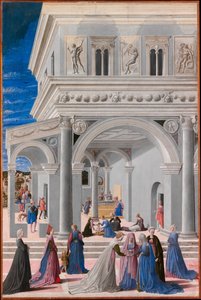
What distinguishes the work of Fra Carnevale from his contemporaries is his unparalleled ability to integrate complex architectural settings with sacred narratives. He did not merely paint backgrounds; he constructed worlds. His canvases often feature imposing, classically inspired structures that reflect the humanist ideals of the age, echoing the grandeur of the Ducal Palace at Urbino and the theoretical treatises of Leon Battista Alberti. In works such as The Birth of the Virgin, one observes a breathtaking marriage of medieval detail and Renaissance spatial logic. The architectural depth achieved in these panels suggests a profound understanding of geometry, creating a stage where the miraculous feels grounded in a tangible, measurable reality.
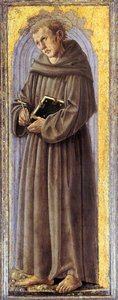
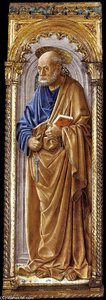
His technical repertoire was as diverse as his influences, ranging from the luminous clarity of tempera to the rich textures of oil painting. In pieces like St Peter, he utilized light and shadow to evoke a sense of solemnity and divine presence, while his Allegorical Scene showcases a daring use of nude figures within classical settings, reflecting the era's fascination with rediscovered Greco-Roman ideals. This ability to navigate between the pious requirements of his Dominican vocation and the sophisticated aesthetic demands of patrons like Federico Montefeltro allowed him to create art that was simultaneously devotional and intellectually stimulating.
Legacy and Historical Resonance
Though the scarcity of his surviving oeuvre has often led scholars to debate the authenticity of certain works, the historical significance of Fra Carnevale cannot be overstated. He acted as a vital bridge between the early experiments of the 15th century and the High Renaissance perfection achieved by masters like Bramante and Raphael. His preoccupation with architectural perspective and the integration of classical motifs provided a foundational blueprint for the next generation of Italian artists. To study Carnevale is to witness the very moment when the spiritual intensity of the Middle Ages began to merge with the structured, human-centric vision of the Renaissance.
Today, the legacy of this enigmatic monk lives on through the rare, precious fragments of his vision that remain. He stands as a testament to the power of the "architectural painter," an artist who saw the divine not just in the faces of saints, but in the very proportions of the space they inhabited. His life, though shrouded in much historical uncertainty, continues to inspire awe, reminding us that even the most elusive figures can leave an indelible mark on the soul of art history.
Fra Carnevale
1420 - 1484 , Italy
Quick Facts
- Artistic Movement Or Style: Quattrocento
- Artists Or Movements Influenced By This Artist:
- Filippo Lippi
- Piero della Francesca
- Artists Who Influenced This Artist:
- Antonio Alberti
- Dominico Veneziano
- Date Of Birth: c. 1420
- Date Of Death: 1484
- Full Name: Bartolomeo di Giovanni Corradini
- Nationality: Italian
- Notable Artworks:
- The Annunciation
- Portrait of a Man
- Place Of Birth: Urbino, Italy
Related Articles
Titian: Innovation, Technique & the Venetian Renaissance Portrait Tradition
Explore the revolutionary techniques & enduring legacy of Titian, the master of Venetian Renaissance portraiture. Discover insights for collectors & appreciate his impact on art history.

Jacob Henricus Maris: A Master of Dutch Atmospheric Realism & the Intimate Landscape
Explore the captivating world of Jacob Henricus Maris, a leading figure of the Dutch Hague School. Discover his atmospheric landscapes, signature brushstrokes & lasting influence on 19th-century art. Learn more at ArtsDot.
Giotto's Masterpieces: 25 Renaissance Artworks for Your Home | ArtsDot
Explore 25 breathtaking artworks by Giotto di Bondone, a Renaissance master. Discover the stories behind iconic frescoes & paintings like the Scrovegni Chapel cycle. Find museum-quality Giotto reproductions and elevate your home decor with ArtsDot.com.

Mary Vaux Walcott: Botanical Precision & Artistic Vision in American Conservation
Discover the exquisite botanical watercolors of Mary Vaux Walcott, celebrated as the 'Audubon of Botany.' Explore her life, art, and lasting impact on American conservation through detailed illustrations & Smithsonian contributions.
Fra Angelico's Masterpieces: 25 Renaissance Paintings for Your Home | ArtsDot
Explore 25 breathtaking masterpieces by Fra Angelico, a Renaissance master. Discover the stories behind his iconic frescoes, Annunciations & religious art. Find museum-quality reproductions and elevate your home decor with ArtsDot.com.