

 Preview
 Send
Send Share
Share
 Details

 Download
 Similars
 X-Ray
X-Ray Diaporama
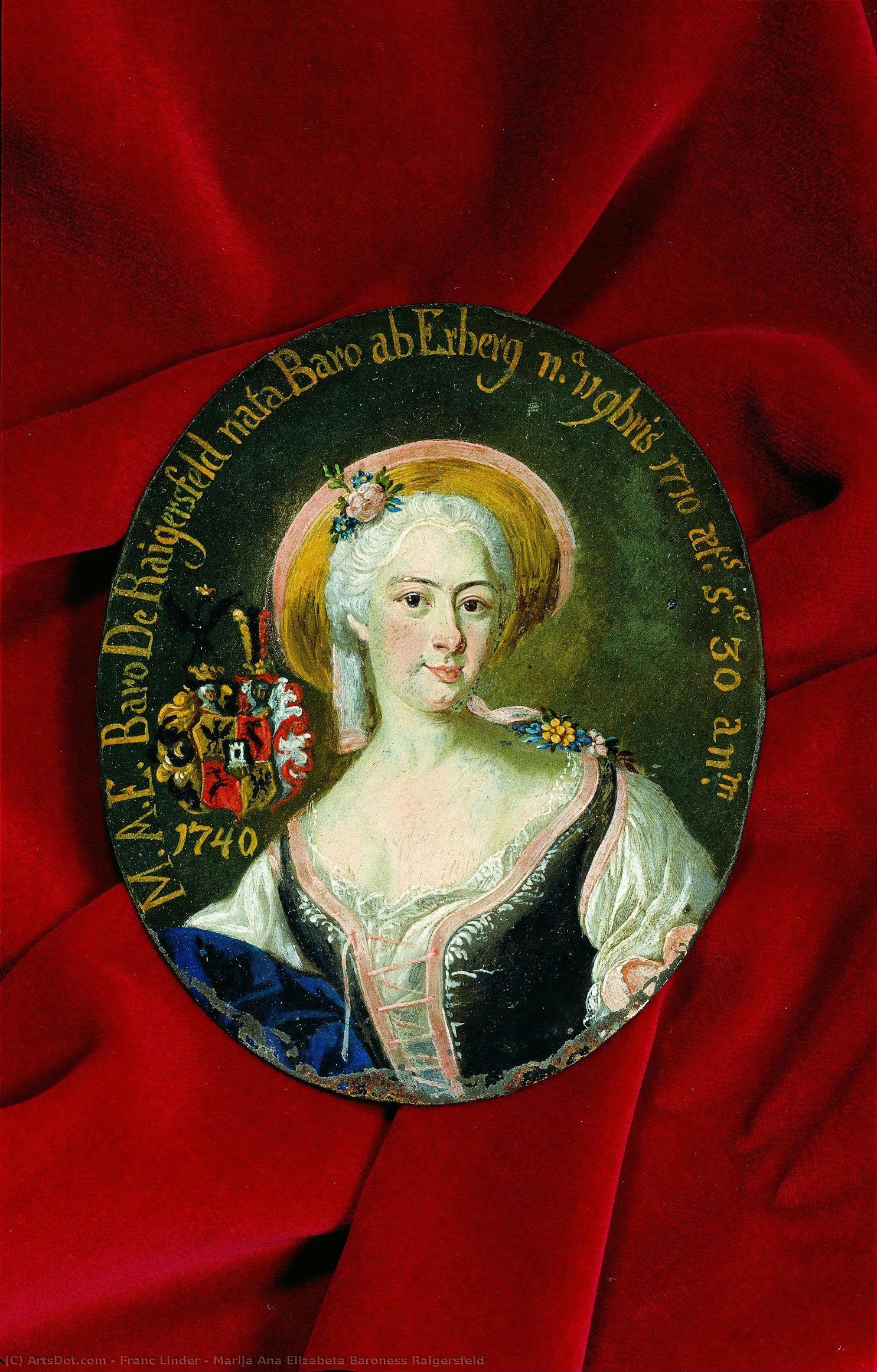
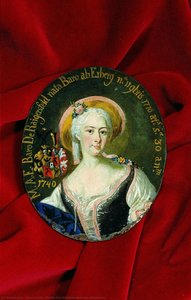
Marija Ana Elizabeta Baroness Raigersfeld
 1750
1750 12.0 x 10.0 cm
 National Museum of Slovenia
 Read More
Hand Made Oil Reproduction
Hand-painted oil on canvas in your size and frame, made to order by our artists. ( Buy Print Buy Image)




































Pick from our preset sizes that match the artwork's original proportions.

You may enter your own dimensions to fit a specific frame or space. If your selected size does not match the original image's proportions, we will either crop the artwork or extend the painting with additional hand-painted elements. A digital mockup will be sent for your approval before production begins.
Please note that the on-screen preview does not reflect the actual cropping or extension. Only the mockup will accurately show the final composition.
While custom sizes are available, we recommend selecting a dimension from the predefined list to preserve the original proportions.
After order, ArtsDot.com team will email client for instructions and provide a mockup preview
Worldwide Delivery () in 3/4 weeks instead of standard 5 weeks. (22 August). No compromise on quality.

Free Worldwide Express Shipping

High-Quality Linen Canvas

Full Shipping Insurance

Customs Tax Refund Guarantee

True Color Matching Guarantee

60-Day Return Policy (Defects Only)

100% Money-Back Guarantee

Bulk Discount Offer
 Glass option is only available in size under 110 CM

Marija Ana Elizabeta Baroness Raigersfeld
Reproduction Medium
Reproduction Size
-


Total Price
$ 263
Artwork Description
Related Artworks





Artist Biography
The Master of the Miniature: The Life and Legacy of Franz Linder
In the grand tapestry of eighteenth-century European art, certain names shimmer with the brilliance of gold leaf, while others provide the essential, intricate threads that hold the narrative together. Franz Linder (1738–1802) belongs to that profound class of masters whose work captures the very soul of an era. A pioneer of German portraiture, Linder emerged during the twilight of the Baroque period, a time when the dramatic shadows of the past were beginning to soften into the refined elegance of a new age. While history often reserves its loudest praises for titans like Rembrandt or Rubens, Linder carved out a specialized and deeply intimate niche, becoming one of the most vital chroniclers of the aristocratic spirit in Bavaria and beyond.
Linder’s artistic journey was rooted in the rigorous traditions of Munich. Though much of his early life remains shrouded in the mists of time, his formative years were defined by a prestigious apprenticeship under Johann Georg Baumgartner. It was within this studio that Linder mastered the complex language of Baroque aesthetics—learning to manipulate chiarosciente to create depth, and understanding how opulent ornamentation could serve to elevate the status of a sitter. This foundational training instilled in him a lifelong dedication to realism, yet he possessed a unique ability to temper cold accuracy with an unmistakable human warmth, ensuring that his subjects were never merely icons of wealth, but living, breathing individuals.
The Munich Atelier and the Art of Intimacy
By approximately 1765, Linder had established his own atelier in Munich, a sanctuary of creativity that soon became a magnet for the Bavarian nobility. His studio was not merely a place of commerce but a center of psychological exploration. Linder’s technique was characterized by subtle tonal gradations and a delicate modeling of form that allowed him to capture the fleeting nuances of expression. He possessed an uncanny sensitivity to the sitter's essence, moving beyond the rigid conventions of his contemporaries to find the quiet, often unspoken, character beneath the lace and velvet.
One of the most fascinating chapters of Linder’s career involves his connection to the illustrious Raigersfeld family. In 1757, he was invited to reside with the wealthy businessman and official Baron Franc Henrik Raigersfeld. This period of residence allowed Linder to engage in a prolific burst of creativity, producing an extraordinary collection of sixty miniature portraits for the family. These small-scale masterpieces, including poignant depictions of Marija Ana Elizabeta, Baroness Raigersfeld, demonstrate his mastery over the miniature format—a medium that requires immense precision and a command over minute details to convey grandeur within a tiny frame.
Historical Significance and Artistic Endurance
The significance of Franz Linder lies in his role as a bridge between eras. His work embodies the transition from the heavy, dramatic ornamentation of the Baroque to a more nuanced, observant style that prefigured the sensibilities of later centuries. Through his meticulous documentation of the Bavarian aristocracy, he provided a visual record of a social order on the cusp of profound change. His ability to blend the monumental with the miniature allowed him to serve both the public need for status-driven portraiture and the private desire for intimate remembrance.
Today, Linder’s legacy is preserved through the enduring charm of his portraits, which continue to captivate collectors and historians alike. His contributions can be summarized by several key artistic pillars:
- Psychological Depth: The ability to move past superficial likeness to capture the inner temperament of his subjects.
- Technical Precision: A mastery of both large-scale portraiture and the delicate, exacting demands of miniature painting.
- Cultural Documentation: Serving as a vital visual historian for the aristocratic families of Southern Germany and the Carniolan regions.
- Stylistic Synthesis: The seamless blending of Baumgartner’s Baroque influences with a burgeoning sense of classical refinement.
As we look upon the works of Franz Linder, we do not merely see faces from a bygone century; we witness the triumph of an artist who found beauty in the details and immortality in the ephemeral glance.
franc linder
1738 - 1802 , Germany
Quick Facts
- Artistic Movement Or Style: Baroque
- Date Of Death: 1802
- Full Name: Franz Linder
- Nationality: German
- Notable Artworks:
- Portrait of a Gentleman
- Baroness Raigersfeld pain
- Place Of Birth: Germany


