 Preview
 Send
Send Share
Share
 Details

 Download
 Similars
 X-Ray
X-Ray Diaporama
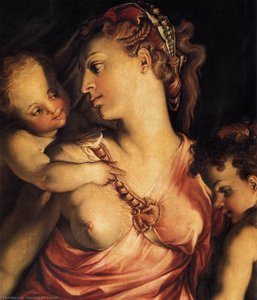
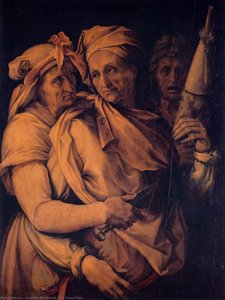
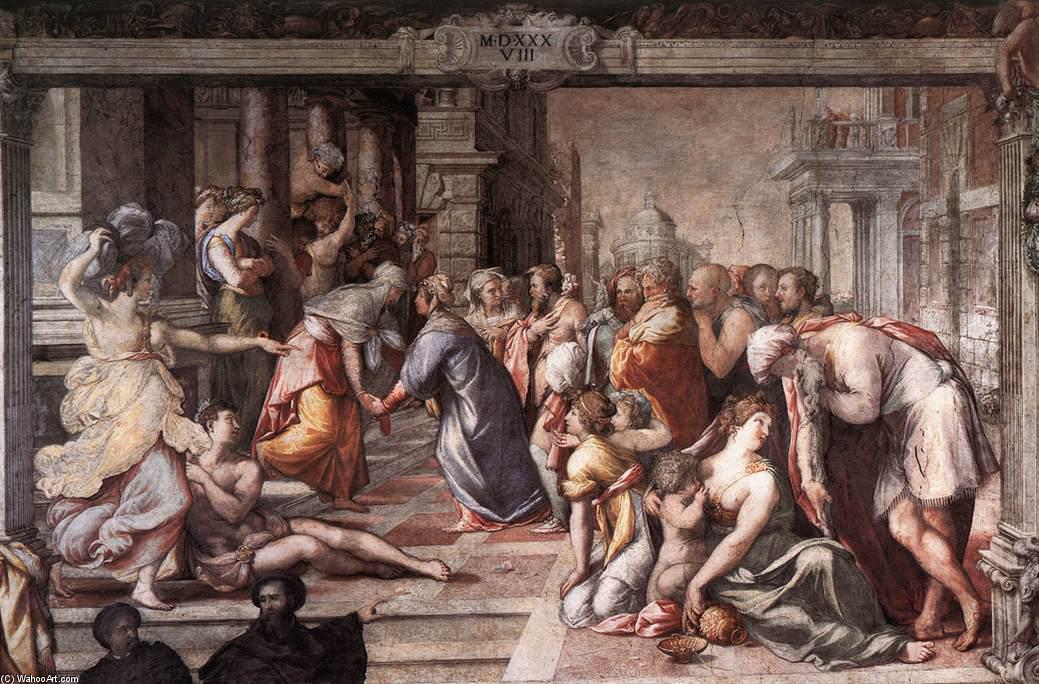
The Visitation


 Read More
Hand Made Oil Reproduction
Hand-painted oil on canvas in your size and frame, made to order by our artists. ( Buy Print Buy Image)




































Pick from our preset sizes that match the artwork's original proportions.

You may enter your own dimensions to fit a specific frame or space. If your selected size does not match the original image's proportions, we will either crop the artwork or extend the painting with additional hand-painted elements. A digital mockup will be sent for your approval before production begins.
Please note that the on-screen preview does not reflect the actual cropping or extension. Only the mockup will accurately show the final composition.
While custom sizes are available, we recommend selecting a dimension from the predefined list to preserve the original proportions.
After order, ArtsDot.com team will email client for instructions and provide a mockup preview
Worldwide Delivery () in 3/4 weeks instead of standard 5 weeks. (17 August). No compromise on quality.

Free Worldwide Express Shipping

High-Quality Linen Canvas

Full Shipping Insurance

Customs Tax Refund Guarantee

True Color Matching Guarantee

60-Day Return Policy (Defects Only)

100% Money-Back Guarantee

Bulk Discount Offer
 Glass option is only available in size under 110 CM

The Visitation
Reproduction Medium
Reproduction Size
-


Total Price
$ 263
Related Artworks
Artist Biography
The Florentine Visionary: The Life and Legacy of Cecchino del Salviati
In the vibrant, shifting landscape of the sixteenth century, few artists captured the restless energy of the Mannerist movement as profoundly as Francesco Salviati, known to history by his evocative moniker, Cecchino del Salviti. Born in Florence around 1510 into a lineage of creative talent—his father being the painter Francesco Rossi—Cecchino was destined for a life steeped in the aesthetic complexities of the Italian Renaissance. His early years were not merely an education in technique but an immersion into the very soul of Florentine humanism. Under the tutelage of the great Andrea del Sarto, Cecchino absorbed a foundation of meticulous realism and compositional grace, yet he possessed an innate drive to push beyond the balanced harmonies of his predecessors toward something far more experimental and emotionally charged.
The trajectory of his career shifted dramatically around 1531 when the influential Cardinal Giovanni Salviati summoned him to Rome. This transition from the disciplined workshops of Florence to the grand, papal stage of Rome allowed Cecchino to flourish amidst the most prestigious patrons of the age. It was in this Roman atmosphere that his style began to evolve into the quintessential Mannerist idiom. He moved away from the serene stability of the High Renaissance, instead embracing a language of artifice, elegance, and tension. His work became a playground for elongated limbs, asymmetrical arrangements, and a sophisticated use of color that could evoke both divine splendor and unsettling psychological depth.
Mastery of Fresco and the Mannerist Spirit
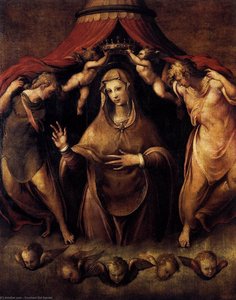
Cecchino’s true genius found its most enduring expression in the medium of fresco. He possessed a rare ability to transform cold plaster into breathing, celestial narratives. His mastery of this technique allowed him to decorate the sacred spaces of Rome with a sense of monumental scale and intricate detail. One cannot discuss his contributions without reflecting on his ability to navigate the complex demands of religious iconography while injecting them with a modern, almost theatrical flair. In works such as the Coronation of the Divine with Angels, he presents a breathtaking display of grace, where the heavens seem to descend through layers of swirling, ethereal light and meticulously rendered drapery.
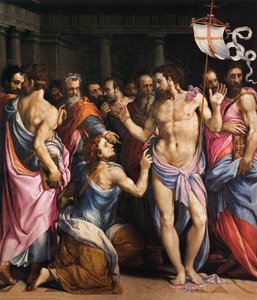
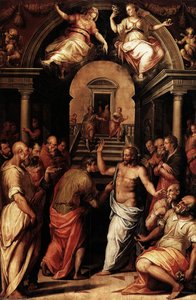
His approach to narrative was often characterized by a departure from strict classical conventions in favor of emotional intensity. In his depictions of biblical events, such as the Incredulity of St. Thomas, he utilized the hallmarks of Mannerism—distorted perspectives and complex, crowded compositions—to heighten the drama of the moment. This stylistic choice was not merely decorative; it served to engage the viewer on a visceral level, pulling them into the spiritual struggle and the miraculous tension of the scene. His ability to balance the monumental with the intimate allowed him to serve both the grand architectural needs of churches and the more personal, psychological demands of portraiture.
A Lasting Impression on Art History
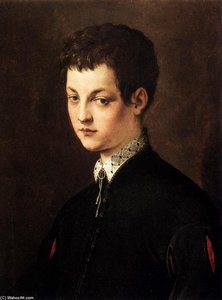
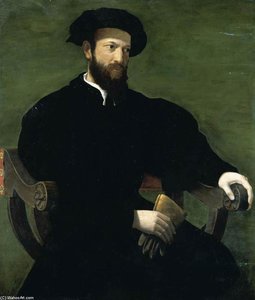
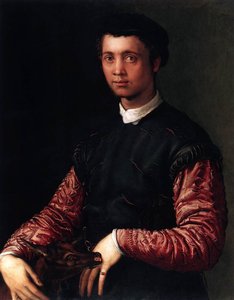
Beyond his large-scale religious cycles, Cecchino del Salviati left an indelible mark through his portraits and decorative works. His ability to capture the character and social standing of his subjects—often seen in his Portrait of a Young Man—demonstrates a versatility that bridged the gap between the sacred and the secular. As a painter who navigated the transition from the stability of the Renaissance to the expressive complexity of Mannerism, he acted as a vital link in the evolution of Italian art. His work reflects the era's fascination with virtuosity and the pursuit of an aesthetic that challenged the eye and stirred the spirit.
Though his life was cut short in Rome in 1563, the legacy of Cecchino del Salviati remains etched in the very walls of Italy’s most storied basilicas. He stands as a pioneer who helped define an era of artistic experimentation, proving that beauty could be found not only in perfect proportion but also in the beautiful distortions and dramatic shadows of the human experience. His contributions continue to offer scholars and art lovers alike a window into a period of unparalleled creative courage.
cecchino del salviati
1510 - 1563 , Italy
Quick Facts
- Artistic Movement Or Style: Mannerist Painting
- Artists Or Movements Influenced By This Artist: ['Renaissance']
- Artists Who Influenced This Artist: ['Andrea del Sarto']
- Date Of Birth: 1510
- Date Of Death: 1563
- Full Name: Francesco Salviati
- Nationality: Italian
- Notable Artworks:
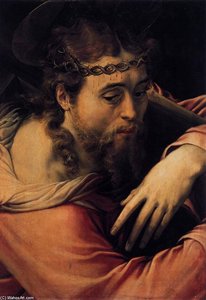
- Christ Carrying the Cross
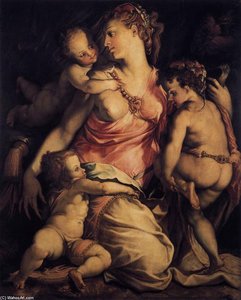
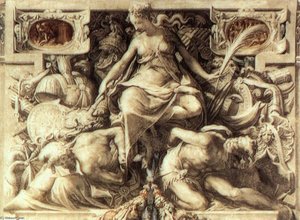
- Charity
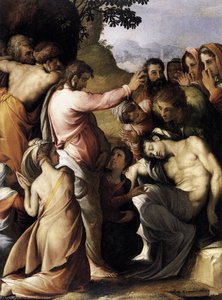
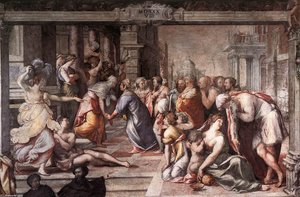
- Raising of Lazarus
- Place Of Birth: Florence, Italy