 Preview
 Send
Send Share
Share
 Details

 Download
 Similars
 X-Ray
X-Ray Diaporama
Illustrations from the Trattato di architettura (15)


 Read More
Hand Made Oil Reproduction
Hand-painted oil on canvas in your size and frame, made to order by our artists. ( Buy Print Buy Image)




P118B $10

P118H $10

P118W $10

P438Z $10

P508JH $12

P508YH $12

P805H $10

P805Z $10

P919BZ $10

P919G $10

P919XJ $10

P959ZH $10

P968JZ $12

W106C $8

W218G $10

W218JH $8

W218Y $10

W307PJ $10

W316G $10

W316PJ $8

W316Y $10

W398PJ $8

W4111J $10

W500HY $15

W500JH $15

W692G $12

W849H $8

W940BG $15

W953PJ $8




Pick from our preset sizes that match the artwork's original proportions.

You may enter your own dimensions to fit a specific frame or space. If your selected size does not match the original image's proportions, we will either crop the artwork or extend the painting with additional hand-painted elements. A digital mockup will be sent for your approval before production begins.
Please note that the on-screen preview does not reflect the actual cropping or extension. Only the mockup will accurately show the final composition.
While custom sizes are available, we recommend selecting a dimension from the predefined list to preserve the original proportions.
After order, ArtsDot.com team will email client for instructions and provide a mockup preview
Worldwide Delivery () in 3/4 weeks instead of standard 5 weeks. (28 August). No compromise on quality.

Free Worldwide Express Shipping

High-Quality Linen Canvas

Full Shipping Insurance

Customs Tax Refund Guarantee

True Color Matching Guarantee

60-Day Return Policy (Defects Only)

100% Money-Back Guarantee

Bulk Discount Offer
 Glass option is only available in size under 110 CM

Illustrations from the Trattato di architettura (15)
Reproduction Medium
Reproduction Size
-


Total Price
$ 263
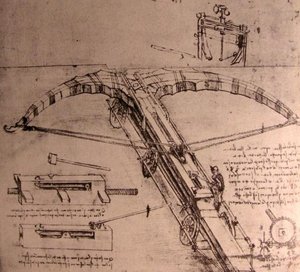
Illustrations from the Trattato di architettura (15) – A Window into Renaissance Engineering
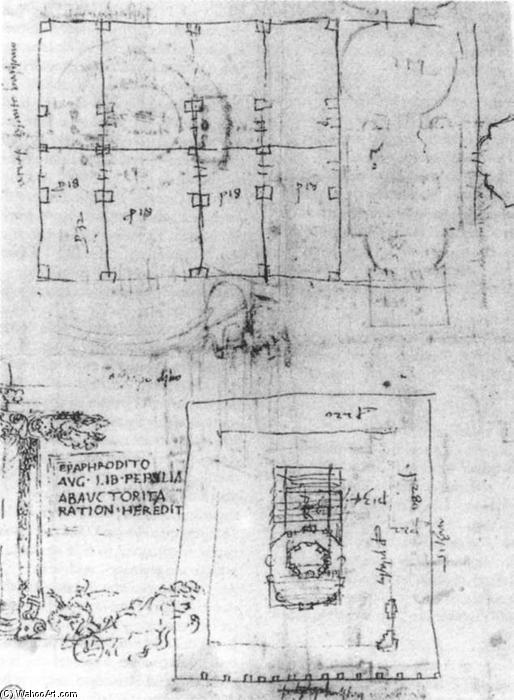
Francesco di Giorgio Martini’s “Illustrations from the Trattato di architettura” stands as a remarkable testament to the intellectual fervor of the Florentine Renaissance. More than just a technical drawing, it embodies the humanist spirit—a dedication to observation, reason, and meticulous representation—that defined the era's artistic achievements. This page extracted from the seminal architectural treatise penned in 1470 offers us an unparalleled glimpse into the mind of a true polymath, showcasing not only his mastery of drafting but also his profound understanding of structural principles.
- Subject Matter: The artwork delves into the realm of architectural design and planning. Specifically, it presents detailed plans for buildings or urban layouts—a subject deeply rooted in Renaissance fascination with engineering and mathematical precision.
- Style & Technique: Martini’s approach aligns perfectly with established architectural drawing conventions of his time. He prioritizes clarity and accuracy above stylistic embellishment, reflecting a commitment to conveying information effectively rather than indulging in artistic expression. The technique utilizes hand-drawing using ink on parchment or vellum—a laborious process that underscores the importance placed upon meticulous detail.
- Composition & Detail: The illustration is dominated by geometric shapes – squares and rectangles arranged in a grid – meticulously delineated with hatching to simulate shading and depth. A central structure, likely a temple or palace, receives particular attention, showcasing intricate architectural elements indicative of Renaissance grandeur.
Beyond its technical merits, “Illustrations from the Trattato di architettura” resonates with symbolic significance. The unwavering focus on order and rationality mirrors the humanist belief in human potential—a conviction that knowledge and observation could unlock the secrets of the universe. The grayscale palette speaks to the materiality of the manuscript itself, emphasizing the passage of time and lending an aura of authenticity to this extraordinary artifact.
Consider commissioning a high-quality reproduction of this captivating artwork. Its understated elegance and intellectual depth will undoubtedly elevate any interior space—serving as a constant reminder of the Renaissance’s enduring legacy of innovation and artistic excellence. Explore more about Francesco di Giorgio Martini and his groundbreaking contributions at ArtsDot.com.
Related Artworks







Artist Biography
The Renaissance Polymath: The Life and Vision of Francesco di Giorgio Martini
In the vibrant tapestry of the Italian Quattrocento, few figures loom as large or as multifaceted as Francesco di Giorgio Martini. A true homo universalis, his intellect spanned the boundaries between the ethereal beauty of fine art and the rigorous precision of engineering. Born in Siena in 1439, Martini emerged from a period of profound cultural transformation, where the shadows of the Middle Ages were being chased away by the light of humanism. His life was not merely a career in art, but a lifelong pursuit of understanding the underlying geometry of the universe, whether expressed through the delicate brushstroke of a Madonna or the fortified walls of an ideal city.
Martini’s artistic journey began under the watchful eye of Vecchietta, a master of the Sienese School whose style favored rhythmic, frieze-like compositions. While his early training instilled in him a deep respect for religious iconography and the graceful traditions of Siena, Francesco possessed an unquenchable thirst for innovation. He looked beyond the local traditions toward the burgeoning Florentine interest in linear perspective and classical antiquity. This intellectual curiosity allowed him to transcend the decorative nature of his predecessors, infusing his works with a newfound psychological depth and a sophisticated command of spatial relationships that would later echo the genius of Leonardo da Vinci.
A Synthesis of Spirit and Structure
The breadth of Martini’s creative output is nothing short of staggering. As a painter, he possessed a rare ability to marry the divine with the tangible. In masterpieces such as Madonna and Child with Saints and Angels, one observes a profound tenderness paired with a rigorous structural clarity. His religious works, including the monumental Coronation of the Virgin for the Siena Cathedral, demonstrate his capacity to synthesize classical grandeur with the emotive power required by sacred art. He did not merely depict holy figures; he placed them within a world that felt architecturally sound and physically present.
However, to view Martini solely through the lens of a painter is to miss the heartbeat of his true genius. His contributions to architecture and military engineering were equally transformative. Through his Trattato di architettura, he provided much more than mere technical drawings; he offered a visionary blueprint for the città ideale—the ideal city. His detailed illustrations and manuscripts reveal a mind obsessed with the harmony of proportion and the strategic necessity of defense. In these sketches, we see the seeds of modern urban planning, where beauty and utility exist in a delicate, calculated balance.
Legacy of an Architectural Visionary
The historical significance of Francesco di Giorgio Martini lies in his ability to bridge the gap between the artist's intuition and the engineer's logic. He was a man who saw no distinction between the grace of a sculpted limb and the strength of a stone bastion. His influence rippled through the Renaissance, shaping the way subsequent generations approached the concept of design as an integrated discipline. His life, which concluded in Siena in 1502, left behind a legacy that continues to resonate in the study of both art history and architectural theory.
To reflect on his enduring impact, one might consider the following pillars of his greatness:
- Mastery of Perspective: His role in transitioning Sienese art from decorative tradition to the spatial depth of the High Renaissance.
- Architectural Innovation: The development of theoretical frameworks for urban design and fortification that influenced centuries of engineering.
- Humanist Integration: The seamless blending of classical anatomical study with religious devotion and scientific inquiry.
- The Polymathic Ideal: Serving as a definitive model for the Renaissance creator, where art, science, and intellect are inseparable.
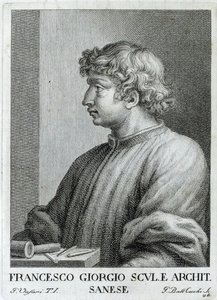
Francesco di Giorgio Martini
1439 - 1502 , Italy
Quick Facts
- Artistic Movement Or Style: Renaissance
- Artists Or Movements Influenced By This Artist: ['Leonardo da Vinci']
- Artists Who Influenced This Artist: ['Andrea del Verrocchio']
- Date Of Birth: Sept. 23, 1439
- Full Name: Francesco Maurizio di Giorgio Martini
- Nationality: Italian
- Notable Artworks:
- Nativity
- Coronation of the Virgin
- Place Of Birth: Siena, Italy
Related Articles

Giotto's Masterpieces: 25 Renaissance Artworks for Your Home | ArtsDot
Explore 25 breathtaking artworks by Giotto di Bondone, a Renaissance master. Discover the stories behind iconic frescoes & paintings like the Scrovegni Chapel cycle. Find museum-quality Giotto reproductions and elevate your home decor with ArtsDot.com.

Simone Martini: Innovation, Spirituality & Courtly Refinement in Sienese Painting
Explore the captivating world of Simone Martini, a pivotal figure in Sienese painting & the International Gothic style. Discover his innovative techniques, spiritual depth, and lasting influence on early Renaissance art.
La Biennale's Masterpieces: 25 Artworks to Inspire Your Home | ArtsDot
Explore 25 iconic artworks from La Biennale di Venezia! Discover the stories behind masterpieces of Italian art, modernism & Renaissance paintings. Find museum-quality reproductions and elevate your home decor with ArtsDot.com. Explore the full collection online.
Proto-Renaissance Masters: 10 Artworks That Changed History | ArtsDot
Journey back to the dawn of Renaissance art! Explore 10 iconic Proto-Renaissance masterpieces by Giotto, Cimabue & Duccio. Discover their stories, techniques & lasting impact. Find museum-quality reproductions for your home at ArtsDot.com

The Nuances of Graphite: Exploring Emotional Depth & Technical Mastery in Pencil Drawing
Explore the captivating world of graphite drawing! Discover its rich history, master essential techniques like chiaroscuro, and learn how artists evoke emotion through this timeless medium. Expert insights for art enthusiasts.