

 Preview
 Send
Send Share
Share
 Details

 Download
 Similars
 X-Ray
X-Ray Diaporama
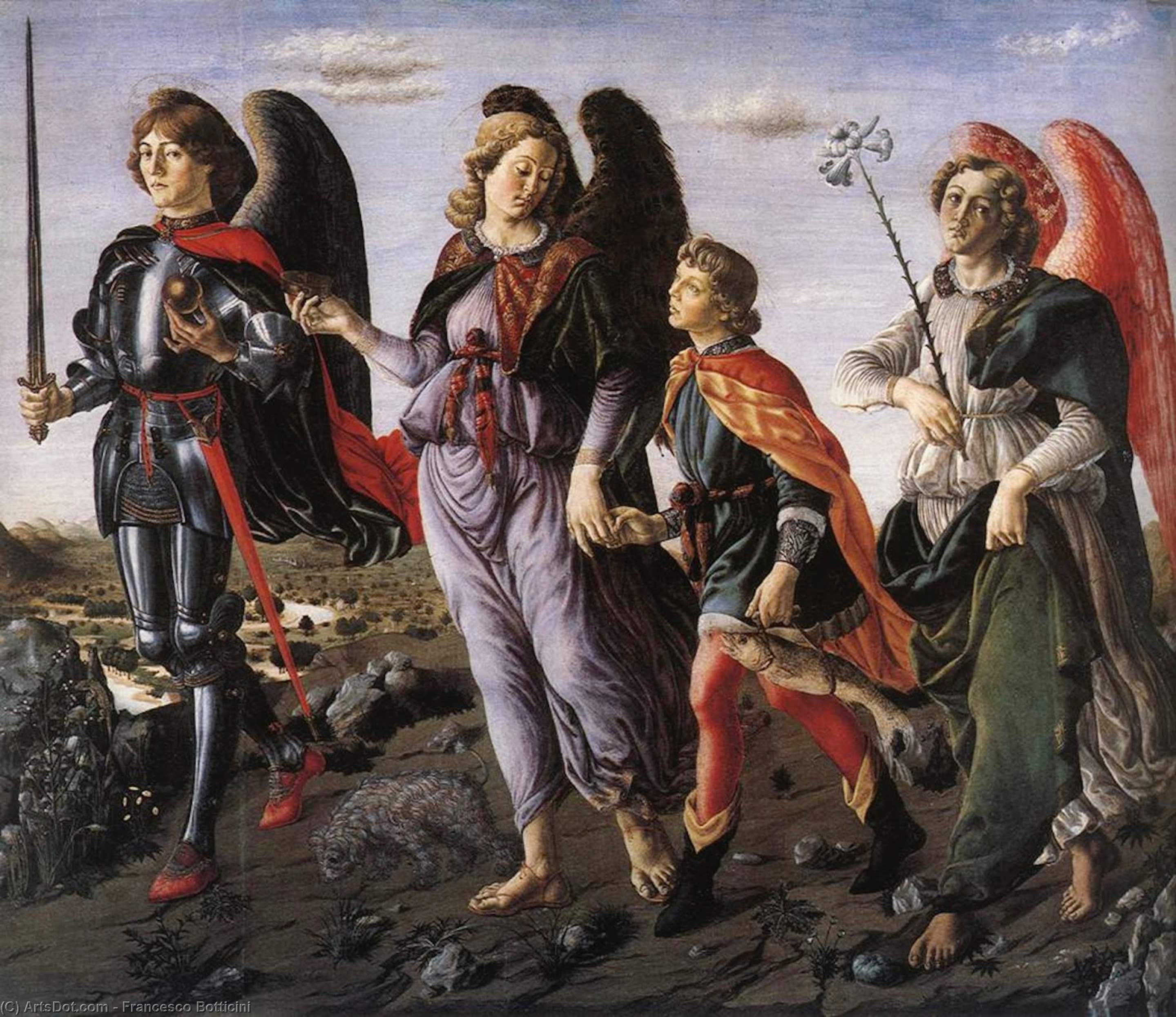
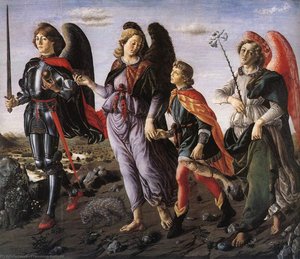
The Three Archangels with Tobias
 Oil On Canvas
- WallArt
- Renaissance
 1470
1470 135.0 x 154.0 cm
 Galleria degli Uffizi
 Read More
Purchase a high-resolution, enhanced digital image, far superior to the online preview.
Each file is meticulously prepared by our in-house specialists using advanced tools and expert manual retouching. We ensure every image has exceptional clarity, precise color accuracy, and fine detail.
The final file is delivered via email within 72 hours, optimized for immediate use in professional, editorial, and print environments. This is the same quality trusted by top-tier design studios, publishers, and galleries.
Digital Image
Download a high-resolution file for personal display, printing, and creative projects. ( Buy Print Buy Hand Made Painting)
Included in Every Digital Image Order
Expert Digital Delivery, Guaranteed
When you choose ArtsDot.com, you're not just getting an image - you're receiving a professionally enhanced digital artwork, crafted with precision and backed by a satisfaction guarantee. Here's everything that comes with your order, automatically:

Fast Email Delivery
Your high-resolution digital image file will be emailed to you within 72 hours of ordering - ready for immediate use.

AI-Enhanced Digital File
Your artwork is professionally optimized using advanced AI tools and manual editing, ensuring maximum detail, clarity, and color accuracy.

Free Lifetime Re-Delivery
Accidentally deleted or lost your file? No worries - we'll resend it to you anytime, free of charge.

No Import Fees - Ever
Enjoy your artwork instantly with zero customs, duties, or delivery fees - digital downloads are always tax-free.

Color Accuracy Guarantee
We ensure your digital image reflects the original colors as closely as possible using professional tools and color management.

60-Day Satisfaction Guarantee
If you're not satisfied with your digital image, we'll revise it or refund 100% within 60 days - no questions asked.

100% Money-Back Guarantee
Not satisfied? Get a full refund within 60 days of receiving your digital file - no questions asked.

Bulk Order Discounts
Buy 3 images, save 10% - Buy 5, save 15% - Buy 10+, save 20%. Great for creative projects, galleries, and agencies.
Collectible Description
The Three Archangels with Young Tobias – A Renaissance Vision of Divine Grace
Francesco Botticini’s “Three Archangels with Young Tobias,” painted circa 1470, stands as a cornerstone of Florentine Renaissance art—a testament to the era's fascination with idealized beauty and profound spiritual contemplation. This oil painting, housed in the Galleria Sabauda of Turin, transcends mere representation; it embodies a carefully crafted narrative infused with symbolic resonance and executed with masterful technical skill. Examining its details unveils layers of artistic intention and offers a glimpse into the intellectual currents shaping fifteenth-century Italy.Subject Matter and Narrative Composition
The artwork depicts six angelic figures arranged against a backdrop of rugged Tuscan landscape—a deliberate choice mirroring the biblical tale of Tobias, recounted in Apocrypha. At the forefront stand three archangels: Michael, Raphael, and Gabriel, positioned with commanding presence and conveying unwavering authority. Their gestures are purposeful – Michael’s outstretched hand signifies divine protection, Raphael offers guidance, while Gabriel holds aloft a lily symbolizing purity and grace. Dominating the scene is Tobias himself, a young boy embodying innocence and vulnerability, representing humanity's reliance on divine intervention. The arrangement guides the viewer’s eye upward towards the celestial realm, establishing a visual hierarchy that underscores the narrative’s central theme: God’s benevolent guardianship over humankind.Style and Artistic Influences – Embracing Classical Idealism
Botticini’s style firmly anchors itself within the traditions of Italian Renaissance art—specifically influenced by artists like Piero della Francesca and Andrea Mantegna. The painting adheres to classical ideals of proportion and beauty, mirroring the humanist ethos prevalent during the period. Anatomical accuracy is evident in the depiction of the angelic figures' musculature and drapery, reflecting a renewed interest in observation and scientific inquiry. Botticini skillfully employs perspective—though relatively shallow—to create depth within the landscape and enhance the sense of spatial realism. The overall aesthetic leans towards serenity and solemnity, mirroring the spiritual fervor characteristic of Florentine religious art at the time.Technique – Layers of Color and Texture
Botticini’s technique demonstrates a mastery of oil painting—a medium favored by Renaissance artists for its ability to achieve luminous colors and subtle tonal gradations. The artist meticulously builds up layers of paint, utilizing glazing techniques to fuse translucent washes over underlying pigments—resulting in rich textures and captivating visual effects. Careful blending ensures smooth transitions between hues, creating an atmosphere of ethereal beauty and conveying a sense of palpable depth. Examination reveals evidence of meticulous preparation – priming the canvas with gesso and applying multiple coats of paint to achieve optimal luminosity and tonal harmony. The materials employed—primarily oil paints on canvas—speak to Botticini’s dedication to achieving artistic excellence.Symbolism and Spiritual Significance
Beyond its visual splendor, “Three Archangels with Young Tobias” resonates with profound symbolic meaning. The lily held by Gabriel symbolizes purity and divine grace – a motif frequently utilized in Renaissance iconography to represent Christ's immaculate conception. The sword wielded by Michael embodies divine justice and protection—a reminder of God’s unwavering vigilance over humanity. The entire composition serves as an allegory for the Christian faith, portraying angels as messengers of God’s benevolent providence and highlighting the importance of spiritual devotion. Botticini’s artwork encapsulates the humanist preoccupation with moral virtue and underscores the belief that beauty and truth are inseparable expressions of divine wisdom.Concluding Reflection – An Enduring Legacy
Francesco Botticini's “Three Archangels with Young Tobias” remains a captivating exemplar of Renaissance artistic achievement—a painting whose enduring appeal stems from its harmonious blend of visual splendor, narrative complexity, and spiritual contemplation. Its meticulous technique, informed by classical ideals and imbued with symbolic resonance, continues to inspire admiration and scholarly inquiry centuries after its creation. This masterpiece exemplifies the Florentine Renaissance’s commitment to elevating art as a vehicle for conveying moral truths and celebrating God's grace—a legacy that persists in reproductions and interpretations today.Related Artworks


Artist Biography
The Florentine Master: The Life and Legacy of Francesco Botticini
In the vibrant, sun-drenched streets of 15th-century Florence, amidst the burgeoning intellect of the Early Renaissance, lived a painter whose brush captured the profound spiritual essence of an era. Francesco di Giovanni Botticini, born around 1446, was far more than a mere contemporary to the giants of his age; he was a vital thread in the rich tapestry of Florentine art. While history often casts the spotlight on the monumental shadows of Leonardo da Vinci or Michelangelo, Botticini’s work offers a window into a period of exquisite transition, where the rigid structures of medieval devotion began to melt into the humanistic grace of the Renaissance.
Botticini’s journey into the heart of artistry was predestined by his lineage. Born into a family steeped in the traditions of the craft, he was the son of Giovanni di Domenico di Piero, a skilled painter of playing cards. This early exposure to the meticulous demands of pigment and design laid the groundwork for a career defined by precision and devotion. His formal education began in the prestigious workshop of Neri di Bicci, where, as an apprentice in 1459, he absorbed the foundational principles of fresco and the collaborative spirit of the Florentine studio system. However, it was his subsequent immersion in the atelier of the legendary Andrea del Verrocchio that truly transformed his vision. Within Verrocchio’s workshop—the same crucible that nurtured Leonardo da Vinci—Botticini learned to marry the sculptural depth of three-dimensional form with the ethereal beauty of tempera painting.
A Symphony of Devotion and Technique
The oeuvre of Botticini is a testament to his ability to evoke the divine through the tangible. His style, heavily influenced by the lyrical elegance of Botticelli and the structural clarity of Filippino Lippi, often centered on religious narratives that invited deep contemplation. One cannot discuss his mastery without reflecting on his monumental achievement, "The Assumption of the Virgin." This large-scale tempera on wood panel, now housed in the National Gallery in London, serves as a breathtaking display of his technical prowess. In this work, the heavens open to reveal a celestial hierarchy of angels, while the earthly realm is populated by disciples and donors, all rendered with a delicate balance of movement and stillness.
Botticini’s talent extended beyond grand altarpieces into the intimate realm of small-scale religious panels and portraits. His ability to manipulate light and shadow allowed him to create scenes of profound intimacy, such as his "Virgin and Child Enthroned," where the boundaries between the sacred and the human seem to dissolve. His technique often utilized the traditional medium of tempera, which lent a luminous, almost translucent quality to the skin of his holy figures, making them appear as though they were radiating an inner, spiritual light. Whether depicting the scholarly weight of Saint Jerome or the tender grace of the Madonna, Botticini possessed a unique gift for capturing the emotional gravity of his subjects.
Historical Significance and Rediscovery
The historical trajectory of Francesco Botticini is as poignant as the art he produced. For centuries, much of his contribution was obscured by the overwhelming legacies of his more famous peers. Many of his works were once attributed to other masters, lost in the shifting tides of art historical attribution. It is only through the meticulous efforts of modern scholars—reconstructing his oeuvre through stylistic analysis and archival research—that Botticini has been reclaimed as a significant voice of the Quattrocento.
Today, we recognize Botticini not merely as a student of Verrocchio or a follower of the Florentine tradition, but as an artist who contributed a distinct sense of serenity and spiritual depth to the Renaissance. His legacy resides in:
- The integration of sculptural form: Bringing a sense of weight and presence to religious figures through his training under Verrocchio.
- Mastery of the Florentine style: Contributing to the aesthetic language of grace, line, and luminosity that defined the era.
- Spiritual storytelling: Creating works that served as both educational tools for the faithful and profound objects of meditation.
As we gaze upon his surviving panels, we see more than just paint on wood; we see the enduring spirit of a master who, though he lived in the shadow of giants, left an indelible mark upon the soul of Florence.
francesco di giovanni botticini
1446 - 1498
Quick Facts
- Artistic Movement Or Style: Early Renaissance
- Artists Who Influenced This Artist:
- Neri di Bicci
- Andrea del Verrocchio
- Date Of Death: 1498
- Full Name: Francesco di Giovanni Botticini
- Nationality: Italian
- Notable Artworks:
- Assumption of the Virgin
- Sacrament Tabernacle
- Saint Sebastian
- Saint Cecilia Between Saint Valerian and Saint Tiburtius with a Donor
- Place Of Birth: Florence, Italy

