 Preview
 Send
Send Share
Share
 Details

 Download
 Similars
 X-Ray
X-Ray Diaporama
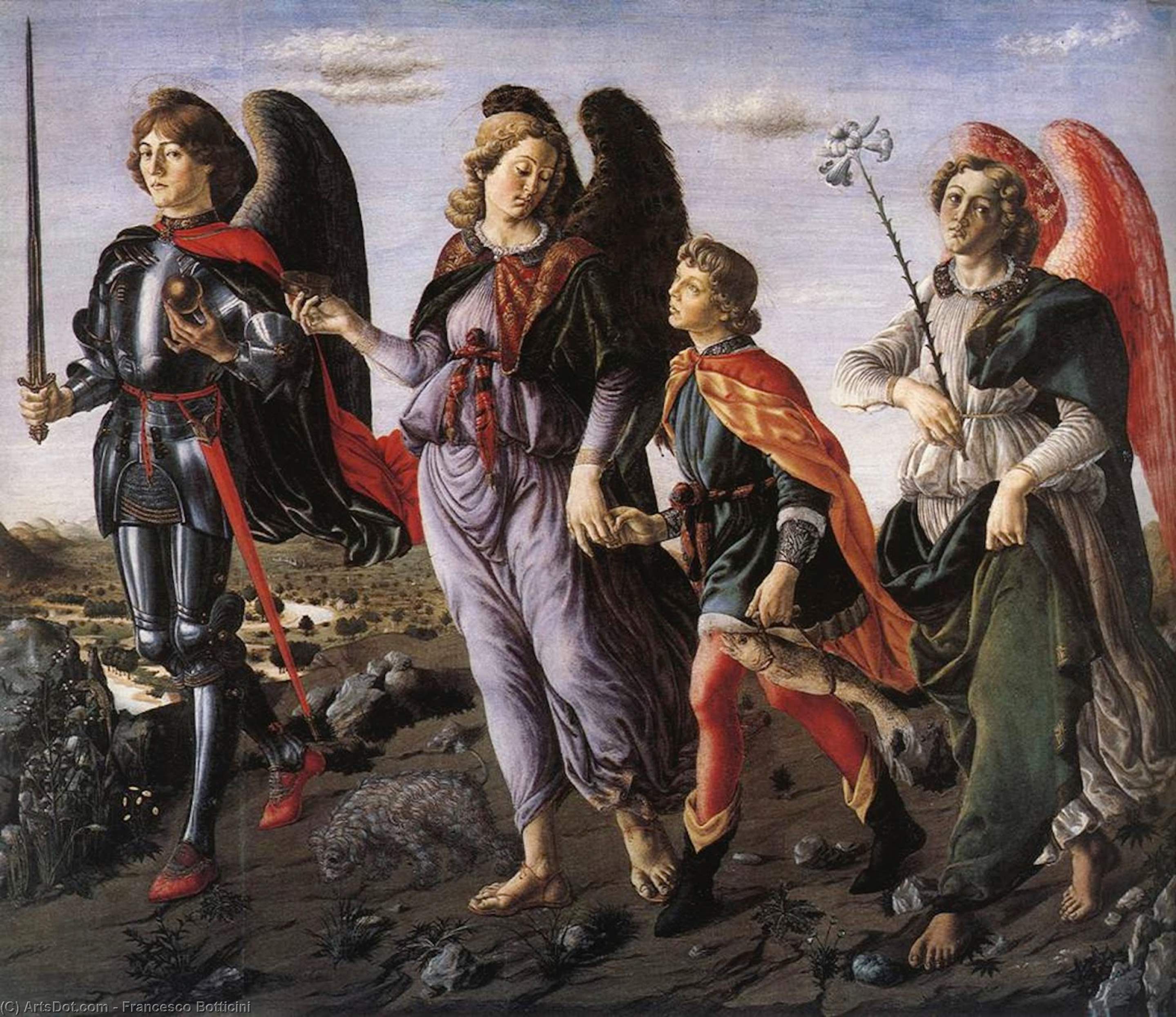
The Three Archangels with Tobias
 Oil On Canvas
- WallArt
- Renaissance
 1470
1470 135.0 x 154.0 cm
 Galleria degli Uffizi
 Read More
Hand Made Oil Reproduction
Hand-painted oil on canvas in your size and frame, made to order by our artists. ( Buy Print Buy Image)




P118B $10

P118H $10

P118W $10

P438Z $10

P508JH $12

P508YH $12

P805H $10

P805Z $10

P919BZ $10

P919G $10

P919XJ $10

P959ZH $10

P968JZ $12

W106C $8

W218G $10

W218JH $8

W218Y $10

W307PJ $10

W316G $10

W316PJ $8

W316Y $10

W398PJ $8

W4111J $10

W500HY $15

W500JH $15

W692G $12

W849H $8

W940BG $15

W953PJ $8




Pick from our preset sizes that match the artwork's original proportions.

You may enter your own dimensions to fit a specific frame or space. If your selected size does not match the original image's proportions, we will either crop the artwork or extend the painting with additional hand-painted elements. A digital mockup will be sent for your approval before production begins.
Please note that the on-screen preview does not reflect the actual cropping or extension. Only the mockup will accurately show the final composition.
While custom sizes are available, we recommend selecting a dimension from the predefined list to preserve the original proportions.
After order, ArtsDot.com team will email client for instructions and provide a mockup preview
Worldwide Delivery () in 3/4 weeks instead of standard 5 weeks. (16 August). No compromise on quality.

Free Worldwide Express Shipping

High-Quality Linen Canvas

Full Shipping Insurance

Customs Tax Refund Guarantee

True Color Matching Guarantee

60-Day Return Policy (Defects Only)

100% Money-Back Guarantee

Bulk Discount Offer
 Glass option is only available in size under 110 CM

The Three Archangels with Tobias
Reproduction Medium
Reproduction Size
-


Total Price
$ 388
Artwork Description
The Three Archangels with Young Tobias – A Renaissance Vision of Divine Grace
Francesco Botticini’s “Three Archangels with Young Tobias,” painted circa 1470, stands as a cornerstone of Florentine Renaissance art—a testament to the era's fascination with idealized beauty and profound spiritual contemplation. This oil painting, housed in the Galleria Sabauda of Turin, transcends mere representation; it embodies a carefully crafted narrative infused with symbolic resonance and executed with masterful technical skill. Examining its details unveils layers of artistic intention and offers a glimpse into the intellectual currents shaping fifteenth-century Italy.Subject Matter and Narrative Composition
The artwork depicts six angelic figures arranged against a backdrop of rugged Tuscan landscape—a deliberate choice mirroring the biblical tale of Tobias, recounted in Apocrypha. At the forefront stand three archangels: Michael, Raphael, and Gabriel, positioned with commanding presence and conveying unwavering authority. Their gestures are purposeful – Michael’s outstretched hand signifies divine protection, Raphael offers guidance, while Gabriel holds aloft a lily symbolizing purity and grace. Dominating the scene is Tobias himself, a young boy embodying innocence and vulnerability, representing humanity's reliance on divine intervention. The arrangement guides the viewer’s eye upward towards the celestial realm, establishing a visual hierarchy that underscores the narrative’s central theme: God’s benevolent guardianship over humankind.Style and Artistic Influences – Embracing Classical Idealism
Botticini’s style firmly anchors itself within the traditions of Italian Renaissance art—specifically influenced by artists like Piero della Francesca and Andrea Mantegna. The painting adheres to classical ideals of proportion and beauty, mirroring the humanist ethos prevalent during the period. Anatomical accuracy is evident in the depiction of the angelic figures' musculature and drapery, reflecting a renewed interest in observation and scientific inquiry. Botticini skillfully employs perspective—though relatively shallow—to create depth within the landscape and enhance the sense of spatial realism. The overall aesthetic leans towards serenity and solemnity, mirroring the spiritual fervor characteristic of Florentine religious art at the time.Technique – Layers of Color and Texture
Botticini’s technique demonstrates a mastery of oil painting—a medium favored by Renaissance artists for its ability to achieve luminous colors and subtle tonal gradations. The artist meticulously builds up layers of paint, utilizing glazing techniques to fuse translucent washes over underlying pigments—resulting in rich textures and captivating visual effects. Careful blending ensures smooth transitions between hues, creating an atmosphere of ethereal beauty and conveying a sense of palpable depth. Examination reveals evidence of meticulous preparation – priming the canvas with gesso and applying multiple coats of paint to achieve optimal luminosity and tonal harmony. The materials employed—primarily oil paints on canvas—speak to Botticini’s dedication to achieving artistic excellence.Symbolism and Spiritual Significance
Beyond its visual splendor, “Three Archangels with Young Tobias” resonates with profound symbolic meaning. The lily held by Gabriel symbolizes purity and divine grace – a motif frequently utilized in Renaissance iconography to represent Christ's immaculate conception. The sword wielded by Michael embodies divine justice and protection—a reminder of God’s unwavering vigilance over humanity. The entire composition serves as an allegory for the Christian faith, portraying angels as messengers of God’s benevolent providence and highlighting the importance of spiritual devotion. Botticini’s artwork encapsulates the humanist preoccupation with moral virtue and underscores the belief that beauty and truth are inseparable expressions of divine wisdom.Concluding Reflection – An Enduring Legacy
Francesco Botticini's “Three Archangels with Young Tobias” remains a captivating exemplar of Renaissance artistic achievement—a painting whose enduring appeal stems from its harmonious blend of visual splendor, narrative complexity, and spiritual contemplation. Its meticulous technique, informed by classical ideals and imbued with symbolic resonance, continues to inspire admiration and scholarly inquiry centuries after its creation. This masterpiece exemplifies the Florentine Renaissance’s commitment to elevating art as a vehicle for conveying moral truths and celebrating God's grace—a legacy that persists in reproductions and interpretations today.Related Artworks

Artist Biography
Francesco Botticini: A Florentine Master Rediscovered
Francesco di Giovanni Botticini (c. 1446 – January 16, 1498) stands as a testament to the quiet brilliance of early Renaissance painting—a figure whose impact on Florentine art history has only recently been fully appreciated thanks to meticulous scholarship and the painstaking reconstruction of his oeuvre. While overshadowed by contemporaries like Leonardo da Vinci and Michelangelo during his lifetime, Botticini’s output represents a substantial contribution to the artistic landscape of his era, characterized by masterful technique and profound spiritual contemplation.Early Life and Artistic Training
Born in Florence around 1446—precise dates remain elusive—Botticini descended from a family with established artistic traditions. His father, Giovanni di Domenico di Piero, was himself a painter, fostering an environment conducive to artistic pursuits. Crucially, Botticini’s formative years coincided with the ascendancy of Neri di Bicci, arguably Florence's most influential workshop master at the time. Recognizing his talent early on, Bicci apprenticed Botticini in 1459, securing him a position within a vibrant hub of artistic innovation. This association proved invaluable, exposing Botticini to the stylistic precepts and collaborative spirit that defined Bicci’s studio—a crucible for shaping the sensibilities of future masters. Though his tenure was brief, lasting only nine months before he departed Bicci's workshop in 1460, Botticini’s time under Bicci instilled a foundational understanding of fresco painting and humanist artistic ideals. Following his departure from Bicci’s workshop, Botticini embarked on a period of intensive study within the atelier of Andrea del Verrocchio—a legendary sculptor and painter who served as mentor to Leonardo da Vinci among others. This immersion in Verrocchio's workshop provided Botticini with unparalleled exposure to sculptural techniques alongside painting, broadening his artistic horizons and solidifying his mastery of illusionistic perspective. The collaborative atmosphere fostered by Verrocchio undoubtedly influenced Botticini’s stylistic choices, contributing to the distinctive visual language that characterizes his paintings.Botticini’s Artistic Style and Notable Works
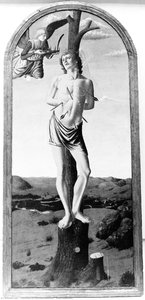
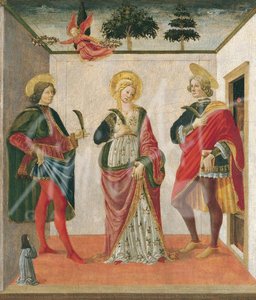
Botticini's artistic style is immediately recognizable for its luminous color palette—particularly its use of ultramarine pigment—and its meticulous attention to detail. He excelled in portraying religious subjects with a serene grace and psychological depth, prioritizing emotional resonance over dramatic gesture. His paintings frequently depict scenes from the Gospels and biblical narratives, imbued with symbolic significance and conveying profound spiritual contemplation. Among Botticini’s most celebrated achievements are undoubtedly ‘Assumption of the Virgin,’ housed in Siena Cathedral—a monumental altarpiece showcasing Botticini's unparalleled skill in fresco painting and his masterful manipulation of color and light—and ‘Sacrament Tabernacle,’ a breathtaking depiction of Christ’s ascension, demonstrating Botticini’s mastery of spatial illusionism. Furthermore, he produced iconic works such as 'Saint Cecilia Between Saint Valerian and Saint Tiburtius with a Donor' and 'Saint Sebastian,' each reflecting the humanist ideals prevalent in Florentine art during his time.Legacy and Historical Significance
Francesco Botticini’s contribution to Renaissance art history extends beyond his individual masterpieces. He represents a crucial link between Giotto’s expressive frescoes and the stylistic innovations of Leonardo da Vinci and Michelangelo—a conduit for transmitting humanist artistic principles across generations. Although initially underestimated by scholars, recent research has dramatically expanded our understanding of Botticini's prolific output—revealing a considerable number of paintings previously attributed to other artists. This rediscovery underscores Botticini’s significance as a “minor master,” whose understated elegance and profound spiritual sensitivity nonetheless resonate powerfully with audiences today. His enduring legacy resides not merely in his stunning visual achievements but also in his role as a pivotal figure shaping the artistic trajectory of Florence during its golden age—a testament to the transformative power of quiet dedication and unwavering artistic vision.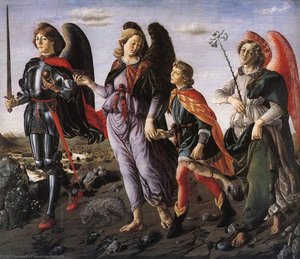
francesco di giovanni botticini
1446 - 1498
Quick Facts
- Artistic Movement Or Style: Early Renaissance
- Artists Who Influenced This Artist:
- Neri di Bicci
- Andrea del Verrocchio
- Date Of Death: 1498
- Full Name: Francesco di Giovanni Botticini
- Nationality: Italian
- Notable Artworks:
- Assumption of the Virgin
- Sacrament Tabernacle
- Saint Sebastian
- Saint Cecilia Between Saint Valerian and Saint Tiburtius with a Donor
- Place Of Birth: Florence, Italy
Related Articles

The Enduring Legacy of Oil on Canvas: Technique, History & Aesthetic Impact
Explore the rich history & techniques of oil painting – from Renaissance masters to Impressionism. Discover pigments, layering methods, and why this timeless medium endures. Expert insights for artists & art enthusiasts.

Oil on Canvas: A Historical & Technical Exploration of a Timeless Artistic Medium
Explore the rich history & enduring techniques of oil painting on canvas. Discover the science behind its longevity, conservation practices, and contemporary relevance. Expert insights for art enthusiasts.

The Enduring Legacy of Oil on Canvas: Technique, History & Contemporary Practice
Explore the rich history & enduring techniques of oil painting on canvas. Discover the science behind its longevity, conservation practices, and contemporary relevance. Expert insights for art enthusiasts.
Oil on Canvas Masters: 10 Paintings That Redefined Art History |
Journey through art history with our guide to 10 legendary oil on canvas masterpieces! Explore iconic works by Van Gogh, Monet & Rembrandt. Find museum-quality reproductions and elevate your home decor at . Discover all masterpieces online.

The Enduring Power of Painting: A Historical & Contemporary Exploration of Form and Emotion
Explore the rich history & enduring techniques of oil painting with ArtsDot. Discover masterpieces, learn about art collecting, and find authentic handmade reproductions crafted by skilled artists.