 Preview
 Send
Send Share
Share
 Details

 Download
 Similars
 X-Ray
X-Ray Diaporama
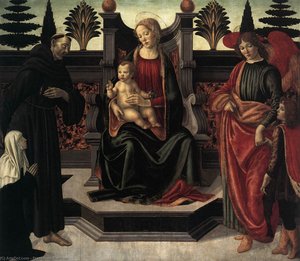
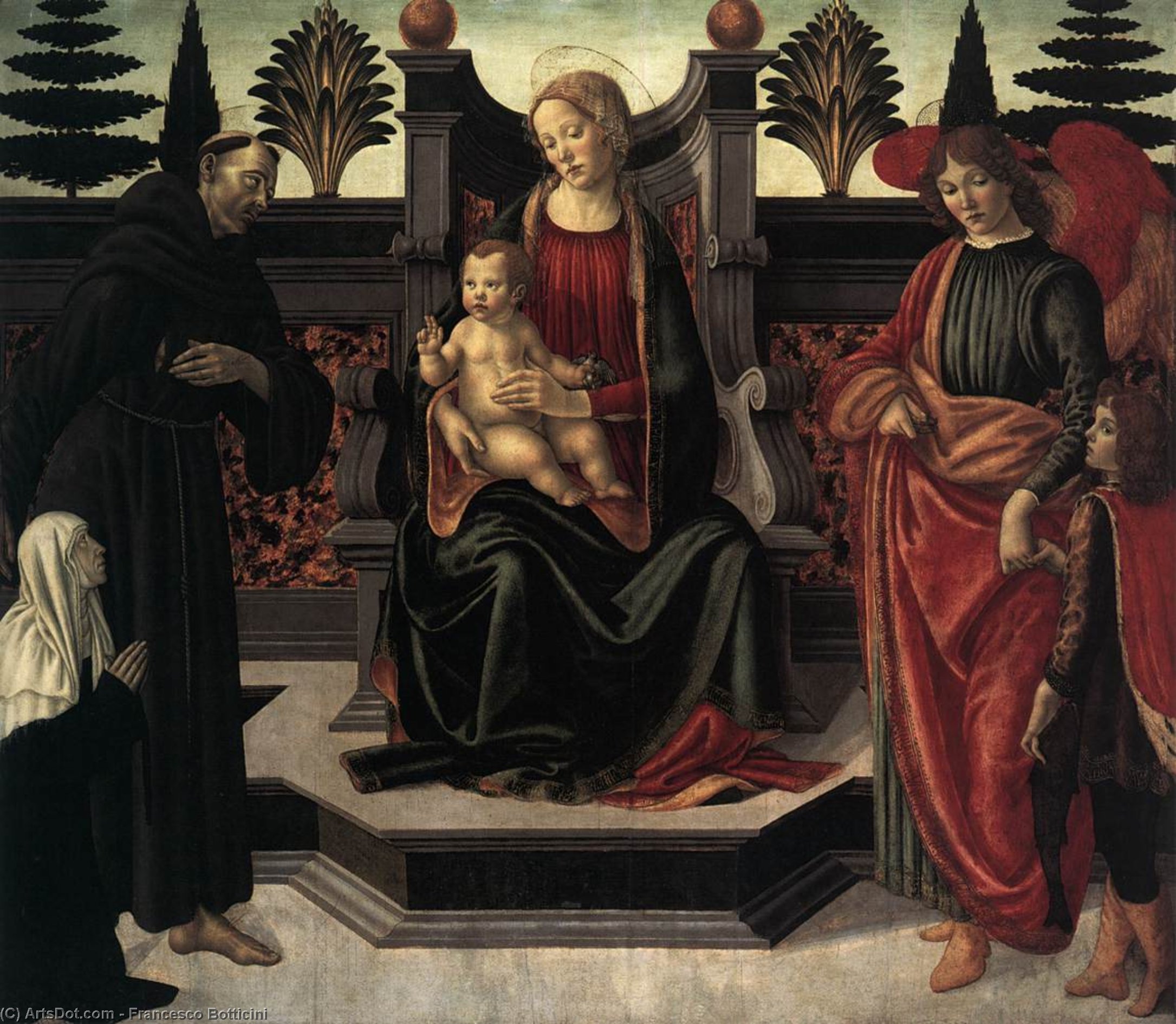
Virgin and Child Enthroned
 Renaissance
 1495
1495- Renaissance
 149.0 x 170.0 cm
 National Gallery of Scotland
 Read More
Hand Made Oil Reproduction
Hand-painted oil on canvas in your size and frame, made to order by our artists. ( Buy Print Buy Image)




P118B $10

P118H $10

P118W $10

P438Z $10

P508JH $12

P508YH $12

P805H $10

P805Z $10

P919BZ $10

P919G $10

P919XJ $10

P959ZH $10

P968JZ $12

W106C $8

W218G $10

W218JH $8

W218Y $10

W307PJ $10

W316G $10

W316PJ $8

W316Y $10

W398PJ $8

W4111J $10

W500HY $15

W500JH $15

W692G $12

W849H $8

W940BG $15

W953PJ $8




Pick from our preset sizes that match the artwork's original proportions.

You may enter your own dimensions to fit a specific frame or space. If your selected size does not match the original image's proportions, we will either crop the artwork or extend the painting with additional hand-painted elements. A digital mockup will be sent for your approval before production begins.
Please note that the on-screen preview does not reflect the actual cropping or extension. Only the mockup will accurately show the final composition.
While custom sizes are available, we recommend selecting a dimension from the predefined list to preserve the original proportions.
After order, ArtsDot.com team will email client for instructions and provide a mockup preview
Worldwide Delivery () in 3/4 weeks instead of standard 5 weeks. (17 August). No compromise on quality.

Free Worldwide Express Shipping

High-Quality Linen Canvas

Full Shipping Insurance

Customs Tax Refund Guarantee

True Color Matching Guarantee

60-Day Return Policy (Defects Only)

100% Money-Back Guarantee

Bulk Discount Offer
 Glass option is only available in size under 110 CM

Virgin and Child Enthroned
Reproduction Medium
Reproduction Size
-


Total Price
$ 263
Artwork Description
A Vision of Divine Serenity
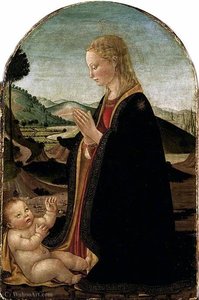
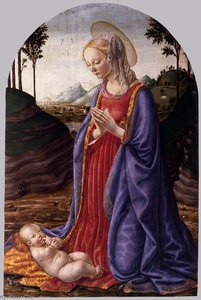
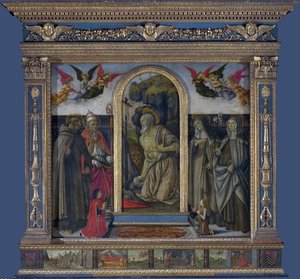
In the quietude of the late Quattrocento, Francesco di Giovanni Botticini captured a moment of profound celestial intimacy in his masterpiece, Virgin and Child Enthroned. This evocative work invites the viewer into a sacred space where the boundaries between the earthly and the divine begin to blur. At its heart, the painting presents the Virgin Mary, seated with a regal yet tender grace upon an ornate throne, cradling the infant Jesus. The composition is not merely a portrait of religious figures but a carefully orchestrated tableau of devotion. Surrounded by attendants who stand in silent reverence, the scene is anchored by a sense of stillness that transcends time, offering a window into the spiritual aspirations of 15th-century Florence.
The artistry of Botticini shines through his masterful command of light and form, characteristic of the Florentine Renaissance. The way the light falls upon the Virgin’s robes and the soft features of the Christ child suggests a divine radiance emanating from within the scene itself. His technique employs a delicate balance of line and color, where the subtle transitions in skin tones and the intricate textures of the surrounding drapery create a palpable sense of depth. This meticulous attention to detail serves to ground the miraculous event in a tangible reality, making the holy figures feel present and accessible to the faithful observer.
Symbolism and the Renaissance Landscape
Beyond the central figures, Botticini weaves a rich tapestry of symbolism that speaks to the era's preoccupation with nature as a reflection of God's handiwork. The inclusion of potted plants in the background is far from incidental; they serve as symbols of life, growth, and the flourishing of faith. As the eye wanders from the central throne toward the periphery, the outdoor setting provides a breath of fresh air, suggesting that the presence of the divine is not confined to cathedral walls but permeates the very landscape of our world. The arrangement of the figures—one standing to the left, another behind, and a third to the right—creates a triangular stability that guides the viewer's gaze in a continuous loop of contemplation, reinforcing the themes of unity and eternal protection.
For the discerning collector or interior designer, this painting offers more than just historical significance; it provides an emotional anchor for any space. The palette, though rooted in the traditions of 1495, possesses a timeless elegance that complements both classical and contemporary settings. Whether placed in a sunlit gallery or a sophisticated study, the Virgin and Child Enthroned radiates a sense of peace and tranquility. It is a piece that does not merely decorate a room but transforms its atmosphere, inviting a moment of reflection and a deep appreciation for the enduring beauty of Renaissance humanism.
Related Artworks
Artist Biography
Francesco Botticini: A Florentine Master Rediscovered
Francesco di Giovanni Botticini (c. 1446 – January 16, 1498) stands as a testament to the quiet brilliance of early Renaissance painting—a figure whose impact on Florentine art history has only recently been fully appreciated thanks to meticulous scholarship and the painstaking reconstruction of his oeuvre. While overshadowed by contemporaries like Leonardo da Vinci and Michelangelo during his lifetime, Botticini’s output represents a substantial contribution to the artistic landscape of his era, characterized by masterful technique and profound spiritual contemplation.Early Life and Artistic Training
Born in Florence around 1446—precise dates remain elusive—Botticini descended from a family with established artistic traditions. His father, Giovanni di Domenico di Piero, was himself a painter, fostering an environment conducive to artistic pursuits. Crucially, Botticini’s formative years coincided with the ascendancy of Neri di Bicci, arguably Florence's most influential workshop master at the time. Recognizing his talent early on, Bicci apprenticed Botticini in 1459, securing him a position within a vibrant hub of artistic innovation. This association proved invaluable, exposing Botticini to the stylistic precepts and collaborative spirit that defined Bicci’s studio—a crucible for shaping the sensibilities of future masters. Though his tenure was brief, lasting only nine months before he departed Bicci's workshop in 1460, Botticini’s time under Bicci instilled a foundational understanding of fresco painting and humanist artistic ideals. Following his departure from Bicci’s workshop, Botticini embarked on a period of intensive study within the atelier of Andrea del Verrocchio—a legendary sculptor and painter who served as mentor to Leonardo da Vinci among others. This immersion in Verrocchio's workshop provided Botticini with unparalleled exposure to sculptural techniques alongside painting, broadening his artistic horizons and solidifying his mastery of illusionistic perspective. The collaborative atmosphere fostered by Verrocchio undoubtedly influenced Botticini’s stylistic choices, contributing to the distinctive visual language that characterizes his paintings.Botticini’s Artistic Style and Notable Works
Botticini's artistic style is immediately recognizable for its luminous color palette—particularly its use of ultramarine pigment—and its meticulous attention to detail. He excelled in portraying religious subjects with a serene grace and psychological depth, prioritizing emotional resonance over dramatic gesture. His paintings frequently depict scenes from the Gospels and biblical narratives, imbued with symbolic significance and conveying profound spiritual contemplation. Among Botticini’s most celebrated achievements are undoubtedly ‘Assumption of the Virgin,’ housed in Siena Cathedral—a monumental altarpiece showcasing Botticini's unparalleled skill in fresco painting and his masterful manipulation of color and light—and ‘Sacrament Tabernacle,’ a breathtaking depiction of Christ’s ascension, demonstrating Botticini’s mastery of spatial illusionism. Furthermore, he produced iconic works such as 'Saint Cecilia Between Saint Valerian and Saint Tiburtius with a Donor' and 'Saint Sebastian,' each reflecting the humanist ideals prevalent in Florentine art during his time.Legacy and Historical Significance
Francesco Botticini’s contribution to Renaissance art history extends beyond his individual masterpieces. He represents a crucial link between Giotto’s expressive frescoes and the stylistic innovations of Leonardo da Vinci and Michelangelo—a conduit for transmitting humanist artistic principles across generations. Although initially underestimated by scholars, recent research has dramatically expanded our understanding of Botticini's prolific output—revealing a considerable number of paintings previously attributed to other artists. This rediscovery underscores Botticini’s significance as a “minor master,” whose understated elegance and profound spiritual sensitivity nonetheless resonate powerfully with audiences today. His enduring legacy resides not merely in his stunning visual achievements but also in his role as a pivotal figure shaping the artistic trajectory of Florence during its golden age—a testament to the transformative power of quiet dedication and unwavering artistic vision.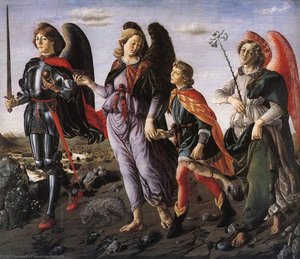
francesco di giovanni botticini
1446 - 1498
Quick Facts
- Artistic Movement Or Style: Early Renaissance
- Artists Who Influenced This Artist:
- Neri di Bicci
- Andrea del Verrocchio
- Date Of Death: 1498
- Full Name: Francesco di Giovanni Botticini
- Nationality: Italian
- Notable Artworks:
- Assumption of the Virgin
- Sacrament Tabernacle
- Saint Sebastian
- Saint Cecilia Between Saint Valerian and Saint Tiburtius with a Donor
- Place Of Birth: Florence, Italy
Related Articles
Raphael's Masterpieces: 25 Iconic Paintings & Renaissance Art for Your Home
Explore 25 breathtaking Raphael paintings! Journey through the Italian Renaissance with masterpieces like 'School of Athens' & iconic Madonnas. Find museum-quality art reproductions and elevate your home decor on ArtsDot.com.
Botticelli's Masterpieces: Explore 25 Iconic Renaissance Paintings | ArtsDot
Journey through Botticelli's world with 25 iconic Renaissance paintings. Explore 'Birth of Venus,' 'Primavera,' and more—stories, techniques & timeless beauty. Find museum-quality art reproductions for your home at ArtsDot.com.
Uffizi's 25 Masterpieces: Renaissance Art & Timeless Decor Inspiration
Journey through the Uffizi Gallery's 25 most iconic Renaissance artworks! Explore Botticelli, Leonardo da Vinci & Michelangelo’s masterpieces. Find museum-quality art reproductions and curated decor ideas to bring timeless Italian beauty into your home. Discover all masterpieces on ArtsDot.com
Sacred Narratives Embodied: A Comprehensive Exploration of Religious Iconography in Art History
Explore the rich history of religious iconography in art! Discover symbolism, movements & masterpieces from Byzantine to Renaissance periods. Expert insights for collectors and enthusiasts at ArtsDot.
Fra Angelico's Masterpieces: 25 Renaissance Paintings for Your Home | ArtsDot
Explore 25 breathtaking masterpieces by Fra Angelico, a Renaissance master. Discover the stories behind his iconic frescoes, Annunciations & religious art. Find museum-quality reproductions and elevate your home decor with ArtsDot.com.