 Preview
 Send
Send Share
Share
 Details

 Download
 Similars
 X-Ray
X-Ray Diaporama
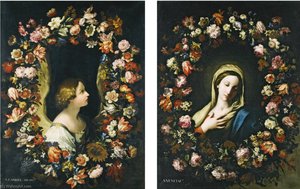
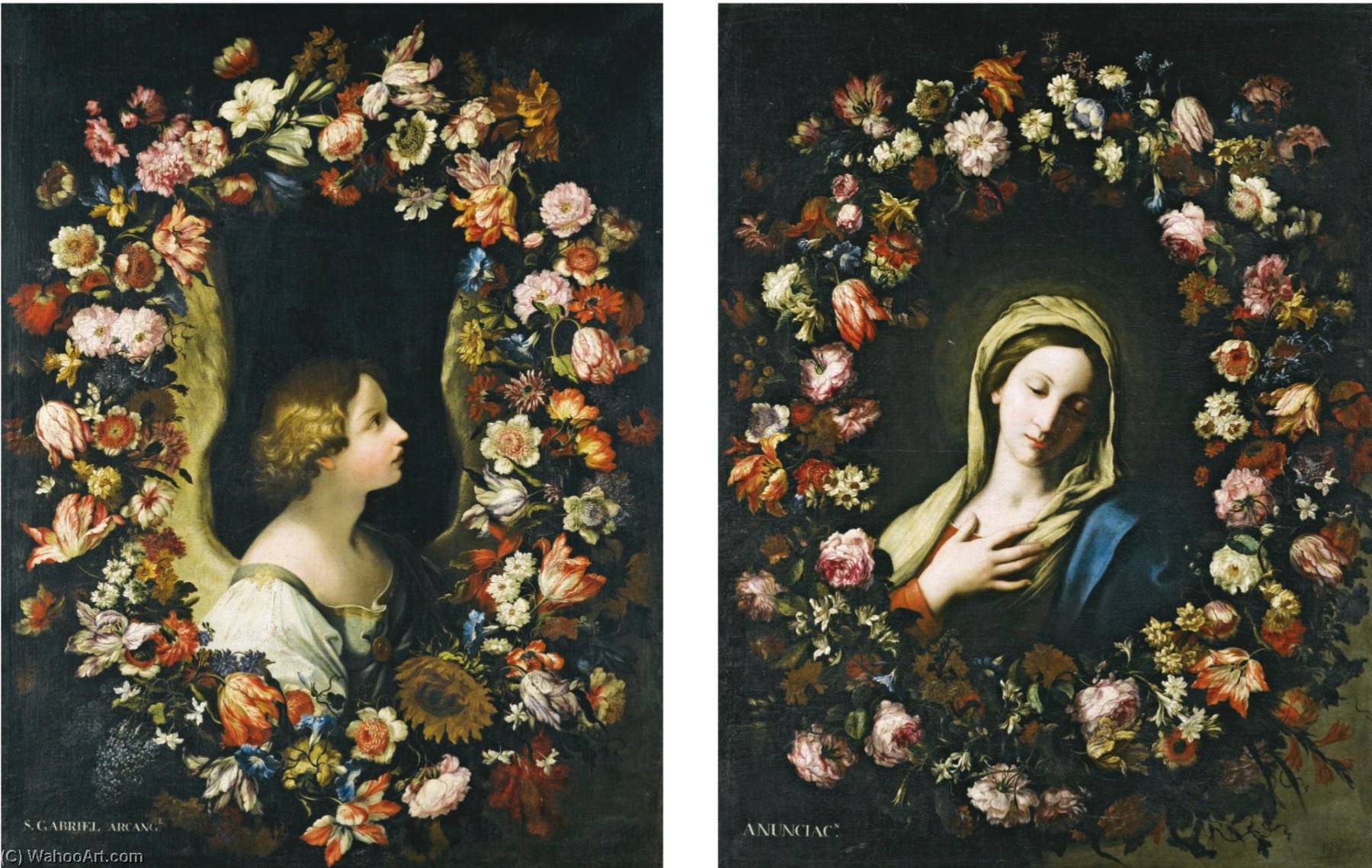
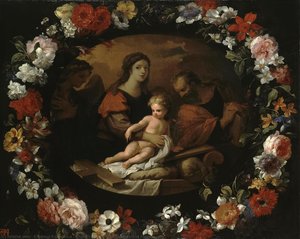
A flower garland surrounding the Angel Gabriel A flower garland surrounding the Virgin Annunciate
 Baroque
 129.0 x 96.0 cm
 Read More
Giclée / Art Print
Museum-quality giclée or canvas print with fast production and flexible finish options. ( Buy Hand Made Painting Buy Image)




































Pick from our preset sizes that match the artwork's original proportions.

You may enter your own dimensions to fit a specific frame or space. If your selected size does not match the original image's proportions, we will either crop the artwork or extend the image with a mirrored or solid-fill edge. A digital mockup will be sent for your approval before production begins.
Please note that the on-screen preview does not reflect the actual cropping or extension. Only the mockup will accurately show the final composition.
While custom sizes are available, we recommend selecting a dimension from the predefined list to preserve the original proportions.
Worldwide Delivery () in 2 weeks instead of standard 4/5 weeks. (2 September)

Free Worldwide Express Shipping

High-Quality Linen Canvas

Full Shipping Insurance

Customs Tax Refund Guarantee

True Color Matching Guarantee

60-Day Return Policy (Defects Only)

100% Money-Back Guarantee

Bulk Discount Offer
 Glass option is only available in size under 110 CM

A flower garland surrounding the Angel Gabriel A flower garland surrounding the Virgin Annunciate
Giclée / Art Print
Reproduction Size
-


Total Price
$ 63
Related Artworks

Artist Biography
A Quiet Mastery: The Life and Art of Francesco Mantovano
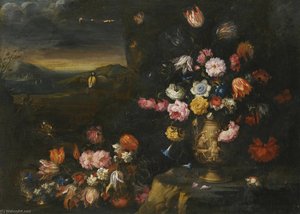
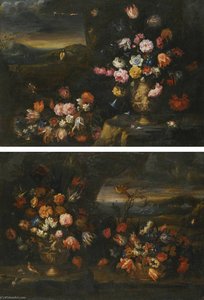
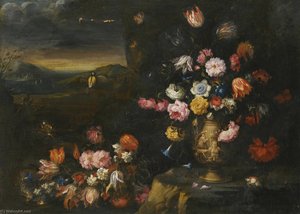
Francesco Mantovano, a name resonating with the subtle beauty of 17th-century Italian still life and landscape painting, occupies a unique position in art history. While not as widely celebrated as some of his contemporaries, his work embodies a delicate realism and evocative power that continues to captivate viewers centuries later. Born in Mantova – a city steeped in artistic tradition, having been home to the Gonzaga court and artists like Andrea Mantegna – Francesco’s early life remains shrouded in mystery. Records are scarce, leaving much of his biography open to scholarly speculation. However, it is reasonable to assume he received training within the local workshops, absorbing the techniques and aesthetic sensibilities prevalent in the region. The influence of Flemish masters, whose paintings were highly sought after by Italian nobility, is clearly visible in his meticulous attention to detail and masterful rendering of textures.The Blossoming of a Still Life Specialist
Mantovano’s artistic focus quickly gravitated towards still life – a genre experiencing a surge in popularity during the Baroque period. He didn't merely replicate objects; he imbued them with symbolic meaning, transforming humble arrangements of flowers, fruit, and everyday items into meditations on mortality, beauty, and the transience of earthly pleasures. His compositions are characterized by a harmonious balance of light and shadow, achieved through careful observation and skillful use of oil paint. Flowers, in particular, became his signature subject matter. He depicted them not as isolated specimens but as vibrant participants in a larger narrative, often arranged in elaborate vases or spilling onto draped surfaces. The inclusion of insects – butterflies, moths, and flies – adds another layer of complexity, subtly reminding the viewer of decay and the inevitable passage of time. His coastal landscapes, though less numerous than his still lifes, share the same meticulous attention to detail and atmospheric quality. These scenes often feature tranquil harbors, rocky shores, and distant views, evoking a sense of peace and solitude.Influences and Artistic Development
The artistic landscape of Mantova undoubtedly shaped Francesco’s development. The legacy of Renaissance masters like Mantegna, with their emphasis on perspective and anatomical accuracy, provided a foundation for his technical skills. However, it was the arrival of Flemish still life painters – artists such as Jan Brueghel the Elder and Peter Paul Rubens – that had the most profound impact on his style. He absorbed their techniques for rendering textures, creating realistic depictions of light and shadow, and composing complex arrangements. Mantovano, however, wasn’t simply a copyist; he infused these influences with his own unique sensibility, developing a softer palette and a more lyrical approach to composition. His work also reflects the influence of Italian artists like Caravaggio, particularly in his dramatic use of chiaroscuro – the contrast between light and dark. This technique adds depth and emotional intensity to his paintings, drawing the viewer’s eye to specific details and creating a sense of realism.Major Achievements and Lasting Legacy
While Francesco Mantovano didn't achieve widespread fame during his lifetime, his work was highly regarded by collectors and connoisseurs in Mantova and beyond. His paintings adorned the homes of wealthy patrons, serving as symbols of status and refinement.- His ability to capture the delicate beauty of flowers and the tranquility of coastal landscapes established him as a leading still life painter of his time.
- The symbolic depth of his compositions – exploring themes of mortality, beauty, and the transience of earthly pleasures – adds another layer of complexity to his work.
- His meticulous attention to detail and skillful use of oil paint demonstrate his mastery of technique.
Related Articles
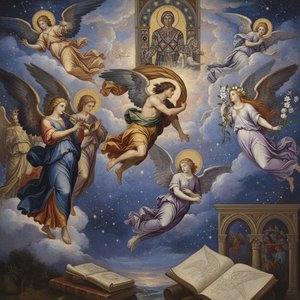
Celestial Messengers: Angels in Painting – A Historical & Artistic Exploration
Explore the captivating history of angels in painting! Discover symbolism, iconic Renaissance & Byzantine masterpieces, and renowned artists. Expert insights for art lovers & collectors at ArtsDot.
Celestial Messengers: A Comprehensive Exploration of Angelic Representation in Art History
Explore the captivating history of angels in art! Discover symbolism, iconic Renaissance masterpieces & renowned artists. Expert insights for art lovers & collectors at ArtsDot.

Baroque Drama: Bringing Opulence & Emotion into Contemporary Interiors
Explore the opulent world of Baroque interior design! Discover key elements, modern applications & how to bring dramatic elegance into your home with 's authentic reproductions.

The Enduring Power of Painting: A Historical & Contemporary Exploration of Form and Emotion
Explore the rich history & enduring techniques of oil painting with ArtsDot. Discover masterpieces, learn about art collecting, and find authentic handmade reproductions crafted by skilled artists.

The Dramatic Flourish: Exploring the Baroque Movement's Enduring Legacy in Art History
Explore the dramatic world of Baroque art! Discover iconic artists like Caravaggio & Rubens, defining techniques, and its lasting impact on art history. Expert insights for collectors & enthusiasts at ArtsDot.