 Preview
 Send
Send Share
Share
 Details

 Download
 Similars
 X-Ray
X-Ray Diaporama
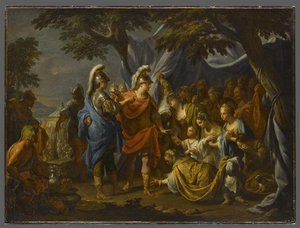
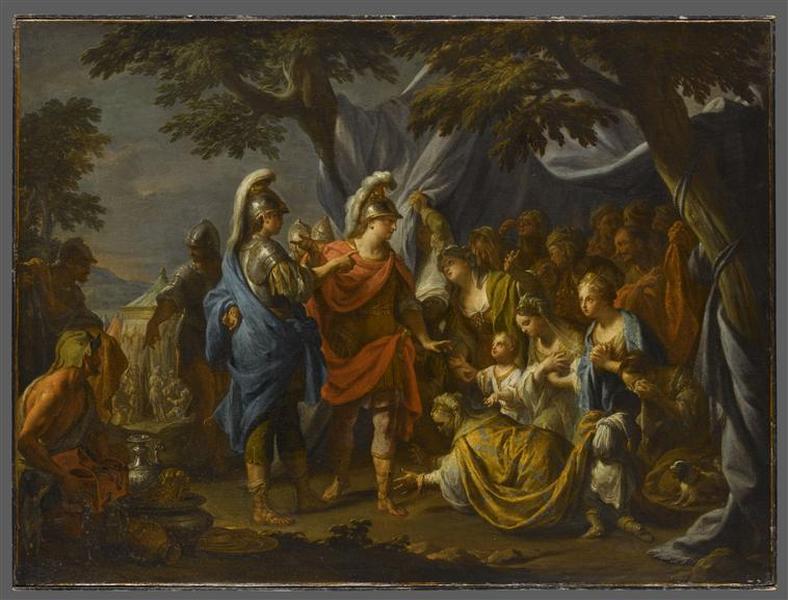
La famille de Darius aux pieds d'Alexandre


 Read More
Hand Made Oil Reproduction
Hand-painted oil on canvas in your size and frame, made to order by our artists. ( Buy Print Buy Image)




P118B $10

P118H $10

P118W $10

P438Z $10

P508JH $12

P508YH $12

P805H $10

P805Z $10

P919BZ $10

P919G $10

P919XJ $10

P959ZH $10

P968JZ $12

W106C $8

W218G $10

W218JH $8

W218Y $10

W307PJ $10

W316G $10

W316PJ $8

W316Y $10

W398PJ $8

W4111J $10

W500HY $15

W500JH $15

W692G $12

W849H $8

W940BG $15

W953PJ $8




Pick from our preset sizes that match the artwork's original proportions.

You may enter your own dimensions to fit a specific frame or space. If your selected size does not match the original image's proportions, we will either crop the artwork or extend the painting with additional hand-painted elements. A digital mockup will be sent for your approval before production begins.
Please note that the on-screen preview does not reflect the actual cropping or extension. Only the mockup will accurately show the final composition.
While custom sizes are available, we recommend selecting a dimension from the predefined list to preserve the original proportions.
After order, ArtsDot.com team will email client for instructions and provide a mockup preview
Worldwide Delivery () in 3/4 weeks instead of standard 5 weeks. (16 August). No compromise on quality.

Free Worldwide Express Shipping

High-Quality Linen Canvas

Full Shipping Insurance

Customs Tax Refund Guarantee

True Color Matching Guarantee

60-Day Return Policy (Defects Only)

100% Money-Back Guarantee

Bulk Discount Offer
 Glass option is only available in size under 110 CM

La famille de Darius aux pieds d'Alexandre
Reproduction Medium
Reproduction Size
-


Total Price
$ 488
Artwork Description
Francesco Trevisani’s “La Famille de Darius aux Pieds d'Alexandre” – A Baroque Tableau of Power and Humility
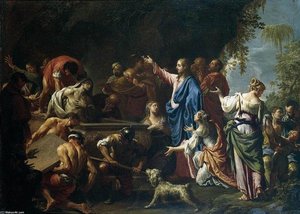
“La Famille de Darius aux Pieds d’Alexandre,” painted circa 1737 by the Venetian artist Francesco Trevisani, is more than just a historical depiction; it’s a meticulously crafted tableau brimming with narrative tension, symbolic weight, and an exquisite mastery of Baroque technique. Housed within the esteemed collections of the Louvre Museum in Paris, this monumental work offers a captivating glimpse into a pivotal moment – the encounter between Alexander the Great and Darius III, King of Persia – while simultaneously exploring themes of power, submission, and familial bonds. Trevisani’s ability to distill such complex ideas into a single, visually arresting composition is a testament to his artistic skill and profound understanding of human psychology.
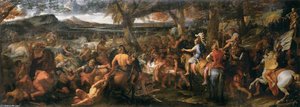
The scene unfolds with dramatic immediacy. Alexander, youthful and radiating authority, stands at the center, gesturing towards Darius, who kneels before him alongside his wife and children. The figures are arranged in a carefully orchestrated manner, creating a sense of dynamic equilibrium. Trevisani skillfully employs linear perspective to draw the viewer’s eye into the scene, with the receding background landscape and the diminishing scale of the figures reinforcing the narrative's progression. The composition isn’t merely static; it pulsates with an underlying current of interaction – the exchange between conqueror and conquered, a silent dialogue conveyed through posture and gesture.
Trevisani’s technical prowess is immediately apparent in the painting’s rich color palette and masterful use of light. The dominant tones are earthy browns, ochres, and muted greens, punctuated by flashes of crimson, blue, and gold – colors that evoke both the grandeur of imperial power and the solemnity of a historical event. He expertly utilizes chiaroscuro, employing strong contrasts between light and shadow to sculpt forms, define textures, and heighten the drama of the scene. Notice, for example, how the light catches the armor of Alexander and his companions, emphasizing their military strength, while casting subtle shadows on Darius’s face, suggesting a mixture of humility and apprehension. The artist's layering technique is also remarkable; visible brushstrokes contribute to the painting’s texture and depth, creating a sense of tangible reality.
A Symphony of Color and Texture: Trevisani’s Technique
Trevisani’s approach to color was deeply informed by his Venetian training, yet he skillfully adapted it to suit the demands of Roman Baroque painting. He employed a sophisticated range of pigments – from the vibrant red lake used for Alexander's garments to the delicate blues and greens that define the landscape – each carefully chosen to achieve maximum visual impact. The use of glazes, thin layers of translucent paint applied over dried underlayers, allowed him to build up color gradually, creating luminous effects and adding depth to the painting’s surface. The meticulous attention to detail is evident in the rendering of fabrics, armor, and facial features, showcasing Trevisani's remarkable ability to capture both the physical likeness and the psychological state of his subjects.
Furthermore, Trevisani’s understanding of texture was equally impressive. He skillfully simulated the rough surface of stone, the smooth sheen of metal, and the soft folds of clothing through a combination of brushwork and glazing techniques. The artist's use of impasto – applying paint thickly to create raised surfaces – is particularly noticeable in the rendering of drapery, adding a tactile quality to the scene. This attention to detail elevates the painting beyond mere representation, transforming it into a richly immersive experience for the viewer.
Symbolism and Narrative Depth: Unpacking the Scene
Beyond its historical subject matter, “La Famille de Darius aux Pieds d’Alexandre” is laden with symbolic meaning. The kneeling posture of Darius and his family represents submission to Alexander's power – a potent visual metaphor for conquest and domination. However, the painting doesn’t simply depict a scene of subjugation; it also subtly suggests a degree of respect and even admiration on the part of Alexander. His gesture, inviting Darius to approach, hints at a willingness to acknowledge the dignity of the defeated king and his family.
The presence of the children within the scene adds another layer of complexity. They represent the future – the potential for continuity and renewal in the wake of conquest. Their vulnerability underscores the human cost of war and highlights the importance of preserving familial bonds even amidst political upheaval. The painting, therefore, transcends a simple historical record; it becomes a meditation on power, humility, and the enduring values of family and legacy.
A Baroque Masterpiece for the Modern Eye
“La Famille de Darius aux Pieds d’Alexandre” remains a captivating work of art centuries after its creation. Trevisani's masterful composition, rich color palette, and nuanced understanding of human psychology continue to resonate with viewers today. Reproductions of this iconic painting offer an opportunity to appreciate the artistry of a true Baroque master and to contemplate the timeless themes that lie at the heart of this remarkable historical scene. Whether displayed in a grand salon or a smaller domestic space, this painting’s dramatic intensity and symbolic depth will undoubtedly captivate and inspire.
Related Artworks

Artist Biography
Nicolas de Largillière: The Master of Gentle Portraits
Born in Paris in 1656 and passing away in the same city in 1746, Nicolas de Largillière stands as a pivotal figure in the history of French portraiture. While often overshadowed by the titans of his era – Rigaud and Le Brun – Largillière carved out a unique niche, specializing in exquisitely rendered portraits of the wealthy middle class, capturing their dignity, grace, and quiet moments with an unparalleled sensitivity. His career spanned over six decades, marked by consistent success and a prodigious output, solidifying his reputation as one of the most accomplished artists of his time.
Largillière’s early artistic development unfolded in Antwerp, where he received his initial training under Antoine Goubeau. This period proved crucial, exposing him to the vibrant artistic scene of the Low Countries and fostering a deep appreciation for classical ideals. Following this formative experience, he journeyed to England, working briefly with Lely and Verrio – encounters that undoubtedly influenced his technique and understanding of portraiture. It was in Paris, however, that Largillière truly established himself as a leading artist, quickly gaining recognition for his refined style and ability to capture the essence of his subjects.
Unlike many artists of his time who sought fame through grand historical or religious paintings, Largillière focused almost exclusively on portraiture. This dedication allowed him to hone his skills with remarkable precision. His portraits are characterized by a meticulous attention to detail – from the texture of fabrics and the sheen of jewelry to the subtle expressions in his subjects’ eyes. He employed a technique known as ‘clárriage,’ a method of applying paint thinly over a ground prepared with chalk, creating a luminous surface that enhanced the richness and depth of color. His use of light and shadow was particularly masterful, subtly defining forms and conveying a sense of atmosphere within each portrait.
Largillière’s subjects were predominantly members of the Parisian bourgeoisie – merchants, lawyers, doctors, and other prominent figures of the day. He depicted them in intimate settings, often engaged in everyday activities such as reading, playing musical instruments, or conversing with family members. These scenes weren't merely representations of wealth; they revealed a deep understanding of human nature and an ability to capture the quiet dignity and understated elegance of his subjects’ lives. His portraits were not simply likenesses; they were windows into the souls of those he depicted.
Despite his considerable success, Largillière's career was marked by a remarkable longevity. He remained active as an artist well into his eighties, serving as director of the Académie Royale de Paris from 1734 to 1756. This extended tenure speaks volumes about his standing within the artistic community and his continued relevance as a teacher and mentor. His output was astonishing – contemporary sources estimate that he painted approximately 1,500 portraits throughout his career. Beyond portraiture, Largillière also produced religious works, still lifes, and landscapes, though these genres never achieved the same level of recognition as his celebrated portraits.
Influences and Artistic Style
Largillière’s artistic style was a synthesis of influences from various sources. His early training in Antwerp exposed him to the Baroque traditions of the Low Countries, characterized by dramatic lighting and dynamic compositions. His time in England introduced him to the refined portraiture of Lely, known for his elegant brushwork and ability to capture the beauty of his subjects. However, Largillière’s style evolved beyond these influences, developing a distinctly French sensibility marked by restraint, subtlety, and an emphasis on psychological realism.
He was particularly influenced by Caravaggio's use of chiaroscuro – the dramatic contrast between light and shadow – which he skillfully employed to create depth and atmosphere in his portraits. Largillière’s compositions were typically balanced and harmonious, reflecting a classical aesthetic rooted in Renaissance ideals. He avoided excessive ornamentation or theatrical gestures, preferring to focus on capturing the quiet dignity and inner character of his subjects.
Major Works
While Largillière produced an enormous number of portraits, several stand out as particularly noteworthy examples of his skill and artistry. Among his most celebrated works are *Portrait of a Young Woman*, *Portrait of Monsieur de la Rochefoucauld*, and *Portrait of Madame de Montesqui*. These paintings exemplify his mastery of technique, his ability to capture the nuances of human expression, and his profound understanding of his subjects’ personalities.
*Portrait of a Young Woman* (circa 1685) is particularly admired for its delicate rendering of the subject's features and the subtle play of light on her skin. *Portrait of Monsieur de la Rochefoucauld* (1703) showcases his ability to convey both intellectual depth and aristocratic bearing. And *Portrait of Madame de Montesqui* (1724), a later work, demonstrates his continued skill and refinement throughout his long career.
Historical Significance
Nicolas de Largillière’s contribution to the history of French portraiture is significant for several reasons. He was one of the last artists to maintain a high level of artistic excellence into old age, demonstrating remarkable dedication and perseverance. His portraits offer invaluable insights into the lives and customs of the Parisian bourgeoisie during the 17th and 18th centuries. Furthermore, Largillière’s emphasis on psychological realism – his ability to capture the inner character of his subjects – set a new standard for portraiture in France.
Often described as the “French Van Dyck,” Largillière's work continues to be admired for its elegance, subtlety, and profound humanity. He remains a testament to the enduring power of portraiture as a means of capturing beauty, dignity, and the essence of human experience. His legacy endures through his remarkable body of work, which provides a captivating glimpse into a bygone era.
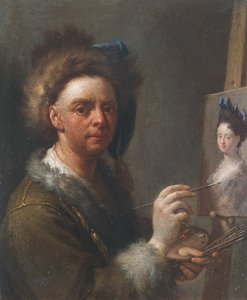
francesco trevisani
1656 - 1746 , Italy
Quick Facts
- Artistic Movement Or Style: Portraiture
- Artists Or Movements Influenced By This Artist: ['Van Dyck']
- Artists Who Influenced This Artist:
- Lely
- Verrio
- Date Of Birth: 1656
- Date Of Death: 1746
- Full Name: Nicolas de Largillière
- Nationality: French
- Notable Artworks:
- The Old Man and the Young Woman
- The Scholar at his Books
- Place Of Birth: Paris, France
Related Articles

The Dramatic Flourish: Exploring the Baroque Movement's Enduring Legacy in Art History
Explore the dramatic world of Baroque art! Discover iconic artists like Caravaggio & Rubens, defining techniques, and its lasting impact on art history. Expert insights for collectors & enthusiasts at ArtsDot.

Baroque Drama: Bringing Opulence & Emotion into Contemporary Interiors
Explore the opulent world of Baroque interior design! Discover key elements, modern applications & how to bring dramatic elegance into your home with 's authentic reproductions.

Baroque Masterpieces: 10 Paintings That Defined an Era |
Journey through the drama & grandeur of Baroque art! Explore 10 masterpieces by Caravaggio, Rembrandt, Rubens & more. Discover stunning oil paintings, rich colors & timeless stories. Find museum-quality reproductions at .

The Visceral Stage: Exploring Dramatic Narratives & Emotional Intensity in Baroque Art
Explore the dramatic world of Baroque art! Discover iconic masters like Caravaggio & Rembrandt, their techniques, and the movement's lasting impact. Expert insights for collectors & enthusiasts at ArtsDot.

Theatricality & Triumph: Baroque Drama in Painting & Sculpture
Explore the dramatic world of Baroque art! Discover its history, defining characteristics, & lasting influence on painting & sculpture. Expert insights into Caravaggio, Zurbarán, and Bernini – plus high-quality reproductions at ArtsDot.