 Preview
 Send
Send Share
Share
 Details

 Download
 Similars
 X-Ray
X-Ray Diaporama
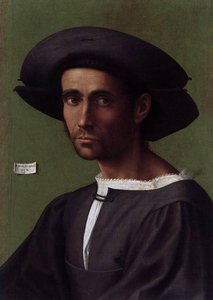
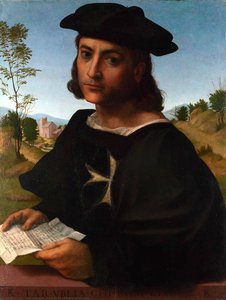
Portrait of a Man
 Acrylic On Canvas
- WallArt
- Renaissance
 1522
1522 76.0 x 61.0 cm
 Staatliche Museen
 Read More
Hand Made Oil Reproduction
Hand-painted oil on canvas in your size and frame, made to order by our artists. ( Buy Print Buy Image)




P118B $10

P118H $10

P118W $10

P438Z $10

P508JH $12

P508YH $12

P805H $10

P805Z $10

P919BZ $10

P919G $10

P919XJ $10

P959ZH $10

P968JZ $12

W106C $8

W218G $10

W218JH $8

W218Y $10

W307PJ $10

W316G $10

W316PJ $8

W316Y $10

W398PJ $8

W4111J $10

W500HY $15

W500JH $15

W692G $12

W849H $8

W940BG $15

W953PJ $8




Pick from our preset sizes that match the artwork's original proportions.

You may enter your own dimensions to fit a specific frame or space. If your selected size does not match the original image's proportions, we will either crop the artwork or extend the painting with additional hand-painted elements. A digital mockup will be sent for your approval before production begins.
Please note that the on-screen preview does not reflect the actual cropping or extension. Only the mockup will accurately show the final composition.
While custom sizes are available, we recommend selecting a dimension from the predefined list to preserve the original proportions.
After order, ArtsDot.com team will email client for instructions and provide a mockup preview
Worldwide Delivery () in 3/4 weeks instead of standard 5 weeks. (20 August). No compromise on quality.

Free Worldwide Express Shipping

High-Quality Linen Canvas

Full Shipping Insurance

Customs Tax Refund Guarantee

True Color Matching Guarantee

60-Day Return Policy (Defects Only)

100% Money-Back Guarantee

Bulk Discount Offer
 Glass option is only available in size under 110 CM

Portrait of a Man
Reproduction Medium
Reproduction Size
-


Total Price
$ 263
Artwork Description
Portrait of a Man – A Renaissance Study in Quiet Intensity
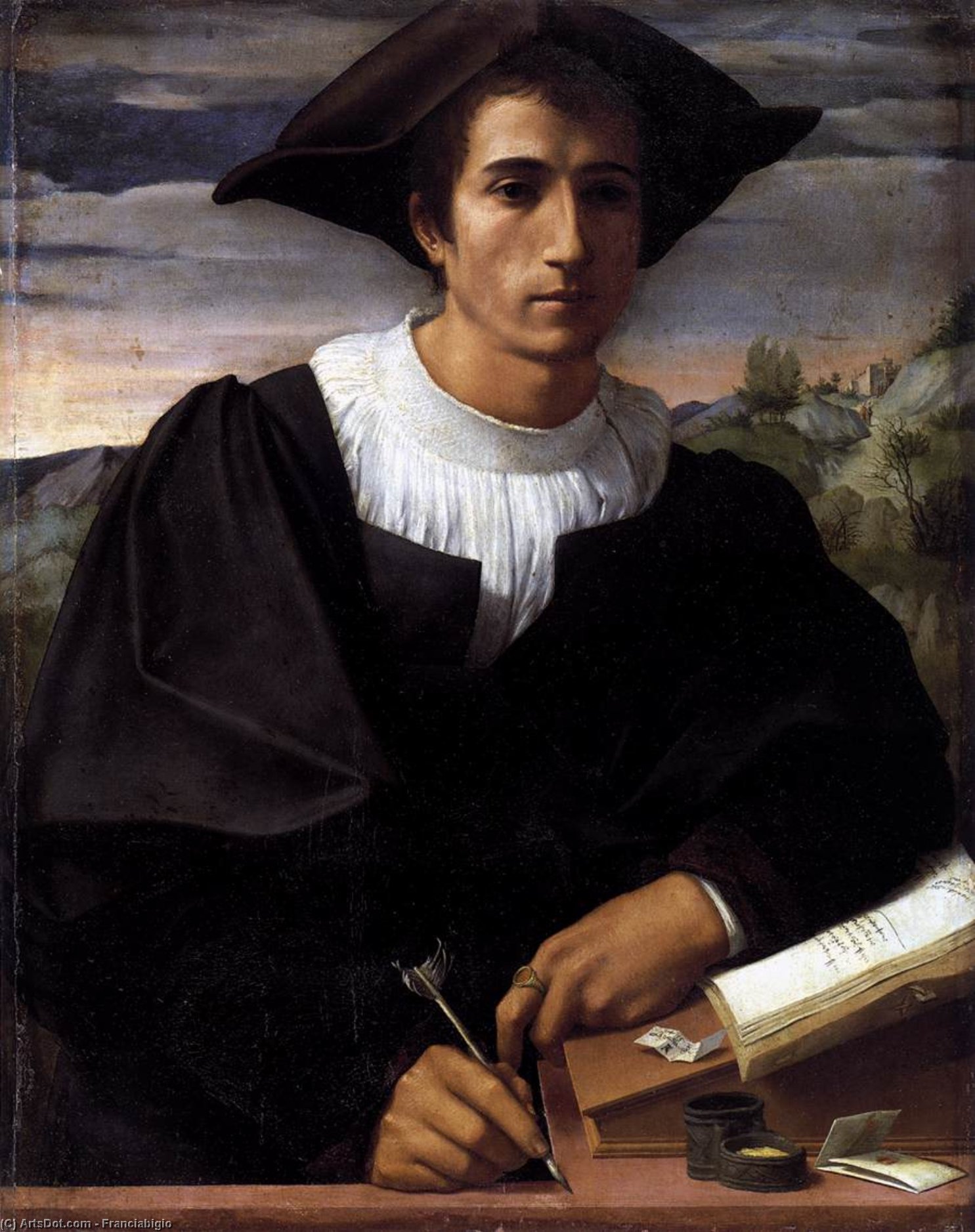
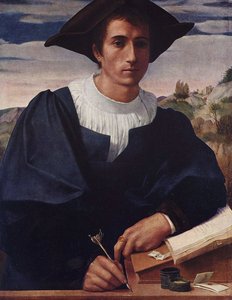
The “Portrait of a Man,” attributed to Franciabigio circa 1522, is not merely a likeness; it’s a carefully constructed meditation on intellect, age, and the subtle complexities of human experience. Painted during the High Renaissance in Florence, this oil-on-wood panel offers a rare glimpse into the world of a scholar or gentleman – a figure both familiar and profoundly enigmatic. The painting immediately draws the eye with its masterful use of sfumato, a technique perfected by Leonardo da Vinci and embraced here to create soft transitions between light and shadow, lending an almost dreamlike quality to the subject’s features.
The man himself is presented in three-quarter profile, his gaze direct and unwavering. He wears a dark purple and brown robe, trimmed with fur – a subtle indication of wealth and status, yet tempered by the simplicity of the attire. A prominent headdress, richly embroidered and elaborately structured, dominates the upper portion of the composition, adding to the sense of intellectual authority. Note the meticulous detail in its folds and textures; Franciabigio’s skill lies not just in capturing a likeness but in rendering the very essence of material – the weight of fabric, the gleam of metal, the warmth of human skin.
A Window into Florentine Artistic Circles
Franciabigio's workshop was a vibrant hub of artistic exchange. He initially trained under Alberto Altramonte and later collaborated closely with Andrea del Sarto, absorbing influences from both masters while forging his own distinctive style. The “Portrait of a Man” reflects this dynamic environment – it’s imbued with the influence of the Renaissance ideals of humanism and realism, yet retains a distinctly Florentine sensibility. The painting's creation coincided with a period of intense artistic activity in Florence, marked by patronage from powerful families like the Medici, who commissioned works to glorify their lineage and legacy.
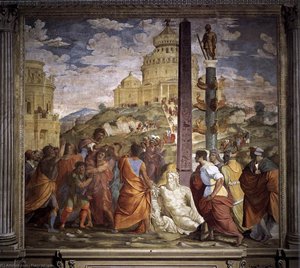
Interestingly, this portrait is part of a larger project undertaken at the Villa Medici di Poggio a Caiano – a complex of rooms decorated with frescoes depicting episodes from Roman history. The commission for this fresco was intended to celebrate the Medici family’s connection to the glories of antiquity, and Franciabigio's "Portrait of a Man" served as a poignant counterpoint, offering a more intimate and introspective reflection on human nature.
Symbolism and Emotional Resonance
Beyond its technical brilliance, the portrait is rich in symbolic meaning. The man’s furrowed brow and slightly pursed lips suggest contemplation and perhaps even melancholy – a quiet awareness of mortality and the burdens of intellect. The open book resting on a table to his right hints at scholarly pursuits, while the quill pen suggests an ongoing engagement with ideas. The lighting, carefully orchestrated by Franciabigio, casts dramatic shadows across the subject’s face, intensifying the sense of introspection and adding depth to the portrait.
The painting's enduring appeal lies in its ability to evoke a profound emotional response. It is not a celebratory depiction of power or wealth; rather, it offers a quiet moment of connection with a solitary figure grappling with the complexities of human existence. The directness of his gaze invites us to contemplate our own place in the world and to appreciate the beauty of a thoughtful, introspective soul.
A Timeless Masterpiece – Reproduction Options
ArtsDot is proud to offer high-quality reproductions of Franciabigio’s “Portrait of a Man,” meticulously crafted to capture the essence of this remarkable Renaissance painting. Our hand-painted reproductions utilize archival-grade materials and techniques, ensuring that each artwork retains the rich colors, subtle textures, and nuanced details of the original. Whether you are seeking an authentic work of art for your home or office, or simply a beautiful reminder of the enduring power of human creativity, our “Portrait of a Man” reproduction is a timeless addition to any collection.
Explore the available sizes and framing options on our website today – and bring this captivating Renaissance portrait into your world.
Related Artworks
Artist Biography
The Florentine Soul: The Life and Legacy of Franciabigio
In the golden era of the High Renaissance, amidst the bustling workshops and marble-clad streets of Florence, there lived a painter whose brush captured the very essence of human emotion. Franciabigio, born Francesco di Cristofano around 1482, was not merely a chronicler of faces but a master of the psychological landscape. While history often shines its brightest light upon the monumental figures of his era, Franciabigio carved out a singular niche through his ability to infuse portraiture with a palpable, breathing naturalism. His life, though relatively brief—concluding in January 1525—was a testament to the vibrant, evolving spirit of Florentine art, bridging the gap between the balanced perfection of the High Renaissance and the expressive tension of the emerging Mannerist style.
The foundations of his artistry were laid under the guidance of Alberto Altramonte, but it was his transition into the studio of Andrea del Sarto around 1506 that would fundamentally reshape his creative trajectory. This period of apprenticeship and subsequent partnership became a cornerstone of his career. Together, they established a workshop in the Piazza del Gradino, creating a crucible of innovation that drew in other luminaries such as Rosso Fiorentino and Pontormo. Within this collaborative atmosphere, Franciabigio refined a technique that favored the delicate nuances of light and shadow, learning to navigate the complex interplay of color and form that defined the Sarto school.
Mastery of Fresco and the Art of Expression
While many of his contemporaries sought glory through massive religious altarpieces or grand mythological cycles, Franciabigio found his greatest triumph in the demanding medium of fresco. He possessed a rare dexterity for this technique, earning a reputation that often surpassed his peers in the execution of wall paintings. His skill lay not just in the technical application of pigment to wet plaster, but in his ability to use the expansive surface of a fresco to convey profound narrative depth. In the Cloister of Santa Maria della Annunziata, his contributions alongside Andrea del Sarto demonstrate a sophisticated command over composition and atmosphere.
However, it is perhaps in his portraiture that his true genius resides. Moving away from the rigid, idealized archetypes common in earlier decades, Franciabigio embraced a more intimate approach to the human subject. His portraits are characterized by:
- Psychological Depth: A profound ability to capture the internal life and subtle moods of his sitters.
- Naturalistic Detail: An unwavering commitment to representing the textures of skin, fabric, and light with lifelike precision.
- Proto-Mannerist Elements: A subtle introduction of elongated forms and more complex, emotive gestures that hinted at the stylistic shifts of the coming decades.
A Lasting Impression on the Renaissance Canvas
The historical significance of Franciabigio lies in his role as a vital link in the evolution of Italian painting. He stood at the crossroads of tradition and innovation, absorbing the classical harmony of Raphael while pushing toward the more experimental, emotive boundaries that would define the later 16th century. Though some of his most ambitious projects were overshadowed by the monumental achievements of his mentor, del Sarto, his individual voice remains unmistakable to the discerning eye.
To study a work by Franciabigio is to witness a moment of transition captured in pigment. He reminds us that the history of art is not only written by those who commanded the largest stages, but by those who possessed the sensitivity to capture the quiet, flickering truths of the human condition. His legacy survives in every nuanced expression and every masterful stroke of fresco, serving as a poignant reminder of the enduring power of the Florentine Renaissance.
Franciabigio
1482 - 1525 , Italy
Quick Facts
- Artistic Movement Or Style: Renaissance
- Artists Or Movements Influenced By This Artist: ['Renaissance']
- Artists Who Influenced This Artist:
- Andrea del Sarto
- Raphael Sanzio
- Date Of Birth: Florence, Italy (1482)
- Date Of Death: January 24, 1525
- Full Name: Francesco Cristofano
- Nationality: Italian
- Notable Artworks:
- Portrait of a Man
- Head of the Madonna
- Angel
- St Job Altarpiece
- Marriage of the Virgin
- Last Supper
- Departure of John the Baptist
- Meeting of John the Baptiste
- Triumph of Cicero
- Vertumnus and Pomona
- Place Of Birth: Florence
Related Articles

Dark Masterpieces: 10 Iconic Paintings Dominated by Black Tones |
Explore 10 iconic paintings dominated by black tones, from Rembrandt’s chiaroscuro to Goya's dark expressions. Discover the stories behind these masterpieces & find museum-quality art reproductions for your home at .
Mars Black Masterpieces: 10 Iconic Paintings & Timeless Art Decor Ideas
Delve into the power of 'Mars Black' with 10 iconic paintings by masters like Rembrandt & Caravaggio. Explore dramatic chiaroscuro, gothic art, and timeless beauty. Find museum-quality reproductions & elevate your home decor on .
Ivory Black Masters: 10 Paintings That Define Dramatic Art |
Delve into the power of 'Ivory Black' with 10 iconic paintings by masters like Rembrandt & Caravaggio. Explore dramatic chiaroscuro, gothic moods & timeless art history. Find museum-quality reproductions and elevate your home decor at
Lamp Black & Masterpieces: 10 Paintings That Define Shadow & Light |
Delve into the captivating world of 'Lamp Black' tones with 10 iconic paintings by masters like Rembrandt & Caravaggio. Explore Baroque chiaroscuro, dramatic lighting & shadow in art history. Find museum-quality reproductions at
Mario Sironi: A Poetic of Modern Italian Identity Through Symbolism & Social Commentary
Explore the profound works of Mario Sironi, a key figure in Italian Modernism. Discover his evolution from Futurism to Metaphysical painting and his powerful social commentary. Learn about his legacy at ArtsDot.