 Preview
 Send
Send Share
Share
 Details

 Download
 Similars
 X-Ray
X-Ray Diaporama
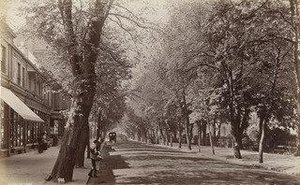
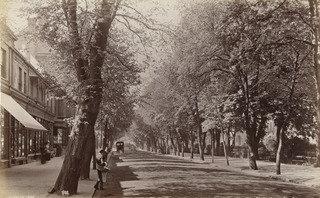
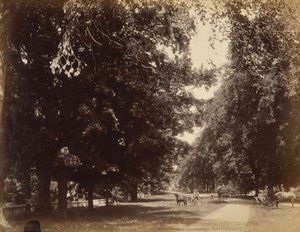
Chettenham, The Promenade (No. 659)


 Read More
Hand Made Oil Reproduction
Hand-painted oil on canvas in your size and frame, made to order by our artists. ( Buy Print Buy Image)




































Pick from our preset sizes that match the artwork's original proportions.

You may enter your own dimensions to fit a specific frame or space. If your selected size does not match the original image's proportions, we will either crop the artwork or extend the painting with additional hand-painted elements. A digital mockup will be sent for your approval before production begins.
Please note that the on-screen preview does not reflect the actual cropping or extension. Only the mockup will accurately show the final composition.
While custom sizes are available, we recommend selecting a dimension from the predefined list to preserve the original proportions.
After order, ArtsDot.com team will email client for instructions and provide a mockup preview
Worldwide Delivery () in 3/4 weeks instead of standard 5 weeks. (24 August). No compromise on quality.

Free Worldwide Express Shipping

High-Quality Linen Canvas

Full Shipping Insurance

Customs Tax Refund Guarantee

True Color Matching Guarantee

60-Day Return Policy (Defects Only)

100% Money-Back Guarantee

Bulk Discount Offer
 Glass option is only available in size under 110 CM

Chettenham, The Promenade (No. 659)
Reproduction Medium
Reproduction Size
-


Total Price
$ 263
Related Artworks
Artist Biography
The Visionary Lens of Francis Bedford
In the golden age of the Victorian era, when the boundaries between scientific discovery and artistic expression were beautifully blurred, Francis Bedford emerged as a pioneer who redefined how the world perceived the landscape. Born in London in 1815 to an influential family—descended from the 2nd Earl of Bedford—his life was steeped in the intellectual and aristocratic currents of his time. This privileged upbringing provided him with more than just social standing; it granted him access to a world of profound observation and scientific inquiry, nurtured during his early education at King’s Hall, Cambridge. Before he ever touched a camera, Bedford was a master of the line, working as an architectural draughtsman and lithographer. This foundational training in precision and perspective would become the very soul of his photographic work, allowing him to approach the lens not merely as a recording device, but as a brush capable of capturing the sublime.
Bedford’s ascent into the pantheon of great Victorian artists was marked by an extraordinary series of royal commissions that placed him at the heart of the British Empire's visual history. In 1854, Queen Victoria herself commissioned him to document the treasures within the royal collection, and later, he was tasked with capturing the beloved hometown of Prince Albert in Coburg, Germany. Perhaps his most legendary feat, however, was accompanying the future King Edward VII on a grand tour of Greece and the Middle East. This expedition resulted in some of the first photographic records of these ancient lands, bringing the distant, sun-drenched ruins of antiquity into the drawing rooms of England. Through his eyes, the monumental architecture of the past was rendered with a clarity that felt both immediate and eternal.
The Artistry of Depth and Light
What truly set Bedford apart from his contemporaries was his refusal to accept the photograph as a mere mechanical reproduction. He viewed the medium through the lens of a painter, often employing meticulous techniques to enhance the emotional resonance of his subjects. To achieve a sense of true atmospheric depth, he would frequently paint in clouds or use fine brushes and pencils to refine details that the wet collodion process might have softened. He even utilized tissue paper to manipulate shadows and light within his negatives, creating a chiaroscuro effect that echoed the classical traditions of landscape painting. This dedication to craftsmanship transformed his stereoscopic images—designed to be viewed through a stereoscope—into immersive, three-dimensional adventures that allowed viewers to feel as though they could step directly into the rugged Cornish coastlines or the serene English meadows.
His prolific output was staggering; between 1851 and 1894, he produced nearly 9,000 wet collodion negatives and albumen prints. This immense body of work serves as a visual archive of a changing world, capturing:
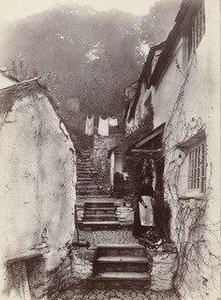
- The Rugged Landscapes of Britain: Iconic views such as "Clovelly, North Hill," which captured the dramatic textures of the Cornish coastline with unparalleled artistry.
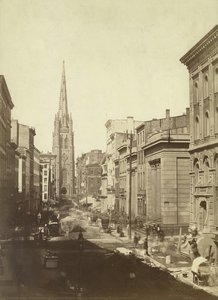
- Urban Victorian Life: Detailed street scenes like "Chettenham, The Promenade," which offered a window into the serene, sepia-toned elegance of 19th-century urbanity.
- The Grandeur of Antiquity: Evocative documentation of Greece and the Middle East, bridging the gap between the modern era and the ancient world.
A Lasting Legacy in Light
As the decades progressed, Bedford’s style underwent a fascinating evolution. While his early career was defined by an almost obsessive attention to detail and manual enhancement, the later years of his life saw him becoming a staunch advocate for simplicity and the raw honesty of the photographic medium. This transition mirrored the broader movement within photography itself, moving away from the heavy-handedness of the daguerreotype era toward a more naturalistic aesthetic. Despite these shifts in technique, his fundamental mission remained unchanged: to capture the sublime.
Francis Bedford’s historical significance cannot be overstated. As a founding member of the Royal Photographic Society in 1853, he helped establish photography as a legitimate and respected art form. He did not merely take pictures; he constructed visions. His ability to blend the precision of an architect with the soul of a romantic painter ensured that his work would endure long after the silver salts had faded. Today, his images remain vital touchstones for historians and art lovers alike, serving as a breathtaking window into the light, shadow, and spirit of the Victorian age.
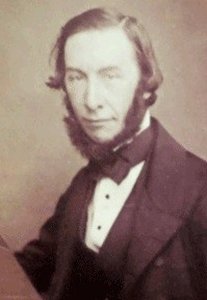
francis bedford
1815 - 1894
Quick Facts
- Artistic Movement Or Style: Victorian landscape photography
- Artists Or Movements Influenced By This Artist: ['Stereoscopy']
- Artists Who Influenced This Artist: ['William Henry Fox Talbot']
- Date Of Birth: 1815 London
- Date Of Death: 1894 London
- Full Name: Francis Bedford
- Nationality: British
- Notable Artworks: ['Clovelly, North Hill']
- Place Of Birth: England
Related Articles
Francis Bacon's Masterpieces: Exploring 25 Iconic Paintings | ArtsDot
Delve into the haunting world of Francis Bacon with ArtsDot. Explore 25 iconic paintings, from his visceral portraits to powerful triptychs. Discover the stories behind these masterpieces & find museum-quality art reproductions for your home. Explore the full collection online!
Documentary Photography's Defining Moments: 10 Masterpieces for Your Home |
Explore 10 defining documentary photography masterpieces – from Dorothea Lange to Robert Capa. Discover powerful stories, iconic images & timeless art for your home. Museum-quality prints at .
Beyond the Lens: Photography's Enduring Influence on Modern & Contemporary Art
Explore photography's pivotal role in shaping modern & contemporary art. Discover key movements, influential artists like Stieglitz, and expert collecting advice from ArtsDot.

Monochrome Visions: Exploring the Aesthetic & Historical Significance of Black & White Photography
Explore the rich history & artistic power of black and white photography. From early techniques to iconic masters like Ansel Adams, discover why monochrome continues to captivate art lovers today. Expert insights for collectors.
Witnessing History Through Lens & Light: Documentary Photography's Enduring Legacy
Explore the powerful history of documentary photography – from its origins to contemporary masters like Gordon Parks & W. Eugene Smith. Discover how this art form shapes our understanding of society and witness pivotal moments in time.