 Preview
 Send
Send Share
Share
 Details

 Download
 Similars
 X-Ray
X-Ray Diaporama
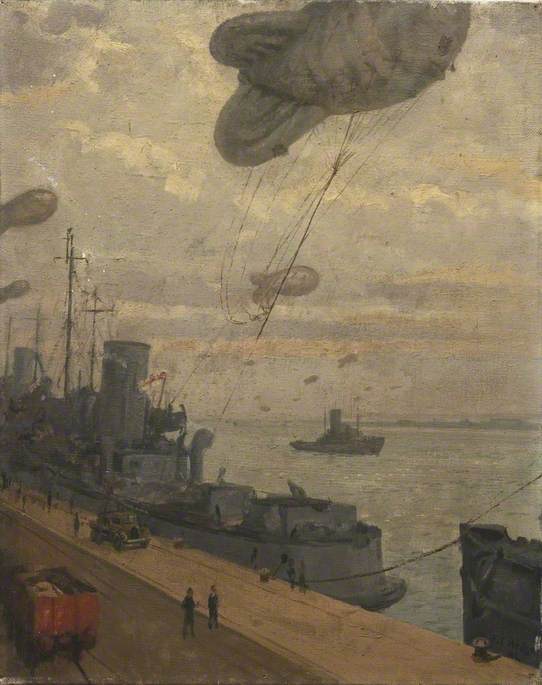
A Balloon Being Transferred to a Land Winch from a Barrage Balloon Vessel
 Impressionism
 1941
1941 51.0 x 41.0 cm
 Read More
Hand Made Oil Reproduction
Hand-painted oil on canvas in your size and frame, made to order by our artists. ( Buy Print Buy Image)




































Pick from our preset sizes that match the artwork's original proportions.

You may enter your own dimensions to fit a specific frame or space. If your selected size does not match the original image's proportions, we will either crop the artwork or extend the painting with additional hand-painted elements. A digital mockup will be sent for your approval before production begins.
Please note that the on-screen preview does not reflect the actual cropping or extension. Only the mockup will accurately show the final composition.
While custom sizes are available, we recommend selecting a dimension from the predefined list to preserve the original proportions.
After order, ArtsDot.com team will email client for instructions and provide a mockup preview
Worldwide Delivery () in 3/4 weeks instead of standard 5 weeks. (23 August). No compromise on quality.

Free Worldwide Express Shipping

High-Quality Linen Canvas

Full Shipping Insurance

Customs Tax Refund Guarantee

True Color Matching Guarantee

60-Day Return Policy (Defects Only)

100% Money-Back Guarantee

Bulk Discount Offer
 Glass option is only available in size under 110 CM

A Balloon Being Transferred to a Land Winch from a Barrage Balloon Vessel
Reproduction Medium
Reproduction Size
-


Total Price
$ 263
Related Artworks
![Legend Of St Francis - [02] - St Francis Giving His Mantle To A Poor Man — Giotto Di Bondone, Gothic](/media/artworks/images-thumb/1f/84/1f842a0319a02eaaa27d431c94a53fd1.jpg)
![Life Of Saint Francis - [01] - Stigmatization Of Saint Francis — Giotto Di Bondone, Early Renaissance](/media/artworks/images-thumb/fd/6a/fd6ae2a8f5e88e0ace6b86a21d020ded.jpg)
![Legend Of St Francis - [11] - St Francis Before The Sultan (trial By Fire) — Giotto Di Bondone, Proto-renaissance](/media/artworks/images-thumb/0d/32/0d328acfb6c90f7ef32707586e86044b.jpg)
![Life Of Saint Francis - [04] - Death And Ascension Of St Francis — Giotto Di Bondone, Italian Renaissance](/media/artworks/images-thumb/08/8b/088b102b13c1a379233690905590f156.jpg)
![Life Of Saint Francis - [07] - Vision Of The Ascension Of St Francis — Giotto Di Bondone, Gothic Revival](/media/artworks/images-thumb/71/2e/712ed3190eed1271478f0e69b3d0ec03.jpg)
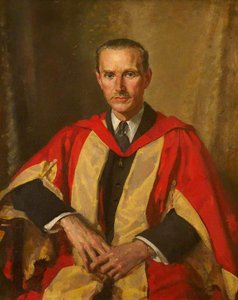
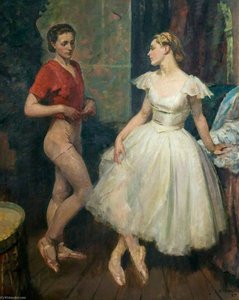
Artist Biography
The Soul of the Canvas: The Life and Legacy of Francis Edwin Hodge
To wander through the works of Francis Edwin Hodge is to embark on a journey through the shifting light of the early twentieth century, where the delicate grace of Impressionism meets the somber, unyielding reality of war. Born in December 1881 in the coastal beauty of Plymouth, Devon, Hodge developed an eye for the subtle nuances of the natural world from a young age. His artistic foundation was built upon a rigorous academic tradition, shaped by his studies at the prestigious Westminster School of Art and the Slade School of Fine Art. Under the mentorship of luminaries such as Augustus John, William Orpen, and Frank Brangwyn, Hodge learned to marry meticulous anatomical precision with an expressive, emotive brushwork that would become his signature.
His formative years were deeply colored by the burgeoning Impressionist movement. One can sense the lingering influence of masters like Claude Monet in Hodge’s landscapes, particularly those capturing the rugged, atmospheric Cornish coastlines. He possessed a rare ability to translate the fleeting qualities of light and mist onto canvas, creating scenes that felt less like static images and much more like captured breaths of air. This sensitivity to atmosphere allowed him to bridge the gap between the academic realism of his teachers and the luminous, sensory-driven approach of the French Impressionists.
Shadows of Conflict and the Human Spirit
The trajectory of Hodge’s life and art was irrevocably altered by the onset of the Great War. Enlisting in the Artists' Rifles and later serving as a captain in the Royal Field Artillery on the Western Front, Hodge was thrust into the heart of human devastation. Yet, even amidst the chaos of the trenches, his commitment to the canvas remained unbroken. This period of profound trauma infused his work with a new, psychological depth. He began to document not just the physical landscape of war, but the internal landscapes of those enduring it. Many of these evocative wartime paintings are now preserved by the Imperial War Museum, serving as haunting testaments to a generation lost.
This era of his life brought about a mastery of tonal gradation and texture that allowed him to convey the heavy, often melancholic weight of existence. Whether through a poignant portrait or a desolate battlefield scene, Hodge’s work from this period reflects a profound empathy for the human condition. His ability to find beauty within the wreckage—to capture the "echoes of war"—distinguishes him as an artist who did not merely observe history but felt its pulse.
A Legacy of Mastery and Distinction
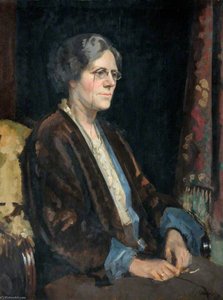
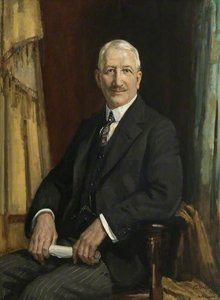
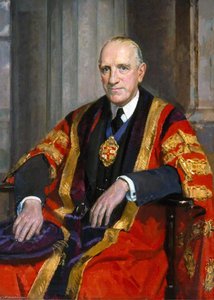
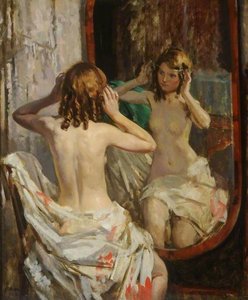
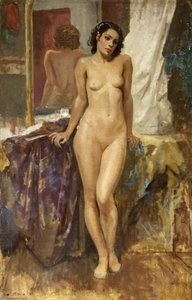
As his career progressed, Hodge’s versatility became his greatest strength. His repertoire expanded to include intimate portraits, such as the introspective Reverie, and graceful studies of movement like Preparation for the Ballet. These works showcase a different facet of his talent: a soft, romantic realism that celebrates the quiet, contemplative moments of life. His technical prowess earned him significant recognition within the British art establishment, marked by several prestigious appointments:
- 1915: Elected to the Royal Society of British Artists
- 1927: Elected member of the Royal Institute of Oil Painters
- 1929: Elected member of the Royal Society of Portrait Painters
- 1931: Elected member of the Royal Institute of Painters in Watercolours
Beyond his individual canvases, Hodge contributed to the public's aesthetic experience through decorative commissions, including notable murals for Bedford Hospital. His membership in the Chelsea Arts Club further cemented his place within the vibrant artistic community of London. When he passed away on February 6, 1949, and was laid to rest in Chelsea’s Brompton Cemetery, he left behind a body of work that remains a vital bridge between the classical traditions of the past and the modern, emotive sensibilities of the twentieth century. His paintings continue to invite viewers into a world where light, shadow, and memory intertwine.
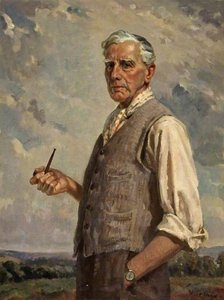
francis edwin hodge
1883 - 1949
Quick Facts
- Artistic Movement Or Style: WWI Landscape Painting
- Artists Or Movements Influenced By This Artist: ['Royal Society of British Artists']
- Artists Who Influenced This Artist:
- Augustus John
- William Orpen
- Frank Brangwyn
- Date Of Birth: December 1881
- Date Of Death: 6 February 1949
- Full Name: Francis Edwin Hodge
- Nationality: English
- Notable Artworks:
- A Morning Walk
- Ciss: A portrait
- Place Of Birth: Devon, England
Related Articles
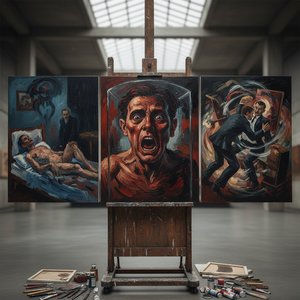
Francis Bacon's Masterpieces: Exploring 25 Iconic Paintings | ArtsDot
Delve into the haunting world of Francis Bacon with ArtsDot. Explore 25 iconic paintings, from his visceral portraits to powerful triptychs. Discover the stories behind these masterpieces & find museum-quality art reproductions for your home. Explore the full collection online!

The Enduring Legacy of Oil on Canvas: Technique, History & Aesthetic Impact
Explore the rich history & techniques of oil painting – from Renaissance masters to Impressionism. Discover pigments, layering methods, and why this timeless medium endures. Expert insights for artists & art enthusiasts.

Oil on Canvas: A Historical & Technical Exploration of a Timeless Artistic Medium
Explore the rich history & enduring techniques of oil painting on canvas. Discover the science behind its longevity, conservation practices, and contemporary relevance. Expert insights for art enthusiasts.

The Enduring Power of Painting: A Historical & Contemporary Exploration of Form and Emotion
Explore the rich history & enduring techniques of oil painting with ArtsDot. Discover masterpieces, learn about art collecting, and find authentic handmade reproductions crafted by skilled artists.
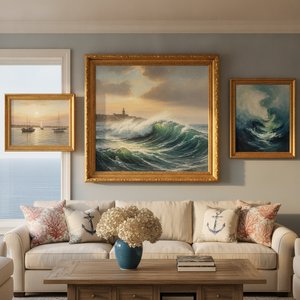
Bring the Ocean Home: Captivating Maritime Paintings to Transform Your Space with Timeless Elegance
Transform your home with breathtaking maritime oil paintings. From serene seascapes to dramatic nautical scenes, discover hand-painted reproductions that bring the ocean's soul to your space. Expertly crafted for collectors seeking timeless elegance and coastal tranquility.