 Preview
 Send
Send Share
Share
 Details

 Download
 Similars
 X-Ray
X-Ray Diaporama
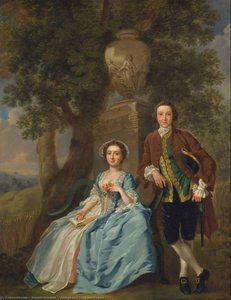
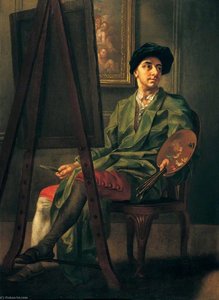
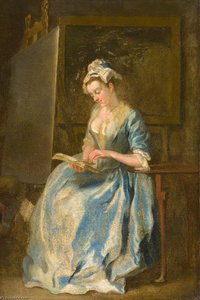
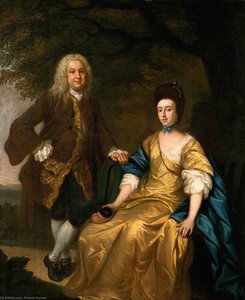
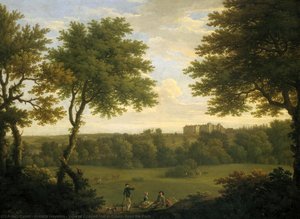
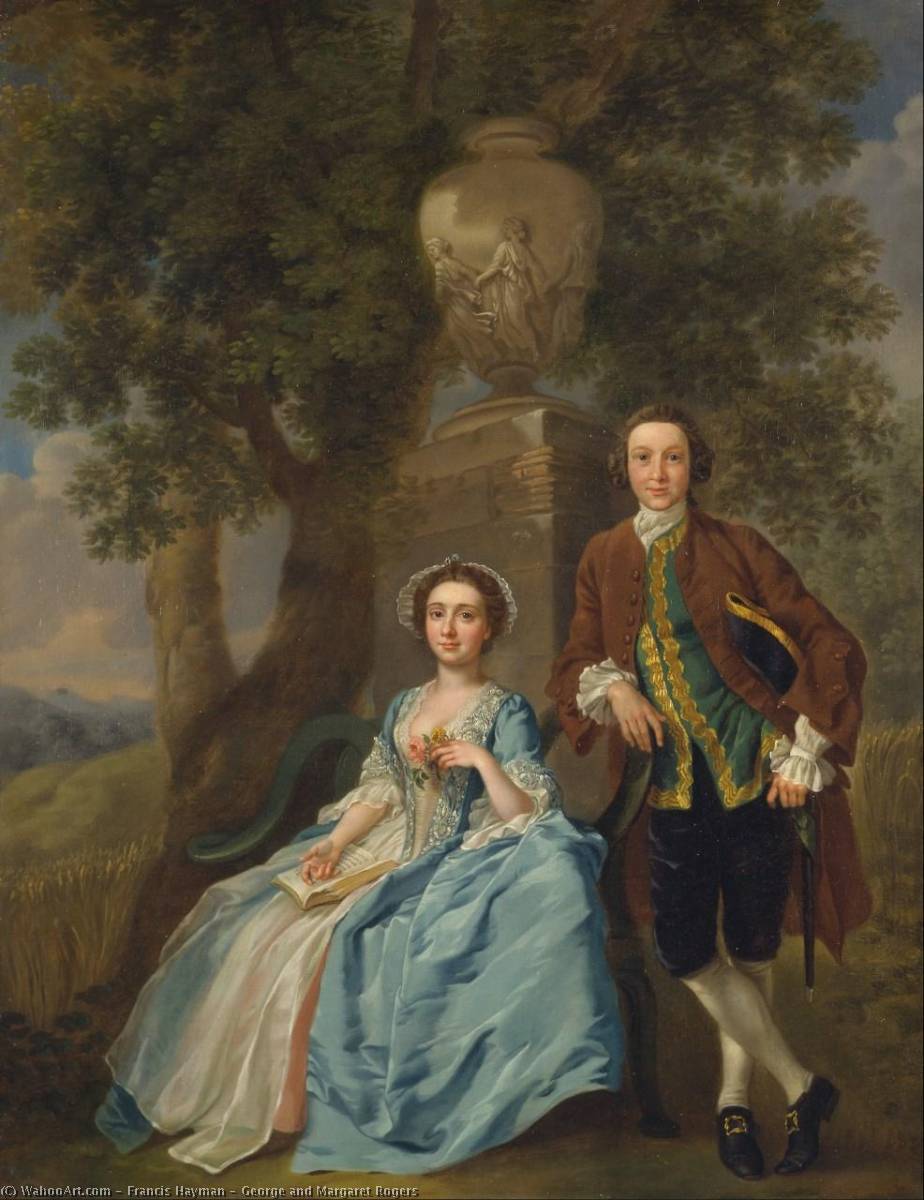
George and Margaret Rogers


 Read More
Hand Made Oil Reproduction
Hand-painted oil on canvas in your size and frame, made to order by our artists. ( Buy Print Buy Image)




P118B $10

P118H $10

P118W $10

P438Z $10

P508JH $12

P508YH $12

P805H $10

P805Z $10

P919BZ $10

P919G $10

P919XJ $10

P959ZH $10

P968JZ $12

W106C $8

W218G $10

W218JH $8

W218Y $10

W307PJ $10

W316G $10

W316PJ $8

W316Y $10

W398PJ $8

W4111J $10

W500HY $15

W500JH $15

W692G $12

W849H $8

W940BG $15

W953PJ $8




Pick from our preset sizes that match the artwork's original proportions.

You may enter your own dimensions to fit a specific frame or space. If your selected size does not match the original image's proportions, we will either crop the artwork or extend the painting with additional hand-painted elements. A digital mockup will be sent for your approval before production begins.
Please note that the on-screen preview does not reflect the actual cropping or extension. Only the mockup will accurately show the final composition.
While custom sizes are available, we recommend selecting a dimension from the predefined list to preserve the original proportions.
After order, ArtsDot.com team will email client for instructions and provide a mockup preview
Worldwide Delivery () in 3/4 weeks instead of standard 5 weeks. (17 August). No compromise on quality.

Free Worldwide Express Shipping

High-Quality Linen Canvas

Full Shipping Insurance

Customs Tax Refund Guarantee

True Color Matching Guarantee

60-Day Return Policy (Defects Only)

100% Money-Back Guarantee

Bulk Discount Offer
 Glass option is only available in size under 110 CM

George and Margaret Rogers
Reproduction Medium
Reproduction Size
-


Total Price
$ 263
Artwork Description
George Rogers and His Wife Margaret and His Sister Margaret Rogers
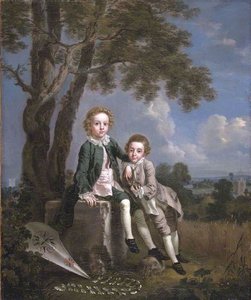
Francis Hayman’s “George Rogers and His Wife Margaret Rogers (née Tyers), and His Sister Margaret Rogers” is a captivating portrait that embodies the elegance and refinement characteristic of Rococo art. Executed in 1748-1750, this masterpiece resides within Yale Center for British Art's impressive collection, offering viewers an intimate glimpse into the lives of prominent figures during the mid-18th century.
The painting depicts George Rogers and his wife Margaret Tyers seated on a bench beneath a blossoming tree – a motif frequently employed in Rococo interiors to symbolize prosperity and familial harmony. Margaret Rogers herself is dressed in a serene blue gown, reflecting the prevailing pastel palette of the era, which prioritized softness and delicacy over bold hues.
Hayman’s masterful technique showcases his command of oil paint on canvas. He skillfully captures subtle nuances of light and shadow, creating a luminous effect that enhances the portrait's realism while simultaneously conveying an atmosphere of quiet contemplation. The artist’s meticulous attention to detail—from the folds of Margaret Rogers’ dress to the texture of the tree bark—demonstrates his dedication to artistic precision.
Beyond its aesthetic beauty, “George Rogers and His Wife Margaret Rogers” carries symbolic weight. The inclusion of Margaret's sister reinforces the importance of familial bonds within aristocratic society during this period. Furthermore, the tranquil setting suggests a desire for stability and contentment—values deeply ingrained in Rococo ideals.
This artwork exemplifies Hayman’s contribution to British art history and stands as a testament to the enduring appeal of Rococo portraiture. Its serene composition and masterful execution continue to inspire admiration and provide insight into the cultural sensibilities of the time, making it a treasured piece within Yale’s collection.
Related Artworks
![Legend Of St Francis - [24] - Canonization Of St Francis — Giotto Di Bondone, Gothic](/media/artworks/images/thumbnails/46/25/46258ba5eea24e14b12f138b9d3f90a3.jpg)
![Life Of Saint Francis - [04] - Death And Ascension Of St Francis — Giotto Di Bondone, Italian Renaissance](/media/artworks/images/thumbnails/e8/b6/e8b63a7fcb4a42ab89d26ae343d6f757.jpg)
Artist Biography
The Dramatic Vision of Francis Hayman
In the vibrant, shifting landscape of eighteenth-century British art, few figures possessed the versatile brilliance of Francis Hayman. Born in Exeter in 1708, Hayman did not merely observe the cultural evolution of his era; he actively shaped its visual language. His journey began far from the refined galleries of London, rooted instead in the ephemeral and high-stakes world of theatrical scenery. This early immersion in the dramatic arts provided him with a unique advantage, instilling a profound understanding of composition, light, and narrative tension that would later define his mastery of the Rococo style. As he transitioned from a scenic painter to an independent artist in St Martin's Lane, Hayman brought with him a storyteller’s soul, capable of transforming a static canvas into a window onto a theatrical moment.
The aesthetic essence of Hayman’s work is deeply intertwined with the Rococo movement, an era characterized by grace, ornament, and a certain lighthearted elegance. Drawing inspiration from the opulent French masters such as François Boucher, Hayman embraced a palette of delicate pastels and fluid, rhythmic brushstrokes. Yet, his work was never purely decorative; it possessed a structural integrity informed by classical ideals. Through his connection to the burgeoning intellectual circles of London, he integrated a sense of proportion and form that allowed his portraits to transcend mere likeness, capturing instead the very essence of character and social standing.
A Legacy of Royal Academy and Narrative Mastery
Hayman’s historical significance is anchored by his foundational role in the establishment of the Royal Academy. As a founding member and the institution's inaugural librarian, he helped lay the groundwork for professional artistic standards in Britain. This position of influence allowed him to bridge the gap between the popular, often boisterous, entertainment of the masses and the high-minded pursuits of the academic elite. His ability to navigate these different worlds is perhaps best seen in his diverse body of work, which ranges from the monumental to the intimate.
His artistic repertoire was remarkably expansive, showcasing a talent that could pivot between genres with seamless ease:
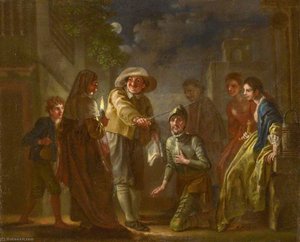
- Theatrical and Literary Scenes: Hayman possessed a rare ability to breathe life into literature, creating evocative depictions of Shakespearean drama and lively scenes from Don Quixote, such as the spirited moment of the innkeeper knighting the knight.
- Portraiture: He became a sought-after chronicler of his age, capturing the charisma of legendary actors like David Garrick and the aristocratic elegance of figures such as Dr. Charles Chauncey, MD.
- Decorative Commissions: His work for the Vauxhall Pleasure Gardens demonstrated his skill in large-scale storytelling, where he used art to enhance the public's sensory experience of leisure and joy.
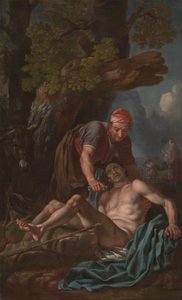
- Biblical and Mythological Themes: Through works like The Good Samaritan, Hayman utilized his Rococo sensibilities to explore profound themes of compassion, charity, and divine interaction.
Ultimately, the life of Francis Hayman was a testament to the power of visual storytelling. By blending the theatricality of the stage with the refined elegance of the Rococo, he created a body of work that remains a vital window into the Enlightenment era. His legacy persists not only in the canvases that bear his name but in the very structure of British art history, marking him as a true pioneer who helped elevate the status of the painter from craftsman to academic master.
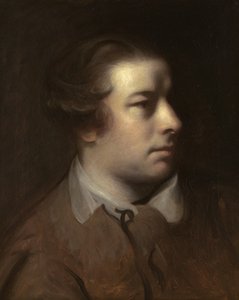
Francis Hayman
1708 - 1776 , United Kingdom
Quick Facts
- Artistic Movement Or Style: Rococo, Portraiture
- Artists Or Movements Influenced By This Artist: ['Gainsborough']
- Artists Who Influenced This Artist: ['Joshua Reynolds']
- Date Of Birth: 1708, Exeter
- Date Of Death: 1776, London
- Full Name: Francis Hayman
- Nationality: English
- Notable Artworks:
- Hamlet Scene
- Dancing Milkmaids
- Wapping Landlady
- Place Of Birth: Exeter, UK
Related Articles
Francis Bacon's Masterpieces: Exploring 25 Iconic Paintings | ArtsDot
Delve into the haunting world of Francis Bacon with ArtsDot. Explore 25 iconic paintings, from his visceral portraits to powerful triptychs. Discover the stories behind these masterpieces & find museum-quality art reproductions for your home. Explore the full collection online!

Slate Blue Masterpieces: 10 Iconic Paintings & Timeless Home Decor Ideas
Immerse yourself in the captivating world of slate blue! Explore 10 iconic paintings by Monet, Van Gogh & Renoir. Discover their stories, techniques & find museum-quality art reproductions for your home at .
The Allure of Azure: Exploring the Symbolic & Aesthetic Depths of Blue in Art History
Explore the rich history of blue in art! Discover its symbolism, from ancient pigments to modern masterpieces by Kandinsky & Seurat. Uncover the psychological impact and cultural meanings behind this captivating hue.

Rococo's Radiant Legacy: 10 Masterpieces for Your Home |
Indulge in the elegance of Rococo! Explore 10 masterpieces by Fragonard, Boucher & Watteau. Discover the stories behind these iconic paintings and bring timeless art to your home with museum-quality reproductions from .
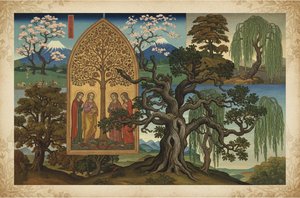
Arboreal Echoes: A Historical & Artistic Exploration of Trees in Painting
Explore the rich history of trees in painting! Discover symbolism, Romantic masterpieces by Caspar David Friedrich & beyond. A curated journey for art enthusiasts.