 Preview
 Send
Send Share
Share
 Details

 Download
 Similars
 X-Ray
X-Ray Diaporama
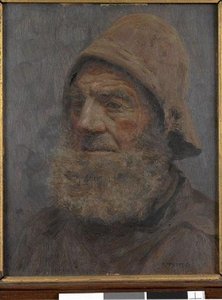
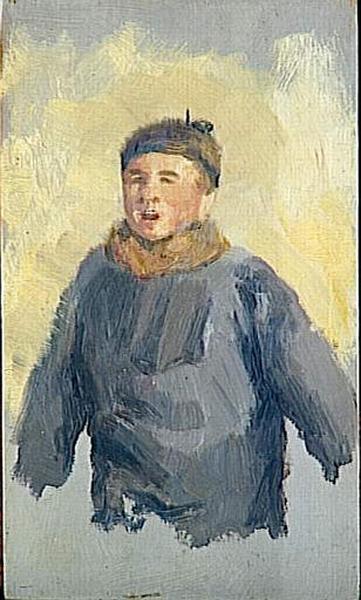
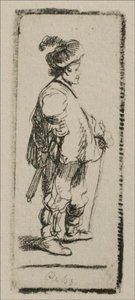
JEUNE GARCON EN VAREUSE, BONNET ET COL DE FOURRURE, A MI CORPS
 Read More
Giclée / Art Print
Museum-quality giclée or canvas print with fast production and flexible finish options. ( Buy Hand Made Painting Buy Image)




































Pick from our preset sizes that match the artwork's original proportions.

You may enter your own dimensions to fit a specific frame or space. If your selected size does not match the original image's proportions, we will either crop the artwork or extend the image with a mirrored or solid-fill edge. A digital mockup will be sent for your approval before production begins.
Please note that the on-screen preview does not reflect the actual cropping or extension. Only the mockup will accurately show the final composition.
While custom sizes are available, we recommend selecting a dimension from the predefined list to preserve the original proportions.
Worldwide Delivery () in 2 weeks instead of standard 4/5 weeks. (25 August)

Free Worldwide Express Shipping

High-Quality Linen Canvas

Full Shipping Insurance

Customs Tax Refund Guarantee

True Color Matching Guarantee

60-Day Return Policy (Defects Only)

100% Money-Back Guarantee

Bulk Discount Offer
 Glass option is only available in size under 110 CM

JEUNE GARCON EN VAREUSE, BONNET ET COL DE FOURRURE, A MI CORPS
Giclée / Art Print
Reproduction Size
-


Total Price
$ 63
Related Artworks









Artist Biography
The Painter of Wissant’s Coastal Soul
Francis Tattegrain, a name synonymous with the salt-sprayed landscapes of northern France, lived a life defined by a profound duality between rigorous intellect and sensory devotion. Born on October 11, 1852, in Péronne, his early years were shaped by a family steeped in legal tradition. His father, the President of the Court of Amiens, initially required that Francis pursue a law degree alongside his artistic ambitions—a promise the artist kept, eventually earning a doctorate. Yet, beneath this academic discipline beat the heart of a Naturalist. The seeds of his maritime obsession were sown in 1865, when his family built a summer cottage in the seaside village of Berck. It was here, amidst the shifting tides and the rhythmic labor of local fishermen, that Tattegrain discovered his true vocation.
His formal artistic journey led him to the prestigious Académie Julian in Paris in 1877, where he studied under the masters Jules Lefebvre and Gustave Boulanger. While these mentors provided him with a foundation in traditional academic precision, Tatte and his contemporaries were increasingly drawn to the atmospheric freedoms of Impressionism. This tension between classical structure and modern light would become a hallmark of his style. Encouraged by figures such as the sculptor Georges Tattegrain and the painter Ludovic-Napoléon Lepic, he moved beyond the confines of the studio to embrace the raw, unvarnished reality of the coast.
The Spirit of the École de Berck
Tattegrain’s most enduring contribution to art history lies in his leadership within the École de Berck, a collective of painters dedicated to capturing the authentic essence of the maritime world. Establishing a studio in Wissant Bay, he worked alongside artists like Henri and Marie Duhem to create a movement that prioritized direct observation over idealized scenery. His canvases became windows into the daily struggles and triumphs of coastal life, focusing on the heavy labor of fishermen hauling nets, the graceful movement of sailboats against turbulent seas, and the dramatic interplay of light upon the shoreline.
His technique was characterized by an evocative use of color and a brushwork that could shift from precise realism to loose, impressionistic strokes. In works such as Retour de la pêche à Berck, one can feel the weight of the spray and the tension of the wind. He possessed a rare ability to imbue even the most mundane coastal scenes with a sense of monumental importance, treating the weathered faces of elderly fishermen—as seen in Groslu, Berckois—with the same dignity as historical subjects. This commitment to Naturalism allowed him to document not just a landscape, but a vanishing way of life.
Legacy and a Final Sketch
The recognition of Tattegrain’s talent was widespread throughout his lifetime. He became a celebrated figure in the French art scene, earning a knighthood in the Légion d'honneur in 1889 and receiving prestigious commissions for the 1900 Exposition Universelle. His ability to translate the fleeting moments of nature into enduring art even reached the masses through widely circulated postcards, making his coastal visions accessible to a global audience. Beyond the canvas, he demonstrated a versatile creative spirit, providing illustrations for legendary authors such as Alexandre Dumas and Edmond Rostand.
Tragically, Tattegrain’s life ended with the same intensity with which he lived. He passed away on January 1, 1915, during the tumult of the First World War. Legend holds that he died "palette in hand," caught in the crossfire while attempting to sketch the belfry of Arras under heavy bombardment. This final, heroic act—placing his devotion to art above his own safety—serves as a poignant coda to a life dedicated to capturing the truth of the world around him. Today, his works remain vital testaments to the rugged beauty of the French coast and the enduring power of the Naturalist vision.
francis tattegrain
1852 - 1915
Quick Facts
- Artistic Movement Or Style: Naturalism
- Artists Or Movements Influenced By This Artist: ['École de Berck']
- Artists Who Influenced This Artist:
- Ludovic-Napoléon Lepic
- Georges Tattegrain
- Date Of Birth: October 11, 1852
- Date Of Death: January 1, 1915
- Full Name: Francis Tattegrain
- Nationality: French
- Notable Artworks:
- Groslu, Berckois
- Place du parvis Notre Dame à Senlis
- Place Of Birth: Péronne, France