 Preview
 Send
Send Share
Share
 Details

 Download
 Similars
 X-Ray
X-Ray Diaporama
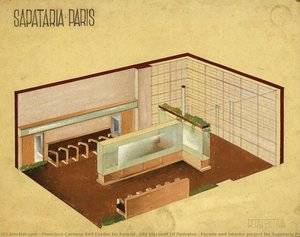
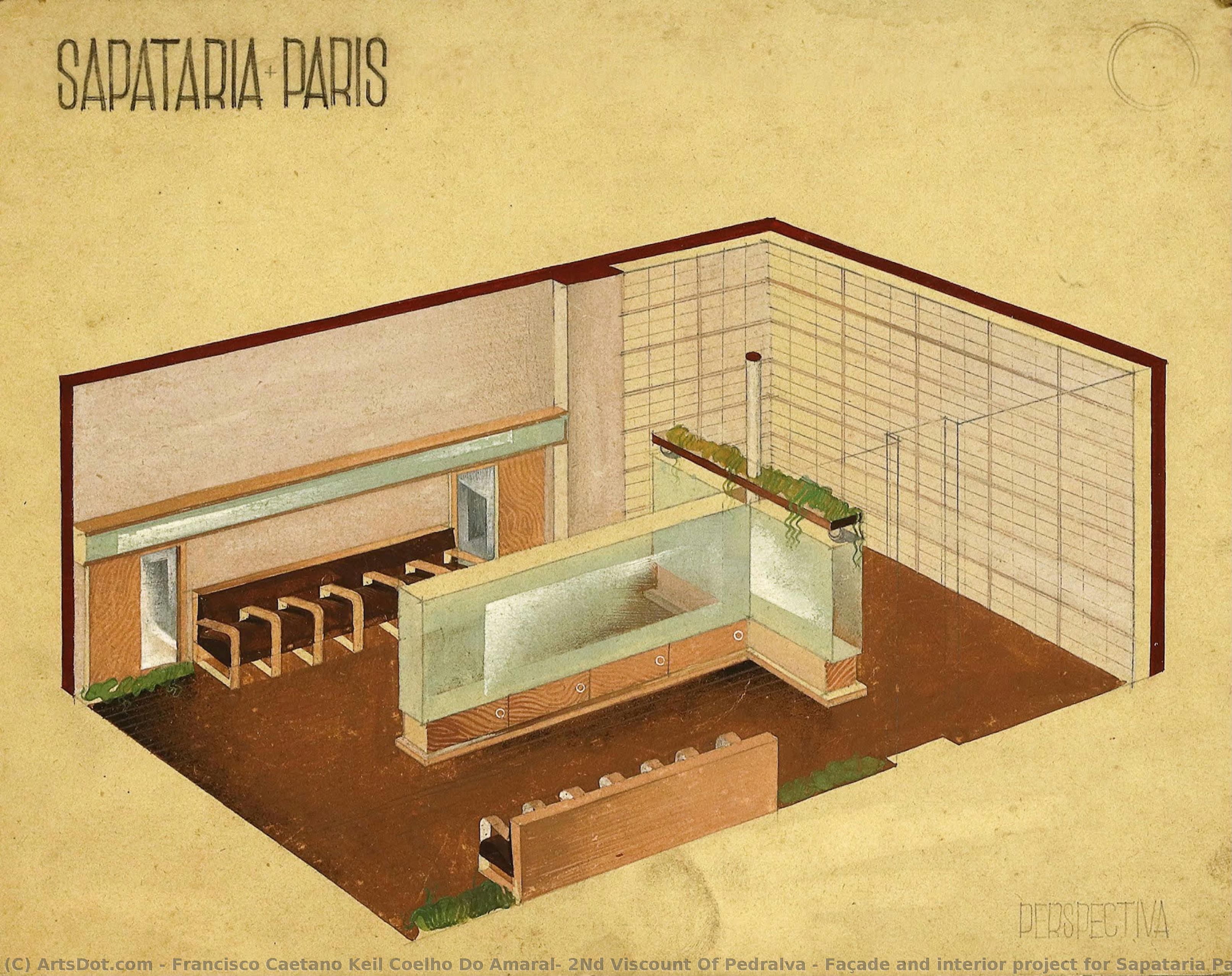
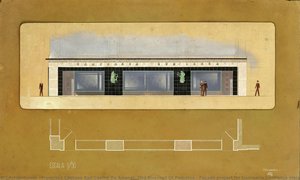
Façade and interior project for Sapataria Paris store
 1949
1949- Modern
 11.0 x 69.0 cm
 Lisboa Municipal Archive
 Read More
Hand Made Oil Reproduction
Hand-painted oil on canvas in your size and frame, made to order by our artists. ( Buy Print Buy Image)




P118B $10

P118H $10

P118W $10

P438Z $10

P508JH $12

P508YH $12

P805H $10

P805Z $10

P919BZ $10

P919G $10

P919XJ $10

P959ZH $10

P968JZ $12

W106C $8

W218G $10

W218JH $8

W218Y $10

W307PJ $10

W316G $10

W316PJ $8

W316Y $10

W398PJ $8

W4111J $10

W500HY $15

W500JH $15

W692G $12

W849H $8

W940BG $15

W953PJ $8




Pick from our preset sizes that match the artwork's original proportions.

You may enter your own dimensions to fit a specific frame or space. If your selected size does not match the original image's proportions, we will either crop the artwork or extend the painting with additional hand-painted elements. A digital mockup will be sent for your approval before production begins.
Please note that the on-screen preview does not reflect the actual cropping or extension. Only the mockup will accurately show the final composition.
While custom sizes are available, we recommend selecting a dimension from the predefined list to preserve the original proportions.
After order, ArtsDot.com team will email client for instructions and provide a mockup preview
Worldwide Delivery () in 3/4 weeks instead of standard 5 weeks. (27 August). No compromise on quality.

Free Worldwide Express Shipping

High-Quality Linen Canvas

Full Shipping Insurance

Customs Tax Refund Guarantee

True Color Matching Guarantee

60-Day Return Policy (Defects Only)

100% Money-Back Guarantee

Bulk Discount Offer
 Glass option is only available in size under 110 CM

Façade and interior project for Sapataria Paris store
Reproduction Medium
Reproduction Size
-


Total Price
$ 263
A Window into Mid-Century Elegance
In the delicate interplay of light and structure captured within Façade and interior project for Sapataria Paris store, we find a profound meditation on the intersection of commerce and domesticity. Created in 1949 by the visionary Portuguese architect and artist Francisco Caetano Keil Coelho do Amaral, this work transcends its original purpose as an architectural proposal to become a poetic vignette of mid-century life. The painting invites the viewer to step through a large, luminous window, where natural light floods a meticulously composed interior. Within this space, the arrangement of chairs and a central dining table suggests a rhythm of human presence, even in their stillness. A solitary potted plant breathes life into the composition, offering a soft, organic counterpoint to the structured geometry of the store's layout.
The technique employed by the 2nd Viscount of Pedralva reflects his unique position as both a rationalist architect and a sensitive painter. There is a rhythmic quality to the brushwork that captures the essence of light filtering through glass, creating an atmosphere that feels simultaneously airy and grounded. The artist utilizes a subtle palette to define the boundaries of the room, allowing the shadows to dance around the furniture with a quiet grace. This mastery of light does more than merely illuminate a scene; it imbues the architectural plan with a soul, transforming a commercial interior into a sanctuary of design where every element—from the placement of a chair to the reach of a leaf—feels intentional and harmonious.
The Architect's Visionary Touch
To understand this piece is to understand the "third way" of Portuguese modernism. Keil do Amaral was not merely documenting a floor plan; he was composing an experience. During a period of rigid political and architectural shifts in Portugal, his work sought a balance between the efficiency of modern design and the warmth of traditional spatial intimacy. In this 1949 work, we see the seeds of his philosophy: the belief that architecture should serve as a stage for daily life, blending the public nature of a storefront with the inviting comfort of a private salon. The way the furniture is scattered throughout the room suggests a fluid movement, an invitation to linger and observe.
For the discerning collector or interior designer, this artwork offers much more than historical value; it provides a blueprint for sophisticated atmosphere. The painting’s ability to evoke a sense of calm, organized beauty makes it an extraordinary centerpiece for modern interiors. Whether placed in a sunlit gallery or a contemporary study, a high-quality reproduction of this piece brings with it the prestige of Portuguese architectural history and a timeless aesthetic of light and order. It serves as a constant reminder that true design is not just about the walls that surround us, but about the light, the life, and the quiet moments we cultivate within them.
Related Artworks
Artist Biography
A Pioneer of Modern Portuguese Architecture: Francisco Keil do Amaral
Francisco Caetano Keil Coelho do Amaral, 2nd Viscount of Pedralva (1910-1975), stands as a pivotal figure in the development of modern architecture in Portugal. More than simply an architect, he was a painter and photographer whose unique vision sought to reconcile the principles of rational design with a deep respect for traditional Portuguese building practices. His career unfolded during the complex political landscape of the Estado Novo regime, where he navigated a path independent of both its historicist tendencies and the rigid internationalism of the time, forging what he termed a “third way” in architectural expression. Born into a family with significant public service ties – his father served as Governor-General of Portuguese Angola – Keil do Amaral’s early life instilled a sense of civic responsibility that would permeate his professional endeavors. His childhood experiences, including a period spent in Luanda and formative years at Canas de Senhorim, shaped an aesthetic sensibility attuned to both the grandeur of colonial architecture and the understated beauty of rural Portugal.Early Influences and Artistic Formation
Keil do Amaral’s formal artistic training began with studies in advertising design, followed by enrollment in the Architecture course at Lisbon's School of Fine Arts in 1930. However, a conflict with his professor led him to pursue his education independently, working under the guidance of Carlos Ramos, whose functionalist approach profoundly influenced his early work. This period saw Keil do Amaral embrace purism and rational design principles, evident in projects like the Instituto Pasteur in Porto (1933-1935). Crucially, his time in Paris in 1936, winning the competition for the Portuguese Pavilion at the Universal Fair, marked a turning point. Exposure to international trends was tempered by travels through the Netherlands, where he discovered the work of Willem Marinus Dudok and developed an admiration for Frank Lloyd Wright. This encounter sparked a desire to integrate modern rationality with a thoughtful consideration of architectural traditions – a core tenet of his evolving philosophy. He recognized in Dutch architecture a progressive character that harmonized seamlessly with established customs, a binomial that would define his practice.A “Third Way” and Public Works
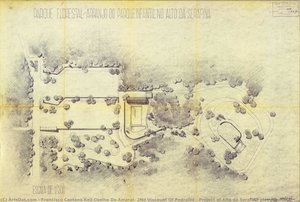
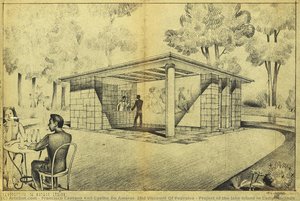
The 1940s and 50s witnessed Keil do Amaral’s most significant contributions to Portuguese architecture. He deliberately distanced himself from the prevailing aesthetic currents of the Estado Novo, rejecting both its revivalist tendencies and the wholesale adoption of International Style orthodoxy. Instead, he championed a uniquely Portuguese modernism – one that embraced functionality but remained deeply rooted in local materials, techniques, and cultural contexts. This approach is particularly evident in his public works projects. He assumed responsibility for important commissions without aligning himself with the political regime’s ideological preferences. Projects such as the *Project of the lake island in Campo Grande* demonstrate a sensitivity to landscape and urban space, while designs for commercial facades – like those for *Camisaria Confiança store* and *Sapataria Paris store* – showcase his ability to blend modern aesthetics with the character of Lisbon’s existing architectural fabric. His work consistently sought a balance between innovation and tradition, creating buildings that were both forward-looking and deeply connected to their surroundings.Legacy and Historical Significance
Francisco Keil do Amaral's influence extends beyond the physical structures he designed. He represented a rare instance of artistic independence within an authoritarian context, successfully navigating the complexities of the Estado Novo era while maintaining his own distinct vision. His emphasis on functionality, simplicity, and integration with local traditions paved the way for subsequent generations of Portuguese architects. He left behind a body of work that continues to inspire, demonstrating the power of architecture to reflect cultural identity and respond sensitively to its environment. The fact that his name graces a street in Lisbon is a testament to his enduring legacy as a pioneer of modern Portuguese design – an architect who sought not merely to build structures, but to create spaces that embodied a uniquely Portuguese spirit. His work remains a compelling example of how architectural innovation can be achieved through thoughtful engagement with history and context, rather than blind adherence to prevailing trends.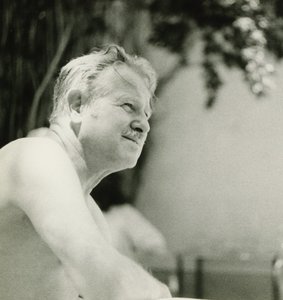
francisco caetano keil coelho do amaral, 2nd viscount of pedralva
1910 - 1975 , Portugal
Quick Facts
- Artistic Movement Or Style: Modernist architecture
- Artists Who Influenced This Artist:
- Carlos Ramos
- Willem Dudok
- Frank Lloyd Wright
- Date Of Birth: April 28, 1910
- Date Of Death: February 19, 1975
- Full Name: Francisco Keil do Amaral
- Nationality: Portuguese
- Notable Artworks:
- Lake Island Project
- Camisaria Confiança Facade
- Sapataria Paris Facade
- Place Of Birth: Lisbon, Portugal
Related Articles
The Enduring Legacy of Architecture in Art: A Historical Survey of Representation & Meaning
Explore the rich history of architecture in art, from Renaissance theory to 19th-century reconstructions. Discover key artists & movements shaping visual representation – a guide for discerning collectors.
Harmonizing History & Hue: A Guide to Matching Art Styles with Interior Architecture for Balanced Décor
Elevate your interior design with our expert guide to harmonizing art styles & architecture. Discover timeless pieces, color palettes, & custom artwork solutions for balanced, luxury spaces. Expert advice included!

Beyond Decoration: Architectural Resonance of Fine Art Reproductions in Interior Design
Elevate hotel interiors with fine art reproductions that resonate architecturally. Discover how custom artwork & expert curation create unforgettable guest experiences. Explore Renaissance-inspired design solutions.