 Preview
 Send
Send Share
Share
 Details

 Download
 Similars
 X-Ray
X-Ray Diaporama
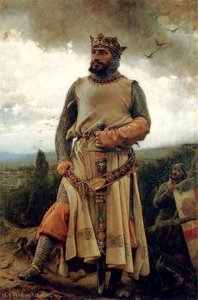
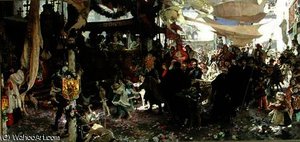
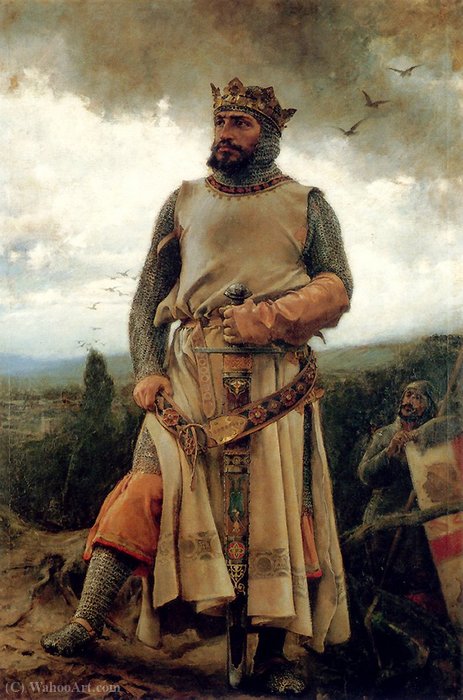
Portrait of King Alfonso I of Aragon, the Warrior, by Francisco Pradilla. City of Zaragoza. (1879.)

 Read More
Giclée / Art Print
Museum-quality giclée or canvas print with fast production and flexible finish options. ( Buy Hand Made Painting Buy Image)




































Pick from our preset sizes that match the artwork's original proportions.

You may enter your own dimensions to fit a specific frame or space. If your selected size does not match the original image's proportions, we will either crop the artwork or extend the image with a mirrored or solid-fill edge. A digital mockup will be sent for your approval before production begins.
Please note that the on-screen preview does not reflect the actual cropping or extension. Only the mockup will accurately show the final composition.
While custom sizes are available, we recommend selecting a dimension from the predefined list to preserve the original proportions.
Worldwide Delivery () in 2 weeks instead of standard 4/5 weeks. (3 September)

Free Worldwide Express Shipping

High-Quality Linen Canvas

Full Shipping Insurance

Customs Tax Refund Guarantee

True Color Matching Guarantee

60-Day Return Policy (Defects Only)

100% Money-Back Guarantee

Bulk Discount Offer
 Glass option is only available in size under 110 CM

Portrait of King Alfonso I of Aragon, the Warrior, by Francisco Pradilla. City of Zaragoza. (1879.)
Giclée / Art Print
Reproduction Size
-


Total Price
$ 63
Portrait of King Alfonso I of Aragon, the Warrior: A Glimpse into Aragonese Royalty
Francisco Pradilla Ortiz's "Portrait of King Alfonso I of Aragon, the Warrior" (1879) is a striking oil painting that transports viewers to 12th-century Aragon. This work isn’t merely a likeness; it’s a carefully constructed image intended to convey power, authority, and the martial prowess of a pivotal figure in Aragonese history.
The Subject: King Alfonso I – The Founder
Alfonso I (c. 1073 – 1134), often referred to as "the Warrior," was a key figure in the formation of the Kingdom of Aragon. He played a crucial role in expanding Aragonese territory and consolidating power during a period of significant political upheaval in the Iberian Peninsula. His reign saw the incorporation of territories like Barcelona, Tarragona, and Lérida into what would become a powerful kingdom. The portrait aims to capture not just his physical appearance but also the essence of this ambitious and influential ruler.
Style and Technique: Academic Realism with Romantic Undertones
Pradilla, a leading figure in Spanish academic painting, employed a style rooted in realism, meticulously rendering details of Alfonso’s armor and the surrounding landscape. The influence of the Old Masters, studied during his time at the Spanish Academy in Rome, is evident in the composition's balance and the careful modeling of light and shadow. However, the dramatic sky and the overall sense of grandeur suggest a touch of Romanticism, elevating the portrait beyond a simple likeness to something more evocative and heroic. The use of oil paint allows for rich color saturation and subtle gradations that bring depth and texture to the scene. Notice how Pradilla uses light to highlight Alfonso’s face and armor, drawing the viewer's eye to the central figure.
Historical Context and Symbolism
The painting was created during a period of renewed interest in Spanish history and national identity. Commissioned by the Spanish Senate, it reflects a desire to celebrate Aragonese heritage and its contribution to Spain’s broader narrative. The armor itself is symbolic of Alfonso's military strength and his role as a warrior king. The mountainous landscape likely represents the rugged terrain of Aragon, further emphasizing the kingdom’s resilience and independence. The presence of birds in flight could symbolize freedom, aspiration, or even divine guidance – common motifs in historical paintings of the era. While the exact details of Alfonso's appearance are debated by historians (as it is a portrait created centuries after his death), Pradilla aimed to create an image that embodied the ideals associated with this important ruler.
Emotional Impact and Legacy
"Portrait of King Alfonso I of Aragon, the Warrior" evokes a sense of awe and respect for a powerful historical figure. The painting’s grandeur and meticulous detail invite viewers to contemplate the challenges and triumphs of medieval kingship. Pradilla's masterful execution ensures that this portrait remains a compelling representation of Aragonese royalty and a testament to his skill as one of Spain’s leading academic painters. It stands as a valuable window into 12th-century Aragon, offering insights into its history, culture, and the enduring legacy of King Alfonso I.
Related Artworks
Artist Biography
Francisco Pradilla Ortiz: A Titan of Spanish Historical Painting
Francisco Pradilla Ortiz (1848-1921) stands as one of the most prolific and influential figures in 19th-century Spanish art. Born in Villanueva del Gallego, Zaragoza province, his artistic journey began with formal studies at Zaragoza University before he moved to San Fernando Academy and subsequently honed his skills at the Académie Royale des Beaux-Arts de Rome—a pivotal experience that exposed him to the grandeur of Italian Renaissance masters and profoundly shaped his stylistic sensibilities. This formative period instilled in him a dedication to academic realism combined with subtle Impressionistic influences, resulting in an oeuvre characterized by dramatic narratives and meticulous detail.- Early Life & Education: Pradilla’s upbringing fostered a passion for art from a young age. His studies at San Fernando Academy provided a solid grounding in classical technique, while the Académie Royale des Beaux-Arts de Rome allowed him to immerse himself in the artistic traditions of Europe.
- Rome and Artistic Influences: The Roman academy proved instrumental in shaping Pradilla’s vision. He absorbed the lessons of Michelangelo, Raphael, and Titian, integrating their compositional strategies and expressive approaches into his own work.
- Return to Madrid & Museo Nacional del Prado: Upon returning to Spain, Pradilla accepted the prestigious role of Director of the Museo Nacional del Prado, a position he held briefly but which cemented his legacy as a champion of artistic excellence.
A Career Defined by Monumental Commissions and Dramatic Narrative
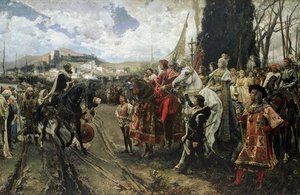
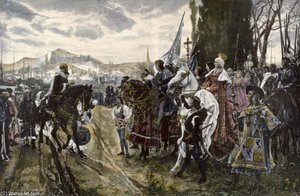
Pradilla’s artistic reputation soared with the commission to depict “La Rendición de Granada” (The Surrender of Granada), a monumental undertaking that consumed three years of his life and cemented his place in Spanish history. This ambitious project showcased his mastery of scale, color, and theatrical presentation—elements he would consistently employ throughout his career. The painting’s meticulous depiction of the siege and subsequent surrender captured the spirit of the era with remarkable accuracy and emotional intensity.- Notable Commissions: Beyond “La Rendición de Granada,” Pradilla undertook numerous commissions for royal patrons and institutions, demonstrating his versatility and commitment to artistic excellence.
- Dramatic Composition & Color Palette: His paintings are distinguished by their dramatic compositions—often employing pyramidal structures—and a rich color palette designed to evoke emotion and convey narrative depth.
Costumbrismo and Landscape Painting – Exploring Local Identity and Impressionistic Sensibilities
While Pradilla is primarily celebrated for his historical paintings, he also produced a significant body of costumbrista works—studies that captured the everyday life and customs of Spanish towns and cities. These paintings often possessed a romanticized quality, imbued with an Impressionistic sensibility that subtly softened the harsh realities of provincial existence. His landscapes were equally noteworthy, characterized by loose brushstrokes and atmospheric effects that conveyed the beauty of the Iberian countryside.- Costumbrismo’s Aesthetic: Pradilla's costumbrista paintings reflected a fascination with capturing authentic regional life—often idealized—with an eye for subtle Impressionistic nuances.
- Landscape Technique: He skillfully employed loose brushstrokes and atmospheric perspective to convey the mood and character of Spanish landscapes, anticipating developments in Impressionism.
Legacy and Recognition – An Artist Ahead of His Time
Francisco Pradilla Ortiz’s output exceeded 1,000 paintings—a testament to his unwavering dedication to artistic pursuits. He remained steadfastly committed to exploring diverse subjects and styles without succumbing to prevailing trends, prioritizing artistic integrity above all else. His enduring influence can be seen in subsequent generations of Spanish painters who admired his technical prowess and dramatic storytelling abilities. Today, Pradilla Ortiz’s works are housed in major museums across Europe and America, ensuring that his contribution to the history of art continues to inspire awe and admiration.
Francisco Pradilla Ortiz
1848 - 1921 , Spain
Quick Facts
- Artistic Movement Or Style: Academic realism with Impressionistic influences
- Artists Or Movements Influenced By This Artist: ['Impressionism']
- Artists Who Influenced This Artist: ['Old Masters']
- Date Of Birth: 1848
- Date Of Death: 1921
- Full Name: Francisco Pradilla Ortiz
- Nationality: Spanish
- Notable Artworks:
- Doña Juana la Loca
- La Rendición Granada
- Cortejo del bautizo del príncipe don juan, hijo de los reyes católicos, por las calles de sevilla
- Place Of Birth: Villanavilla del Gallego, Spain
Related Articles

Goya's Masterpieces: Explore 25 Iconic Paintings & Art Prints | ArtsDot
Delve into the world of Francisco Goya with ArtsDot. Explore 25 iconic paintings – from 'The Third of May' to his haunting Black Paintings. Discover the stories, techniques & emotions behind these Spanish masterpieces. Find museum-quality art reproductions for your home at ArtsDot.com!
Charles Bird King: Capturing Native American Dignity Through Portraiture & Cultural Exchange
Explore the captivating portraits of Charles Bird King, renowned for his depictions of Native American leaders. Discover the historical context, artistic techniques, and collecting value of these significant 19th-century artworks.
Francisco Goya: Darkness & Enlightenment – A Comprehensive Exploration of the Artist's Life, Works, and Enduring Legacy
Explore the life & works of Francisco Goya, Spain's Romantic master. Discover his evolution from court painter to a visionary chronicler of war and social injustice. A comprehensive guide for art enthusiasts.
Francisco de Zurbarán: Mysticism, Realism & the Golden Age of Spanish Painting
Explore the captivating world of Francisco de Zurbarán, a master of Spanish Baroque painting. Discover his dramatic tenebrism, religious masterpieces like 'La Porciúncula,' and lasting influence on art history.

F.A.Q.: Do Artists Receive Royalties When Sells Their Work or Reproductions?
Discover how supports artists! Learn about our royalty structure & partnerships for fine art reproductions. Trusted by elite collectors worldwide.